Notus
Notus is the Greek god of the south wind. Hesiod makes him a son of Eos and the Titan Astraeus, brother of Boreas and Zephyrus (Theogony 375-380). Hesiod also lists him among the few winds that are a blessing to men (Theogony 869-880). In Hesiod's farming poem and in Homer, the same wind rouses the sea and wrecks ships.
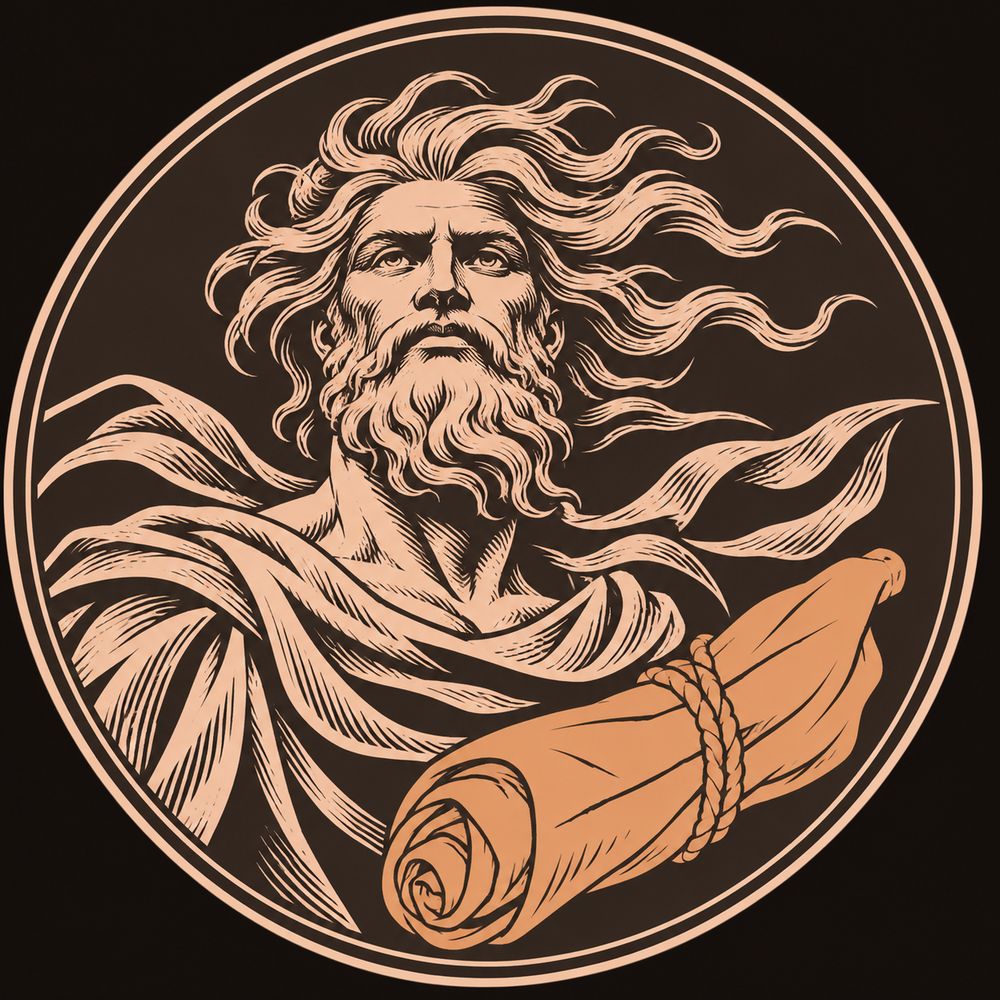
Notus the South Wind, bust portrait holding a ship's sail
Generated by AI from this page's own facts, not an ancient image or evidence of anything. How this site uses generated images
Sections on this page
See Notus in the Greek family tree.
Core Myth
Hesiod gives Notus his family. In the Theogony, Eurybia bears Astraeus, Pallas and Perses to Crius. Then Eos bears to Astraeus the strong-hearted winds: Zephyrus, Boreas and Notus (Theogony 375-380). Notus is therefore the brother of Boreas, the north wind, and of Zephyrus, the west wind. His mother is the dawn goddess Eos. His father is the Titan Astraeus. Hesiod names only these three sons in the passage checked here. He does not name Eurus, the east wind, as a son of Astraeus.
Hesiod also sets the three winds apart from all others. Boisterous winds that blow damply come from Typhoeus, he says, except Notus, Boreas and clear Zephyrus. These three are a god-sent kind and a great blessing to men. The other winds blow fitfully on the sea, scatter ships and destroy sailors (Theogony 869-880). In the Theogony, then, Notus is a benefit. The same poem does not treat him as a bringer of harm. The Zephyrus page tells the story of his brother.
Hesiod's other poem gives a harsher picture. In Works and Days he warns the farmer against sailing late in the year, when the autumn rains and winter come, and names the dread gales of Notus. He says this wind rouses the sea and joins the rain of Zeus (Works and Days 675-677).
Homer uses Notus as one wind among the others at sea. In the Iliad, the assembly of the Achaeans stirs like the Icarian sea when the East Wind or the South Wind raises waves (Iliad 2.144-146). In the Odyssey, Poseidon roused all the winds, and the East Wind and the South Wind dashed together with the West Wind and the North Wind (Odyssey 5.291-296). Odysseus's men also fear a blast of the South Wind that could wreck a ship against the will of the gods (Odyssey 12.283-290). Later the South Wind blows unceasingly for a full month, and no other wind rises except the East Wind and the South Wind (Odyssey 12.325-326).
What does Notus mean?
Notus is the Greek name of the south wind, and translators usually give it as the South Wind. The sources checked here use the word both as the name of a wind and as the name of the god who is that wind's brother to Boreas and Zephyrus. They do not explain where the word comes from, so this page offers no etymology.
Who is Notus in Greek mythology?
He is one of the three winds Hesiod calls the sons of Eos and Astraeus, with Zephyrus and Boreas. Hesiod ranks him among the winds that bring good to men, while Works and Days and the Odyssey show the south wind raising dangerous seas. No story in the passages checked here gives Notus a myth of his own, such as a marriage or a quarrel.
Is Notus a kind wind or a dangerous one?
The sources split. The Theogony counts Notus a god-sent blessing, set against the harmful winds born of Typhoeus. Works and Days calls the gales of Notus dread and joins them to autumn rain and a rough sea. The Odyssey has sailors fear a blast of the South Wind, and its South Wind blows for a month, keeping Odysseus's men on an island.
Which wind is the fourth of the four winds?
The east wind, Eurus. Homer names the East Wind beside the South, West and North Winds in one line of the storm that wrecks Odysseus's raft. The Theogony names only three sons of Astraeus and Eos, so the passage checked here does not say where Eurus comes from.
Later Traditions
The two traditions differ on where the winds come from. Hesiod makes Notus a son of Astraeus and Eos (Theogony 375-380). Homer gives the winds no parent in the passages checked here. He gives them a keeper. In the Odyssey, Aeolus binds the paths of the blustering winds in an ox-hide bag and leaves only the West Wind free to blow Odysseus home (Odyssey 10.19-27). The passage does not name Notus. It does not say which winds are in the bag beyond the West Wind being left out. So Hesiod traces the wind to a family and Homer places it under a master, and neither passage cancels the other.
Hesiod's genealogy also sets the winds beside other well-known children. The Theogony continues from Eos's sons to the star Eosphorus and the stars. It then says that Styx, daughter of Oceanus, was joined to Pallas, the brother of Astraeus, and bore Zelus and Nike (Theogony 381-385). The wind-god's family is thus placed in the same generation as the parents of Victory.
Lineage
See the full family tree3 recorded relations, each with the ancient line behind it.
Parents
-

Eos bears Notus to the Titan Astraeus, with Zephyrus and Boreas.
Siblings
-

Boreas and Notus are both among the strong-hearted winds born to Eos and Astraeus.
-

Zephyrus and Notus are both among the strong-hearted winds born to Eos and Astraeus.
Where Accounts Differ
- whether Notus is a blessing or a danger
- whether the winds have a parent or a keeper
- Notus's character differs between Hesiod's poems and Homer. Hesiod (Theogony 869-880) lists Notus among the winds that are a blessing to men. Hesiod (Works and Days 675-677) names the dread gales of Notus and the rough sea they bring in autumn. Homer (Odyssey 12.283-290) has sailors fear a blast of the South Wind.
- The origin of the winds differs between Hesiod and Homer. Hesiod (Theogony 375-380) makes Notus a son of Astraeus and Eos. Homer (Odyssey 10.19-27) shows Aeolus keeping the blustering winds in a bag and names no parent for them.
Read the full source verification →