The Underworld and Death
Hades names both the god of the dead and, by extension, his whole realm. Tartarus is not another name for that realm; it is a deeper prison reserved for the Titans and the worst offenders. Homer's underworld has no moral judgment at all - Minos there only settles disputes among the dead - and the judges who sort souls by conduct are a later addition, developed in Plato.
Sections on this page
Overview
Hades is a name that does two jobs in Greek myth, and both are legitimate. It names the god who won the underworld when he, Zeus, and Poseidon drew lots for sky, sea, and darkness after the Titans fell. It also names the whole shadowy realm he then ruled. Homer's Greek keeps the two senses close together rather than fully apart: a formula like "the gates of the house of Hades" names the place by its owner, not as an independent place-name in its own right. Persephone, abducted from the world above to become his queen, sits at the center of that domain. Her yearly return is the clearest sign the underworld was never a fully sealed system.
That single realm is not flat, and it is not the same thing as Tartarus. Hades, in the broad sense, is where every ordinary soul goes regardless of virtue. Tartarus is a specific, far deeper region reserved for the defeated Titans and the worst human offenders. It is sealed behind its own gates rather than folded into the general afterlife. The earliest detailed picture of the general realm is Odysseus's visit in Book 11 of the Odyssey. It is strikingly plain next to the tiered, judged system most people now assume: mostly featureless shades, a handful of named sinners suffering individual punishments, and no line dividing the virtuous from the wicked. The Styx, which Charon ferries the dead across, marks the realm's outer boundary rather than any division within it.
Judgment is where the gap between Homer and later tradition is sharpest. Minos does appear in Homer's underworld, seated with a golden scepter while the dead ask him to settle their own disputes. That is arbitration among the shades, not a moral sorting of souls into reward or punishment, and no such sorting scene exists anywhere in the Odyssey's Nekyia. The familiar picture of Minos, Rhadamanthus, and Aeacus as judges who assign each soul its fate by how it lived is a later development, laid out at length in Plato's Gorgias. Virgil's Aeneid gives the clearest surviving ancient scene of that later system in action, with Rhadamanthus himself interrogating the guilty in Tartarus.
In This Topic (9)
-

Hades Character
Hades is the Greek god of the dead and the ruler of the underworld.
-

Persephone Character
Persephone is the Greek goddess of spring and queen of the underworld.
-
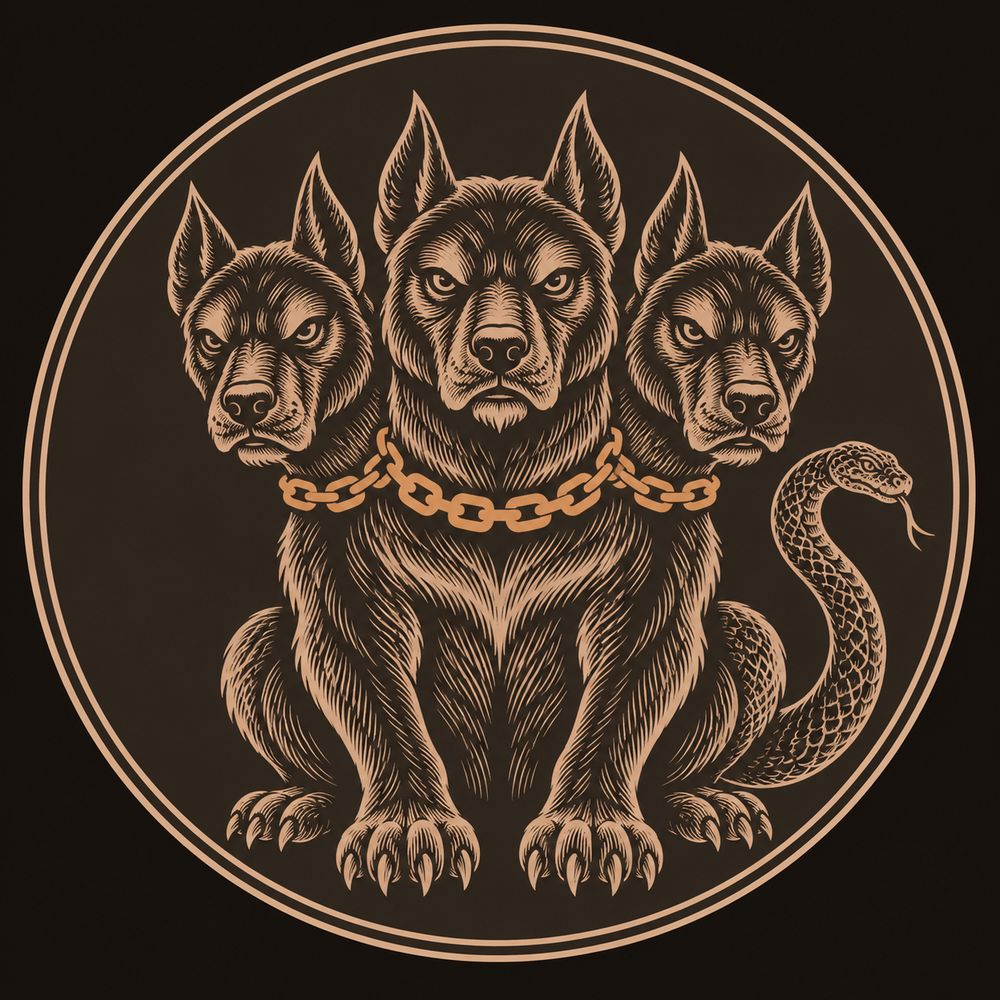
Cerberus Character
Cerberus is the monstrous three-headed dog that guards the entrance to the Greek underworld.
-

Charon Character
Charon is the ferryman who rows the souls of the dead across the waters of the underworld for a coin, a figure so entrenched in Greek belief that the dead were buried with an obol in the mouth to pay his fare.
Absent from Homer and Hesiod entirely; belief in him as ferryman is well attested only in later sources such as Virgil.
-
The Underworld Term
The Underworld is the realm of the dead in Greek mythology, ruled by Hades and his queen Persephone. It lies beneath the earth and is reached by crossing the River Styx. Later tradition divides it into distinct regions: the Asphodel Meadows for ordinary souls, Elysium for the virtuous and heroic, and Tartarus for the wicked. Cerberus, a three-headed dog, guards the entrance to prevent the living from entering and the dead from leaving. The earliest detailed picture of the underworld, Odysseus's visit in Book 11 of the Odyssey, describes something flatter and less organized than the later three-region system implies. The dead there are mostly undifferentiated shades, faint copies of the living who can barely speak until they drink sacrificial blood, and there is no general judgment separating the virtuous from the wicked - Odysseus meets heroes, his own mother, and a handful of individually named sinners such as Tantalus and Sisyphus enduring specific punishments (his stone is the subject of Sisyphus and the Boulder), but the vast majority of the dead exist in the same gray, joyless condition regardless of how they lived. The formal division into Elysium, the Asphodel Meadows, and Tartarus, along with judges assigned to sort the dead between them, develops in sources after Homer and becomes the standard picture repeated in most later literature and in this glossary's own definition above. Hermes, in his role as psychopomp, guides the souls of the newly dead down to the underworld, and Charon ferries them across the Styx for a coin placed with the body at burial. A small number of the living are said to have entered and returned: Heracles descends to complete his final labor, capturing Cerberus; Orpheus goes down to plead for his wife Eurydice's return; Psyche, in Apuleius's Eros and Psyche, is sent there and back by Aphrodite to fetch a portion of Persephone's own beauty; and Persephone herself divides her year between the underworld and the world above after being taken there by Hades, an arrangement later authors use to explain the changing seasons.
The general realm itself. Tartarus, Elysium, and the Styx below are regions or a boundary within it, not alternate names for the whole.
-
Tartarus Term
Tartarus is the deepest region of the Underworld in Greek mythology, a dark abyss used as a dungeon for the wicked and a prison for the defeated Titans. It is described as being as far below Hades as the earth is below the sky. Famous prisoners include Kronos and the Titans after the Titanomachy, Tantalus, Sisyphus, and Ixion, each suffering a punishment tailored to their transgressions. Hesiod names Tartarus twice over, as a place and as a being. In the opening lines of the Theogony he lists Tartarus alongside Chaos, Gaia, and Eros as one of the first four things to come into existence, before any god is born - which makes Tartarus, in this sense, a primordial entity rather than merely a location built or designated later. Elsewhere in the same poem, Gaia and Tartarus together father the monster Typhon, treating Tartarus as an active, personified figure capable of parentage rather than only an abyss. Most of the poem, and nearly all later tradition, uses Tartarus in the more familiar sense: a specific, physical place with a measurable location. Hesiod is precise about that location in a way few other Greek geographic myths bother to be: a bronze anvil dropped from the sky would fall nine days and nights before reaching the earth, and dropped from the earth's surface would fall another nine days and nights before reaching Tartarus, which puts it exactly as far beneath the world of the living as the sky is above it. Bronze walls and gates, forged by Poseidon, seal it off, and Night's dwelling stands at its threshold, marking it as one of the outer limits of the ordered cosmos rather than simply a lower floor of Hades' kingdom. Homer independently gives the same measurement from the other direction: in the Iliad, Zeus threatens to hurl any disobedient god down to murky Tartarus, describing it as lying as far beneath Hades as the sky lies above the earth, with gates of iron and a threshold of bronze - a description close enough to Hesiod's that the two poets are clearly drawing on a shared, well-established cosmic geography rather than inventing the depth independently.
The deepest region within the underworld, not another name for it - reserved for the defeated Titans and the worst offenders, not the fate of an ordinary soul.
-
Elysium Term
Elysium, also called the Elysian Fields or the Elysian Plain, is the blessed afterlife reserved in Greek mythology for a select few favored by the gods. It is not the common destination of the dead. The earliest description, in the Odyssey, places it at the ends of the earth, where life is easiest for mortals. There is no snow, no storm and no rain, only the cool breath of the West Wind blowing off the Ocean. It is granted to Menelaus specifically because he is Zeus's son-in-law by marriage to Helen, not because of any deed of his own. Hesiod's account, of the Isles of the Blessed, describes a comparable reward extended to an entire generation rather than one favored individual. The surviving heroes of the Race of Heroes, the demigods who fought at Thebes and Troy, are settled by Zeus at the ends of the earth. There the grain-giving earth bears its honey-sweet fruit three times a year, and Kronos rules over them. Later authors increasingly relocate this paradise inside the Underworld itself rather than at the world's edge. They also expand the criteria for entry from birth or divine favor to include the virtuous dead more broadly. The throughline across the shifting geography and eligibility rules is that Elysium is never the fate of an ordinary soul. Entry is a special exception granted by connection to the gods, exceptional virtue, or heroic death. It is set apart from the grey, comparatively featureless existence Homer generally gives the dead elsewhere in the Odyssey. Virgil's Aeneid gives Elysium its most fully developed later form and moves it firmly inside the underworld. Aeneas finds his father Anchises there, in green valleys among the souls of the virtuous, poets, priests, and those who died for their country. Most of them later drink from the river Lethe to forget their past lives and be reborn. This Roman version has its own rivers and its own admission criteria, tied to civic and moral virtue rather than divine marriage. It also links Elysium explicitly to reincarnation. It differs enough from Homer's version that the two are best read as related but separate pictures, not one stable belief repeated across centuries.
A favored exception to the ordinary underworld, not its general condition - a reward reserved for a select few rather than the common fate of the dead.
-
River Styx Term
The River Styx is the principal river of the Greek Underworld, forming the boundary between the world of the living and the realm of the dead. The souls of the deceased were ferried across by Charon the boatman in exchange for a coin placed in the mouth at burial. The Styx was also the river upon which the gods swore their most binding oaths, and any god who broke a Styx-oath faced severe punishment. Hesiod's Theogony makes Styx a Titaness in her own right before it makes her a river: the eldest daughter of the Titans Oceanus and Tethys, she came to Zeus's side first, with her children, in the war against the Titans, and Zeus rewarded that loyalty by making her the gods' binding oath and giving her children a permanent place among the immortals. The punishment for a false Styx-oath is specific and severe: a perjuring god lies breathless for a year, then is cut off from the nectar and ambrosia of Olympus and from the company of the other gods for nine more years, an exile inside their own society rather than a physical injury. In later tradition, separate from Hesiod and not found in Homer, Achilles' mother Thetis is said to have dipped the infant Achilles in the Styx to make him invulnerable, holding him by the heel, which stayed dry and unprotected - the origin of the phrase "Achilles' heel." This story is a post-Homeric addition; the Iliad describes Achilles as a formidable but not invulnerable warrior, and his death by an arrow to a random spot in Homer's tradition is inconsistent with the later heel story, which assumes a single fatal weak point rather than an ordinarily mortal body. Later authors including Statius, in the unfinished Achilleid, develop the Styx-dipping story at length, well after Homer's version of the hero had already been fixed in wide circulation.
The river marking the underworld's boundary and the gods' most binding oath - a boundary the dead cross, not a region they inhabit.
-
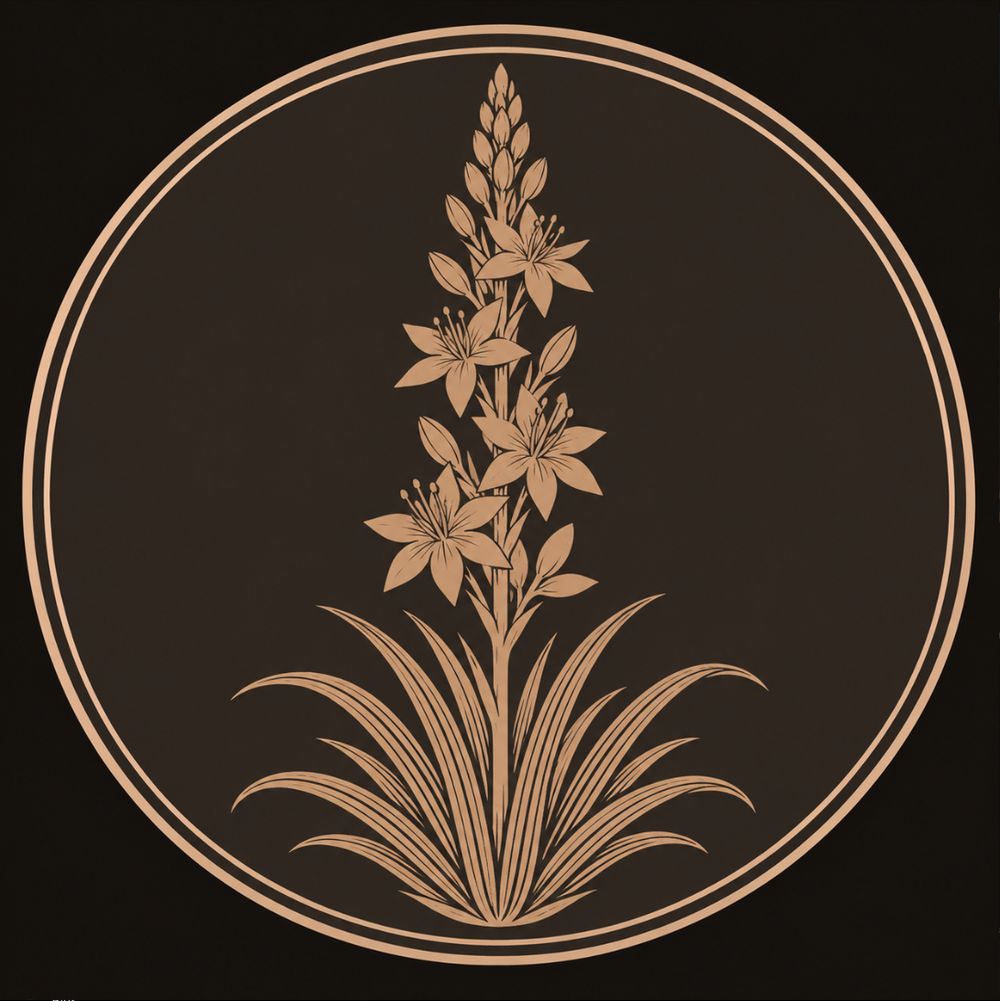
Asphodel Term
Asphodel is the meadow where the ordinary dead dwell in Homer's underworld, and it is also the name of a real flowering plant. In the Odyssey the spirits of Achilles, Patroclus and the murdered suitors are found on the meadow of asphodel, and Orion drives wild beasts across it (Odyssey 24.11-14; 11.538-540; 11.572-575). The passages checked here describe it as a dwelling, not as a reward or a punishment. The fullest route there is the one Hermes takes at the start of Odyssey Book 24. He calls up the suitors' spirits with his golden wand and leads them down the damp paths, past the streams of Oceanus, the rock Leucas, the gates of the sun and the land of dreams. They reach the mead of asphodel, where the spirits dwell, the phantoms of men who have done with toils (Odyssey 24.1-14). This is the psychopomp role at work: Hermes escorts the dead and does nothing to them once they arrive. Odysseus sees the same meadow from the other side in his visit to the dead. Achilles strides away across the field of asphodel, glad to hear that his son was preeminent (Odyssey 11.538-540). Not far from Minos, who gives judgment to the dead from his seat, Odysseus sees Orion driving the beasts he once killed over the field of asphodel (Odyssey 11.568-575). The meadow is part of the wider picture of the Greek underworld, and in Homer it is simply where the dead are. It is not Elysium. Proteus tells Menelaus that he will not die in Argos but will be sent to the Elysian plain at the ends of the earth, because he is the husband of Helen and so the son-in-law of Zeus (Odyssey 4.561-569). That is an exception granted to one man. The asphodel meadow is the ordinary place, and Achilles' own verdict on the ordinary dead is bleak: he would rather be a hired labourer on earth than lord over all the perished (Odyssey 11.488-491). Modern accounts that set the Asphodel Meadows beside Elysium and Tartarus as three regions describe a later arrangement, which these Homeric passages do not state. The plant has a separate and much shorter record. Hesiod tells his brother that fools do not know how much more the half is than the whole, nor the great advantage in mallow and asphodel (Works and Days 40-41). The line praises modest living. It does not describe the flower or say what the plant was used for, and the sources checked here do not link it to the dead. Why Homer chose asphodel as the plant of the dead is not explained in any passage checked here.
The meadow where Homer's ordinary dead dwell, a region of the realm rather than a reward or a punishment.
Is Hades a place or a god?
Both, and the overlap is native to the word rather than a later confusion. Hades is a person first: one of the six children Kronos and Rhea bore. He drew the underworld as his portion when he, Zeus, and Poseidon divided the world by lot after the Titans fell. Homer's language already lets the name slide toward the place too - a formula like "the gates of the house of Hades" names the realm by its ruler, not as an independent place-name. By later Greek, the bare name Hades routinely stands for the realm on its own, apart from the god.
Homer, Iliad 15.187-193; Homer, Iliad 23.71-74
What is the difference between Hades and Tartarus?
Hades, in the general sense, is where every ordinary soul goes after death regardless of how it lived. Tartarus is a specific, much deeper region within that larger realm, reserved for the defeated Titans and for the worst human offenders. Hesiod measures the gap physically: a bronze anvil falling from the sky would take nine days and nights to reach the earth. Falling again from the earth's surface, it would take another nine days and nights to reach Tartarus, sealed behind its own bronze gates rather than open to the ordinary dead.
Hesiod, Theogony 721-725
Who judges the dead, and did Homer's afterlife have judges at all?
Not in the sense most people assume. Homer's Odyssey does put Minos in the underworld holding a golden scepter, but the dead approach him to settle their own disputes. That is an extension of his old kingly role, not a judgment of how they lived, and the Nekyia has no scene sorting souls by conduct at all. The specific judges of later tradition, Minos, Rhadamanthus, and Aeacus assigning each soul to reward or punishment, appear at length only in Plato's Gorgias. Virgil's Aeneid gives the clearest ancient picture of that later system in action, with Rhadamanthus interrogating the guilty in Tartarus.
Homer, Odyssey 11.568-571; Virgil, Aeneid 6.566-569
Where Accounts Differ
- homer-underworld-has-no-judgment-scene
- later-judges-minos-rhadamanthus-aeacus
- hades-vs-tartarus-distinct-not-synonyms
- Homer's underworld in the Odyssey has no moral judgment sorting the dead at all; the specific judges Minos, Rhadamanthus, and Aeacus who assign souls to reward or punishment are a later development, laid out at length in Plato's Gorgias rather than present in the earliest sources.
- Minos does appear in Homer's underworld, but settling disputes among the dead as a continuation of his kingly role, not judging how they lived - the two roles are easy to conflate and this page keeps them distinct.
- Hades in the general sense and Tartarus are sometimes used loosely as synonyms in casual retellings; Hesiod's own measurement in the Theogony treats them as distinct, with Tartarus specifically as far below Hades as the sky is above the earth.
Related Terms
Referenced By
Sources
- Homer, Iliad 15.187-193
- Homer, Iliad 23.71-74
- Homer, Odyssey 11.475-491
- Homer, Odyssey 11.568-571
- Hesiod, Theogony 721-725
- Virgil, Aeneid 6.566-569
- Timothy Gantz, Early Greek Myth (1993)