The Theseus Cycle
The Theseus Cycle is a feud between the royal houses of Athens and Crete across three generations. Minos cheats Poseidon of a bull, and his son Androgeus dies in Attica. Minos forces Athens to send youths to the Minotaur. Aegeus's son Theseus kills it and sails off with Ariadne, but his black sail kills Aegeus. Years later Minos's daughter Phaedra destroys Theseus's son.
Sections on this page
Overview
The Theseus Cycle is the story of two royal houses, and it starts in Crete, not Athens. Apollodorus's Library gives the fullest connected account, and this page follows it. Minos won the Cretan throne by asking Poseidon for a bull from the sea and promising to sacrifice it. He kept the bull instead. Poseidon made the animal savage and made Minos's wife Pasiphae desire it, and she bore the Minotaur. Minos shut the creature in the Labyrinth that Daedalus built. Heracles later caught the bull for Eurystheus and let it go, a labor told in The Heracles Cycle. It wandered as far as Marathon in Attica.
Athens entered the feud through a death. Aegeus, still childless, had lain with Aethra at Troezen and left a sword and sandals under a rock for their son. At the Panathenaic games in Athens, Minos's son Androgeus beat every competitor. Apollodorus says Aegeus then sent him against the bull of Marathon, which killed him. Minos made war on Athens until famine and plague forced the city to accept his terms: seven youths and seven maidens as food for the Minotaur. Apollodorus says the tribute sailed every year, while Plutarch and Ovid say every ninth year. When the third tribute fell due, Theseus sailed with it. How he killed the monster and escaped the maze is told in Theseus and the Minotaur.
The cycle does not end in the Labyrinth. Minos's daughter Ariadne helped Theseus and sailed away with him, and the sources cannot agree whether she died or became a god's wife. On the way home Theseus forgot to raise the white sail his father had asked for. Aegeus saw the black sail from the Acropolis and threw himself down, and Theseus became king. Years later he married Ariadne's sister Phaedra. She fell in love with his son Hippolytus and accused him falsely. Theseus cursed his son through Poseidon, and a bull sent up from the surf panicked his horses. In Apollodorus, a bull from Poseidon opens the cycle and a bull from the sea closes it.
In This Topic (8)
-
Minos Character
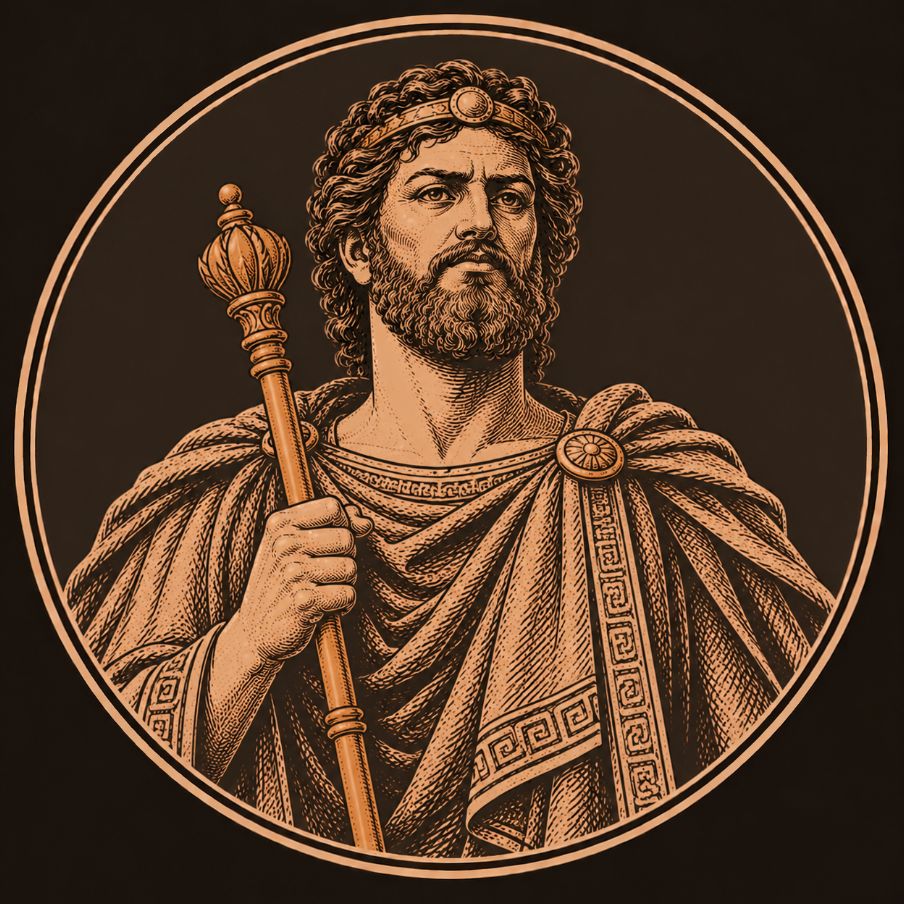
Minos is the legendary king of Crete, born to Zeus and Europa, whose broken vow to Poseidon produced the Minotaur and whose war on Athens produced the tribute Theseus ended.
The Cretan side of the feud. His broken vow to Poseidon produced the Minotaur, and his war over Androgeus produced the tribute. Homer's Odyssey also shows him in Hades with a golden scepter, settling the disputes of the dead.
-

Minotaur Character
The Minotaur is the half-man, half-bull monster imprisoned in the Labyrinth of Crete.
-
Aegeus Character
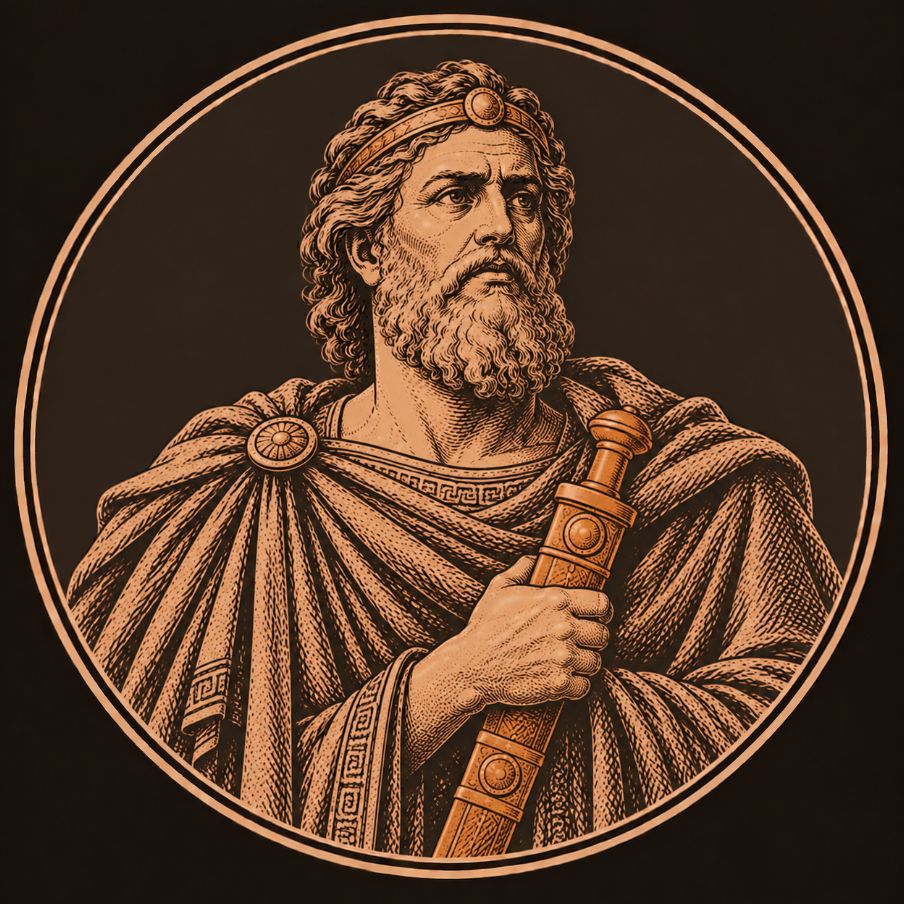
Aegeus is the king of Athens who fathered Theseus at Troezen, sheltered Medea, and killed himself when his son's ship came home under a black sail.
-

Theseus Character
Theseus is the legendary Athenian hero who slew the Minotaur in the Labyrinth of Crete.
-
Ariadne Character
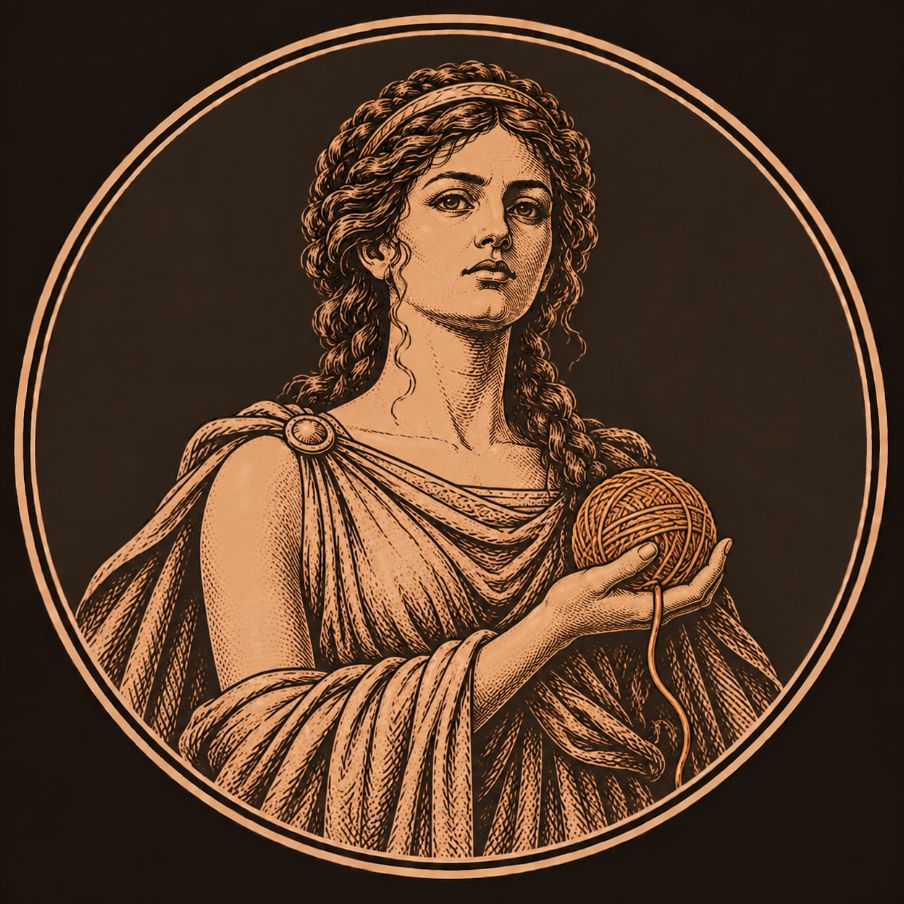
Ariadne is the Cretan princess who gave Theseus the thread out of the Labyrinth. The ancient sources disagree on whether she then died or became the immortal wife of Dionysus.
-
Phaedra Character
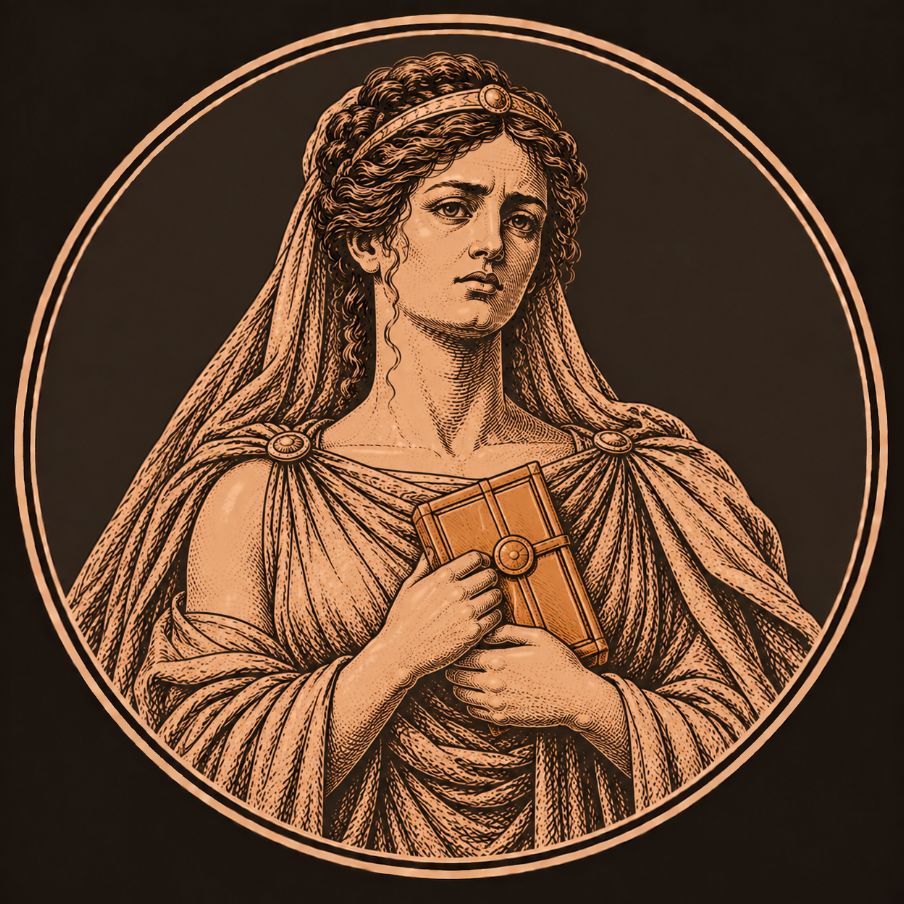
Phaedra is the Cretan princess and wife of Theseus whose love for her stepson Hippolytus ends in a false accusation and two deaths.
The aftermath. A daughter of Minos married to the son of Aegeus, she brings the Cretan house back into Athens, and her false charge against Hippolytus ends Theseus's line through his first son.
-
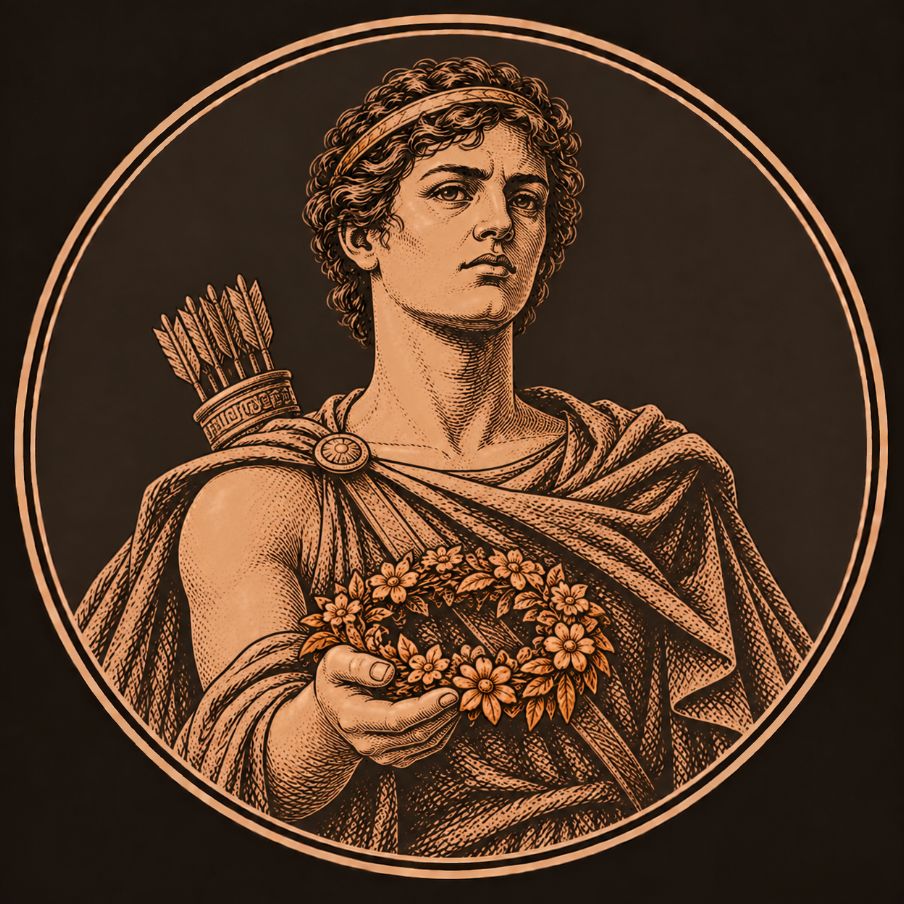
Hippolytus Character
Hippolytus is the son of Theseus and an Amazon, a chaste hunter devoted to Artemis who died dragged by his own horses after his father cursed him on a false charge.
The last victim of the feud. Theseus's son by an Amazon, he dies when Poseidon answers his father's curse with a bull from the sea, the same god whose bull began the cycle in Crete.
-
Daedalus and the Labyrinth Story
Daedalus's years on Crete run from exile to a manhunt. Banished from Athens for killing his nephew, he built the wooden cow, then the Labyrinth for the Minotaur. He gave Ariadne the thread, and Minos jailed him for it. After his flight, Minos chased him to Sicily with a spiral shell and died at the court of Cocalus.
The maze's maker and its weak point: in Apollodorus's Epitome, Daedalus suggests the thread that lets Theseus out, and Minos's hunt for him ends the Cretan story in Sicily.
How did Androgeus die?
The sources give several deaths, and each leaves Athens to blame. Apollodorus's Library says Androgeus, son of Minos, beat every competitor at the Panathenaic games, and Aegeus then sent him against the bull of Marathon, which killed him. The same passage records a second version, in which jealous rivals ambushed him on the road to games at Thebes. Pausanias makes the killer the Cretan bull itself, loose in Attica after Heracles freed it. Plutarch says only that Androgeus was treacherously murdered within the borders of Attica. Pausanias adds that Minos refused to believe the Athenians were innocent. He attacked with a fleet until they agreed to send seven maidens and seven boys for the Minotaur.
Apollodorus, Library 3.15.7; Pausanias, Description of Greece 1.27.10; Plutarch, Life of Theseus 15
How is the Minotaur related to the Cretan Bull?
In Apollodorus's main account the Cretan Bull is the Minotaur's father. Poseidon sent it from the sea for Minos to sacrifice. Minos kept it, and the god made Pasiphae fall in love with it; her child was the Minotaur. Apollodorus notes that not everyone agreed which bull Heracles later caught. Acusilaus said it was the bull that carried Europa for Zeus, and others said it was Poseidon's bull. Heracles brought it to Eurystheus and let it go, and it roamed to Marathon. Pausanias says it killed Androgeus there, the death that started the tribute. Theseus later caught it and sacrificed it. In that telling one animal fathers the Minotaur, kills Minos's son and falls to the Minotaur's killer.
Apollodorus, Library 3.1.3-3.1.4; Apollodorus, Library 2.5.7; Pausanias, Description of Greece 1.27.10
Did Ariadne die on Naxos?
The oldest source says she died, but on Dia, not Naxos. Homer's Odyssey says Artemis killed her on sea-girt Dia because of the witness of Dionysus, before Theseus could bring her to Athens. Hesiod's Theogony gives the opposite end: Dionysus made her his wife, and Zeus made her deathless and unageing. Apollodorus sets the parting on Naxos, where Dionysus fell in love with her and carried her off to Lemnos. Plutarch collects darker endings. Some said she hanged herself, and Paeon of Amathus said she died in childbirth on Cyprus. Some Naxians told of two Ariadnes. One married Dionysus on Naxos. A later one, deserted by Theseus, died on the island and was honored with mourning.
Homer, Odyssey 11.321-325; Hesiod, Theogony 947-949; Apollodorus, Epitome 1.9; Plutarch, Life of Theseus 20
What happened to Theseus after he killed the Minotaur?
He lost both people the voyage had tied him to. Apollodorus's Epitome says he sailed by night with Ariadne and the Athenian youths to Naxos, where Dionysus took her. Grieving for her, he forgot to hoist the white sail his father had asked for. Aegeus saw the black sail from the Acropolis, believed his son dead and threw himself down. Theseus became king of Athens and killed the fifty sons of Pallas, his cousins. Plutarch reports a different ending to the feud from the historian Clidemus. Minos's son Deucalion threatened the Athenian hostages, so Theseus sailed on Cnossus and killed him. He then made a treaty with Ariadne, who now ruled, binding Crete never again to make war on Athens.
Apollodorus, Epitome 1.9-1.11; Plutarch, Life of Theseus 19
Who did Theseus marry after Ariadne?
Ariadne's own sister Phaedra, so the house of Minos came back into Athens by marriage. Apollodorus's Epitome says Theseus received Phaedra from Deucalion, a son of Minos. Diodorus Siculus presents the match as the seal on an alliance between Crete and Athens. Apollodorus adds that Theseus's earlier Amazon wife came armed to the wedding and was killed. Phaedra bore Acamas and Demophon, then fell in love with Hippolytus, Theseus's son by the Amazon. When he refused her, she accused him of assault. Theseus prayed to Poseidon for his son's death, and a bull from the surf wrecked his chariot. Euripides has Phaedra hang herself before Theseus returns home. Apollodorus places her death after Hippolytus's.
Apollodorus, Epitome 1.17-1.19; Diodorus Siculus, Bibliotheca Historica 4.62; Euripides, Hippolytus 776-802
Where Accounts Differ
- Ariadne's end: death on Dia or immortal marriage
- Dia or Naxos
- how often Athens sent the tribute
- how Androgeus died
- which bull Heracles caught
- how the feud with Crete ended
- Ariadne's end is the central disagreement of the cycle. Homer's Odyssey (11.321-325) has Artemis kill her on Dia on the word of Dionysus. Hesiod's Theogony (947-949) makes her the wife of Dionysus, deathless and unageing. Apollodorus's Epitome (1.9) has Dionysus carry her from Naxos to Lemnos. Plutarch (Theseus 20) adds suicide by hanging, death in childbirth on Cyprus after Paeon of Amathus, and a Naxian tradition of two Ariadnes, the later of whom died on Naxos.
- Frazer's note to Apollodorus (Epitome 1.9) says later writers such as Diodorus identified Homer's Dia with Naxos, while a modern commentator placed it at a small island off the north coast of Crete. Whether Homer's Ariadne died on Naxos depends on that identification.
- How often the tribute sailed differs by source. Apollodorus's Library (3.15.8) says the Athenians sent seven youths and seven maidens every year. Plutarch (Theseus 15) says every nine years, as most writers agree, and Ovid's Metamorphoses (8.152-182) speaks of victims sent every ninth year.
- Androgeus's death is told several ways. Apollodorus (Library 3.15.7) has Aegeus send him against the bull of Marathon, or has jealous rivals ambush him on the road to Thebes. Pausanias (1.27.10) names the Cretan bull loose in Attica as the killer. Plutarch (Theseus 15) says only that he was treacherously murdered in Attica.
- The bull Heracles caught is identified two ways. Apollodorus (Library 2.5.7) reports Acusilaus's view that it was the bull that carried Europa, and the view of others that it was the bull Poseidon sent to Minos, the father of the Minotaur.
- How the feud with Crete ended differs. Apollodorus's Epitome (1.17) has Theseus receive Phaedra in marriage from Deucalion, son of Minos. Plutarch (Theseus 19) reports Clidemus, for whom Theseus sailed on Cnossus, killed Deucalion and made a treaty with Ariadne as ruler of Crete.
- Plutarch is cited from the Dryden-Clough translation held in the site's source library, with chapter numbers following the member pages, which were checked against Bernadotte Perrin's Loeb translation.
Related Topics
Related Terms
Sources
- Homer, Odyssey 11.321-325
- Homer, Odyssey 11.568-571
- Hesiod, Theogony 947-949
- Apollodorus, Library 2.5.7
- Apollodorus, Library 3.1.3-3.1.4
- Apollodorus, Library 3.15.7
- Apollodorus, Library 3.15.8
- Apollodorus, Epitome 1.5-1.6
- Apollodorus, Epitome 1.7-1.10
- Apollodorus, Epitome 1.11
- Apollodorus, Epitome 1.17
- Apollodorus, Epitome 1.18-1.19
- Catullus, Carmina 64.52-264
- Ovid, Metamorphoses 8.152-182
- Euripides, Hippolytus 776-802
- Pausanias, Description of Greece 1.27.10
- Plutarch, Life of Theseus 15
- Plutarch, Life of Theseus 19
- Plutarch, Life of Theseus 20
- Plutarch, Life of Theseus 22
- Diodorus Siculus, Bibliotheca Historica 4.62
- Timothy Gantz, Early Greek Myth (1993)
- J. G. Frazer, Apollodorus: The Library (Loeb, 1921), notes to Epitome 1.9-1.10