The Heracles Cycle
The Heracles Cycle follows one hero from birth to godhood. Hera delays his birth at Thebes so that Eurystheus becomes king, and later drives him mad. His penance is the service to Eurystheus and the labors. After them come a second madness, slavery to Omphale, the sack of Troy and marriage to Deianira, whose poisoned tunic kills him. From the pyre on Mount Oeta he rises to Olympus.
Sections on this page
Overview
The Heracles Cycle is the whole life of Heracles, from a birth Hera tried to spoil to a place among the gods. Homer's Iliad already knows how it began. Hera held back Alcmene's labor at Thebes and brought Eurystheus into the world first, so that he, not Heracles, became lord of the Argives. Apollodorus's Library gives the fullest connected sequence, and this page follows it. When the child was eight months old, Hera sent two serpents to his bed, and he strangled them. As a young man he defeated the Minyans of Orchomenus for Thebes and won Megara, daughter of King Creon, as a prize of valor.
The middle of the cycle is the service to Eurystheus. Hera drove Heracles mad, he killed his children, and the Pythia at Delphi sent him to Tiryns to perform labors for his cousin. The labors themselves, one by one and in order, are told in The Twelve Labors of Heracles. Each opponent also has its own page, from the Nemean Lion and the Hydra to Cerberus, and the member list below follows Apollodorus's order.
The labors did not end his troubles. Apollodorus says he won an archery contest for Iole of Oechalia but was refused her, then killed her brother Iphitus in a second madness. For that he was sold as a slave to Omphale, queen of Lydia. He sacked Troy, wrestled the river Achelous for Deianira, and shot the centaur Nessus when he tried to violate her. The dying centaur's blood, smeared on a tunic, later destroyed Heracles, the death Sophocles stages in his Trachiniae. Hesiod and Apollodorus carry the story one step further, to Olympus, marriage to Hebe and apotheosis.
In This Topic (13)
-

Heracles Character
Heracles is the greatest hero of Greek mythology, famous for his extraordinary strength and twelve labors.
-
The Twelve Labors of Heracles Story
Driven mad by Hera and having killed his own wife and children, Heracles consulted the Oracle at Delphi and was commanded to serve King Eurystheus and complete twelve seemingly impossible labors as penance, feats that took him across the known world and down into the underworld itself.
-

Nemean Lion Character
The Nemean Lion is the invulnerable-hided lion Heracles killed for the first of his twelve labors.
-

Hydra Character
The Hydra is a many-headed serpentine monster whose heads regenerated when cut off.
-

Ceryneian Hind Character
The Ceryneian Hind is the swift, golden-horned deer sacred to Artemis that Heracles chased for a year and captured alive as his third labor.
-

Erymanthian Boar Character
The Erymanthian Boar is the ferocious wild boar of Mount Erymanthus that Heracles trapped alive in deep snow as his fourth labor.
-

Stymphalian Birds Character
The Stymphalian Birds are the man-eating, bronze-beaked birds Heracles drove from Lake Stymphalus as his sixth labor.
-

Cretan Bull Character
The Cretan Bull is the ferocious bull that fathered the Minotaur and was later slain by Theseus at Marathon.
The seventh labor, and the same bull that fathered the Minotaur. After Eurystheus released it, Theseus killed it at Marathon, so it links this cycle to the Cretan and Athenian myths.
-

Mares of Diomedes Character
The Mares of Diomedes are the man-eating horses of a Thracian king that Heracles tamed and delivered to Eurystheus as his eighth labor.
-
Hippolyta Character
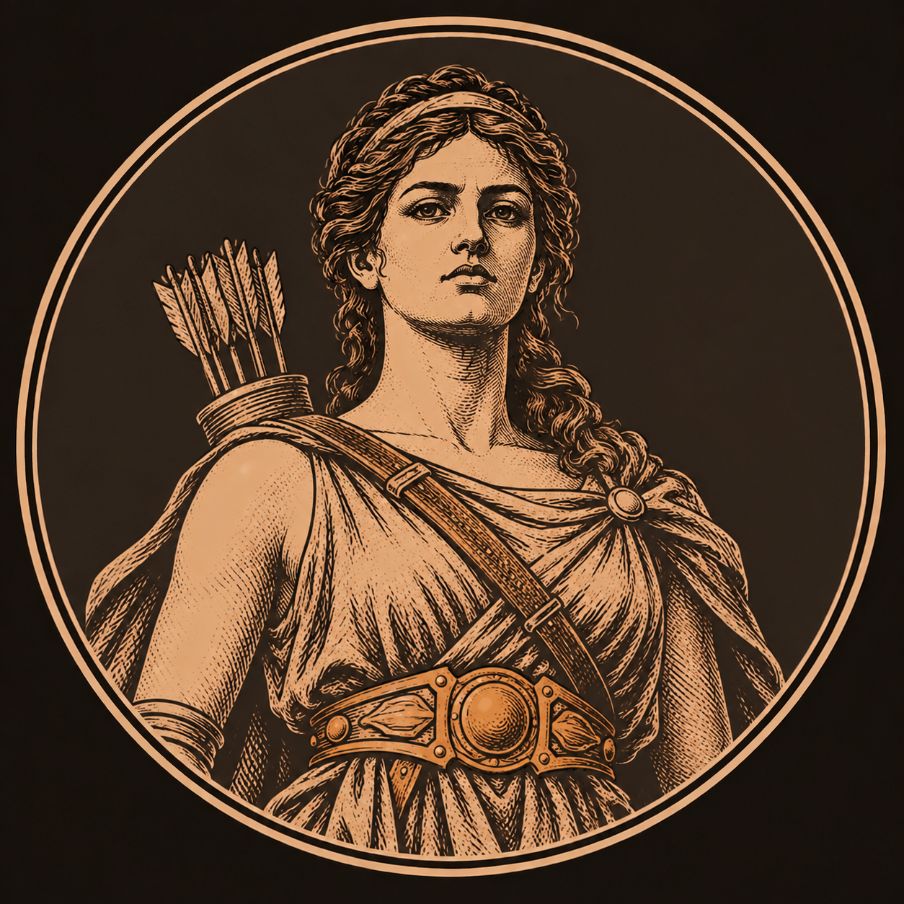
Hippolyta is the Amazon queen whose war-belt Heracles fetched as his ninth labor, and the ancient sources disagree about her death, her marriage, and even her name.
The ninth labor was her belt, the belt of Ares, which Eurystheus's daughter Admete wanted. Her page also covers the separate Athenian tradition that made her the wife of Theseus.
-

Geryon Character
Geryon is the three-bodied giant whose cattle Heracles stole as the tenth of his twelve labors.
-

Ladon Character
Ladon is the hundred-headed serpent that guarded the golden apples of the Hesperides.
The guardian of the golden apples in the eleventh labor. Apollodorus calls it an immortal dragon with a hundred heads and gives it no name; the name Ladon comes from Apollonius of Rhodes.
-
Cerberus Character
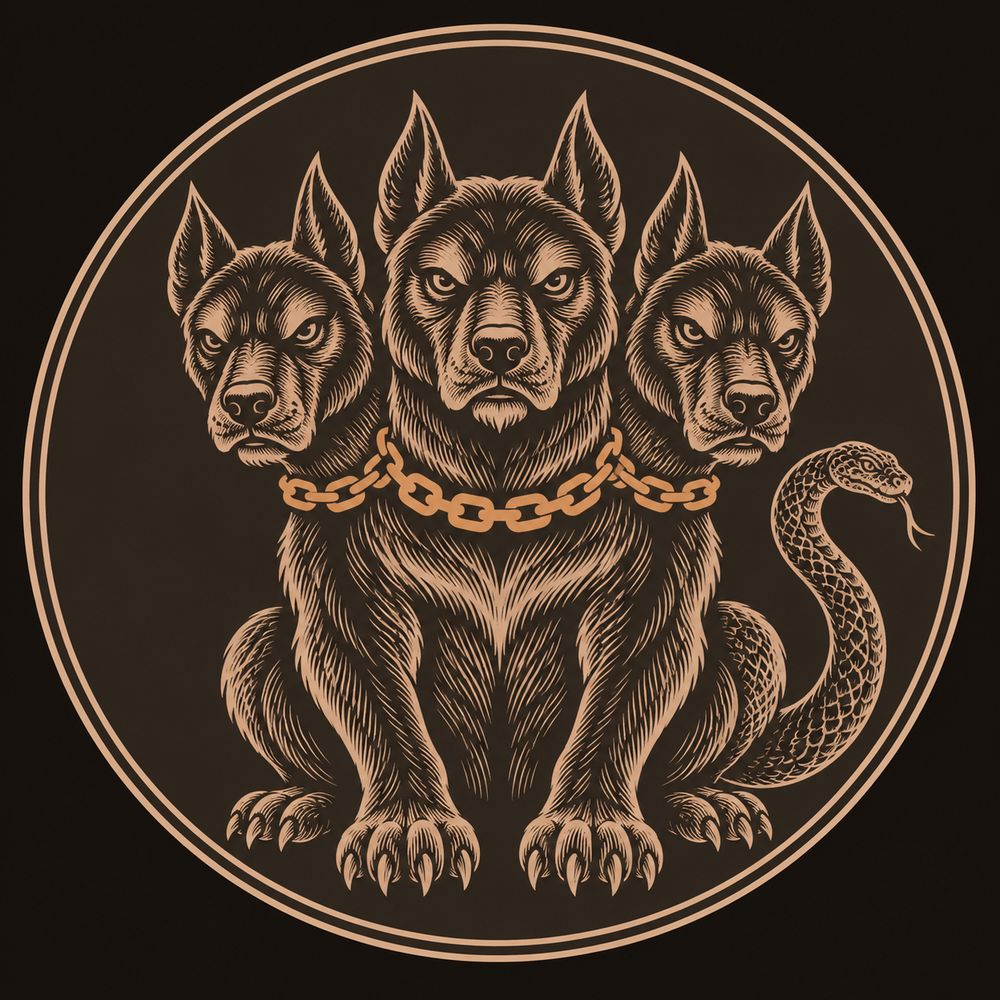
Cerberus is the monstrous three-headed dog that guards the entrance to the Greek underworld.
The last labor in Apollodorus, where Heracles brings the hound up from Hades and shows it to Eurystheus. Cerberus also belongs to the Greek underworld cluster as the guard at its gate.
Where was Heracles born?
At Thebes, though his family came from the Argolid. Homer's Iliad sets his birth in Thebes, where Alcmene was about to bring forth the mighty Heracles. Hesiod's Theogony calls him Heracles the Theban-born. Apollodorus explains why a hero of Perseus's line was born there. Amphitryon, who was to marry Alcmene, killed her father Electryon, king of Mycenae, by accident and was banished, and the couple went to Thebes. Heracles's claim to the Argolid shapes the rest of his story. In Euripides's Heracles, Amphitryon says his son undertook the labors to win the family's return to Argos, the land from which Amphitryon was exiled.
Homer, Iliad 19.95-133; Hesiod, Theogony 526-532; Apollodorus, Library 2.4.6
Why did Hera hate Hercules?
The sources give jealousy as the motive: Heracles was the son of Zeus by the mortal Alcmene. Her hostility starts before his birth. In Homer's Iliad, Zeus swears that a man of his blood born that day will rule those around him. Hera holds back Alcmene's labor and brings Eurystheus into the world early, so the future taskmaster becomes lord of the Argives. Zeus, Homer says, groaned whenever he saw his son toiling under Eurystheus's tasks. Hesiod's Theogony says Hera raised the Hydra out of anger at Heracles, and reared the Nemean Lion too. Diodorus Siculus adds a bargain: Eurystheus would rule, and Heracles would win immortality after twelve labors.
Homer, Iliad 19.95-133; Hesiod, Theogony 313-318
What happened to Hercules after finishing the 12 labors?
More suffering, and then his death. Apollodorus says he went back to Thebes and gave Megara to his nephew Iolaus. He won an archery contest for Iole, daughter of Eurytus, but her father refused her, fearing he would kill his children again. When Iphitus, her brother, came to him about stolen cattle, Heracles went mad again and threw him from the walls of Tiryns. To be cured he was sold to Omphale, queen of Lydia. Afterward he sacked Troy, married Deianira and settled at Trachis. The cycle ends when Deianira, hoping to win back his love from Iole, sends him a tunic smeared with Nessus's blood. Rome's Hercules adds an Italian episode, the killing of Cacus (Livy, Ab Urbe Condita 1.7.3-15), compared in Heracles vs Hercules.
Apollodorus, Library 2.6.1-2.6.3; Apollodorus, Library 2.7.7
Who were Heracles' wives?
The ancient sources give him three wives in succession. The first was Megara, daughter of King Creon of Thebes, whom Apollodorus says he received as a prize for defeating the Minyans. Their children died in his madness, and after the labors he gave Megara to his nephew Iolaus. The second was Deianira, daughter of Oeneus of Calydon, whom he won by wrestling the river Achelous. Her tunic, smeared with Nessus's blood, killed him. The third was the goddess Hebe, daughter of Zeus and Hera, whom he married on Olympus once he was immortal. Omphale, queen of Lydia, was his owner in Apollodorus, not his wife.
Apollodorus, Library 2.4.11; Apollodorus, Library 2.7.5; Hesiod, Theogony 950-955
Was Hercules classified as a demigod?
The Greeks classed him as both a hero and a god, which is why the question has no single answer. Pindar calls him a hero god in his third Nemean ode. Herodotus says the Greeks who did best kept two cults of Heracles, sacrificing to one as an immortal Olympian and bringing offerings to the other as a dead hero. The Odyssey already splits him in the same way. Odysseus sees his phantom among the dead, while Heracles himself feasts with the immortal gods and has Hebe as his wife. Apollodorus says that as the pyre on Oeta burned, a cloud carried him up to heaven.
Pindar, Nemean Odes 3.20-26; Herodotus, Histories 2.44; Homer, Odyssey 11.601-626
Where Accounts Differ
- madness-before-or-after-the-labors
- purification-or-amphitryons-recall-as-motive
- megara-spared-or-killed
- one-or-three-years-with-omphale
- death-on-oeta-with-or-without-ascent
- Where the madness falls in his life differs by source. Apollodorus (Library 2.4.12) places it before the labors, which are its penance. Diodorus Siculus (Library of History, Book 4) places it after the oracle has ordered the labors, while Heracles despairs at serving Eurystheus. Euripides's Heracles (822-842) places it after all the labors are finished, when Iris and Madness come for him at Thebes.
- The reason for the service differs. Apollodorus (2.4.12) makes it purification for killing his children. In Euripides's Heracles (17-25), Amphitryon says Heracles offered Eurystheus the labors as the price of Amphitryon's return from exile to Argos, whether Hera goaded him to it or fate. Diodorus Siculus has Zeus persuade Hera, at the birth, that Heracles would serve Eurystheus for twelve labors and then become immortal.
- Megara's fate differs by source. Apollodorus (2.4.12) has Heracles throw only his children by her into the fire, and after the labors (2.6.1) he gives Megara to Iolaus.
- The length of his slavery to Omphale differs. Sophocles's Trachiniae (250-253) says he spent a whole year as her bought slave. Apollodorus (2.6.2) says the oracle ordered him to be sold and serve for three years.
- The end of his life is told with and without the ascent. Sophocles's Trachiniae (1191-1199) ends with Heracles ordering his son to burn him on Oeta. Apollodorus (2.7.7) adds a cloud that carried him up to heaven, reconciliation with Hera and marriage to Hebe, which Hesiod's Theogony (950-955) and Homer's Odyssey (11.601-626) already know.
- Diodorus Siculus is named in prose only. His Library of History is not a registered, line-checkable source on this site, so no passage number from it is cited. The claims here were read in C. H. Oldfather's Loeb translation of Book 4.
Related Topics
Related Terms
Referenced By
Sources
- Homer, Iliad 19.95-133
- Homer, Odyssey 11.601-626
- Hesiod, Theogony 313-318
- Hesiod, Theogony 326-332
- Hesiod, Theogony 526-532
- Hesiod, Theogony 950-955
- Pindar, Nemean Odes 3.20-26
- Herodotus, Histories 2.44
- Sophocles, Trachiniae 250-253
- Sophocles, Trachiniae 555-577
- Sophocles, Trachiniae 821-830
- Sophocles, Trachiniae 1191-1199
- Euripides, Heracles 17-25
- Euripides, Heracles 822-842
- Euripides, Alcestis 481-499
- Apollodorus, Library 2.4.6
- Apollodorus, Library 2.4.8
- Apollodorus, Library 2.4.11
- Apollodorus, Library 2.4.12
- Apollodorus, Library 2.5.11
- Apollodorus, Library 2.6.1
- Apollodorus, Library 2.6.2
- Apollodorus, Library 2.6.3
- Apollodorus, Library 2.6.4
- Apollodorus, Library 2.7.5
- Apollodorus, Library 2.7.6
- Apollodorus, Library 2.7.7
- Timothy Gantz, Early Greek Myth (1993)
- Emma Stafford, Herakles (2012)
- J. G. Frazer, Apollodorus: The Library (Loeb, 1921), notes to 2.4-2.7
- C. H. Oldfather, Diodorus of Sicily, Library of History, Book IV (Loeb, 1935)