The Perseus Cycle
The Perseus Cycle follows one family across three generations. An oracle warns Acrisius of Argos that his daughter's son will kill him, so he locks Danae away and later casts her and the infant Perseus into the sea. On Seriphos, Polydectes sends Perseus for the Gorgon's head. He returns with Andromeda, kills Acrisius by accident with a discus, and trades Argos for Tiryns.
Sections on this page
Overview
The Perseus Cycle is a family story as much as a monster story, and it begins before Perseus is born. Apollodorus's Library gives the fullest connected account, and this page follows it. Acrisius, king of Argos, asked the oracle how he might have sons. The god answered that his daughter would bear a son who would kill him. Acrisius shut Danae in a bronze chamber under the ground, but Zeus reached her as a stream of gold. Acrisius refused to believe that Zeus was the father. He put mother and child in a chest and cast it into the sea. It washed ashore on Seriphos, where Dictys took the boy in and raised him.
The middle of the cycle is an errand meant to fail. Polydectes, king of Seriphos and brother of Dictys, wanted Danae and needed her grown son out of the way. Perseus boasted that he would not refuse even the Gorgon's head, and Polydectes held him to it. The road ran through the Graeae, whose single eye Perseus seized until they showed him the way to the nymphs. The beheading of Medusa and the gifts of the gods are told in Perseus and Medusa. Hesiod's Shield of Heracles pictures the flight that followed: Perseus on winged sandals, the head in a silver bag on his back, and the other Gorgons rushing after him.
The return closes the circle the oracle opened. In Ethiopia Perseus found Andromeda bound to a rock, killed the sea monster and married her. On Seriphos he turned Polydectes and his friends to stone and made Dictys king. Then he went to Argos to see his grandfather. Acrisius fled to Larissa in fear of the oracle, and there a discus thrown by Perseus struck and killed him. Ashamed to take the inheritance of a man he had killed, Perseus gave up Argos for Tiryns. His granddaughter Alcmena became the mother of Heracles, whose life is followed in The Heracles Cycle.
In This Topic (7)
-
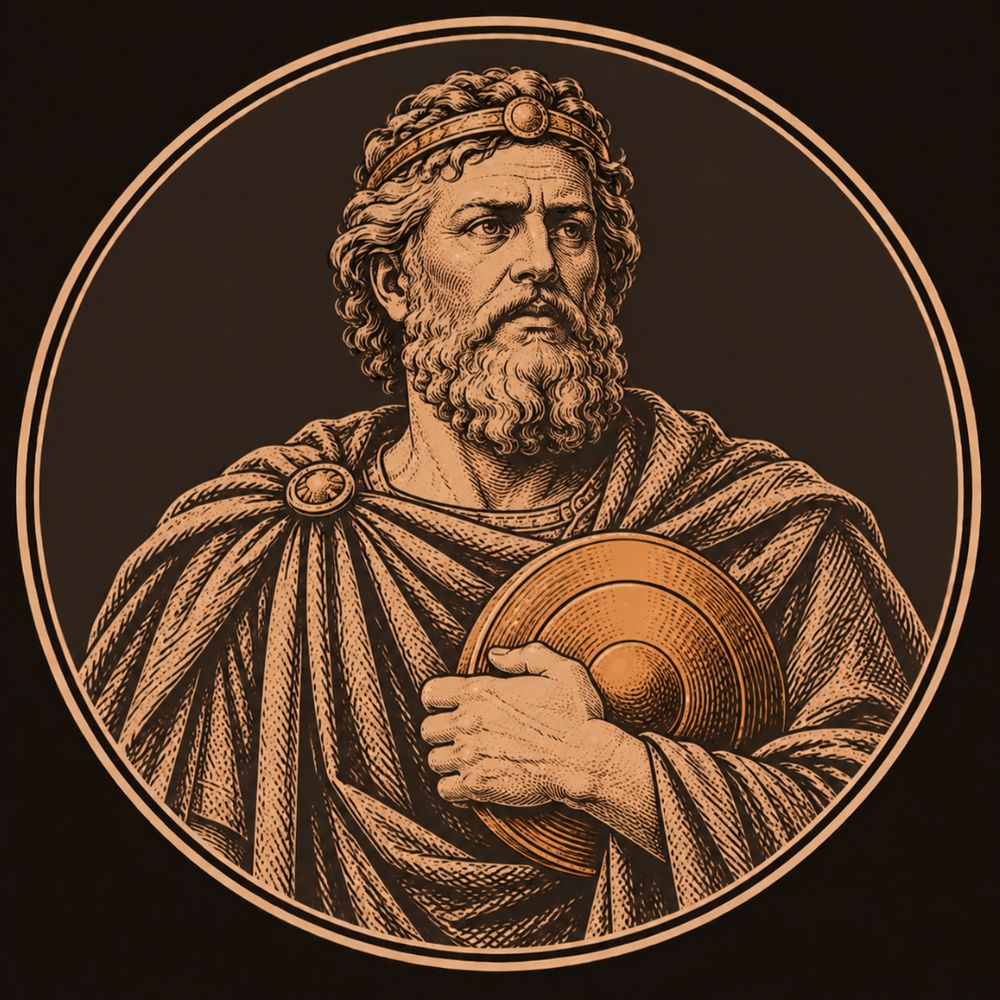
Acrisius Character
Acrisius is the king of Argos who was told that his daughter's son would kill him. Every step he took to stop it led to his death by his grandson Perseus's discus.
The cycle opens with his oracle and closes with his death. Every precaution he took, the bronze chamber and the chest at sea, led to the discus at Larissa that fulfilled it.
-

Danaë Character
Danaë is the mortal princess of Argos whom Zeus visited as a shower of gold, becoming by him the mother of the hero Perseus.
-

Perseus Character
Perseus is the Greek hero who slew the Gorgon Medusa and rescued Andromeda.
-
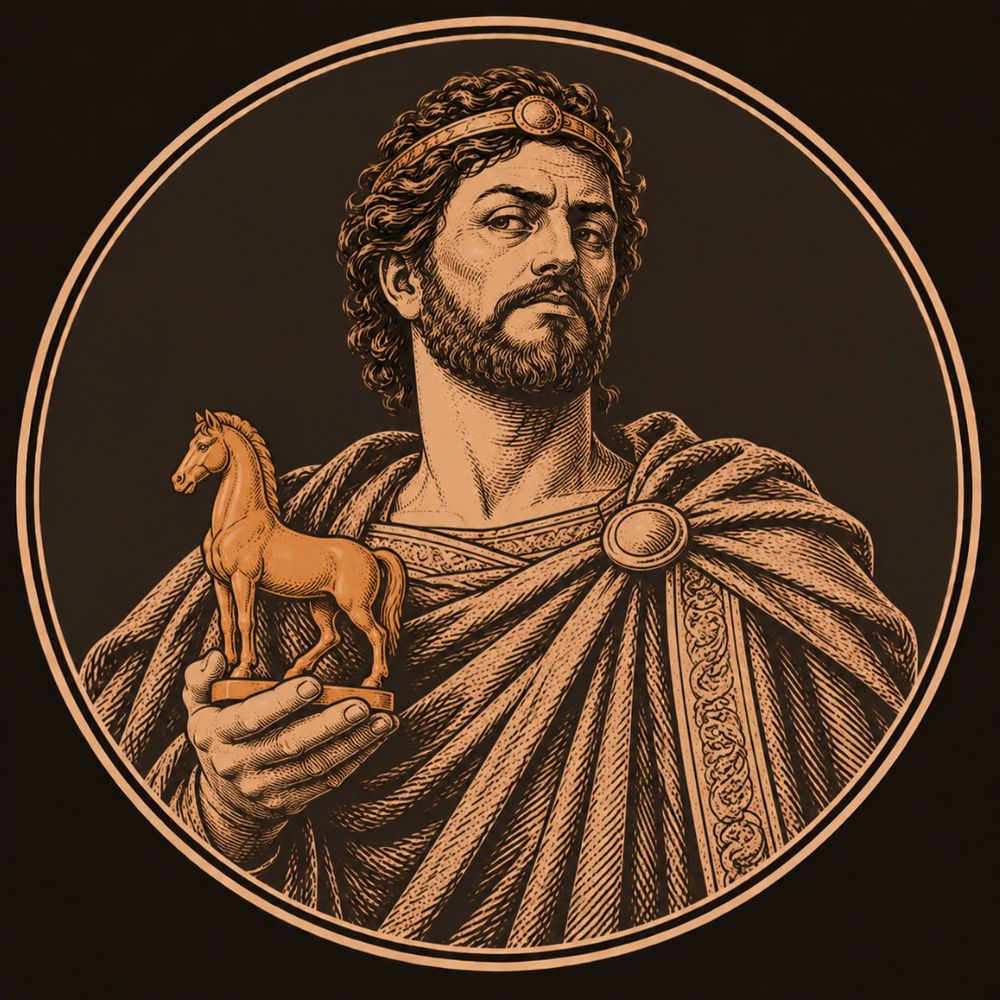
Polydectes Character
Polydectes is the king of Seriphos who sent Perseus to fetch the Gorgon's head so he could have Danaë, and who was turned to stone when Perseus brought it back.
The king who sets the errand to rid himself of Perseus and win Danae. His petrification on Seriphos is the first act of the homecoming.
-
Graeae Term
The Graeae, also called the Phorcides after their father Phorcys, are ancient sister-spirits, gray-haired from birth, who share a single eye and a single tooth between them, passing the pair from one sister to another in turn. Apollodorus names three of them, Enyo, Pephredo, and Deino, daughters of the sea-god Phorcys and his sister-wife Ceto, which makes them close kin to the Gorgons the same union produced. Their best-known appearance is as an obstacle Perseus overcomes on his way to killing Medusa. Needing to find the nymphs who hold the winged sandals, the cap of invisibility, and the wallet he will need for the quest, Perseus tracks down the Graeae and seizes their single shared eye and tooth the moment one sister passes them to another. He refuses to return either one unless the sisters tell him where the nymphs live; once they give him the directions, he makes good on the trade and hands the eye and tooth back. The encounter turns entirely on the sisters' physical dependence on each other, since none of them can see or bite without borrowing what the group owns collectively. Aeschylus's Prometheus Bound gives an independent account of the same figures, describing them as swan-shaped ancient maidens who share one eye and one tooth among them, placed near their Gorgon sisters in Prometheus's warning to Io about the dangerous country she is about to cross. That the detail of the single shared eye and tooth appears in both a genealogical mythographer and a tragedian, in sources otherwise unconnected to each other, is part of why it stands as the Graeae's defining trait across the tradition rather than a detail unique to Perseus's story. The ancient sources do not agree on how many Graeae there were. Hesiod's Theogony, older than Apollodorus's Library, names only two, Pemphredo and Enyo, calling them "fair-cheeked" and gray from birth, and gives no third sister or third name at all. Apollodorus's later account of three sisters, with the added name Deino, is the version that eventually became standard and the one the Perseus story is normally told with, but Hesiod's two-sister count is the earlier and, on its own terms, equally authoritative source for the figures.
Sisters of the Gorgons and the first obstacle of the quest. Perseus takes their shared eye and tooth to learn the way to the nymphs who hold the winged sandals, the wallet and the cap of Hades.
-

Medusa Character
Medusa is the mortal Gorgon whose gaze turned anyone who looked upon her to stone.
-
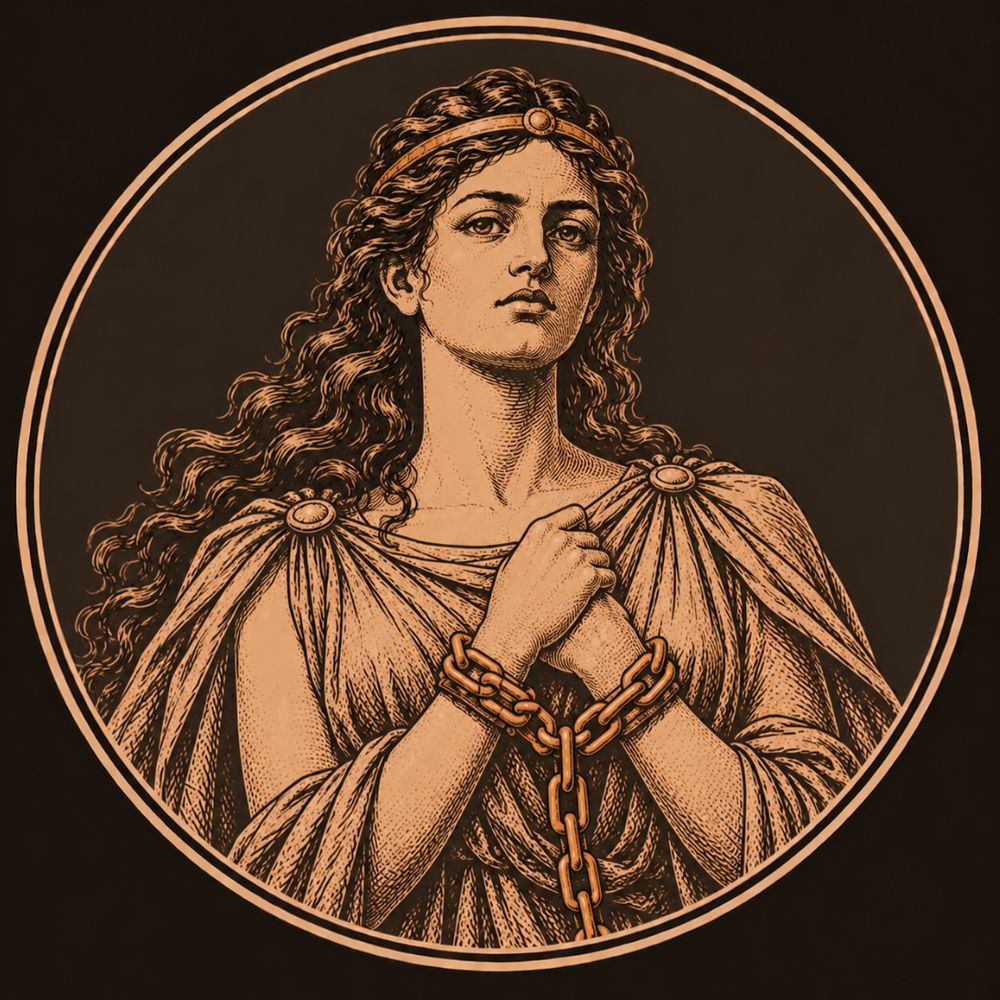
Andromeda Character
Andromeda is the Ethiopian princess chained to a sea rock to appease a monster, rescued by Perseus and made his wife and the mother of his line.
What is the order of events in the Perseus myth?
Apollodorus's Library gives the fullest sequence. First comes the oracle to Acrisius and the bronze chamber where Zeus reached Danae. Then the chest at sea, and the landing on Seriphos, where Dictys raised Perseus. Polydectes demands the Gorgon's head. Perseus forces the Graeae to direct him to the nymphs, takes the winged sandals, the wallet and the cap of Hades, and beheads Medusa. Ovid's Metamorphoses adds a stop in the far west, where Perseus turns the Titan Atlas into a mountain. In Ethiopia he rescues Andromeda and turns her former suitor Phineus to stone. On Seriphos he petrifies Polydectes and gives the head to Athena. Last, his discus kills Acrisius at Larissa, and he trades Argos for Tiryns.
Apollodorus, Library 2.4.1-2.4.4; Ovid, Metamorphoses 4.604-662
Was Medusa always a monster?
The sources disagree, and the oldest tell of no transformation. Hesiod's Theogony lists Medusa among the Gorgons born to Phorcys and Ceto. She differs from her sisters only in being mortal, and Poseidon lay with her in a meadow. Pindar's twelfth Pythian gives the Gorgons snaky hair yet calls Medusa beautiful. Apollodorus describes all three with scaly heads, tusks and golden wings, then reports a variant: some said she died because she claimed to rival Athena in beauty. The transformation comes from Ovid's Metamorphoses. There Perseus explains that Medusa was a famous beauty, that Neptune violated her in Minerva's temple, and that the goddess punished her by turning her hair to snakes. Pausanias, rationalizing, makes her a Libyan queen killed in battle.
Hesiod, Theogony 270-283; Pindar, Pythian Ode 12; Apollodorus, Library 2.4.2-2.4.3; Ovid, Metamorphoses 4.706-803; Pausanias, Description of Greece 2.21.5
Why did Perseus not become king of Argos?
Because he had killed the king. Apollodorus says Perseus came to Argos with Danae and Andromeda to see Acrisius, who fled to Larissa in fear of the oracle. At funeral games there, Perseus's discus struck Acrisius on the foot and killed him. Perseus buried him outside the city. Ashamed to claim the inheritance of a man who died by his hand, he went to Megapenthes, son of Proetus, at Tiryns and exchanged kingdoms with him. Megapenthes ruled the Argives, and Perseus ruled Tiryns and fortified Midea and Mycenae. Pausanias tells the same exchange but says Perseus founded Mycenae, naming it for the cap of his scabbard or for a mushroom.
Apollodorus, Library 2.4.4; Pausanias, Description of Greece 2.16.2-2.16.3
Is Hercules a descendant of Perseus?
Yes, on both sides of his household, and the two heroes are also half-brothers as sons of Zeus. Apollodorus lists the sons Andromeda bore Perseus. Perses stayed with Cepheus in Ethiopia and was said to be the ancestor of the Persian kings. At Mycenae came Alcaeus, Sthenelus, Heleus, Mestor and Electryon. Electryon's daughter Alcmena was the mother of Heracles, and Alcaeus's son Amphitryon was her husband. Sthenelus fathered Eurystheus. So the hero of the labors and the king who imposed them were both Perseus's great-grandsons. Apollodorus explains why that mattered: Zeus declared that the descendant of Perseus born that day would rule Mycenae, and Hera made sure it was Eurystheus.
Apollodorus, Library 2.4.5
Where Accounts Differ
- medusa-born-a-gorgon-or-transformed
- medusa-rationalized-as-libyan-queen
- perseus-rules-tiryns-or-founds-mycenae
- acrisius-flees-or-is-sought-out-at-larissa
- Medusa's nature differs by source. Hesiod's Theogony (270-283) makes her one of the Gorgons born to Phorcys and Ceto, set apart only by being mortal. Apollodorus (2.4.2) gives all three Gorgons the same monstrous form and reports (2.4.3) that some said she died for claiming to rival Athena in beauty. Ovid's Metamorphoses, in the closing lines of Book 4, makes her a beautiful woman whose hair Minerva turned to snakes after Neptune violated her in the goddess's temple.
- Pausanias (Description of Greece 2.21.5-2.21.6) sets the miraculous aside. He reports an Argive account in which Medusa was a queen by Lake Tritonis killed at night in a war with Perseus, and the view of the Carthaginian Procles that she was a wild woman of the Libyan desert.
- Perseus's kingdom after the exchange differs. Apollodorus (2.4.4) has him rule Tiryns and fortify Midea and Mycenae. Pausanias (2.16.3) has him found Mycenae and gives two stories for the name.
- The meeting of Acrisius and Perseus at Larissa is told two ways. Apollodorus (2.4.4) has Acrisius flee there in fear of the oracle and die at funeral games held by Teutamides. Pausanias (2.16.2) has Perseus seek him out to greet him and Acrisius step into the path of the discus.
- Ovid's Metamorphoses is cited here by the passage units Perseus serves, which run longer than the episodes themselves. The Atlas episode falls within 4.604-662, and Medusa's transformation within the unit beginning at 4.706, in lines 790-803 of the standard numbering.
Related Topics
Related Terms
Sources
- Hesiod, Theogony 270-283
- Hesiod, Shield of Heracles 216-237
- Pindar, Pythian Ode 12
- Apollodorus, Library 2.4.1
- Apollodorus, Library 2.4.2
- Apollodorus, Library 2.4.3
- Apollodorus, Library 2.4.4
- Apollodorus, Library 2.4.5
- Ovid, Metamorphoses 4.604-662
- Ovid, Metamorphoses 4.706-803
- Pausanias, Description of Greece 2.16.2
- Pausanias, Description of Greece 2.16.3
- Pausanias, Description of Greece 2.21.5
- Pausanias, Description of Greece 2.21.6
- Timothy Gantz, Early Greek Myth (1993)
- J. G. Frazer, Apollodorus: The Library (Loeb, 1921), notes to 2.4