Heracles
Heracles is the son of Zeus and the mortal Alcmene, and the most celebrated hero in Greek myth. Driven mad by Hera, he was forced to perform twelve impossible labors as penance, ultimately earning immortality and a place among the gods.

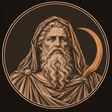
Heracles, the greatest Greek hero
Generated by AI from this page's own facts, not an ancient image or evidence of anything. How this site uses generated images
Sections on this page
Greek vs Roman: Heracles vs. Hercules → See how Hercules differs.
What does the name "Heracles" mean? →
See Heracles in the Greek family tree. Looking for a name of your own? Try the mythological name generator.
Core Myth
Heracles was the son of Zeus and the mortal woman Alcmene. From birth, he was persecuted by Hera, who sent serpents to his cradle - the infant strangled them with his bare hands. The name Heracles joins Hera with kleos, 'glory', and ancient sources recognized the irony of a hero called 'Glory of Hera' whom she persecuted. After Hera drove him to madness, causing him to kill his wife and children, the Pythia, Apollo's oracle at Delphi, instructed him to serve King Eurystheus and perform labors as penance. Apollodorus records that ten labors were originally set, but Eurystheus disqualified two - the Hydra, because Heracles had help from his nephew Iolaus, and the Augean stables, because Heracles accepted payment for the work - bringing the total to twelve. Apollodorus gives the twelve labors in a fixed order. The Nemean Lion came first, then the Lernaean Hydra, the Ceryneian Hind, and the Erymanthian Boar. Next came the Augean stables, the Stymphalian Birds, the Cretan Bull, and the mares of Diomedes. The last four were the belt of Hippolyta, the cattle of Geryon, the golden apples guarded by a hundred-headed dragon, and Cerberus from the underworld. Apollodorus says the souls of the dead fled from him there, all but Meleager and the Gorgon Medusa. Heracles also joined the Argonauts, freed Prometheus, and was later enslaved for a year to Omphale, queen of Lydia, as further penance for another act of violence. Apollodorus says an oracle required a mortal ally against the Giants, so Zeus summoned him, through Athena, to the Gigantomachy.
Why did Heracles have to perform the Twelve Labors?
Hera drove him into a fit of madness in which he killed his own wife Megara and their children. Once sane again, Heracles consulted the Oracle at Delphi to learn how to atone, and was told to serve his cousin King Eurystheus of Tiryns for a period of years, performing whatever tasks Eurystheus set him. Those tasks became the Labors.
Apollodorus, Library 2.4.12
Why were there twelve labors instead of the original ten?
Eurystheus set ten labors at first, but refused to count two of them toward the total: the Lernaean Hydra, because Heracles had help from his nephew Iolaus in burning the stumps of its heads, and the Augean stables, because Heracles had arranged to be paid for clearing them. Two replacement labors were added, bringing the count to twelve.
Apollodorus, Library 2.5.11
How did Heracles die?
His wife Deianira, tricked by the dying centaur Nessus, sent him a shirt she believed was a love charm but which was in fact poisoned with Nessus's blood, tainted by the venom of the Hydra from an earlier arrow wound. The poison burned into Heracles's flesh, and in unbearable pain he had a pyre built on Mount Oeta and had himself burned alive rather than continue suffering. Ovid says he had Philoctetes light the pyre and gave him his bow and quiver in return.
Ovid, Metamorphoses 9.134-272
Was Heracles ever enslaved?
Yes. As penance for murdering his friend Iphitus in another fit of rage, Heracles was sold into slavery for a year to Omphale, queen of Lydia. Later tradition made this episode into a comic reversal, dressing Heracles in women's clothes to spin wool while Omphale wore his lion skin and carried his club.
Apollodorus, Library 2.6.2-2.6.3
What happened to Heracles after he died?
Hesiod records that Zeus took him up from the pyre to Olympus, where he was reconciled with Hera and married to Hebe, the goddess of youth. This made Heracles the rare figure in Greek myth who moves from a mortal life of suffering to full and permanent divinity, rather than remaining a hero honored only after death.
Hesiod, Theogony 950-955
Did Heracles really found the Olympic Games?
Pindar credits him with establishing the Games at Elis, holding them to mark his victory over King Augeas, whose stables Heracles had cleared as one of the Labors and who had then refused to pay the agreed price. The claim is a later Panhellenic tradition rather than a fact any source can verify, but it was widely repeated to give the Games a heroic founder.
Pindar, Olympian Ode 10
Later Traditions
In Roman religion, Heracles was worshipped as Hercules, whose Roman cult includes the killing of Cacus and the Ara Maxima (Livy, Ab Urbe Condita 1.7.3-15; see Heracles vs Hercules), and became one of the most popular mythological figures. His labors were widely interpreted as allegories for the triumph of virtue over adversity. Pindar credits him with founding the Olympic Games at Elis after his campaign against King Augeas. Hesiod records his end without dwelling on the manner of his death: consumed on a pyre, he was taken up by Zeus, reconciled with Hera, and married to Hebe, goddess of youth, becoming the one figure in Greek myth to move from mortal suffering to full immortality among the Olympians.

Tetradrachm (Coin) Depicting the Hero Herakles - Amfípolis, 336-323 BCE, Silver
The Art Institute of Chicago, Chicago, IL, 1920.709. CC0
Lineage
See the full family tree3 recorded relations, each with the ancient line behind it.
Parents


Children
-
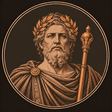
Dionysius of Halicarnassus reports that Heracles fathered Latinus on a Hyperborean girl and then married her to Faunus, so that Latinus passed for the son of Faunus.
Also Connected
18 recorded connections, each with the ancient line behind it.
Allies
-
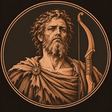
Philoctetes holds the bow Heracles gave him for the pyre on Oeta. In Sophocles the deified Heracles appears to him on Lemnos and sends him to Troy with it.
-

Passing through the Caucasus, Heracles shot the eagle that tormented Prometheus and broke his chains, acting with Zeus's own consent.
Enemies
-
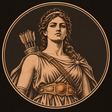
In Apollodorus Hippolyte promises Heracles the belt of Ares, Hera's rumour turns the Amazons against him, and he kills her; other accounts let her live.
-
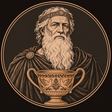
Heracles sacked Pylos and killed the sons of Neleus. Nestor alone survived, being brought up among the Gerenians.
Connected
-

Atlas fetched the golden apples of the Hesperides for Heracles's eleventh labor while Heracles held the sky in his place, then tried to leave him holding it for good.
-

Capturing the hind alive was the third of Heracles's twelve labors, a year-long pursuit rather than a fight.
-

Charon recalls unwillingly ferrying Heracles across while he still lived, so Heracles could descend and drag off Cerberus in chains.
-

Hera has Eileithyia delay Heracles's birth so a rival cousin is born first and takes the kingship instead.
-

Capturing the boar alive was the fourth of Heracles's twelve labors, though the journey there caused more deaths than the boar itself did.
-
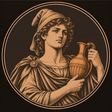
Heracles saves Hesione for the mares Zeus gave in compensation for Ganymede, and Laomedon's refusal to hand them over leads to the first sack of Troy.
-

Once Heracles completes his labors and joins the immortal gods, he marries Hebe on Olympus.
-

Hypnos once lulled Zeus to sleep so Hera could act against Heracles at sea, a favor that nearly cost Hypnos everything when Zeus awoke.
-

Taming the man-eating mares of Diomedes and bringing them to Eurystheus was the eighth of Heracles's twelve labors.
-
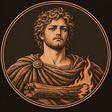
Bacchylides has Heracles meet the shade of Meleager in Hades while fetching Cerberus and draw his bow on him.
-

Guided by nymphs of the river Eridanus during his search for the Hesperides, Heracles seizes the sleeping Nereus and holds on through every shape he takes until the sea god reveals the location of the apples.
-
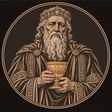
Heracles took Troy and killed Laomedon with his other sons, but spared Podarces, whom Hesione ransomed with her veil.
-
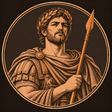
Livy says the rite of Hercules at the Ara Maxima was the only foreign rite Romulus adopted, as though he felt that an immortality won through courage would one day be his own reward.
-
Dionysius reports that followers of Hercules settled the Saturnian hill, later the Capitoline, and that Hercules set up an altar to Saturn there (1.38.2).
Read the full source verification →
Mythology
Appears In
Equivalent Figures
Related Terms
Referenced By
Sources
- Apollodorus, Library 2.4.12
- Apollodorus, Library 2.5.11
- Euripides, Heracles
- Pindar, Nemean Odes
- Ovid, Metamorphoses 9.134-272
- Hesiod, Theogony 950-955
- Apollodorus, Library 2.5.1-2.5.12
- Apollodorus, Library 1.6.1
- Emma Stafford, Herakles (2012)
- Timothy Gantz, Early Greek Myth (1993)