Hera
Hera is the wife and sister of Zeus and the queen of Mount Olympus. She presides over marriage and childbirth and is known for her jealous vengeance against Zeus's many lovers and illegitimate children, a persecution that drives some of Greek myth's longest hero cycles.

Hera, queen of the Olympian gods
Generated by AI from this page's own facts, not an ancient image or evidence of anything. How this site uses generated images
Sections on this page
Greek vs Roman: Hera vs. Juno → See how Juno differs.
What does the name "Hera" mean? →
See Hera in the Greek family tree. Looking for a name of your own? Try the mythological name generator.
Core Myth
Hera was the daughter of the Titans Cronus and Rhea, and sister to Zeus, Poseidon, Hades, Demeter, and Hestia. Like her siblings, she was swallowed by Cronus at birth and later freed when Zeus overthrew their father. Hesiod records her marriage to Zeus and their children together - Ares, Hebe, and Eileithyia, the goddess of childbirth - placing her at the center of Olympian family life as queen and as the goddess who oversees legitimate marriage.
Hera was renowned for her jealousy and wrath toward Zeus's numerous lovers and their offspring, and this persecution supplies some of Greek myth's longest hero cycles: she drove Heracles to madness so that he killed his own family, forcing the labors that follow; she pursued Leto across every land before Apollo and Artemis could be born; she cursed the nymph Echo to only ever repeat others' last words, punishment for distracting her with long stories while other nymphs' affairs with Zeus went undetected, in the opening turn of Narcissus and Echo, where Ovid first shows Echo watching Narcissus drive deer into nets; and she drove Dionysus's nurses mad to punish Semele's child. In Pausanias she also turns the huntress Callisto into a bear, and Artemis shoots it to please her. Her anger was not always simply jealousy over infidelity - when Zeus produced Athena from his own head without her, Hesiod says Hera responded in kind, bearing Hephaestus by herself, without union with Zeus at all.
Why is Hera so often hostile toward Zeus's children by other women?
Hera is the goddess of legitimate marriage, and Zeus's affairs are a standing violation of the institution she embodies, so the sources treat her anger as consistent with her role rather than as simple spite. Her targets are not random: she pursues Heracles, the Trojan-War-era heroes born of Zeus's unions, and Dionysus's household because each birth is a visible, lasting reminder of a marriage broken.
Homer, Iliad 14.153-353
What children did Hera have with Zeus?
Hesiod names Ares, Hebe, and Eileithyia as children Hera bore to Zeus within their marriage. Eileithyia in particular matters beyond her own myths, since she is the goddess of childbirth invoked, and sometimes deliberately delayed, at the birth of other figures in the tradition, including at Heracles's own birth.
Hesiod, Theogony 921-923
How was Hephaestus born, and why does the story matter?
Hesiod says Hera bore Hephaestus by herself, without union with Zeus, specifically because she was angry that Zeus had produced Athena alone from his own head. The story is told as an answer in kind: each parent demonstrates that a child of theirs does not require the other. It also sits behind Hephaestus's uneasy relationship with both parents in later myth, since he is thrown from Olympus at least once for taking his mother's side in a quarrel with Zeus.
Hesiod, Theogony 927-929
How did Hera try to stop Heracles from being born as the ruling king promised by Zeus?
Zeus swore an oath that a descendant of Perseus born that day would rule all his kin, meaning the unborn Heracles. Hera tricked him into the wording, then hastened the premature birth of another descendant, Eurystheus, while holding back Alcmene's labor, so that Eurystheus was born first and took the kingship instead. This is also the origin of Heracles later serving Eurystheus rather than the reverse.
Homer, Iliad 19.95-133
Did Hera and Zeus's marriage ever break down entirely?
The Iliad shows a genuinely adversarial marriage rather than a settled one: in Book 14, Hera borrows Aphrodite's girdle of persuasion specifically to seduce and distract Zeus so she can secretly help the Greeks at Troy against his stated wishes, and the scheme works exactly as she plans it. Their disputes are recurring enough across the epic that Zeus at one point threatens her with violence for interfering, which the poem treats as an ordinary, if tense, feature of their relationship rather than as an isolated crisis.
Homer, Iliad 14.153-223
Later Traditions
In Roman religion, Hera was identified with Juno, who held an even more prominent civic role as protector of the Roman state and guardian of women through every stage of life. Later traditions increasingly emphasized Hera as a symbol of marital fidelity and queenly dignity, softening the vindictiveness that dominates her role in the earlier myths.

Drachm (Coin) Depicting the Goddess Hera - Knossos, 350-220 BCE, Silver
The Art Institute of Chicago, Chicago, IL, 1922.4914. CC0
11 recorded relations, each with the ancient line behind it.
Parents
-

Kronos swallowed each child at birth; Zeus alone escaped and later forced the others back up.
-

Siblings


Children
-

-

Hesiod's Theogony lists Eileithyia alongside Ares and Hebe among Hera's offspring by Zeus.
-

-

Hesiod has Hera bear Hephaestus alone, without Zeus, in answer to the birth of Athena. Later sources instead make him the son of both.
Also Connected
13 recorded connections, each with the ancient line behind it.
Allies
-

Argus served as Hera's loyal guardian, set to watch over the transformed Io on her orders.
-

Hera reared the lion after its birth and set it loose on the countryside around Nemea.
Enemies
-

Hera tricked Zeus into an oath that cost Heracles the birthright meant for him, delayed Alcmene's labor to favor a rival's birth instead, and sent serpents into the nursery to kill the infant.
-
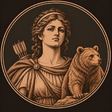
In Pausanias Hera turns Callisto into a bear, and in Apollodorus she persuades Artemis to shoot her.
-
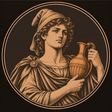
Virgil counts the honors given to the stolen Ganymede among Juno's grievances against Troy. Homer and the Homeric Hymn to Aphrodite describe no such hostility.
-

Hera persecuted Io as Zeus's lover; in Aeschylus's Suppliants she herself turns Io into a cow, sets Argus over her and sends the gadfly.
-

Connected
-

Dione cites Hera's wounding by Heracles as precedent while comforting the wounded Aphrodite.
-

Hera, disguised as an Amazon, spread the rumour that Heracles meant to carry off their queen, which turned the meeting into a battle.
-

Hera bribed Hypnos with a wife, one of the Graces, to lull Zeus to sleep so she could act unseen.
-

Hera once sent Iris to Achilles with an urgent message, done entirely without Zeus's knowledge.
-

Once tamed, Eurystheus dedicated the mares to Hera rather than keeping them for himself.
-

Hera says she raised Thetis herself and gave her to Peleus as his wife.
Read the full source verification →
Mythology
Appears In
Equivalent Figures
Related Terms
Referenced By
Sources
- Homer, Iliad 14.153-223
- Homer, Iliad 19.95-133
- Hesiod, Theogony 921-929
- Ovid, Metamorphoses 3.356-369
- Pausanias, Description of Greece 8.3.6
- Joan V. O'Brien, The Transformation of Hera (1993)
- Timothy Gantz, Early Greek Myth (1993)