Tiresias
Tiresias was the blind prophet of Thebes, son of Everes and the nymph Chariclo. Apollodorus gives rival stories of his blindness: Athena blinded him for seeing her bathe, or Hera blinded him after he had lived as a woman and judged a quarrel with Zeus. He warns Oedipus, Creon and Pentheus in tragedy, and prophesies to Odysseus in the underworld.
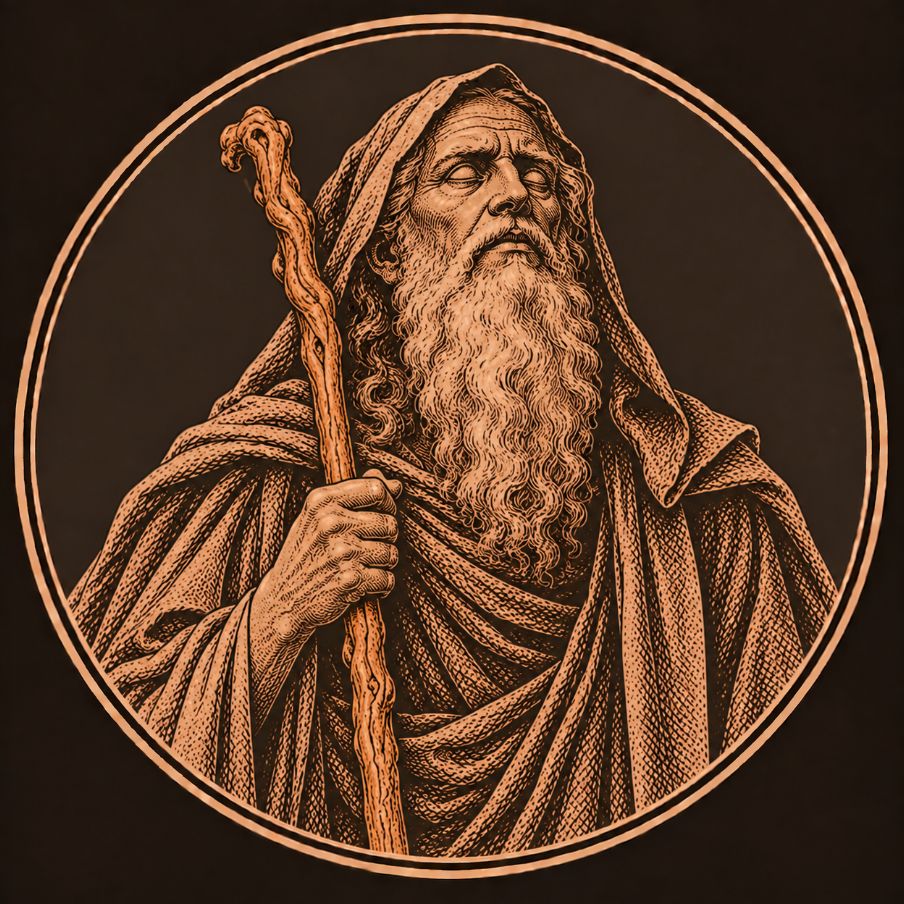
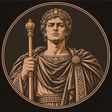
Tiresias, bronze medallion illustration
Generated by AI from this page's own facts, not an ancient image or evidence of anything. How this site uses generated images
Sections on this page
Core Myth
Apollodorus introduces Tiresias as a Theban soothsayer, son of Everes and the nymph Chariclo, descended from Udaeus, one of the Sown Men who sprang from the dragon's teeth. He was blind, and Apollodorus admits that the stories of how he lost his sight differ. Some said the gods blinded him for revealing their secrets to men.
Pherecydes, as Apollodorus reports him, blamed Athena. Chariclo was dear to the goddess, and Tiresias saw Athena naked. She covered his eyes with her hands and he lost his sight. When Chariclo begged her to undo it, Athena could not, so she cleansed his ears to let him understand the birds. She also gave him a staff of cornel-wood to walk with. Callimachus tells the same story in his hymn on the Bath of Pallas, set at a spring on Mount Helicon.
The other story Apollodorus credits to Hesiod. Tiresias saw two snakes coupling on Mount Cyllene, wounded them, and was changed from a man into a woman. When he saw the same snakes again, he became a man once more. So when Hera and Zeus argued over whether women or men take more pleasure in love, they asked him. He said that of ten parts, men enjoy one and women nine. Hera blinded him for it, and Zeus gave him the art of prophecy.
He lived a very long life and served Thebes across several reigns. Apollodorus says Amphitryon learned from him that Zeus had slept with Alcmene, and Pindar has him foretell the labours of the infant Heracles. In the war of the Seven against Thebes, he told the Thebans they would win if Creon's son Menoeceus gave himself to Ares. Menoeceus killed himself before the gates.
Sophocles makes him the voice of truth that kings refuse to hear. In Oedipus Tyrannus, Oedipus summons him to name the killer of Laius. Tiresias at first refuses, then says Oedipus himself is the man and foretells his blindness and exile. In Antigone, he reports birds tearing each other and sacrifices that will not burn, and warns Creon that the Furies lie in wait for him for denying Antigone's brother burial.
He died when Thebes fell to the sons of the Seven. Apollodorus says Tiresias advised the Thebans to send a herald to the Argives and flee by night. At the spring of Tilphusa he drank and died. The Argives then sent his daughter Manto to Apollo at Delphi as part of their spoils.
Death did not end his work. In the Odyssey, Circe tells Odysseus that Persephone let Tiresias alone keep his reason in the house of Hades. Odysseus sails to the edge of the underworld, and the seer comes up with a golden staff to drink the blood. He warns of Poseidon's anger and the cattle of Helios. He also foretells the suitors' deaths, a last journey inland with an oar, and a gentle death far from the sea.
How did Tiresias become blind?
The ancient sources give two main answers. Apollodorus reports Pherecydes's version, in which Tiresias saw Athena naked and she covered his eyes, and Callimachus tells the same story. In the version Apollodorus credits to Hesiod, Tiresias had lived as a woman, so Hera and Zeus asked him who enjoys love more. He said women, nine parts to one, and Hera blinded him. Zeus gave him prophecy in return. A third view held that the gods blinded him for revealing their secrets.
Apollodorus, Library 3.6.7
Why did Tiresias turn into a woman?
Because he struck a pair of coupling snakes. Apollodorus, following Hesiod, says Tiresias saw snakes mating on Mount Cyllene, wounded them, and was turned from a man into a woman. When he came upon the same snakes again, he became a man. Ovid says he hit them with his staff, remained a woman for seven autumns, and in the eighth year struck them again to change back. Hyginus adds that an oracle told him to return to the spot.
Ovid, Metamorphoses 3.316-338
What role did Tiresias play in the Odyssey?
He is the prophet Odysseus must consult among the dead. Circe tells Odysseus that Persephone let Tiresias alone keep his mind in Hades, and sends him there. After drinking the sacrificial blood, Tiresias warns that Poseidon is angry over the blinding of Polyphemus. He says the crew can still reach home if they spare the cattle of Helios on Thrinacia. He also foretells the suitors' deaths, a journey inland carrying an oar, and a gentle death far from the sea.
Homer, Odyssey 11.90-137
How does Tiresias die?
He dies after drinking from the spring of Tilphusa, but the sources disagree about the circumstances. Apollodorus says that when the sons of the Seven took Thebes, Tiresias told the Thebans to flee by night. On the way he drank from Tilphusa and died. Pausanias records that the Argives were taking him to Delphi as part of their spoils when he drank from the spring and died. Pausanias adds that his grave lay beside it.
Apollodorus, Library 3.7.3
Later Traditions
Euripides gives him two very different scenes. In the Bacchae, he and the old Cadmus put on fawn-skins and ivy to dance for Dionysus, and Tiresias lectures King Pentheus on the new god's power. Cadmus adds the fate of Actaeon, torn apart by his own hounds for boasting he hunted better than Artemis. Pentheus orders his seat of augury torn down. In the Phoenissae, Tiresias arrives led by his daughter and tells Creon that Thebes will be saved only if his son Menoeceus is sacrificed to appease Ares.
Ovid sets the Hera story in a lighter key. In the Metamorphoses, Jupiter and Juno joke about pleasure after too much nectar, and Tiresias is chosen as judge. Ovid adds that he struck the snakes with his staff and stayed a woman for seven autumns. Hyginus says Jupiter gave him seven lives to live in return for his sight.
Ovid then makes him the first seer of the Narcissus and Echo story. Asked whether the infant Narcissus would reach old age, Tiresias answers yes, if he never comes to know himself. Pausanias records a bird-observatory of Tiresias still shown at Thebes, and a grave of Tiresias by the spring of Tilphusa, near Haliartus.
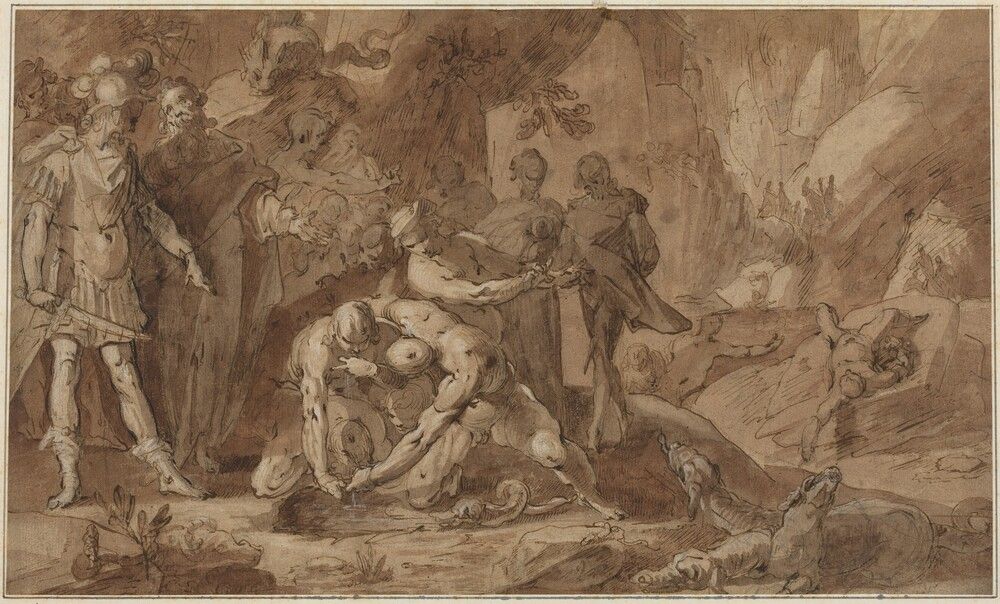
Odysseus and Teiresias - Gerrit Pietersz Sweelinck, pen and brown ink with brown wash, heightened with white, over black chalk on laid paper
National Gallery of Art, Washington, DC, 1982.16.1. CC0
Also Connected
8 recorded connections, each with the ancient line behind it.
Enemies

Connected
-

-

-

-
-
In the Bacchae, Tiresias urges Pentheus to receive Dionysus into Thebes and warns him that he is mad to fight the god.
-

Where Accounts Differ
- who blinded Tiresias and why
- who gave Tiresias the gift of prophecy
- how long Tiresias lived and how long he was a woman
- how and where Tiresias died
- what kind of staff Tiresias carried
- Why Tiresias was blind differs by source. Apollodorus (Library 3.6.7) gives three explanations: the gods punished him for revealing their secrets; Athena blinded him after he saw her naked, which he credits to Pherecydes; or Hera blinded him for his verdict in her dispute with Zeus, which he credits to Hesiod. Callimachus's hymn on the Bath of Pallas tells the Athena version. Ovid (Metamorphoses 3.316-338) and Hyginus (Fabulae 75) tell the Hera version.
- Who gave him prophecy follows from the blinding story. In the Hera version, Zeus gives it (Apollodorus, Library 3.6.7; Ovid, Metamorphoses 3.316-338). In the Athena version, Athena cleanses his ears so he understands birds (Apollodorus), and in Callimachus she also promises him a long life and his mind among the dead.
- How long he lived is told differently. Apollodorus (Library 3.6.7) says only that he lived to a great age. Hyginus (Fabulae 75) says Jupiter gave him seven lives. How long he spent as a woman also varies: Ovid (Metamorphoses 3.316-338) says seven autumns, with the change back in the eighth year. The Hesiodic Melampodia, cited by Apollodorus, is known only in fragments and is not quoted here.
- How he died differs. In Apollodorus (Library 3.7.3) he flees Thebes with its people after advising them to abandon the city, and dies drinking from the spring of Tilphusa. In Pausanias (9.33.1; 7.3.1) the Argives are leading him to Delphi as part of the spoils when he drinks from the same spring and dies.
- His staff differs too. Apollodorus (Library 3.6.7) says Athena gave him a staff of cornel-wood. In the Odyssey (11.90-137) his shade carries a golden staff.
- Callimachus's Hymn 5 (The Bath of Pallas) is named without a line reference, because the site has no checkable edition of it. Its content was read in A. W. Mair's Loeb translation.
Read the full source verification →
Mythology
Appears In
Related Terms
Referenced By
Sources
- Apollodorus, Library 3.6.7
- Apollodorus, Library 3.7.3
- Apollodorus, Library 3.7.4
- Apollodorus, Library 2.4.8
- Homer, Odyssey 10.490-495
- Homer, Odyssey 11.90-137
- Homer, Odyssey 11.138-151
- Sophocles, Oedipus Tyrannus 300-462
- Sophocles, Antigone 988-1090
- Euripides, Bacchae 170-369
- Euripides, Phoenissae 834-959
- Ovid, Metamorphoses 3.316-338
- Ovid, Metamorphoses 3.339-350
- Pindar, Nemean Odes 1.60-69
- Pausanias, Description of Greece 9.16.1
- Pausanias, Description of Greece 9.33.1
- Pausanias, Description of Greece 7.3.1
- Hyginus, Fabulae 75