Pentheus
Pentheus was a king of Thebes, born to Echion and Cadmus's daughter Agave. He inherited the throne from Cadmus and tried to stop the new rites of his cousin Dionysus. In Euripides's Bacchae the god lures him to Mount Cithaeron to spy on the maenads. There his mother Agave and her sisters, maddened, tear him apart.
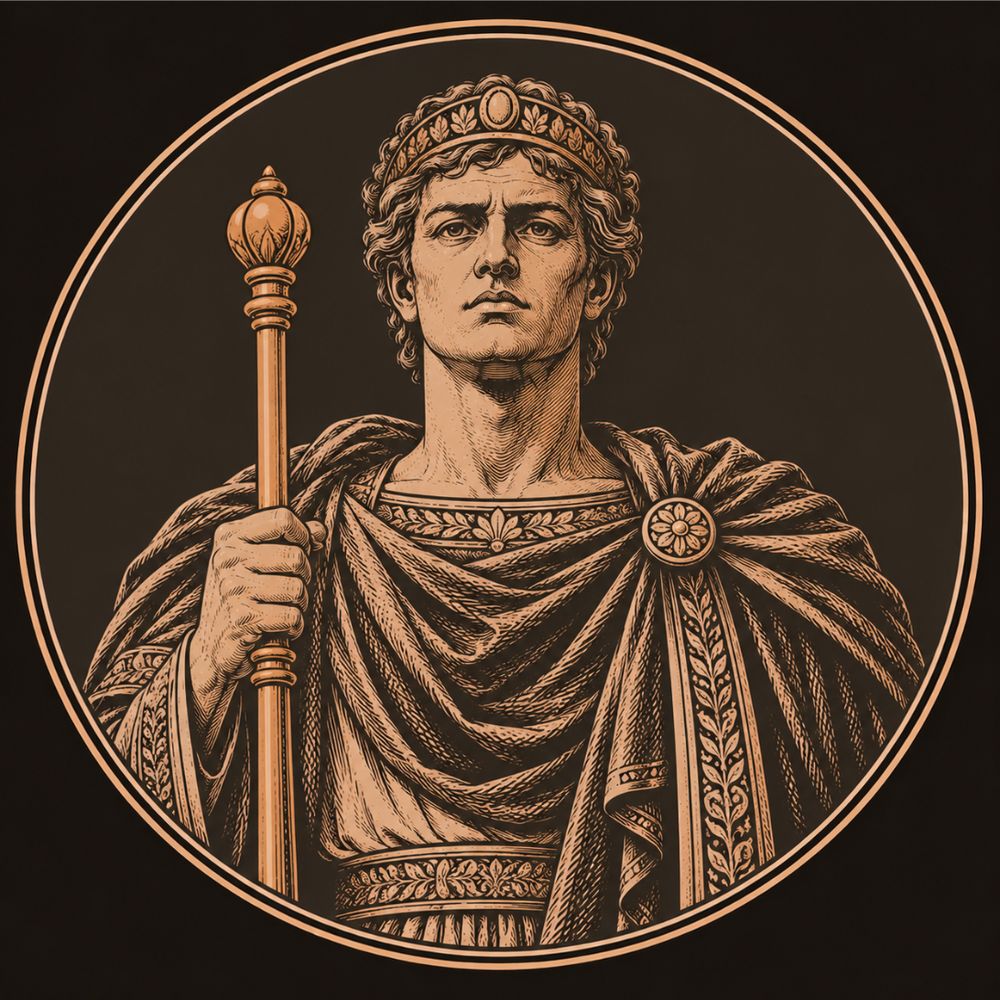
Pentheus, bronze medallion illustration
Generated by AI from this page's own facts, not an ancient image or evidence of anything. How this site uses generated images
Sections on this page
Core Myth
Pentheus belongs to the second generation of the Theban royal house. Apollodorus's Library says Cadmus married his daughter Agave to Echion, and that Pentheus was their son. In Euripides's Bacchae, Agave calls Echion "the sown man", one of the warriors who rose from the serpent's teeth. The sowing of those teeth is told in Cadmus and the Dragon. Apollodorus says Pentheus succeeded Cadmus as king, and in the Bacchae Cadmus himself says he gave him control of the land. That makes Pentheus a cousin of Dionysus, whose mother Semele was Agave's sister. The chorus of the Bacchae holds his descent against him. They call him earth-born, a fierce monster like a bloody giant, hostile to the gods.
The Bacchae opens with Dionysus arriving in Thebes in mortal form. His prologue says Pentheus fights against the gods, drives him from sacrifices and leaves him out of prayers. Pentheus comes home to find the women gone to the mountains. He calls the rites a pretext for wine and sex, jails the women he can catch, and threatens to behead the long-haired stranger who leads them. Tiresias and Cadmus, both dressed for the rites, urge him to accept the god. He orders the prophet's seat of augury torn down instead. He then has the disguised god arrested. The stranger walks free, the palace is shaken, and fire flares on Semele's tomb.
A herdsman reports what the Theban women do on Mount Cithaeron. They strike water, wine and milk from the ground and tear cattle apart with their bare hands. Pentheus calls out his army. The stranger offers another way: dress as a woman and watch in secret. Pentheus hesitates from shame, then agrees. Alone with the chorus, Dionysus says he will first drive the king out of his wits. He dresses him in a long robe and headband and puts a thyrsus in his hand. On the mountain the god bends a pine to the earth, seats Pentheus at its top and lets it rise. Then a voice calls on the maenads to punish the man who mocked the rites.
The women uproot the tree, and Pentheus falls. The messenger says Agave, as priestess, begins the slaughter. Pentheus tears off his headband and begs her to recognize her son. Possessed by the god, she does not. With her sisters Ino and Autonoe she tears him apart. Agave carries his head back to Thebes fixed on her thyrsus, believing it a lion's. Cadmus brings in the scattered body and slowly talks her back to her senses, until she sees whose head she holds. He mourns Pentheus as the hope of the house. Dionysus then appears, Agave goes into exile, and the god tells Cadmus that he and Harmonia will become serpents.
Who was Pentheus and how did he die?
Pentheus was a king of Thebes, the son of Echion and Agave, a daughter of Cadmus. Apollodorus says he succeeded Cadmus and tried to stop the Bacchic frenzy that Dionysus had brought on the Theban women. He went to Mount Cithaeron to spy on them. There his mother Agave, in her madness, took him for a wild beast and tore him limb from limb. The fullest account is Euripides's Bacchae, where the god himself leads Pentheus to the mountain dressed as a maenad. Ovid and Theocritus tell the death differently, but both, like Euripides, make his mother and her sisters his killers.
Apollodorus, Library 3.4.2; Apollodorus, Library 3.5.2
Who killed Pentheus in The Bacchae?
His mother Agave, with her sisters Ino and Autonoe and the other Theban women, though the play makes Dionysus the one truly responsible. The messenger says Agave, acting as priestess, began the slaughter. Pentheus threw off his headband and begged her to know him, but she was possessed by the god. She tore out his shoulder, not by her own strength, the messenger says, but with strength the god gave her hands. Ino and Autonoe joined in. Dionysus had announced the plan before the dressing scene: Pentheus would go to Hades slaughtered by his mother's hands. When Agave recovers, Cadmus tells her plainly that she and her sisters killed him.
Euripides, Bacchae 1114-1136
In the play 'The Bacchae,' why does Dionysus say the name Pentheus means sorrow?
Because the name Pentheus sounds like the Greek word penthos, grief or mourning, and Euripides builds the pun into the play. Strictly, Dionysus says less than that. When the king gives his name and parents, the disguised god replies that his name suits him for misfortune. Tiresias makes the pun openly earlier, warning Cadmus that Pentheus must not bring penthos into his house. The play then makes the name come true. Cadmus carries in the gathered pieces of his grandson's body, Agave recognizes the head she thought was a lion's, and the family goes into exile. English translations usually lose the wordplay.
Euripides, Bacchae 505-508; Euripides, Bacchae 365-369
Later Traditions
Ovid's Metamorphoses tells the story with different details. Pentheus mocks the blind Tiresias, who warns him he will be torn apart and his blood will stain his mother and her sisters unless he honours the new god. Pentheus calls on the Thebans to fight and orders the god's leader brought in chains. He cites Acrisius, who shut the gates of Argos against the god. Cadmus and Athamas try to restrain him, and their efforts only feed his rage. His servants bring back not the god but a follower, Acoetes. The captive tells how the god turned his own ship's crew into dolphins. Pentheus orders him tortured, but the chains fall away and the prison doors open by themselves.
Ovid's Pentheus then goes to Cithaeron himself, with no disguise and no guide. He stands on an open, treeless plain in the middle of the mountain. His mother sees him first, takes him for a boar and wounds him with her thyrsus. He begs his aunt Autonoe for mercy, in memory of her son Actaeon. She tears off his right arm, and Ino wrenches off the other. Agave holds up his head and cries victory. Ovid says the women of Thebes afterwards honour the new rites.
Theocritus's twenty-sixth Idyll gives a short version. Ino, Autonoe and Agave lead three bands of maenads and build altars to Semele and Dionysus. Pentheus watches from a high cliff, hidden in a lentisk bush. Autonoe sees him first, and the frenzied sisters chase him down. The poem ends by calling their act a deed not to be blamed, done at the god's behest. Apollodorus says only that Pentheus came to spy and that Agave, maddened, took him for a wild beast. Pausanias records a tradition at Corinth. The Pythian priestess told the Corinthians to find the tree Pentheus had climbed and worship it equally with the god. From it they made two wooden images of Dionysus, which Pausanias saw in their market-place, gilded except for their red-painted faces.
Also Connected
4 recorded connections, each with the ancient line behind it.
Enemies
-

In the prologue of the Bacchae, Dionysus says Pentheus fights against the gods, drives him from sacrifices and leaves him out of prayers, and vows to show Thebes he was born a god.
Connected
-
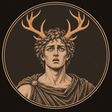
Pentheus and Actaeon are cousins, sons of Cadmus's daughters Agave and Autonoe. In Ovid, the dying Pentheus begs Autonoe to spare him for the sake of Actaeon's ghost.
-
Pentheus is Cadmus's grandson through his daughter Agave. In the Bacchae, Cadmus names him the child of Echion to whom he gave control of the land.
-
In the Bacchae, Tiresias urges Pentheus to receive Dionysus into Thebes and warns him that he is mad to fight the god.
Where Accounts Differ
- how Pentheus reaches the maenads
- where Pentheus is caught
- what Agave takes him for
- how the body is torn
- who warns Pentheus
- whether the killing was just
- How Pentheus reaches the maenads differs. Euripides's Bacchae has the disguised Dionysus dress him as a woman and lead him to Cithaeron. Ovid's Metamorphoses has him go alone and undisguised, in anger, after Acoetes escapes.
- Where he is caught differs. Euripides and the Corinthian story in Pausanias put him in a tree. Theocritus hides him in a lentisk bush on a cliff. Ovid places him on an open, treeless plain.
- Agave mistakes him for a lion in Euripides and for a boar in Ovid. Apollodorus says only that she thought him a wild beast.
- The tearing of the body is told two ways. Euripides has Agave tear out his shoulder first, with Ino and Autonoe joining in. Ovid gives his right arm to Autonoe and the other to Ino.
- The warnings differ. In Euripides, Tiresias and Cadmus argue with Pentheus face to face. In Ovid, Tiresias foretells his death in detail, and Cadmus and Athamas try to restrain him.
- The sources judge the killing differently. Theocritus calls it a deed not to be blamed, done at the god's behest. In Euripides, Cadmus calls the god's punishment just but too severe.
Read the full source verification →
Mythology
Appears In
Related Terms
Referenced By
Sources
- Euripides, Bacchae 1-63
- Euripides, Bacchae 210-262
- Euripides, Bacchae 266-369
- Euripides, Bacchae 434-518
- Euripides, Bacchae 537-555
- Euripides, Bacchae 604-641
- Euripides, Bacchae 660-861
- Euripides, Bacchae 912-976
- Euripides, Bacchae 1043-1152
- Euripides, Bacchae 1165-1329
- Euripides, Bacchae 1330-1392
- Apollodorus, Library 3.4.2
- Apollodorus, Library 3.5.2
- Ovid, Metamorphoses 3.511-581
- Ovid, Metamorphoses 3.582-691
- Ovid, Metamorphoses 3.692-733
- Theocritus, Idyll 26
- Pausanias, Description of Greece 2.2.6
- Pausanias, Description of Greece 2.2.7
- E. R. Dodds, Euripides: Bacchae (2nd ed., 1960)
- Timothy Gantz, Early Greek Myth (1993)