Dionysus
Dionysus is the god of wine, ritual madness, and the grape harvest, born to Zeus and the mortal Theban princess Semele. Uniquely among the Olympians he was carried to term in Zeus's own thigh after his mother's death, and he punished those who denied his divinity with madness rather than lesser penalties.

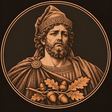
Dionysus, Olympian god of wine and festivity
Generated by AI from this page's own facts, not an ancient image or evidence of anything. How this site uses generated images
Sections on this page
Greek vs Roman: Dionysus vs. Bacchus → See how Bacchus differs.
What does the name "Dionysus" mean? →
See Dionysus in the Greek family tree. Looking for a name of your own? Try the mythological name generator.
Core Myth
Dionysus was the son of Zeus and the mortal princess Semele of Thebes. Hera, jealous of the affair, disguised herself as Semele's old nurse and planted a doubt in her mind: was her lover really Zeus? Semele made Zeus swear by the river Styx to grant her one request, then asked him to appear to her as he appears to Hera. Bound by the unbreakable oath, Zeus came in his full thunder and lightning, and no mortal body could withstand it - Semele was consumed. Zeus snatched the unborn child from the flames and sewed him into his own thigh, carrying him to term himself, which is why Dionysus carries the epithet 'twice-born' throughout the tradition. Once born, he was raised in secret, first by Semele's sister Ino and later by nymphs on Mount Nysa, hidden from Hera's continuing hostility.
How did Semele die while pregnant with Dionysus?
Hera, disguised as Semele's old nurse, convinced her to doubt that her lover was really Zeus and to test him by asking him to appear as he appears to Hera. Zeus had already sworn by the Styx to grant her whatever she asked, so he could not refuse; he arrived in his full form, with thunder and lightning, and Semele's mortal body could not survive it.
Ovid, Metamorphoses 3.253-315
Why is Dionysus called twice-born?
After Semele died, Zeus took the unborn child from her and sewed him into his own thigh, carrying him until he was ready to be born a second time. Hesiod records the basic fact of a mortal woman bearing an immortal son without dwelling on the mechanism; later authors supply the thigh and the epithet that follows Dionysus through the whole tradition.
Hesiod, Theogony 940-942
What happened to King Pentheus for rejecting Dionysus?
In Euripides's Bacchae, Pentheus, king of Thebes and Dionysus's own cousin, refused to acknowledge his divinity and tried to arrest him and suppress the ecstatic rites of his female followers, the Maenads. Dionysus lured Pentheus into spying on the rites disguised as a woman, then drove the Maenads, including Pentheus's own mother Agave, into a god-sent frenzy in which they mistook him for a lion and tore him apart with their bare hands.
Euripides, Bacchae 1043-1152
Did Dionysus rescue his mother from the underworld?
Later tradition holds that Dionysus descended to the underworld to bring Semele back and installed her among the gods on Olympus under the new name Thyone, making her the one mortal woman to be fully deified rather than merely honored as a hero after death. This episode is referred to more often in later sources than narrated at length in any single surviving early text.
Diodorus Siculus, Bibliotheca Historica 4.25
Why is Dionysus's cult connected to the origin of Greek theater?
Athenian tragedy and comedy both developed out of choral performances honoring Dionysus at his festivals, especially the City Dionysia, where competing playwrights staged new tragedies each year as part of the god's worship. The theatrical mask, one of Dionysus's standard symbols, reflects this origin directly: Greek drama was, in its founding context, a religious performance for him before it became literature in its own right.
Euripides, Bacchae 1-63
Later Traditions
As an adult, Dionysus traveled the known world teaching the cultivation of the vine and spreading his worship, and Euripides's Bacchae dramatizes what happened to those who refused to accept him: King Pentheus of Thebes, his own cousin, denied his divinity and tried to suppress his rites, and was torn apart in a Bacchic frenzy by his own mother Agave and aunts, who mistook him for a lion in their god-sent madness. Dionysus eventually descended to the underworld to bring Semele back and installed her on Olympus under the name Thyone, making her the only mortal to be fully deified. In Ovid's Metamorphoses he lets King Midas of Phrygia choose a reward for returning Silenus, and grants the golden touch, his wish that whatever he touches turn to gold. In Roman religion, Dionysus was identified with Bacchus, and the Dionysian mysteries and Bacchic rites were widespread in the Hellenistic and Roman periods; his cult also profoundly shaped the development of Greek theater, which grew out of choral performances at his festivals.

Statue of Dionysos leaning on a female figure ("Hope Dionysos") - Roman, 27 BCE–68 CE, Marble
Metropolitan Museum of Art, New York, NY, 1990.247. CC0
Lineage
See the full family tree2 recorded relations, each with the ancient line behind it.
Parents
-

Semele died before the birth; Zeus carried the child to term himself.
-

Semele died before the birth; Zeus carried the child to term himself.
Also Connected
7 recorded connections, each with the ancient line behind it.
Enemies
-
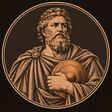
In Ovid, Acrisius alone refuses to admit the new god to Argos and later regrets it.
-
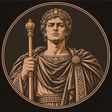
In the prologue of the Bacchae, Dionysus says Pentheus fights against the gods, drives him from sacrifices and leaves him out of prayers, and vows to show Thebes he was born a god.
Connected
-
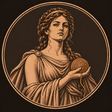
Hesiod makes her the wife of Dionysus, made deathless by Zeus.
-
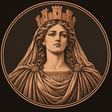
The chorus of the Bacchae blesses whoever keeps the rites of Cybele, the great mother, and serves Dionysus with thyrsus and ivy.
-
In Ovid's Metamorphoses, Dionysus rewards Midas for returning Silenus by granting his wish that everything he touches turn to gold, then takes the gift back and sends him to wash in the river near Sardis.
-

Orpheus was torn apart by Thracian maenads, the female followers of Dionysus, after he refused the company of other women following Eurydice's second death.
-

The Homeric Hymn to Pan names Dionysus as especially delighted among the gods who first saw the newborn Pan.
Read the full source verification →
Mythology
Appears In
Equivalent Figures
Related Terms
Referenced By
Sources
- Euripides, Bacchae 1043-1152
- Hesiod, Theogony 940-942
- Ovid, Metamorphoses 3.253-315
- Ovid, Metamorphoses 11.85-145
- Albert Henrichs, Dionysus (1984)
- Timothy Gantz, Early Greek Myth (1993)