Semele
Semele is a daughter of Kadmos of Thebes and the mother of Dionysus by Zeus. Persuaded to ask Zeus to appear as he does to Hera, she is consumed when he comes with thunder and lightning. Zeus takes the unborn child and carries him to term himself, which makes Dionysus the only Olympian with a mortal mother.

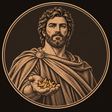
Semele, mortal mother of Dionysus
Generated by AI from this page's own facts, not an ancient image or evidence of anything. How this site uses generated images
Sections on this page
See Semele in the Greek family tree.
Core Myth
Hesiod records the outcome rather than the scene: Semele, daughter of Kadmos, bore Zeus a splendid son, Dionysus, a mortal woman bearing an immortal, and both of them are now gods. Apollodorus lists her among the children of Cadmus and Harmonia, whose story begins in Cadmus and the Dragon. That last clause matters, because it treats her later divinity as settled fact.
The scene itself belongs to the tragedians and to Ovid. Hera, learning of the pregnancy, comes to Semele disguised as her old nurse and plants a doubt: is the lover really Zeus? Semele should ask him to appear as he appears to Hera. Zeus has already sworn by the Styx to grant whatever she asks, so when she asks he cannot refuse. He comes with thunder and lightning, and no mortal body can be near that. Semele is consumed.
Zeus takes the unborn child from her and sews him into his own thigh, carrying him until he is ready. Dionysus is therefore twice-born, and the epithet follows him through the whole tradition. Later Dionysus goes down to the underworld to bring Semele back, and she is taken to Olympos under the name Thyone. The story makes him the only Olympian with a mortal mother, which is exactly the point contested in Thebes when he returns to claim his worship.
How did Semele die?
She asked Zeus to show himself as he shows himself to Hera, and he had already sworn by the Styx to give her whatever she asked. He came with thunder and lightning, and a mortal body cannot be in the presence of that; she was consumed. The request was planted by Hera, who came to her disguised as her old nurse and suggested that her lover might not be Zeus at all.
Ovid, Metamorphoses 3.253-315
How was Dionysus born if Semele died?
Zeus took the unborn child from her body and sewed him into his own thigh, carrying him until he was ready to be born. This is why Dionysus is called twice-born, and the epithet stays with him through the whole tradition. Hesiod records the outcome without the mechanism, simply noting that a mortal woman bore an immortal son; the thigh is told by later authors.
Hesiod, Theogony 940-942
Did Semele become a goddess?
Hesiod says she is one, in the same breath as recording her death: a mortal woman bore an immortal, and now both of them are gods. Later accounts supply the route, with Dionysus going down to the underworld to fetch her and bringing her to Olympos under the name Thyone. Euripides has her sisters deny the divine father altogether, which is the version the Bacchae is built to refute. Hesiod's Theogony places her among the mortal lovers of gods, a company the Greek heroes overview surveys (Hesiod, Theogony).
Hesiod, Theogony 940-942
Later Traditions
Euripides makes the doubt about Semele's story the engine of the Bacchae: her own sisters deny that Zeus was the father and say Kadmos invented the god to cover a human affair, and the play's disaster follows from that denial. Ovid tells the trick and the lightning at length, turning to Semele straight from the death of Actaeon, and gives Hera the disguise of the nurse Beroe. Roman sources use Semele largely through Dionysus, and her rescue from the underworld is more often referred to than narrated.
Lineage
See the full family tree3 recorded relations, each with the ancient line behind it.
Parents
-
Hesiod names Semele among the children Harmonia bore to Cadmus.
-

Hesiod says Harmonia bore Semele to Cadmus, with Ino, Agave, Autonoe and Polydorus.
Children
-

Semele died before the birth; Zeus carried the child to term himself.
Also Connected
1 recorded connection, each with the ancient line behind it.
Connected
-

Semele is Actaeon's aunt. Stesichorus, as Pausanias reports, said the goddess killed Actaeon to stop him marrying Semele.
Where Accounts Differ
- how Semele's death is told
- whether Zeus was the father
- Hesiod treats Semele's divinity as settled and does not describe her death. The lightning scene, Hera's disguise and the rescue from the underworld all come from later authors.
- Euripides has Semele's own sisters deny that Zeus was the father, and the Bacchae turns on that denial rather than on the death itself.
Read the full source verification →
Mythology
Appears In
Related Terms
Referenced By
Sources
- Hesiod, Theogony 940-942
- Ovid, Metamorphoses 3.253-315
- Apollodorus, Library 3.4.3
- Apollodorus, Library 3.4.2