Zeus
Zeus is the supreme deity of the Greek pantheon, ruling from Mount Olympus as king of the gods. He wields the thunderbolt as his weapon and governs the sky, weather, law, and order, a rule he won by force after leading his siblings against their father Cronus.

Zeus, bronze engraved medallion
Generated by AI from this page's own facts, not an ancient image or evidence of anything. How this site uses generated images
Sections on this page
Greek vs Roman: Zeus vs. Jupiter → See how Jupiter differs.
Rivals: Zeus vs. Poseidon → See how Poseidon differs.
What does the name "Zeus" mean? →
See Zeus in the Greek family tree. Looking for a name of your own? Try the mythological name generator.
Core Myth
Hesiod's Theogony gives the fullest account of Zeus's rise. Cronus, warned by Earth and starry Heaven that a son of his own would overthrow him, swallowed each child Rhea bore him as soon as it was born, causing her ceaseless grief. When Zeus was due, Rhea went to Crete and hid the infant in a cave, giving Cronus a stone wrapped in swaddling clothes to swallow in his place. Zeus grew up in secret and, once strong, forced Cronus to disgorge his siblings in reverse order, the stone coming up last. He then led his brothers and sisters in the Titanomachy, a ten-year war against Cronus and the Titans, freeing the hundred-armed giants Cottus, Briareos, and Gyes from their bonds beneath the earth to fight beside him. Their three hundred rocks, hurled at once, broke the Titans' resistance and sent them down to Tartarus.
After the victory, Homer has Poseidon describe how he, Zeus, and Hades cast lots for the world: Zeus won the sky, Poseidon the sea, and Hades the world below, while earth and Olympus stayed common to all three. Zeus's own rule was not automatic even after that: Hesiod records that he first married Metis, whose child was fated to surpass its father, and swallowed her whole on Earth and Heaven's advice, later giving birth to Athena from his own head. Apollodorus adds the Gigantomachy, in which Zeus strikes down the Giants with thunderbolts. His secrets could be betrayed. Apollodorus says Zeus carried off Aegina, daughter of the river god Asopus, and that Sisyphus told Asopus who had taken her (Library 1.9.3).
How did Zeus escape being swallowed by Cronus?
Cronus had swallowed each of his children as they were born, warned that one of them would overthrow him. When Zeus was due, Rhea gave birth on Crete and hid the infant in a cave, handing Cronus a stone wrapped in swaddling clothes to swallow instead. Cronus, deceived, felt no difference, and Zeus grew up safely away from him.
Hesiod, Theogony 468-491
How did Zeus force Cronus to free his siblings?
Once grown, Zeus made Cronus disgorge the children he had swallowed, bringing them up in reverse order so that the stone he had swallowed last came out first among them. Hesiod says Zeus later fixed that stone at Delphi as a marker of what had happened, a permanent sign for mortals to see.
Hesiod, Theogony 492-500
How did Zeus and his siblings divide the world after the Titanomachy?
Homer has Poseidon explain it directly: the three sons of Cronus cast lots, and Zeus won the wide sky and the upper air, Poseidon won the grey sea, and Hades won the murky dark below. Earth itself and Olympus remained common ground, belonging to none of the three alone, which is why Poseidon insists in the same speech that he is Zeus's equal in rank, not his subject.
Homer, Iliad 15.187-193
Why did Zeus swallow his first wife, Metis?
Earth and starry Heaven warned Zeus that Metis was fated to bear a daughter equal to him in wisdom and then a son who would overthrow him as king of gods and men, the same pattern that had unseated Cronus and Ouranos before him. Zeus swallowed Metis whole while she was already pregnant, absorbing her cunning himself and never letting the prophesied son be born. Athena, the daughter, was born from his head some time later.
Hesiod, Theogony 886-900
Was Zeus's rule as king of the gods ever seriously challenged after the Titanomachy?
Yes. Beyond the ten-year war against the Titans, Hesiod records a second great battle against Typhoeus, a monstrous son of Earth and Tartarus with a hundred serpent heads, born specifically to contest Zeus's kingship. Zeus defeated him with the thunderbolt after a fight that shook sea, sky, and the underworld together, and hurled him down to Tartarus, securing his rule for good.
Hesiod, Theogony 820-868
Why does Zeus have so many children with mortal and divine women other than Hera?
The sources do not moralize about it as a flaw so much as treat it as the mechanism by which most major Greek heroes and several Olympians come to exist: Athena, Apollo, Artemis, Hermes, Dionysus, Persephone, Heracles, and Perseus are all children of Zeus by different mothers. Hera's anger at these unions and their offspring is itself one of the most repeated plot engines in Greek myth, driving stories as different as the labors of Heracles and the wanderings of Leto. In one telling, the nymph Echo helped cover these trysts by distracting Hera with long stories until Hera discovered the trick and cursed her, the opening turn of Narcissus and Echo. Apollodorus has him wrong the nymph Callisto and set her among the stars as the Bear. In Ovid's contest of Arachne and Athena, the weaver's tapestry lists his disguises: a bull, an eagle, a shower of gold.
Hesiod, Theogony 940-944
Did Zeus ever grant a mortal immortality outright?
In Apuleius's telling of Eros and Psyche, yes. After the mortal Psyche completes Aphrodite's four impossible tasks and is found and revived by Eros, Zeus settles the affair by having Psyche brought to Olympus and given ambrosia to drink, making her immortal in her own right rather than only by marriage, so that her union with Eros can stand even against his mother's objections.
Apuleius, Metamorphoses 6.23-24
Later Traditions
In Roman religion Zeus was identified with Jupiter, chief god of the Capitoline Triad. Later classical literature increasingly cast Zeus as a symbol of supreme reason and cosmic law: Stoic philosophers read him as the rational order underlying the universe rather than a personal, capricious ruler.

Bronze statuette of Zeus or Poseidon - Greek, early 5th century BCE, Bronze
Metropolitan Museum of Art, New York, NY, 21.88.52. CC0
The museum catalogues this object as "Bronze statuette of Zeus or Poseidon"; the identification is not certain.

Marble head of Zeus Ammon - Roman, ca. 120–160 CE, Marble
Metropolitan Museum of Art, New York, NY, 2012.22. CC0

Coin Depicting the God Zeus - Egypt, 117-111 BCE, issued by Ptolemy X (Soter II), Copper
The Art Institute of Chicago, Chicago, IL, 1923.1192. CC0

Limestone statuette of Zeus Ammon - Cypriot, 2nd quarter of the 6th century BCE, Limestone
Metropolitan Museum of Art, New York, NY, 74.51.2560. CC0
22 recorded relations, each with the ancient line behind it.
Parents
-

Kronos swallowed each child at birth; Zeus alone escaped and later forced the others back up.
-

Siblings


Children
-

disputed
Disputed parentage. Homer names Zeus and Dione; Hesiod (Theogony 188-200) instead has Aphrodite born from the sea foam around the severed genitals of Ouranos, with no mother and no Olympian father.
-

-

-

-

Zeus swallowed the pregnant Metis; Athena was born from his head.
-

Semele died before the birth; Zeus carried the child to term himself.
-

Hesiod's Theogony lists Eileithyia alongside Ares and Hebe in the same short genealogical passage.
-

-
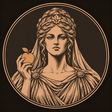
Zeus comes to Leda in the form of a swan, and Helen is said to be born of that union, sometimes hatched from an egg.
-

-

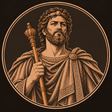
Born in a cave on Mount Kyllene, away from Olympos.
-
-

-

-
disputed
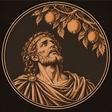
Pausanias reports the parentage as legend and says he saw this Tantalus's grave on Mount Sipylus, apart from a later Tantalus buried at Argos.
Also Connected
27 recorded connections, each with the ancient line behind it.
Connected
-
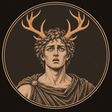
Apollodorus reports that, according to Acusilaus, Actaeon died because Zeus was angry at him for wooing Semele. The more general opinion blamed Artemis.
-

Homer's Odyssey credits Zeus with making Aeolus keeper of the winds, free to still or rouse any of them.
-

Zeus took the exact form of Alcmene's husband Amphitryon and stretched a single night to three times its length to lie with her, the event her entire recorded myth turns on.
-

Argus's entire mythological role exists because of Zeus's affair with Io, which prompted Hera to set him as her guard.
-
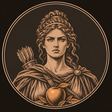
Atalanta and her husband make love in a precinct of Zeus and are turned into lions.
-
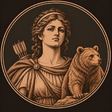
In Apollodorus Zeus shares Callisto's bed against her will and later sets her among the stars as the Bear.
-

The Theogony's genealogy runs as one continuous line from Chaos's first appearance to its own resolution, the gods, prompted by Gaia, pressing Zeus to reign as king.
-

Zeus reached her inside her sealed bronze chamber as a shower of gold, the single event her entire recorded myth turns on.
-

The scene closes with Zeus smiling and telling Aphrodite that war is not her domain.
-

Zeus grants Eos's request to make her lover Tithonus immortal, but she forgets to ask for eternal youth too.
-

Pandora is Zeus's engineered punishment for Prometheus's theft of fire, and Epimetheus is the means by which it reaches humanity.
-
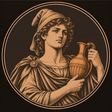
Zeus carries off Ganymede for his beauty to pour nectar for the gods, and has Hermes tell Tros that his son will be deathless and unageing.
-

Zeus honors Hecate above every other Titan-descended god, leaving her ancient share of earth, sea, and heaven untouched.
-

Zeus ordered Sleep and Death to carry his son Sarpedon's body home to Lycia, and once nearly punished Hypnos for helping Hera deceive him.
-
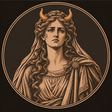
Zeus seduced Io while she was Hera's priestess and turned her into a white cow to hide her from Hera.
-

Zeus sends Iris to fetch the sacred water of the Styx whenever the gods must swear their most binding oath.
-

Zeus lay with Mnemosyne for nine nights in Pieria, a union that produced the nine Muses.
-

In a variant tradition recorded by Apollodorus, Zeus pursues Nemesis across land and sea through a series of shape changes; their union as swan and goose produces the egg from which Helen is later hatched.
-

Hesiod's Theogony records that Zeus rewarded Styx for bringing her children to his side first in the war against the Titans by keeping Nike and her three siblings permanently in his own household, never sent away.
-

Zeus ordered her making, gave her the sealed jar of evils, and sent her to earth as his own act of retaliation against humanity.
-
Zeus fathers Aeacus on Aegina, making him the grandfather of Peleus.
-

Proteus tells Menelaus he will be spared death and carried to the Elysian plain specifically because he is married to Helen and so counted, in the immortals' eyes, as Zeus's own son-in-law.
-
Apollodorus says Sisyphus is punished in Hades because he betrayed to the river god Asopus that Zeus had secretly carried off Aegina.
-

One tradition has Zeus give Talos to Europa as a guardian gift for Crete, alongside a hound and a javelin that never missed.
-

Zeus ordered Thanatos, working together with Hypnos, to carry his son Sarpedon's body home to Lycia for burial.
-

Zeus courted Thetis until a prophecy of a son mightier than his father made him withdraw. In the Iliad she later appeals to Zeus directly to favor Achilles's cause.
-
Read the full source verification →
Mythology
Appears In
- Story The Birth of Athena
- Story Prometheus and the Gift of Fire
- Story The Abduction of Persephone
- Story Eros and Psyche
- Story The Abduction of Europa
- Story Narcissus and Echo
- Story The Gigantomachy
- Story Arachne and Athena
- Story Atalanta and the Race
- Story Bellerophon and Pegasus
- Story Deucalion and the Flood
- Story House of Atreus
- Story Sisyphus and the Boulder
Equivalent Figures
Related Terms
Referenced By
- Character Asclepius
- Term Cornucopia
- Story Creation from Chaos
- Term Cyclopes
- Term Epithet
- Term Giants
- Term Golden Age
- Term Harpies
- Term Libation
- Term Muses
- Term Naiads
- Term Omphalos
- Term Panhellenic Games
- Term Pantheon
- Term Peacock
- Story Scylla and Charybdis
- Story Seven Against Thebes
- Term The Furies (Erinyes)
- Topic The Olympian Gods
- Story The Titanomachy
- Term Theogony
- Term Trident
- Comparison Zeus vs. Jupiter
- Comparison Zeus vs. Poseidon
Sources
- Hesiod, Theogony 468-491
- Hesiod, Theogony 820-868
- Homer, Iliad 15.187-193
- Ovid, Metamorphoses 3.356-369
- Apuleius, Metamorphoses 6.23-24
- Apollodorus, Library 1.6.2
- Apollodorus, Library 3.8.2
- Ovid, Metamorphoses 6.87-145
- Apollodorus, Library 1.9.3
- Timothy Gantz, Early Greek Myth (1993)