Muses
The Muses are the Greek goddesses of song, usually nine daughters of Zeus and Mnemosyne, whose name means Memory.
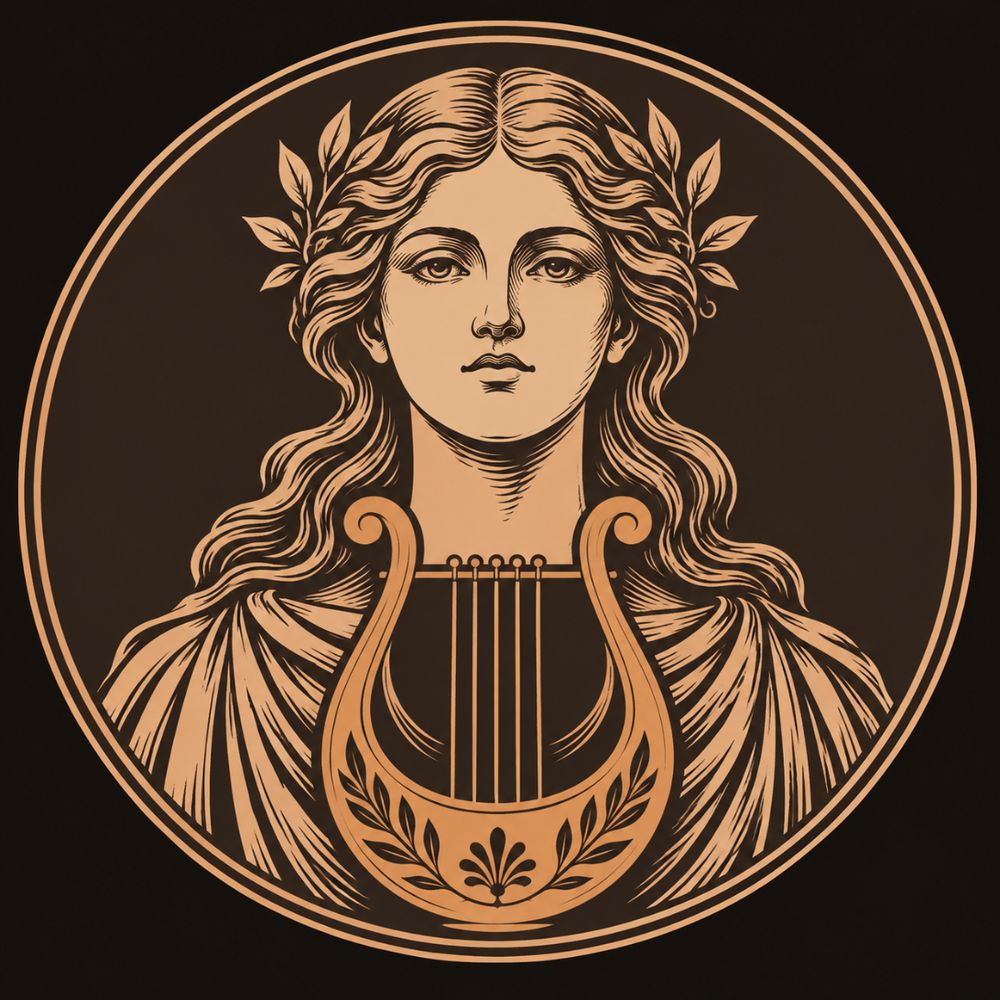
Lyre of the Muses
Generated by AI from this page's own facts, not an ancient image or evidence of anything. How this site uses generated images
Sections on this page
In Practice
Hesiod makes them the source of a poet's voice, and Homer opens both epics by asking one of them to tell the story (Theogony 53-62; Iliad 2.484-493; Odyssey 1.1-10).
Hesiod tells how they were born. Zeus lay with Mnemosyne for nine nights in Pieria, and she bore nine daughters of one mind, whose hearts are set on song (Theogony 53-62). They live on Mount Helicon, where Hesiod says they met him as a shepherd, gave him a staff of laurel and breathed a divine voice into him so that he could sing of things that will be and things that were (Theogony 22-34).
Their gifts are not limited to poets. Hesiod says that a king whom the Muses honour at birth receives sweet dew on his tongue, so that gracious words flow from his lips, and that singers and harpers on earth come from the Muses and Apollo (Theogony 80-103). He gives the Muses one shared task: they sing first of the race of the gods, and the house of Zeus is glad at their voices (Theogony 36-52). He assigns no separate art to each daughter.
Homer treats them as goddesses who know what mortals can only hear. Before the catalogue of ships he asks the Muses of Olympus for help because they are present and know all things, while men hear only report (Iliad 2.484-493). In the Odyssey the bard Demodocus is a man whom the Muse loved above all others. She took away his sight and gave him sweet song (Odyssey 8.62-64). At the funeral of Achilles, nine Muses answer one another with sweet voices and lead the dirge (Odyssey 24.60-62). They belong to the wider company of minor Greek goddesses, though they are defined by what they do rather than by a place, as a nymph is.
The number nine was not the only one on record. Pausanias reports that the sons of Aloeus held the Muses to be three, and that a Macedonian named Pierus later set up nine at Thespiae and gave them the names in use (Description of Greece 9.29.2-9.29.3).
Who are the nine Muses in Greek mythology?
Hesiod lists them as Clio, Euterpe, Thalia, Melpomene, Terpsichore, Erato, Polyhymnia, Urania and Calliope, and calls all nine daughters of Zeus. The modern pairing of each name with one art, such as Clio with history or Urania with astronomy, is not stated in his list. He gives the names and nothing more specific about what each Muse does (Theogony 75-80).
Hesiod, Theogony 75-80
Who was the leader of the nine Muses?
Hesiod singles out Calliope as the chief of them all. He gives the reason in the next breath: she attends on revered kings. No other passage checked here names a different leader, though later writers may have done so (Theogony 79-80).
Hesiod, Theogony 79-80
What are the three original Muses?
Pausanias names three: Melete, Mneme and Aoede, which can be read as Practice, Memory and Song. He says the sons of Aloeus were the first to sacrifice to the Muses on Helicon and held that there were three. He reports that Pierus, a Macedonian, later established nine Muses at Thespiae and changed the names (Description of Greece 9.29.2-9.29.3).
Pausanias, Description of Greece 9.29.2-9.29.3
Who is called a muse in the ancient sources?
A Muse is a goddess, not a woman who inspires a poet by her looks or company. The poet is the one chosen. Hesiod is given a voice by the Muses on Helicon, and Homer's Demodocus is loved by the Muse. The modern use of muse for a human source of inspiration is not found in the passages checked here (Theogony 22-34; Odyssey 8.62-64).
Homer, Odyssey 8.62-64
Can a mortal challenge the Muses?
Homer records one who tried. Thamyris the Thracian boasted that he would win even if the Muses themselves sang against him. In anger the daughters of Zeus maimed him, took away his song and made him forget his minstrelsy. The Iliad mentions him only in passing, in the list of Greek forces from Pylos (Iliad 2.594-600).
Homer, Iliad 2.594-600
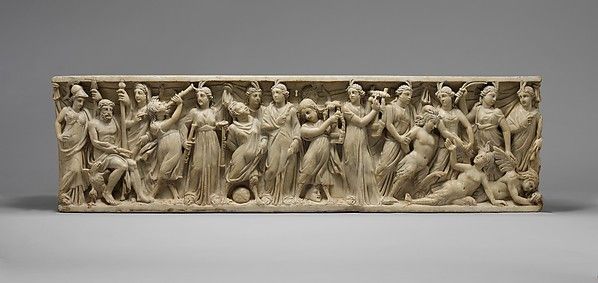
Marble sarcophagus with the contest between the Muses and the Sirens - Roman, 3rd quarter of 3rd century CE, Marble, Pentelic
Metropolitan Museum of Art, New York, NY, 10.104. CC0
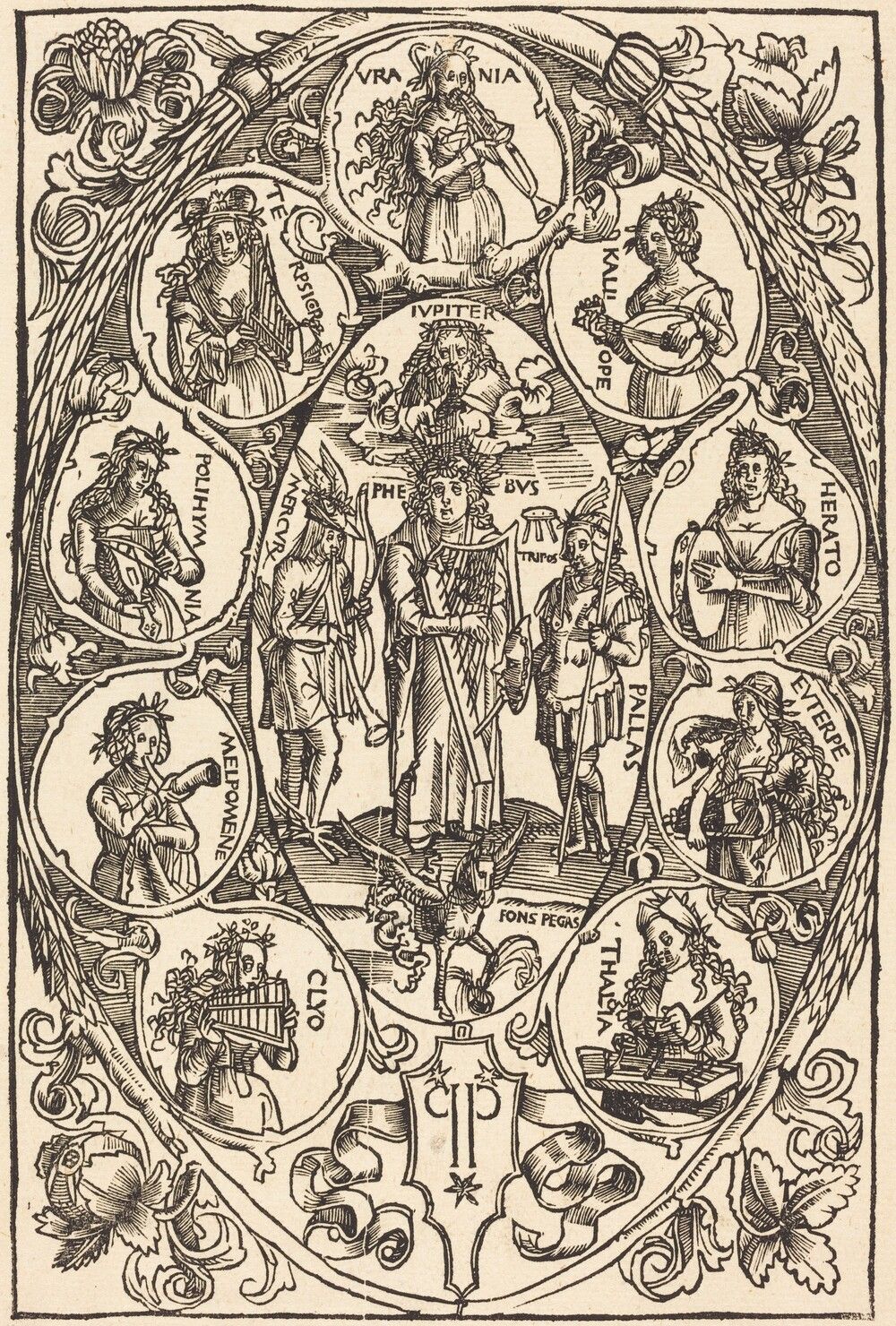
Apollo and the Muses - Hans Süss von Kulmbach, published 1502, woodcut
National Gallery of Art, Washington, DC, 1944.2.96. CC0
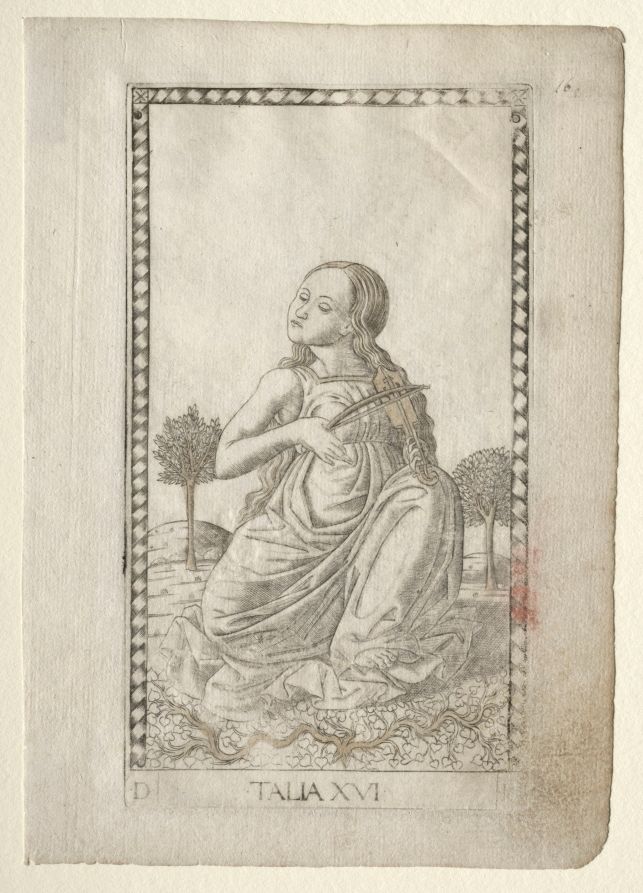
Thalia (comedy, pastoral poetry) (from the Tarocchi series D: Apollo and the Muses, #16) - Italy, Ferrara, 15th century, before 1467, engraving hand-colored with gold
The Cleveland Museum of Art, Cleveland, OH, 1924.432.16. CC0
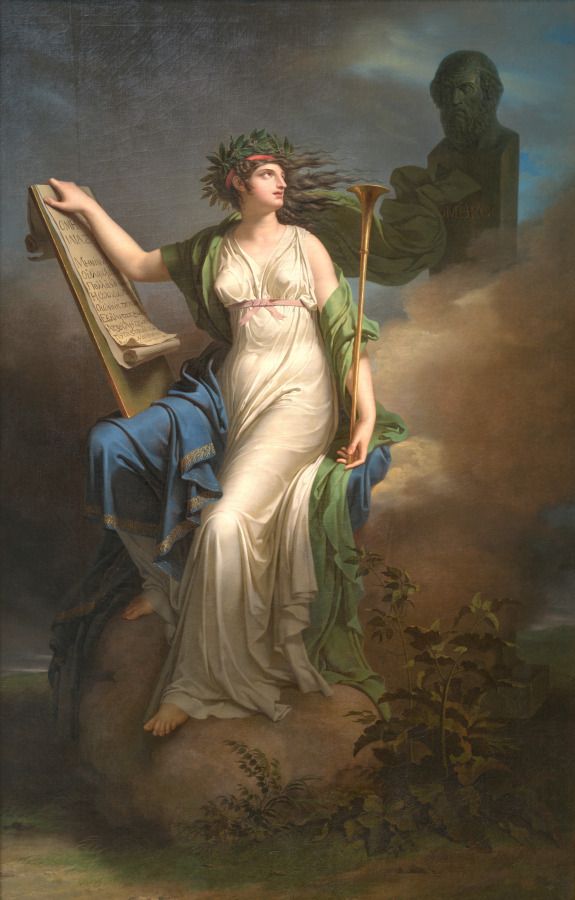
Calliope, Muse of Epic Poetry - France, late 18th-early 19th century, 1798, oil on canvas
The Cleveland Museum of Art, Cleveland, OH, 2003.6.4. CC0
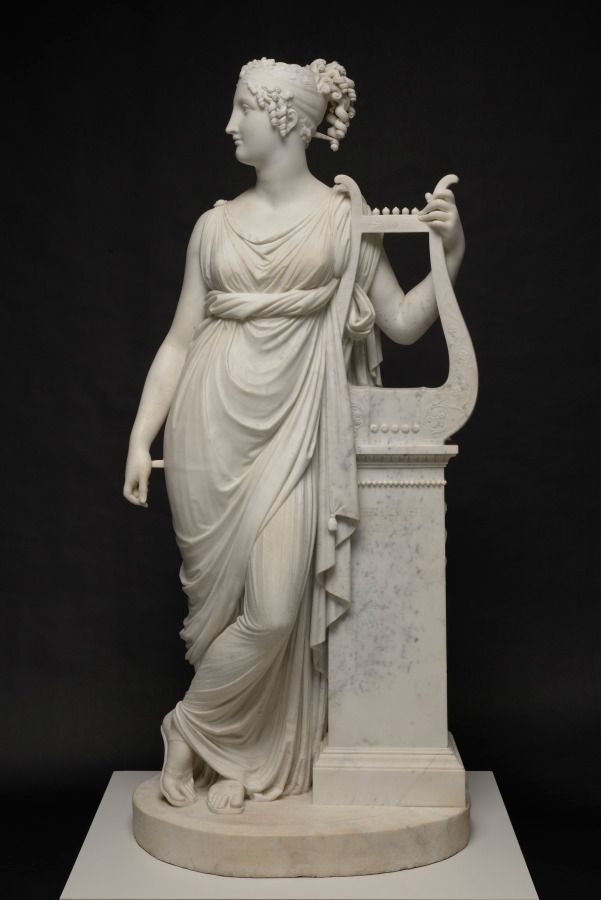
Terpsichore Lyran (Muse of Lyric Poetry) - Italy, 19th century, 1816, marble
The Cleveland Museum of Art, Cleveland, OH, 1968.212. CC0
Where Accounts Differ
- three or nine Muses
- one art for each Muse
- Three Muses or nine: Hesiod gives nine named daughters of Zeus and Mnemosyne (Theogony 75-80), and the Odyssey has nine Muses lead the dirge for Achilles (24.60-62). Pausanias reports that the sons of Aloeus held there were three, Melete, Mneme and Aoede, and that Pierus later introduced nine at Thespiae with the names now used (9.29.2-9.29.3). The sources checked here do not settle which count is older.
- Arts of the Muses: Hesiod names nine Muses and assigns them one shared task of singing (Theogony 36-52, 75-103). The division of one art to each Muse is not stated in any passage checked here, and it is recorded as a later arrangement.
- Verification: Theogony 22-103, Iliad 2.484-600, Odyssey 8.62-64 and 24.60-62 were read in the Perseus translations (Evelyn-White, Murray). Pausanias 9.29 was read on the Perseids reader, which does not mark the section breaks, so the section numbers rest on the page's paragraph order. The etymology of Mousai could not be verified here and is not stated.
Where This Appears
Sources
- Hesiod, Theogony 22-34
- Hesiod, Theogony 36-52
- Hesiod, Theogony 53-62
- Hesiod, Theogony 75-80
- Hesiod, Theogony 80-103
- Homer, Iliad 2.484-493
- Homer, Iliad 2.594-600
- Homer, Odyssey 1.1-10
- Homer, Odyssey 8.62-64
- Homer, Odyssey 24.60-62
- Pausanias, Description of Greece 9.29.2-9.29.3