Achilles
Achilles is the central hero of Homer's Iliad, the mightiest of the Greek warriors at Troy. Dipped in the River Styx as an infant, he was invulnerable everywhere except his heel - the spot by which his mother held him - which became his undoing.

Achilles, greatest warrior of the Trojan War
Generated by AI from this page's own facts, not an ancient image or evidence of anything. How this site uses generated images
Sections on this page
Rivals: Achilles vs. Hector → See how Hector differs.
What does the name "Achilles" mean? →
See Achilles in the Greek family tree. Looking for a name of your own? Try the mythological name generator.
Core Myth
Achilles was the son of the mortal king Peleus and the sea nymph Thetis. To make him immortal, Thetis dipped him in the River Styx, holding him by his heel - the one spot left vulnerable. Achilles became the greatest warrior of his age and the hero of the Greek army at Troy. In Euripides's Iphigenia at Aulis, Agamemnon uses his name as bait for a sham wedding, and Achilles vows to protect the girl. When Agamemnon dishonored him by taking his war prize Briseis, Achilles withdrew from battle, and the Greeks suffered devastating losses. In Book 9 Phoenix tries to win him back with the tale of Meleager, another hero who sat out a war in anger. Only after his beloved companion Patroclus was killed by Hector did Achilles return to the fight. He slew Hector in single combat and dragged his body behind his chariot. Achilles was ultimately killed by Paris, guided by Apollo, with an arrow to his vulnerable heel.
Why did Achilles refuse to fight in the Iliad?
Agamemnon, forced to give up his own war prize to end a plague, seized Achilles's prize Briseis instead, a public insult to his honor. Achilles withdrew himself and his soldiers from the fighting in protest, and Homer's whole epic is framed around the consequences of that single decision, named in its opening line as the wrath of Achilles.
Homer, Iliad, Book 1
Why did Achilles finally return to battle?
His closest companion Patroclus borrowed Achilles's armor and led his soldiers into battle to save the Greek ships, but was killed by the Trojan prince Hector. Grief and rage at Patroclus's death, not any change of heart about Agamemnon, is what brings Achilles back into the war, now aimed entirely at killing Hector.
Homer, Iliad, Book 18
What did Achilles do to Hector's body?
After killing Hector in single combat outside the walls of Troy, Achilles tied the body to his chariot by the ankles and dragged it back to the Greek camp, then continued dragging it around Patroclus's tomb for several days. The gods eventually intervene, and King Priam of Troy comes in person to Achilles's tent to beg for his son's body back, a scene the Iliad ends on.
Homer, Iliad, Book 24
Is the Achilles' heel story actually in Homer?
No. Homer's Iliad never mentions Thetis dipping the infant Achilles in the River Styx or any single vulnerable spot; in Homer he is simply the best fighter at Troy, mortal like any other, killed the way an arrow kills a man. The heel story is a later tradition, first clearly attested in the Roman poet Statius, centuries after Homer composed the Iliad.
Statius, Achilleid
How did Achilles actually die?
Homer's Iliad ends before his death, but later epic tradition has Paris shoot him with an arrow guided by the god Apollo. Whether the fatal wound struck the heel specifically, or simply killed him the way an arrow would kill any warrior, depends on which version of the story is being followed; the heel detail belongs to the later tradition, not the earliest one.
Ovid, Metamorphoses 12.580-628
Did Achilles have a choice about dying young?
Homer gives him one directly: his mother Thetis tells him he can choose a long, obscure life at home or a short life with everlasting glory at Troy, and Achilles chooses glory. This choice, made explicit in his own words in the Iliad, is central to how Greek audiences understood heroism as a trade of lifespan for lasting fame.
Homer, Iliad, Book 9
Later Traditions
After Achilles's death, later tradition has the Greek army award his divine armor to Odysseus over his cousin Ajax, a decision Ajax cannot bear - a dispute the Iliad itself never depicts, since the poem ends before Achilles dies.
The phrase 'Achilles' heel' entered common language as a metaphor for a fatal weakness, though Homer's Iliad never mentions the Styx-dipping story or a special vulnerability at all - in the earliest tradition Achilles is simply the greatest fighter at Troy, killed by an arrow like any other mortal could be. The heel story appears first in later sources such as Statius, writing centuries after Homer. In later tradition, Achilles was said to dwell in the Elysian Fields or on the White Island in the Black Sea after death, and some accounts even give him an afterlife marriage to Helen or to Medea, rewards unusual enough that ancient authors themselves treated them as special cases.

Lower right corner of a marble sarcophagus, illustrating the discovery of Achilles by Odysseus on the island of Skyros - Roman, ca. 160–180 CE, Marble, white
Metropolitan Museum of Art, New York, NY, 18.145.41. CC0
3 recorded relations, each with the ancient line behind it.
Parents
-

Peleus is the mortal father of Achilles; he interrupts Thetis's attempt to make the child immortal and brings him to Chiron to be raised.
-

Thetis and the mortal Peleus are the parents of Achilles, whom Thetis tries and fails to make fully immortal.
Children
-
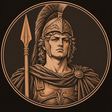
Apollodorus's Library says Achilles, hidden at the court of Lycomedes on Scyros, fathered a son by the king's daughter Deidamia, named Pyrrhus and later called Neoptolemus.
Also Connected
14 recorded connections, each with the ancient line behind it.
Allies
-
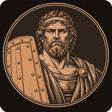
Ajax and Achilles are first cousins, sons of Telamon and Peleus, both sons of Aeacus, and fight side by side as the two greatest Greek champions at Troy.
-

Raised together in Peleus's house after Patroclus fled Opus, the two fight side by side at Troy. Patroclus's ghost asks Achilles that their bones share one golden urn.
Enemies
-
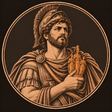
Aeneas faces Achilles in single combat in Iliad Book 20 and is saved only by Poseidon.
-

Agamemnon seizes Achilles's war prize Briseis to replace a captive he was forced to give up, a public insult that drives Achilles to withdraw from the fighting and frames the whole Iliad.
-

Achilles sacked Thebe, killed Andromache's father Eetion and her seven brothers, and took her mother captive before ransoming her.
-

Hector's killing of Patroclus draws Achilles back into the war with rage aimed squarely at him, driving the Iliad's final books toward their duel.
-

Hecuba calls the man who killed Hector savage and faithless, and wishes she could fix her teeth in his heart.
Connected
-

Achilles prays to Boreas and Zephyrus, and Iris carries the request to them, so that the winds fan Patroclus's funeral pyre all night until it burns.
-

Briseis is Achilles's captive, taken when he sacked her city. In the last scene that names her, she lies beside him in his hut.
-

Agamemnon brings Iphigenia to Aulis on the pretence that she will marry Achilles. In Euripides's Iphigenia at Aulis, Achilles knows nothing of the betrothal until Clytemnestra greets him.
-
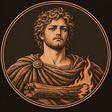
In the Iliad, Phoenix tells Achilles the story of Meleager's wrath as a warning to accept the gifts while they are offered.
-

In Iliad Book 1 Nestor tries to settle the quarrel, telling Achilles not to strive with a sceptred king. In Book 23 Achilles gives him a prize at Patroclus's funeral games.
-

Priam kisses the hands that killed his sons and ransoms Hector's body. Achilles weeps with him, for Peleus and for Patroclus.
-

Zephyrus, mating with the harpy Podarge, sired Achilles's immortal chariot horses Xanthus and Balius.
Where Accounts Differ
- invulnerability tradition
- The Styx-dipping invulnerability story is a later addition not found in Homer, first clearly attested in Statius; the Iliad treats Achilles as mortal without qualification.
Read the full source verification →
Mythology
Appears In
Related Terms
Referenced By
Sources
- Homer, Iliad, Book 1
- Homer, Iliad, Book 9
- Homer, Iliad, Book 18
- Homer, Iliad, Book 24
- Statius, Achilleid
- Ovid, Metamorphoses 12.580-628
- Pindar, Isthmian Ode 8
- Homer, Iliad 9.538-580
- Euripides, Iphigenia at Aulis 819-860
- Euripides, Iphigenia at Aulis 919-974
- Jonathan Shay, Achilles in Vietnam (1994)
- Timothy Gantz, Early Greek Myth (1993)