Hecuba
Hecuba was the queen of Troy, wife of King Priam and mother of Hector, Paris, Cassandra and Polyxena. In Homer's Iliad she begs Hector not to face Achilles and leads the laments at his death. Later works follow her into slavery after Troy falls. In Euripides and Ovid she avenges her murdered son Polydorus and becomes a dog.
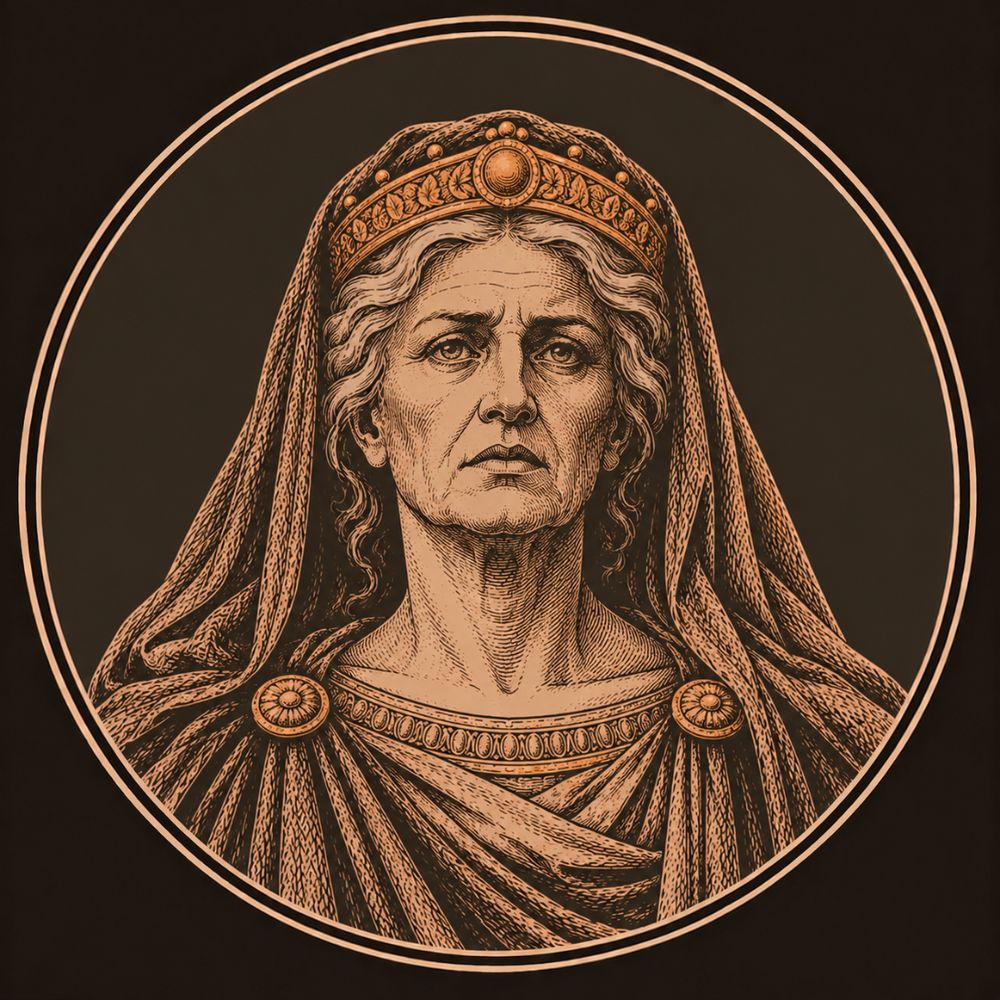
Hecuba, bronze medallion illustration
Generated by AI from this page's own facts, not an ancient image or evidence of anything. How this site uses generated images
Sections on this page
See Hecuba in the Greek family tree.
Core Myth
Homer gives Hecuba a Phrygian family. In Iliad Book 16, Apollo takes the likeness of Asius, Hecuba's own brother. Asius is a son of Dymas, who lived in Phrygia by the streams of the Sangarius. Euripides names a different father. In the opening lines of his Hecuba, the ghost of her son Polydorus calls her the daughter of Cisseus. Apollodorus's Library records both answers and adds a third, the river Sangarius and Metope.
Apollodorus says Hecuba was the second wife of Priam, who had given his first wife Arisbe to Hyrtacus. Her first son was Hector. Before her second child was born, she dreamed she gave birth to a firebrand whose fire spread over the whole city. The seer Aesacus said the child would ruin his country, so the baby was exposed on Mount Ida. He survived and grew up to be Paris. Apollodorus lists her daughters as Creusa, Laodice, Polyxena and Cassandra.
In Iliad Book 6, Hector comes back from the fighting and meets his mother at the palace. She offers him wine for a libation. He refuses and asks her to take her finest robe to the temple of Athena instead. Hecuba picks a robe woven by Sidonian women, one Paris had brought home on the voyage that also brought Helen. The priestess Theano lays it on the goddess's knees and prays for Troy. Homer says Athena denied the prayer.
In Book 22, Achilles is racing toward the walls and Hector waits outside the gate. After Priam's plea fails, Hecuba loosens her robe and shows Hector her breast. She asks him to pity the mother who nursed him and to fight from inside the wall. If Achilles kills him, she warns, she will never lay him on a bier. Hector stays. When he falls, she tears her hair, flings away her veil, and leads the Trojan women's lament.
In Book 24, Priam tells Hecuba that Zeus wants him to ransom Hector's body. She cries out that his heart must be made of iron to face the man who killed his sons. She wishes she could fix her teeth in Achilles's heart and feed on it. Still, she brings Priam wine in a golden cup and tells him to pray to Zeus for a bird of omen. At Hector's funeral she leads the second lament. Achilles sold her other sons overseas, she says, but dragged Hector around the tomb of Patroclus.
What was Hecuba known for?
Hecuba is best known as the grieving queen of Troy. She was Priam's wife and the mother of Hector, Paris, Cassandra and Polyxena. In Homer's Iliad she begs Hector not to fight Achilles and leads the women's laments after his death. Euripides built two tragedies around her as a captive after the sack, the Hecuba and the Trojan Women. Her strangest fame comes from her end, since Euripides and Ovid both have her turned into a dog.
Homer, Iliad 24.747-760
Why did Hecuba turn into a dog?
No ancient source states a single reason, and the versions differ. In Euripides's Hecuba, the change comes right after her revenge on Polymestor, who murdered her son Polydorus. The blinded king prophesies that she will become a dog with bloodshot eyes and that her tomb will be called the hound's grave. He says Dionysus, the Thracian prophet, told him. In Ovid's Metamorphoses the change happens in the fight itself. The Thracians stone her for blinding their king, and she snaps at the stones and barks when she tries to speak.
Euripides, Hecuba 1259-1273
What did Odysseus do with Hecuba?
He took her as his slave. In Euripides's Trojan Women, the Greek herald tells Hecuba she has been allotted to Odysseus, and she mourns falling to a treacherous foe with a double tongue. Apollodorus's Epitome agrees that Odysseus got Hecuba as his share of the captives. In Ovid, Ulysses drags her from her sons' tombs to his ship. In Euripides's Hecuba, Odysseus also leads away her daughter Polyxena to be sacrificed, even though Hecuba once spared his life when he spied on Troy.
Euripides, Trojan Women 277-292
What happened to Hecuba after the fall of Troy?
She lost almost everyone left to her. Apollodorus's Epitome says the Greeks slaughtered her daughter Polyxena on Achilles's grave and gave Hecuba herself to Odysseus. In Euripides's Hecuba, she also finds her youngest son Polydorus murdered by the Thracian king Polymestor for his gold. She blinds Polymestor and kills his two sons. Euripides and Ovid then have her turned into a dog. Apollodorus records another version in which Helenus takes her to the Chersonese and buries her there.
Apollodorus, Epitome 5.23
Who were Priam and Hecuba in Greek mythology?
They were the king and queen of Troy during the Trojan War. Apollodorus says Hecuba was Priam's second wife, after he gave his first wife Arisbe to another man. Their first son was Hector. Their second was Paris, exposed on Mount Ida after Hecuba dreamed she bore a firebrand that burned the city. Apollodorus names their daughters as Creusa, Laodice, Polyxena and Cassandra. In the Iliad, Priam asks Hecuba's advice before he goes to ransom Hector, and she begs him not to go.
Apollodorus, Library 3.12.5
Who was Hecuba's father?
The ancient sources disagree. Homer's Iliad makes her the daughter of Dymas, since her brother Asius is called a son of Dymas who lived in Phrygia by the Sangarius river. Euripides's Hecuba calls her the daughter of Cisseus instead. Apollodorus's Library does not choose. It says her father was Dymas, or as some say Cisseus, or as others say the river Sangarius, with Metope as her mother.
Homer, Iliad 16.718
Later Traditions
The Iliad ends before Troy falls, so Hecuba's later life comes from the tragedians and mythographers. In Euripides's Hecuba, the Greeks vote to sacrifice her daughter Polyxena at Achilles's grave. Odysseus comes to take the girl. Hecuba reminds him that he once came to spy on Troy in rags, that Helen recognized him, and that Hecuba herself let him go. He admits it and takes Polyxena anyway. The herald later reports that Achilles's son cut her throat on the mound.
Then the body of her youngest son, Polydorus, washes up on the shore. Priam had sent him with gold to their Thracian guest-friend Polymestor, who killed him once Troy fell. Hecuba lures Polymestor and his sons into the captives' tent with a tale of hidden Trojan gold. With her Trojan women she kills his two sons and blinds him. The blinded king then prophesies her end: she will become a dog with bloodshot eyes, and her tomb will be called the hound's grave, a mark for sailors. He adds that Agamemnon and Cassandra will die by Clytemnestra's hand.
Euripides's Trojan Women tells the aftermath differently. Its prologue says Polyxena has already died at Achilles's tomb without her mother's knowledge. The herald tells Hecuba she is allotted to Odysseus, and she mourns falling to a man with a double tongue. Her daughter Cassandra objects that Apollo's words say Hecuba will die at Troy. Later in the play, Helen answers the charges against her by blaming Hecuba for bearing Paris and Priam for not killing him.
Ovid retells the whole sequence in Metamorphoses Book 13. Ulysses drags Hecuba from her sons' tombs, and she carries Hector's ashes onto his ship. When she finds Polydorus's body, she tricks Polymestor with a promise of hidden gold and tears out his eyes. The Thracians stone her. She snarls, snaps at the stones, and barks when she tries to speak. Ovid says even Juno denied that Hecuba deserved such a fate.
Apollodorus's Epitome says that when the Greeks shared out the captive women, Agamemnon got Cassandra, Neoptolemus got Andromache, and Odysseus got Hecuba. It then gives a second version. Some say Helenus got her and crossed with her to the Chersonese. There she turned into a bitch, and he buried her at the place still called the Bitch's Tomb.
2 recorded relations, each with the ancient line behind it.
Children
-
At Hector's death Hecuba leads the Trojan women's lament, calling him her boast night and day in the city.
-
Before Paris was born, Hecuba dreamed she brought forth a firebrand that burned the city, and the baby was exposed on Mount Ida.
Also Connected
6 recorded connections, each with the ancient line behind it.
Enemies
-

Hecuba calls the man who killed Hector savage and faithless, and wishes she could fix her teeth in his heart.
-
Apollodorus's Epitome records that the Greeks slaughtered her daughter Polyxena on Achilles's grave, and that Neoptolemus took Andromache while Odysseus took Hecuba. In Euripides's Hecuba, Neoptolemus cuts Polyxena's throat himself.
Connected
-
Hecuba is Andromache's mother-in-law. Forced to sail with Neoptolemus, Andromache leaves the body of her son Astyanax to Hecuba to prepare for burial in Hector's shield.
-

At Hector's bidding Hecuba brings her finest robe to Athena's temple for Troy's sake, but the goddess denies the prayer.
-

When the captives are shared out, Hecuba is allotted to Odysseus as his slave, a master she calls treacherous and double-tongued.
-
Hecuba is Priam's wife and queen. When he resolves to ransom Hector from Achilles, she tells him his heart is iron and begs him to stay.
Where Accounts Differ
- who was Hecuba's father
- who took Hecuba captive
- where and how Hecuba died
- how Paris's birth is told
- whether Hecuba saw Polyxena taken
- Hecuba's father is named three ways. The Iliad (16.718) makes her brother Asius a son of Dymas. Euripides (Hecuba 1-30) calls her the daughter of Cisseus. Apollodorus (Library 3.12.5) gives Dymas, Cisseus, or the river Sangarius and Metope.
- Her captor differs. Euripides (Trojan Women 277-292), Apollodorus (Epitome 5.24) and Ovid (Metamorphoses 13.399-428) give her to Odysseus. Apollodorus (Epitome 5.24) also reports that some said Helenus got her and took her to the Chersonese.
- Where and how she died differs. Euripides (Hecuba 1259-1273) has Polymestor foretell that she will become a dog, fall from a ship's masthead, and lie in the hound's grave, a landmark for sailors. In the Trojan Women (424-430), Cassandra says Apollo's words declare she will die at Troy. Ovid (Metamorphoses 13.533-575) has her change into a dog in Thrace after the Thracians stone her. Apollodorus (Epitome 5.24) has her become a bitch in the Chersonese and Helenus bury her at the Bitch's Tomb.
- Paris's birth is told as an omen in Apollodorus (Library 3.12.5): Hecuba dreams of a firebrand, Aesacus reads it as ruin for Troy, and the baby is exposed. In Euripides (Trojan Women 915-925), Helen turns the story into an accusation, blaming Hecuba for bearing Paris and Priam for not killing him.
- Whether Hecuba saw Polyxena taken differs within Euripides. In the Hecuba (218-250) Odysseus takes the girl from her mother in person, while the prologue of the Trojan Women (36-44) says Polyxena died at Achilles's tomb without Hecuba's knowledge. Ovid (Metamorphoses 13.439-480) has Achilles's ghost demand the sacrifice.
Read the full source verification →
Mythology
Appears In
Related Terms
Referenced By
Sources
- Homer, Iliad 6.251-311
- Homer, Iliad 16.718
- Homer, Iliad 22.79-89
- Homer, Iliad 22.430-436
- Homer, Iliad 24.193-227
- Homer, Iliad 24.283-301
- Homer, Iliad 24.747-760
- Apollodorus, Library 3.12.5
- Apollodorus, Epitome 5.23
- Apollodorus, Epitome 5.24
- Euripides, Hecuba 1-30
- Euripides, Hecuba 218-250
- Euripides, Hecuba 518-582
- Euripides, Hecuba 681-720
- Euripides, Hecuba 1000-1022
- Euripides, Hecuba 1035-1055
- Euripides, Hecuba 1259-1273
- Euripides, Trojan Women 36-44
- Euripides, Trojan Women 277-292
- Euripides, Trojan Women 424-430
- Euripides, Trojan Women 915-925
- Ovid, Metamorphoses 13.399-428
- Ovid, Metamorphoses 13.439-480
- Ovid, Metamorphoses 13.533-575