Libation
A libation is a liquid poured out as an offering to a god or to the dead, and in Homer and Hesiod the liquid is usually wine.
Phiale libation bowl
Generated by AI from this page's own facts, not an ancient image or evidence of anything. How this site uses generated images
Sections on this page
In Practice
The pouring is joined to a prayer, and it is small enough to be done at any meal, in any household or camp.
Homer shows the act at every scale. At the sacrifice for Apollo, the old priest burns the offering on wood and pours gleaming wine over it. Later the youths pour first drops into the cups before they serve the drink (Iliad 1.462-471). Achilles keeps a cup that he uses for no god but Zeus. He cleans it, washes his hands, draws wine, prays and pours it out looking to heaven (Iliad 16.225-232). Hector tells his mother that he shrinks from pouring wine to Zeus with unwashed hands (Iliad 6.264-268).
Hesiod turns that scruple into a rule. He tells the farmer never to pour sparkling wine to Zeus or the other gods with unwashed hands, because the gods then spit back the prayers (Works and Days 724-726). His verb for pouring is leibein.
A libation also seals an agreement. At the oath sacrifice in the Iliad both armies pour wine and pray that whoever breaks the oath may have his brains poured out on the ground like the wine (Iliad 3.296-301). The dead received libations too. Odysseus pours milk and honey, then sweet wine, then water around a pit, and sprinkles white barley meal over it (Odyssey 11.25-28). The Phaeacian leaders pour the last libation of the evening to Hermes before they go to rest (Odyssey 7.137-138).
The libation is the light, everyday counterpart of the hecatomb, which was a sacrifice of many animals offered by a whole community. Both belong to the worship of the Olympian gods, but only the libation needs no animal and no altar.
What is the meaning of libation?
In the Greek sources checked here a libation is the act of pouring a drink out for a god or the dead. Hesiod uses the verb leibein, to pour, for it. The English noun is a modern way of naming that act. The pouring is not a gift of a full drink: the god's share is poured out and the rest is drunk (Works and Days 724-726; Iliad 1.462-471).
Hesiod, Works and Days 724-726
Why is alcohol called libations?
The sources checked here do not explain it. The modern use of libations for alcoholic drinks is a figurative extension of the old sense, in which wine was poured out to a god. The ancient texts keep the two apart: the poured portion belongs to the god, while the drinking that follows belongs to the company. The origin of the English word was not checked (Iliad 1.462-471).
Homer, Iliad 1.462-471
Is libation a sin?
Nothing in Homer or Hesiod treats the act itself as wrong. The danger they name is pouring it carelessly. Hesiod warns that a libation poured with unwashed hands is not heard, and Homer's Hector will not pour wine to Zeus while stained with blood. Sin is a later religious category and neither poet uses it for this rite (Works and Days 724-726; Iliad 6.264-268).
Hesiod, Works and Days 724-726
Who received libations in Greek myth?
Zeus is the god named most often. Hecuba offers Hector wine so that he may pour to Zeus and the other immortals first, and Achilles pours to Zeus alone from his own cup. Hermes had the last libation at the Phaeacian court, and the dead received theirs at Odysseus's pit (Iliad 6.258-262; Iliad 16.225-232; Odyssey 7.137-138).
Homer, Iliad 6.258-262
What did Odysseus pour for the dead?
Odysseus pours three liquids in order around the pit he has dug: milk and honey, then sweet wine, then water. He then sprinkles white barley meal on it. The libation is made to all the dead, not to one named ghost, and it comes before the vows and the sacrifice of the sheep (Odyssey 11.25-28).
Homer, Odyssey 11.25-28
Why did Hector refuse a cup of wine from Hecuba?
Hector gives two reasons. The wine might weaken him and make him forget his courage. He also says he cannot pour wine to Zeus with unwashed hands, and a man covered in blood and filth should not pray to the son of Kronos. His mother had offered the cup so that he could pour first (Iliad 6.258-268).
Homer, Iliad 6.258-268
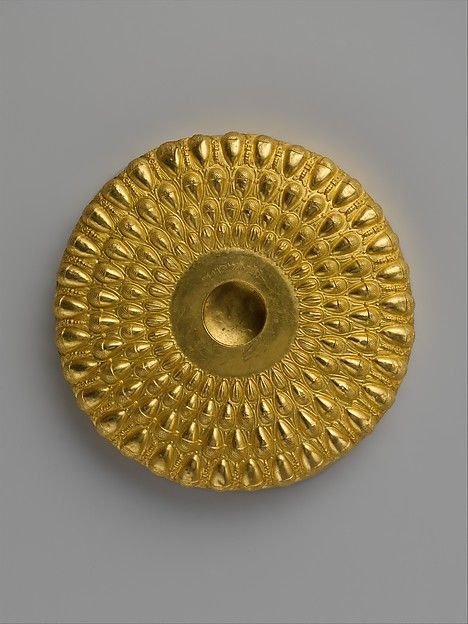
Gold phiale (libation bowl) - Greek, 4th–3rd century BCE, Gold
Metropolitan Museum of Art, New York, NY, 62.11.1. CC0
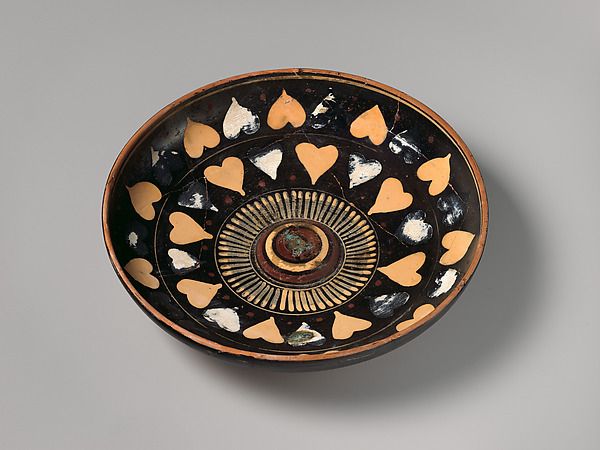
Terracotta phiale (libation bowl) - Greek, Attic, ca. 500 BCE, Terracotta
Metropolitan Museum of Art, New York, NY, 1974.11.3. CC0
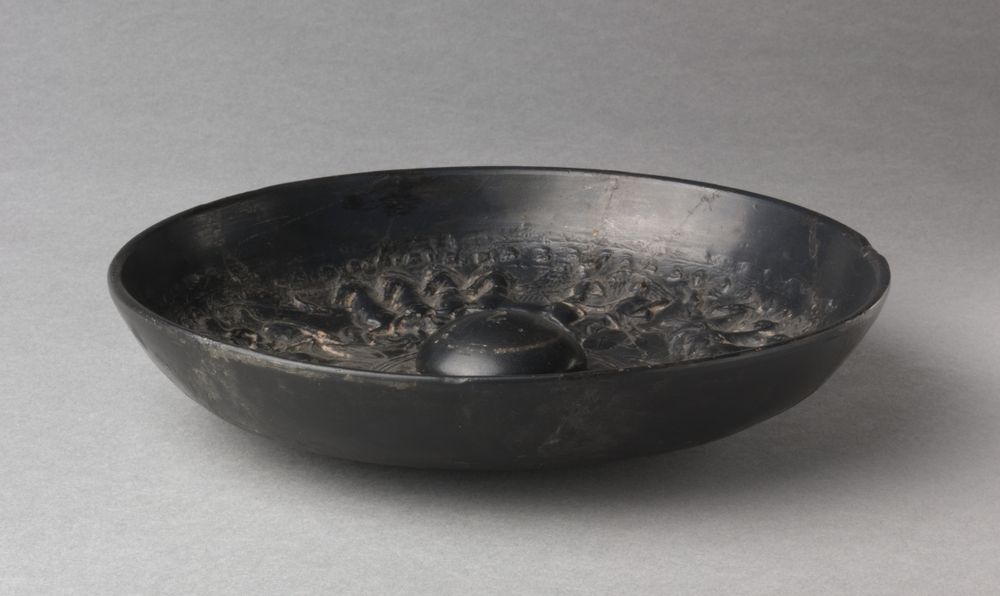
Black-Gloss Mesomphalic Phiale (Libation Bowl): Apotheosis of Herakles - South Italian, Campanian (Calenian), 200s BCE, ceramic
The Cleveland Museum of Art, Cleveland, OH, 1926.515. CC0
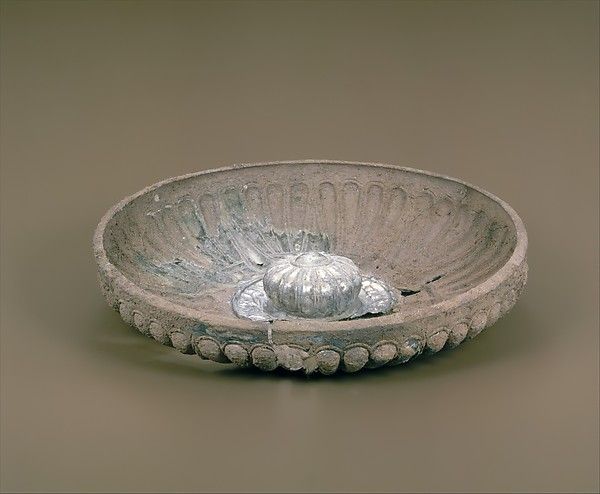
Silver phiale (libation bowl) - East Greek, perhaps Rhodian, late 7th or early 6th century BCE, Silver, gold
Metropolitan Museum of Art, New York, NY, 1981.11.13. CC0
Where Accounts Differ
- modern drinks sense of libation
- Modern drinks sense: the page treats the ritual only. Why English uses libations for alcoholic drinks, and the origin of the English word, were not checked in any source, so neither is stated.
Where This Appears
Sources
- Homer, Iliad 1.462-471
- Homer, Iliad 3.296-301
- Homer, Iliad 6.258-268
- Homer, Iliad 16.225-232
- Homer, Odyssey 7.137-138
- Homer, Odyssey 11.25-28
- Hesiod, Works and Days 724-726