Odysseus
Odysseus, king of Ithaca, is celebrated as the cleverest of the Greek heroes. He devised the Trojan Horse to end the Trojan War and spent ten years wandering the Mediterranean before returning home, facing monsters, gods, and the temptations of the sea.

Odysseus, cunning king of Ithaca
Generated by AI from this page's own facts, not an ancient image or evidence of anything. How this site uses generated images
Sections on this page
What does the name "Odysseus" mean? →
See Odysseus in the Greek family tree. Looking for a name of your own? Try the mythological name generator.
Core Myth
Odysseus was king of Ithaca and one of the principal Greek leaders in the Trojan War. He is credited with devising the stratagem of the Trojan Horse, which ended the ten-year siege. In Apollodorus's Epitome he leads the picked men inside the horse, while Sinon stays behind to light the beacon. His return home took another ten years, during which he faced countless trials: he outwitted the Cyclops Polyphemus by blinding him, then could not resist shouting his own name back to the blinded giant, an act of hubris that lets Polyphemus call down Poseidon's curse on the rest of the voyage; he also resisted the song of the Sirens, navigated between Scylla and Charybdis, and refused the goddess Calypso's offer of immortality. Washed up on Scheria, he is found by the princess Nausicaa, who tells him how to reach her father's house (Odyssey 6.251-315). Upon his return to Ithaca, he found his palace overrun by suitors courting his wife Penelope. Disguised as a beggar, he strung his great bow - which no suitor could bend - and slew them all. Yet he admits in the Odyssey that at Troy only Philoctetes beat him with the bow. In Virgil's Aeneid he is the Greek of guile at Troy, known to Latin readers as Ulysses (Aeneid 2).
Why did Odysseus's journey home take ten years?
Two separate causes stack on top of each other in the Odyssey: Odysseus blinds the Cyclops Polyphemus, a son of Poseidon, and the enraged sea god delays and wrecks his voyage across the entire poem in revenge; on top of that, Odysseus and his crew repeatedly bring disaster on themselves, most fatally by eating the cattle of the sun god Helios against explicit warning, which costs the rest of the crew their lives and leaves Odysseus to finish the journey alone.
Homer, Odyssey, Book 1
How did Odysseus escape the Cyclops Polyphemus?
Trapped in Polyphemus's cave, Odysseus gets the Cyclops drunk on wine, tells him his name is "Nobody," and then blinds his single eye with a sharpened stake while he sleeps. When Polyphemus cries out that Nobody is hurting him, the other Cyclopes assume nothing is wrong and do not come to help, and Odysseus's men escape clinging to the undersides of the Cyclops's sheep as he lets them out to graze.
Homer, Odyssey, Book 9
What did Odysseus learn from the prophet Tiresias in the underworld?
On Circe's advice, Odysseus sails to the edge of the world and calls up the shade of the blind prophet Tiresias to learn his fate: how to get home safely, the danger of eating the cattle of the sun god Helios, and a final warning that death will eventually come to him from the sea, in old age, gently. Among the dead he also sees Sisyphus straining at his stone (Odyssey 11.593-600). The consultation frames the rest of the poem as a fate already partly known rather than a purely open journey.
Homer, Odyssey, Book 11
How did Odysseus resist the Sirens' song without dying?
Warned in advance by the sorceress Circe, Odysseus has his crew plug their ears with wax so they cannot hear the Sirens at all, while he alone is tied tightly to the mast so he can hear the song without being able to steer the ship toward the rocks it lures sailors onto. He orders the crew to ignore any pleas he makes to be untied until they are safely past.
Homer, Odyssey, Book 12
How did Odysseus prove his identity to Penelope after twenty years?
Penelope tests him by ordering their marriage bed moved out of their bedroom, which Odysseus objects to immediately: he built the bed himself around a living olive tree, rooted in the ground, so it cannot be moved without destroying it. Only the real Odysseus would know this secret, and his reaction confirms his identity to her more convincingly than any physical scar or story could.
Homer, Odyssey, Book 23
How did Odysseus defeat Penelope's suitors?
Disguised as an old beggar by Athena, Odysseus returns to Ithaca unrecognized and enters an archery contest Penelope sets for her suitors: stringing Odysseus's own great bow and shooting an arrow through the sockets of twelve axe heads lined in a row. None of the suitors can even string the bow; Odysseus does both feats easily, then turns the bow on the suitors themselves and kills them with the help of his son Telemachus and two loyal servants.
Homer, Odyssey, Book 21
Why did Odysseus lose the contest for Achilles's armor to himself and not Ajax?
After Achilles's death, the Greek army votes on which of the two greatest surviving warriors, Odysseus or Ajax, deserves his armor, and awards it to Odysseus for his cunning contributions to the war effort rather than to Ajax for his raw combat strength. Sophocles's Ajax stages the aftermath: Ajax cannot bear the humiliation and is driven to madness and eventual suicide, a result later Greek audiences used to question whether cleverness should really outrank courage.
Sophocles, Ajax
Later Traditions
Odysseus became one of the most explored figures in Western literature. Dante placed him in Hell for his deceptions, treating the same cunning that made him a hero at Troy as a form of fraud once judged by later moral standards, while Joyce's Ulysses reimagined the entire Odyssey in modern Dublin. His character embodies the tension between cleverness and moral ambiguity: Sophocles's Ajax stages a rivalry in which Odysseus is awarded the dead Achilles's armor over Ajax by vote of the army, a decision Ajax cannot bear and that drives him to his own death, making Odysseus's victory a point where the epic tradition itself questions whether cleverness should outrank raw courage.

Hermes Ordering Calypso to Release Odysseus - Netherlands, c. 1670, oil on canvas
The Cleveland Museum of Art, Cleveland, OH, 1992.2. CC0
2 recorded relations, each with the ancient line behind it.
Children
-
disputed
Hesiod's Theogony and Apollodorus both make Odysseus the father of Latinus, by Circe and by Calypso respectively. Hyginus makes Latinus his grandson through Telemachus, and Virgil names Faunus as the father.
-
Telemachus is Odysseus's only son by Penelope in Homer; he says Laertes, Odysseus and he were each an only son.
Also Connected
22 recorded connections, each with the ancient line behind it.
Allies
-
Diomedes and Odysseus sneak into Troy together to steal the sacred Palladium; ancient sources disagree on which of the two actually carried it off.
-

When Odysseus sneaks into Troy disguised as a beggar to spy on the city, Helen recognizes him, keeps his secret, and helps him escape.
-
In Homer's Odyssey, Odysseus tells the ghost of Achilles that he brought Neoptolemus from Scyros and saw his courage inside the wooden horse. Sophocles's Philoctetes sets them against each other over the stolen bow.
-
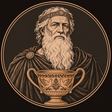
Nestor tells Telemachus that he and Odysseus never spoke at variance in assembly or council at Troy.
-
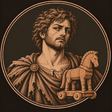
In the Epitome, the Greeks follow Odysseus's advice and appoint him leader of the men in the horse, and they leave Sinon to light the beacon. In Virgil, Sinon falsely calls Ulysses his persecutor.
Enemies
-
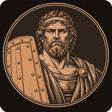
After Achilles's death, the Greek leaders award his armor to Odysseus over Ajax; unable to bear the disgrace, Ajax is driven mad and to suicide, the central action of Sophocles's Ajax.
-

-
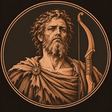
On Agamemnon's orders, Odysseus put the wounded Philoctetes ashore on Lemnos with his bow. Philoctetes curses him for it in Sophocles's play.
-

-

Connected
-

Aeolus hosts Odysseus for a month and sends him home with a bag binding every wind but a favorable one, then refuses to help again once the crew opens it and the storm drives the fleet back to his island.
-
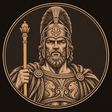
In the underworld, Agamemnon's shade describes his own murder to Odysseus, and the two commiserate over the suffering Helen's abduction brought on the sons of Atreus.
-

Boreas is one of the four winds Poseidon drives against Odysseus's raft, wrecking it and nearly drowning him on the way from Calypso's island.
-

Calypso holds Odysseus on Ogygia, wanting him for her husband, until Zeus orders his release.
-

Circe hosts Odysseus for a year on Aeaea and gives him the instructions that let him survive the Sirens, Scylla, and Charybdis.
-

Calypso recounts Eos's love for Orion to Odysseus as an example of the gods' jealousy over mortal lovers.
-
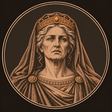
When the captives are shared out, Hecuba is allotted to Odysseus as his slave, a master she calls treacherous and double-tongued.
-
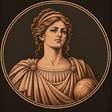
Nausicaa finds the shipwrecked Odysseus on the shore, clothes and feeds him, and sends him to her parents.
-
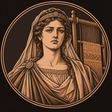
Odysseus and Penelope are husband and wife; in Homer's Odyssey she accepts him after twenty years only when he reveals the secret of the bed he built around a living olive tree.
-

Held fast by Menelaus, Proteus reports that Odysseus is alive but trapped on Calypso's island, weeping for a way home, the first news in the Odyssey's own story of where Odysseus actually is.
-
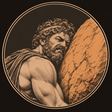
Homer makes Odysseus the child of Laertes. Later writers give him Sisyphus as his true father, usually as an insult. In Euripides's Iphigenia at Aulis, Agamemnon warns that Sisyphus's offspring knows all, and Menelaus answers with Odysseus's name.
-
Read the full source verification →
Mythology
Appears In
Equivalent Figures
Related Terms
Referenced By
Sources
- Homer, Odyssey, Book 1
- Homer, Odyssey, Book 9
- Homer, Odyssey, Book 11
- Homer, Odyssey, Book 12
- Homer, Odyssey, Book 21
- Homer, Odyssey, Book 23
- Homer, Iliad
- Sophocles, Ajax
- Homer, Odyssey 8.219-220
- Apollodorus, Epitome 5.15
- Homer, Odyssey 6.251-315
- Homer, Odyssey 11.593-600
- W.B. Stanford, The Ulysses Theme (1963)
- Timothy Gantz, Early Greek Myth (1993)