Mermaids
A mermaid is a woman with a fish's tail, and the figure has no counterpart in ancient Greek myth.
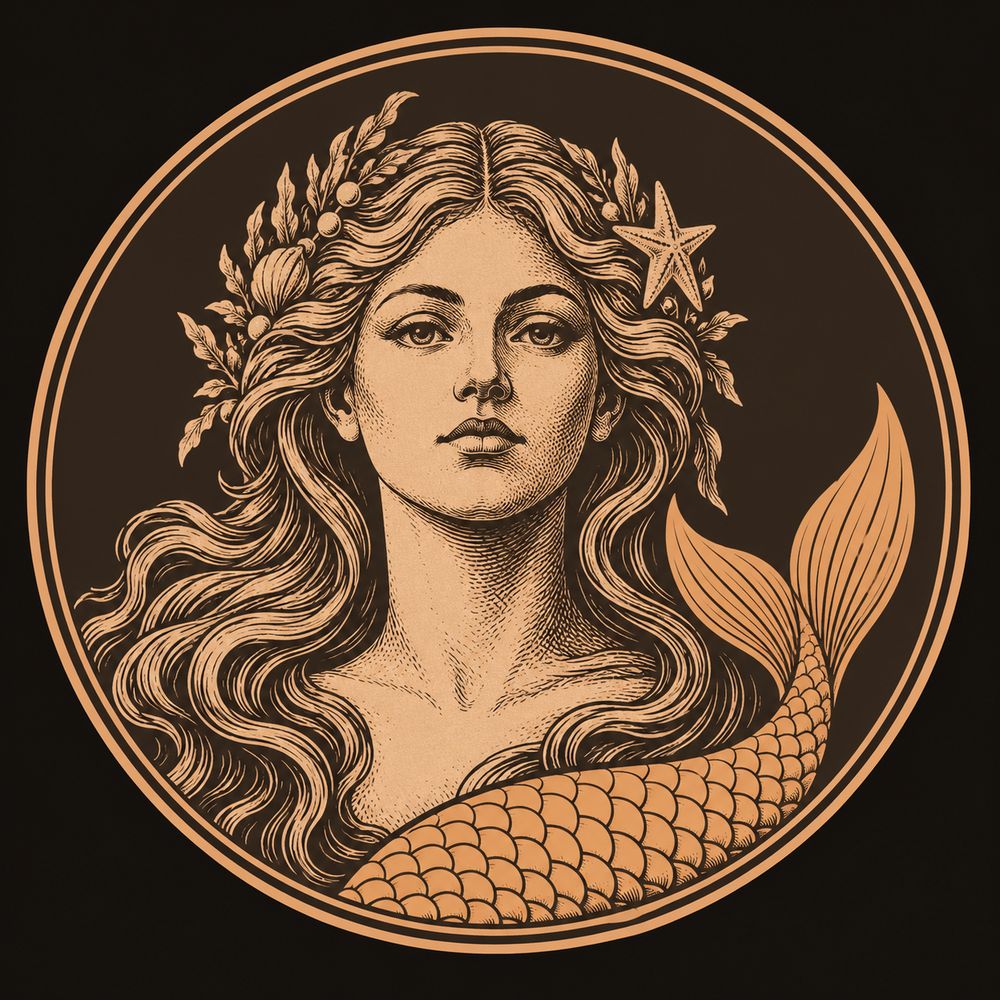
Fish tail of a mermaid
Generated by AI from this page's own facts, not an ancient image or evidence of anything. How this site uses generated images
Sections on this page
In Practice
The Greek Sirens were part bird and part woman, and the Greek sea beings were nymphs and gods in human form. The fish-tailed Siren appears only in late antique and medieval writing.
Homer's Odyssey gives the oldest surviving Siren episode. Circe warns Odysseus of a meadow of singers heaped with the bones of men, and Odysseus passes them bound to the mast (Odyssey 12.39-54; 12.165-200). Homer does not describe their bodies. The first source checked here that does is Apollonius of Rhodes, who says the Sirens of Anthemoessa were fashioned in part like birds and in part like maidens (Argonautica). No passage checked here gives a Siren a fish's tail.
The Greek sea had its own population. Hesiod makes the fifty Nereids daughters of Nereus and Doris, and he lists Thetis and Amphitrite among them (Theogony 240-264). Homer shows Thetis rising from the sea with her sisters, to grieve with Achilles (Iliad 18.35-51). Hesiod makes Triton the son of Poseidon and Amphitrite (Theogony 930-933). Pausanias describes Tritons with frog-coloured hair, fine scales, gills below the ears and a tail like a dolphin's, so a Greek writer could picture a human upper body joined to a fish-like lower body (Description of Greece 9.21.1). That is a male sea being, not a seductive singer, and it is not called a mermaid.
The fish-tailed woman does exist in the wider ancient world. Diodorus Siculus says the Syrian goddess Derceto of Ascalon has the head of a woman and a body that is entirely a fish (Bibliotheca Historica). He presents her as a Syrian goddess, not as a Greek creature or a Siren.
The change in the Siren is documented in medieval Latin. The Liber Monstrorum, an Anglo-Latin catalogue of marvels dated by modern scholars to the late seventh or early eighth century, is described by modern summaries as giving the sirens a maiden's body and fish tails. The sources checked here did not include the Latin text itself, so that wording is not quoted.
This cluster of creatures is surveyed on the monsters of Greek myth page, where the bird-bodied Siren sits beside the other sea-adjacent figures.
What came first, mermaids or sirens?
Sirens came first. Homer's Odyssey already has them, and Apollonius of Rhodes describes them as part bird and part maiden. The fish-tailed woman called a mermaid is not attested in the Greek sources checked here. A fish-bodied goddess, Derceto, is reported for Syria by Diodorus Siculus, but she is not a Siren. The fish-tailed Siren is a medieval development.
Homer, Odyssey 12.39-54; Apollonius of Rhodes, Argonautica; Diodorus Siculus, Bibliotheca Historica
Who is the Greek god of mermaids?
No Greek god is the god of mermaids, because Greek myth has no mermaids. The nearest figures are the gods of the sea. Hesiod names Poseidon and Amphitrite as the parents of Triton, and he names Amphitrite among the Nereids. A sailor in Greek myth would meet these deities, not a fish-tailed woman (Theogony 240-264; Theogony 930-933).
Hesiod, Theogony 240-264; Hesiod, Theogony 930-933
Was Medusa a mermaid?
No. Hesiod makes Medusa one of three Gorgon sisters, daughters of the sea powers Phorcys and Ceto, and he says Poseidon lay with her. That gives her a connection to the sea but no fish's tail. The sources checked here do not describe her with one, and the idea comes from modern retellings (Theogony 270-279).
Hesiod, Theogony 270-279
Did the Greeks imagine any being with a fish's tail?
Yes, the Tritons. Pausanias says they have hair like a marsh frog's, fine scales, gills below the ears and a tail like a dolphin's. Hesiod makes the first Triton the son of Poseidon and Amphitrite. The Tritons are sea gods, so they are not Sirens and are not women, and no Greek author checked here calls them mermaids (Description of Greece 9.21.1; Theogony 930-933).
Pausanias, Description of Greece 9.21.1
Why are Sirens and mermaids confused?
Both are female singers or sea dwellers who endanger sailors, and the Siren was already linked to the sea in Homer. Over time a fish tail replaced the bird's legs and wings in medieval images and texts. Modern retellings kept the sea setting and the song, so the two names now describe one picture. The Greek texts keep them apart (Odyssey 12.39-54).
Homer, Odyssey 12.165-200
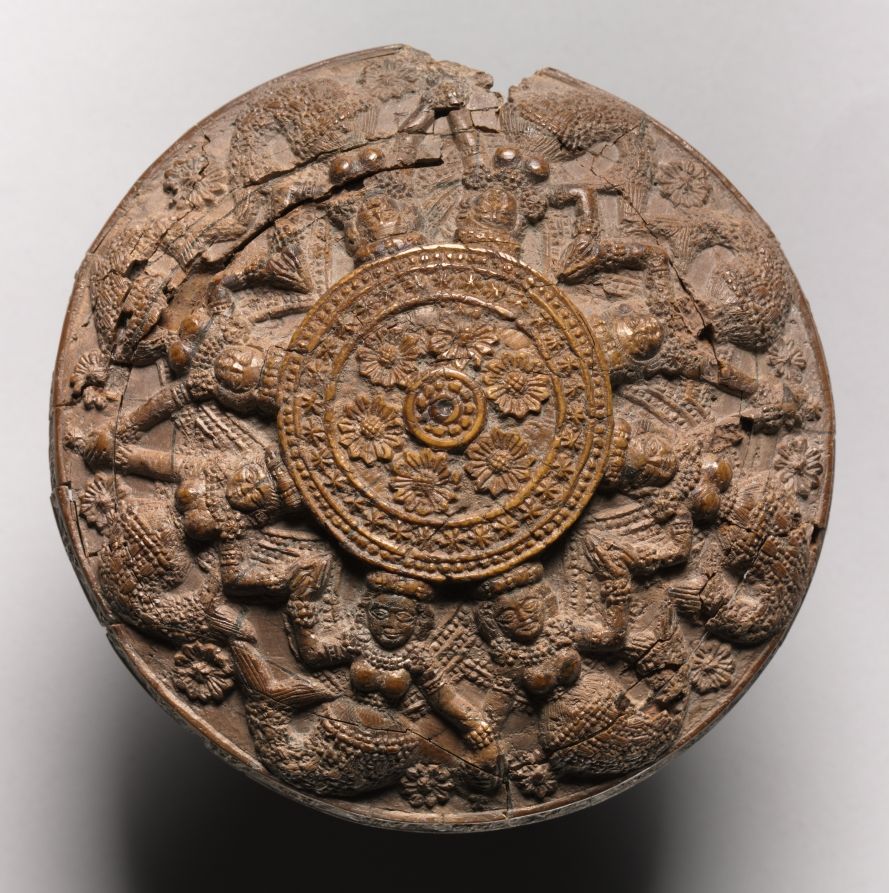
Roundel with Mermaids and Lotus - India, Bengal, Chandraketugarh area, Shunga period (185–78 BCE), c. 100 BCE, ivory
The Cleveland Museum of Art, Cleveland, OH, 2010.295. CC0
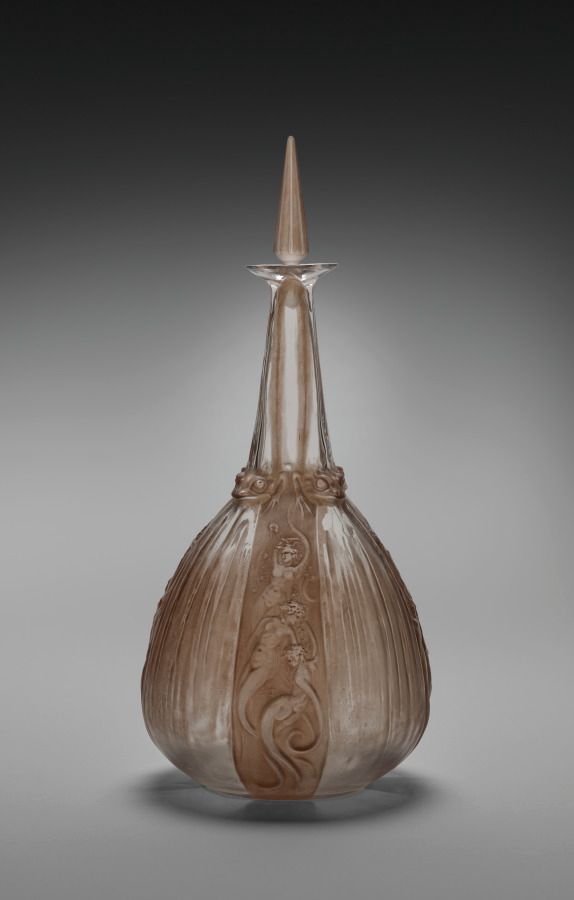
Mermaids and Frogs Decanter (Carafe sirènes et grenouilles) - France, 20th century, 1917, glass
The Cleveland Museum of Art, Cleveland, OH, 2011.122. CC0
Where Accounts Differ
- no mermaid in Greek myth
- date and wording of the Liber Monstrorum siren
- Greek mermaid: no Greek or Roman source checked here describes a Siren, Nereid or other woman with a fish's tail. The Tritons of Pausanias (9.21.1) have a fish-like lower body but are sea gods, and Diodorus Siculus reports a fish-bodied goddess for Syria, not for Greece. Whether other fish-tailed figures existed in Greek art is not settled by the sources checked here.
- Liber Monstrorum: the claim that this medieval catalogue gives sirens fish tails rests on modern summaries and a partial Latin quotation in a secondary page. The Latin text and Andy Orchard's English translation (Pride and Prodigies, 1995) were not read, so no line is cited and the passage is not quoted. The date, late seventh or early eighth century, is the modern scholarly estimate.
- Verification: Odyssey 12, Iliad 18, Theogony and Pausanias references are checked by the citation validator against Perseus. The Argonautica passage on the Sirens of Anthemoessa was read in the local registry text and is cited by work name. The Diodorus passage on Derceto (Book 2, chapter 4) was read in the Loeb text hosted by Penelope and is cited by work name. The etymology of the word mermaid was not checked and is not stated.
Where This Appears
Sources
- Homer, Odyssey 12.39-54
- Homer, Odyssey 12.165-200
- Homer, Iliad 18.35-51
- Hesiod, Theogony 240-264
- Hesiod, Theogony 270-279
- Hesiod, Theogony 930-933
- Pausanias, Description of Greece 9.21.1
- Apollonius of Rhodes, Argonautica
- Diodorus Siculus, Bibliotheca Historica