Ulysses
Ulysses is the Latin name of Odysseus, the Greek king of Ithaca. He is the same hero, seen from a Roman angle. In Virgil's Aeneid he is a Greek of guile who helps take Troy, and in Ovid's Metamorphoses he wins the arms of Achilles from Ajax. Dante later places him in hell among the evil counsellors.
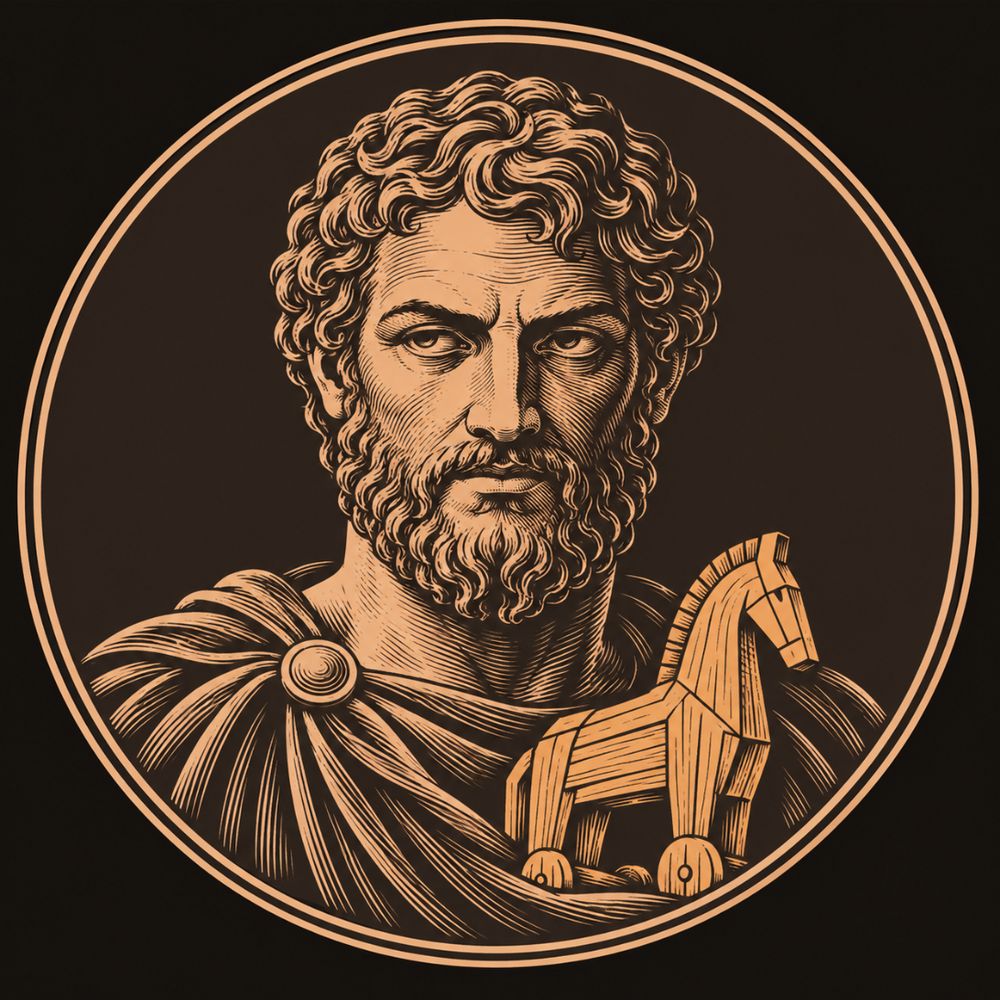
Ulysses with the wooden horse
Generated by AI from this page's own facts, not an ancient image or evidence of anything. How this site uses generated images
Sections on this page
Core Myth
Ulysses is the Latin name of Odysseus, the king of Ithaca. Modern scholars write the Latin form as Ulixes, and English translators of Latin poets keep Ulysses. The Roman epic that matters most for him is Virgil's Aeneid, the story of the Trojan Aeneas. Virgil does not tell Ulysses's own journey home. He shows him through the eyes of the Trojans he helped defeat.
In Book 2 Aeneas begins to tell Dido how Troy fell. He asks who could hold back tears at such a tale, even a Myrmidon or a follower of grim Ulysses (Aeneid 2.1-13). The Greek Sinon then tells the Trojans a false story. He says that Palamedes was condemned on false witness, and that Ulysses envied him and whispered slander against him (Aeneid 2.77-104). The tale is a trick, so the portrait of Ulysses in it serves the trick. The page on Sinon tells how it worked.
Aeneas names Ulysses twice more as an agent of the last night. He says that Diomed and Ulysses, whom he calls the author of all guile, tore the Palladium from its shrine (Aeneid 2.162-175). When the horse opens, Ulysses is among the Greeks who slide down the rope, with Thessander and Sthenelus (Aeneid 2.259-267).
In Book 3 a Greek suppliant comes to the Trojans. He is Achaemenides, who says he is from Ithaca and shared the fortunes of Ulysses (Aeneid 3.613-654). His comrades had left him behind in the cave of a Cyclops. What happened to him next is told below.
Is Ulysses the Roman version of Odysseus?
Ulysses is the Latin name of the same hero, not a separate Roman figure. Greek poems call him Odysseus, while Roman poets such as Virgil and Ovid call him Ulysses. What Rome changed is the viewpoint. Virgil shows him as the Greek who took the Palladium with Diomed (Aeneid 2.162-175), and Ovid gives him a speech against Ajax for the arms of Achilles (Metamorphoses 13.98-204).
Virgil, Aeneid 2.162-175
Is Odyssey Greek or Roman?
The Odyssey is Greek. It is the epic attributed to Homer, and it opens by asking the Muse to tell of the man of many devices who wandered far after he sacked the citadel of Troy (Odyssey 1.1-5). The Roman epic is Virgil's Aeneid, which follows the Trojan Aeneas to Italy. Ulysses appears there as one of the Greeks who took Troy.
Homer, Odyssey 1.1-5
Who is Ulysses in Dante's Inferno?
In Longfellow's translation of the Inferno, Canto 26 places Ulysses in the eighth pit of hell among the evil counsellors. Virgil, Dante's guide, says that Ulysses and Diomed are tormented there, and run together to vengeance as to wrath. Ulysses also tells of a last voyage, in which his ship whirls three times and the stern rises on the fourth. Dante is a medieval poet, so this judgment is not found in the ancient epics.
Dante, Inferno
What happened to Achaemenides, the man Ulysses left behind?
In Virgil, the Trojans take Achaemenides with them. As the Cyclops Polyphemus approaches the shore, they cut the anchor-ropes in silence and bend to the oars, and the Greek suppliant sails away with them. Virgil says Achaemenides had been left in the Cyclops's cave by his own comrades, who forgot him when they fled (Aeneid 3.613-654).
Virgil, Aeneid 3.655-674
Later Traditions
Ovid gives Ulysses a long speech in the thirteenth book of the Metamorphoses. The chiefs of the Greeks sit to decide who receives the arms of Achilles, and Ulysses answers Ajax (Metamorphoses 13.98-204). Ajax has already spoken. He says that Ulysses pretended to be mad to avoid the war and that Palamedes paid for Ulysses's fraud with exile or death (Metamorphoses 13.1-97). Ulysses recalls that the Nereid mother of Achilles hid her son by a change of dress (Metamorphoses 13.98-204). The chiefs are moved, and the fluent man receives the arms of the brave man. Ajax then draws his sword and kills himself (Metamorphoses 13.382-398).
Roman writers disagree on who carried off the Palladium. Virgil names Diomed and Ulysses together (Aeneid 2.162-175). In the sixth book of the Fasti, Ovid lists Diomedes, Ulysses and Aeneas as possible carriers and does not choose between them. Ulysses's own ten years of wandering belong to the Greek tradition, and the returns from Troy page sets them beside the other heroes' voyages. Modern writers kept the Latin name. James Joyce took it for the title of his novel Ulysses (1922), which follows the plan of the Odyssey.
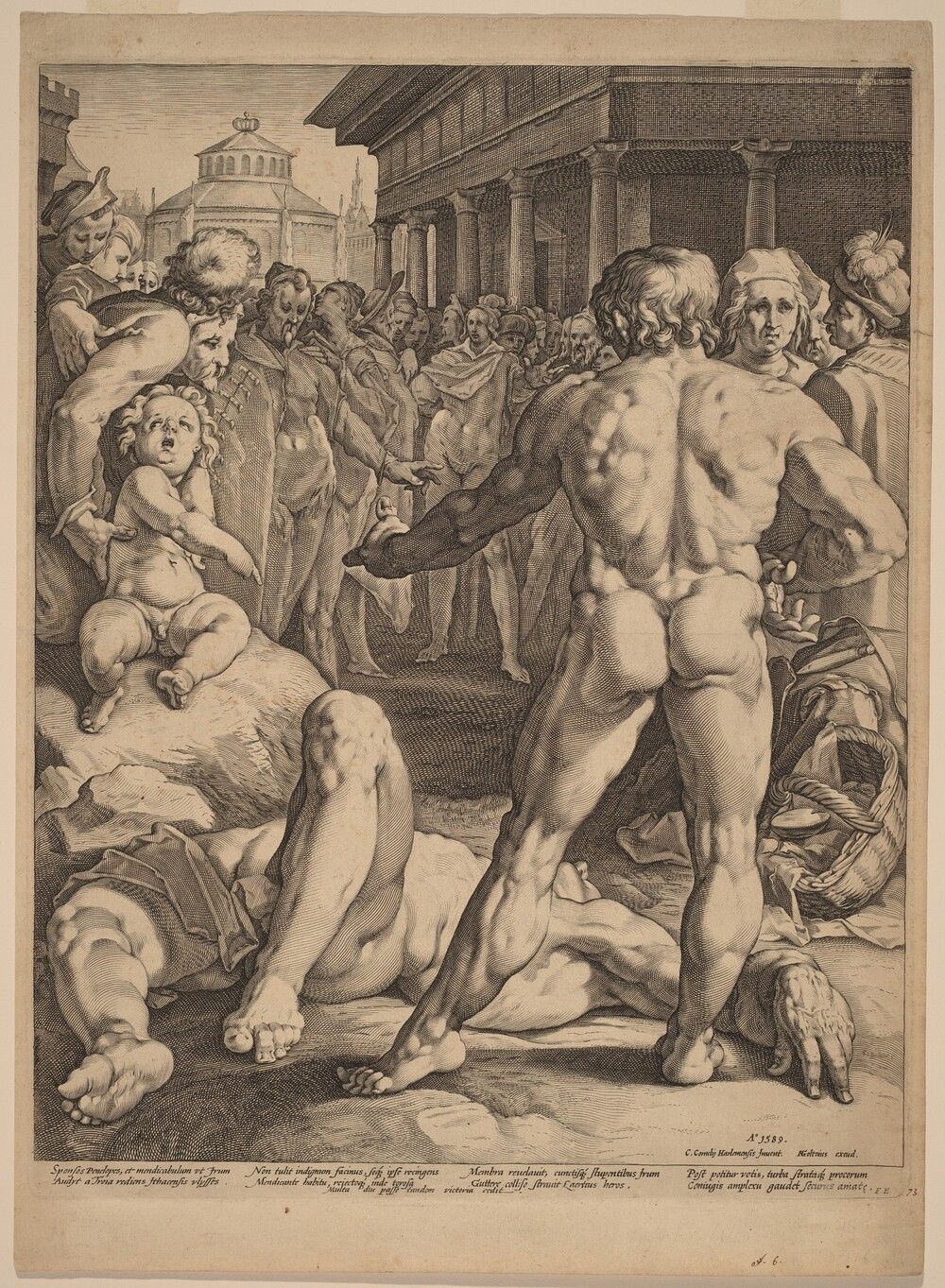
The Fight between Ulysses and Irus - Jan Muller, after Cornelis Cornelisz van Haarlem, 1589, engraving on laid paper
National Gallery of Art, Washington, DC, 2012.92.3. CC0
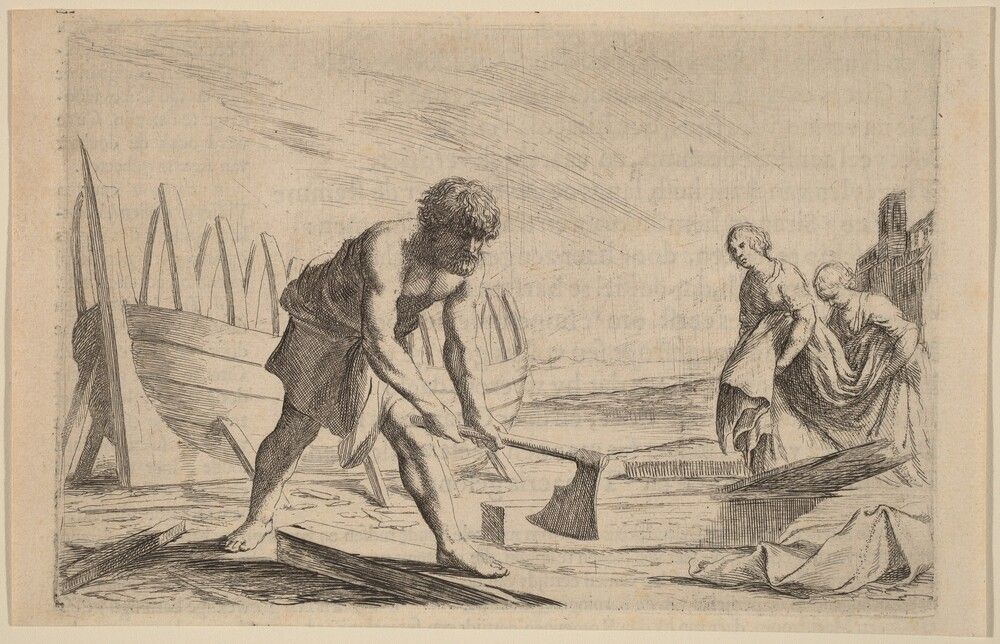
Ulysses on the Island of the Goddess Calypso - Willem Basse, 1634, etching and engraving on laid paper
National Gallery of Art, Washington, DC, 1994.70.5. CC0
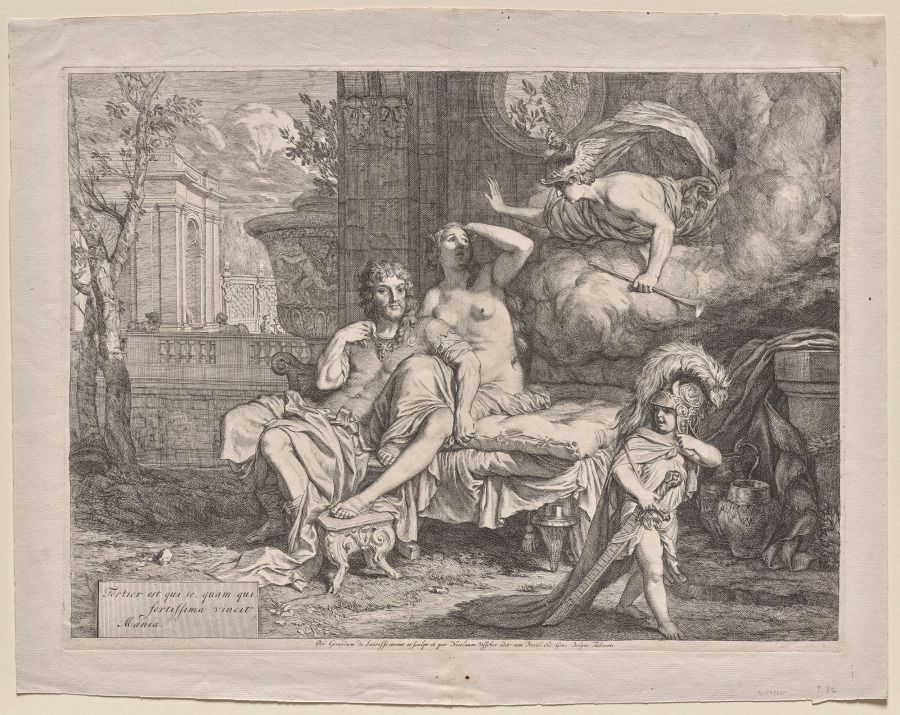
Mercury Orders Calypso to Allow Ulysses Depart - Netherlands, c. 1670, etching
The Cleveland Museum of Art, Cleveland, OH, 2023.210. CC0
Also Connected
4 recorded connections, each with the ancient line behind it.
Allies
-
Virgil names Diomedes and Ulysses together as the two Greeks who carried the Palladium away from Troy's citadel.
Enemies
-
In Ovid the chiefs award the arms of Achilles to Ulysses after both men speak, and Ajax then kills himself.
-

In the Aeneid the Greek Achaemenides, left behind by Ulysses, tells the Trojans of the Cyclops Polyphemus and what Ulysses did to him.
Connected
-
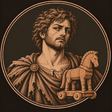
Sinon tells the Trojans that Ulysses persecuted him. In the same book Ulysses is one of the Greeks who come down from the horse.
Where Accounts Differ
- who took the Palladium: Diomed and Ulysses, or three candidates
- Roman sources do not agree on who took the Palladium. Virgil's Aeneas names Diomed and Ulysses together (Aeneid 2.162-175). Ovid's Fasti lists Diomedes, Ulysses and Aeneas as candidates and does not choose. The page reports both.
Read the full source verification →
Mythology
Appears In
Equivalent Figures
Referenced By
Sources
- Virgil, Aeneid 2.1-13
- Virgil, Aeneid 2.77-104
- Virgil, Aeneid 2.162-175
- Virgil, Aeneid 2.259-267
- Virgil, Aeneid 3.613-654
- Virgil, Aeneid 3.655-674
- Ovid, Metamorphoses 13.1-97
- Ovid, Metamorphoses 13.98-204
- Ovid, Metamorphoses 13.382-398
- Homer, Odyssey 1.1-5
- Ovid, Fasti
- Dante, Inferno
- W.B. Stanford, The Ulysses Theme (1963)