Diomedes
Diomedes, king of Argos, leads eighty ships to Troy in Homer's Iliad and fights with a ferocity matched by few other mortals: aided by Athena, he wounds both the goddess Aphrodite and the war god Ares in a single day's fighting. He later speaks out against Agamemnon's plan to abandon the siege, and ancient tradition credits him, alongside Odysseus, with stealing the sacred Palladium from Troy.
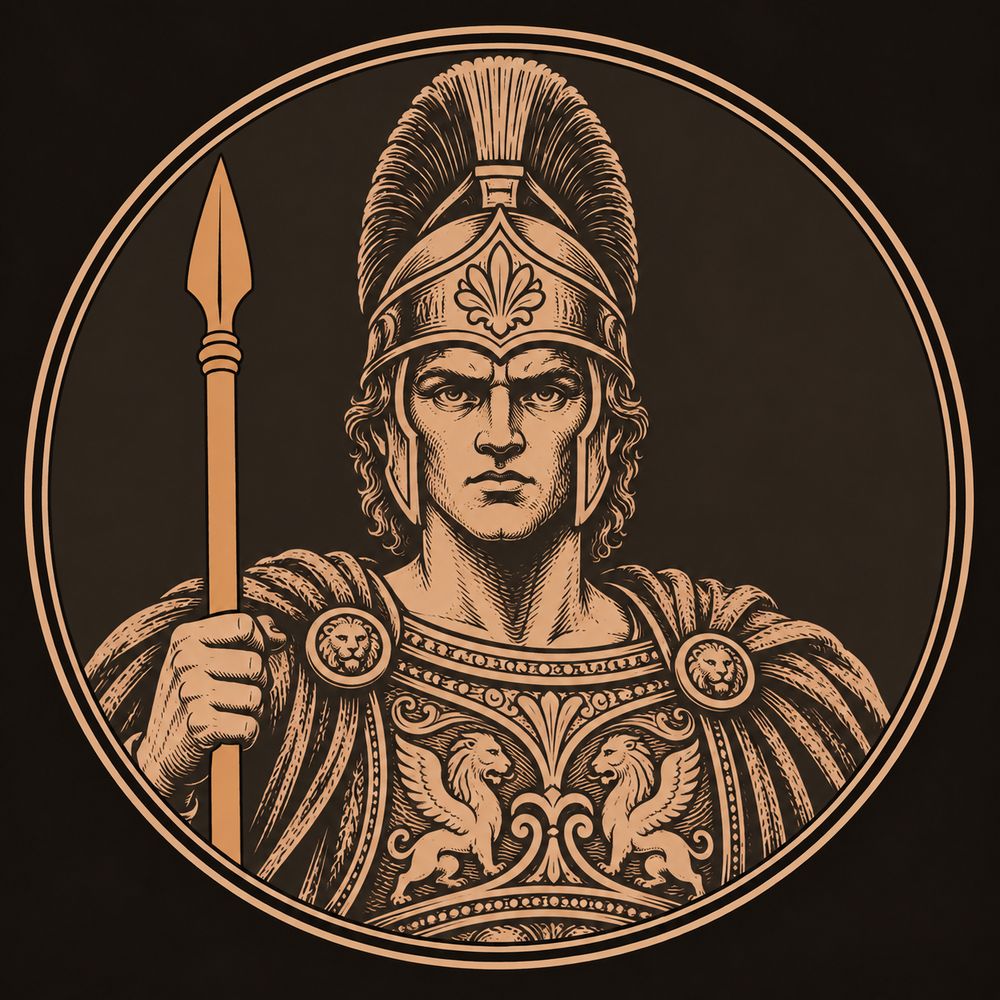
Diomedes, Bronze Medallion Illustration
Generated by AI from this page's own facts, not an ancient image or evidence of anything. How this site uses generated images
Sections on this page
Core Myth
Diomedes, son of Tydeus, ruled Argos and led eighty ships to Troy, second in size only to Agamemnon's own contingent. In one day of fighting, with the goddess Athena riding beside him in his chariot, he wounds the goddess Aphrodite in the wrist as she carries her son Aeneas from the battlefield, then turns on the war god Ares himself, driving his spear into the god's belly until Ares bellows like ten thousand men crying out in battle. When Agamemnon, shaken by a bad night of fighting, proposes abandoning the siege and sailing home, Diomedes alone stands up to rebuke him, vowing that he and his charioteer Sthenelus will fight on to take Troy even if every other Greek sails away. Later tradition also credits Diomedes with one of the war's most daring exploits: sneaking into Troy at night, alongside Odysseus, to steal the sacred image of Athena called the Palladium, which the Trojans believed protected their city from capture.
How does Diomedes wound the goddess Aphrodite in the Iliad?
As Aphrodite carries her wounded son Aeneas away from the fighting, Diomedes pursues her through the crowd and thrusts his spear into her wrist, drawing the immortal blood the gods call ichor. She drops her son in pain and cries out, and Diomedes shouts after her to keep away from war and stick to beguiling weak women.
Homer, Iliad 5.330-352
Does Diomedes really fight a god face to face?
Yes. With Athene driving his chariot and deflecting the god's first spear-throw, Diomedes drives his own spear into Ares's belly. The war god bellows as loudly as nine or ten thousand men shouting in battle, and both armies tremble at the sound before Ares withdraws to Olympus.
Homer, Iliad 5.846-863
What did Diomedes say when Agamemnon proposed abandoning the siege?
After a disastrous night of fighting, Agamemnon tells the assembled Greeks that Zeus has doomed the expedition and urges them to flee home by ship. Diomedes answers first, reminding Agamemnon that he once mocked Diomedes's courage, and tells the king to leave alone if he wishes: Diomedes and his companion Sthenelus, he says, will stay and fight until Troy falls even without him.
Homer, Iliad 9.32-49
How large a force did Diomedes lead to Troy?
Homer's catalogue of the Greek forces gives Diomedes command of eighty ships from Argos, Tiryns, and several nearby towns, sharing leadership with Sthenelus and Euryalus but named as chief over them all. Only Agamemnon, with a hundred ships from Mycenae, leads a larger contingent.
Homer, Iliad 2.559-568
Did Diomedes or Odysseus actually steal the Palladium from Troy?
Apollodorus's own account credits Odysseus with the leading role, sneaking into Troy disguised as a beggar and later returning with Diomedes to carry the sacred image out. But the same passage records a rival tradition it calls more prevalent, in which Diomedes was the one who physically bore the Palladium away.
Apollodorus, Epitome 5.13
Why is the phrase 'Diomedes's necessity' used as a Greek proverb?
In the fuller version of the Palladium theft, Odysseus supposedly plotted to murder Diomedes on the way back to the ships so he could claim the prize alone, but moonlight flashing off his raised sword gave him away. Diomedes turned on him, drove him back at swordpoint, and forced him to keep walking, which is where the proverb for doing something only because one is compelled to comes from.
Apollodorus, Epitome 5.13
Later Traditions
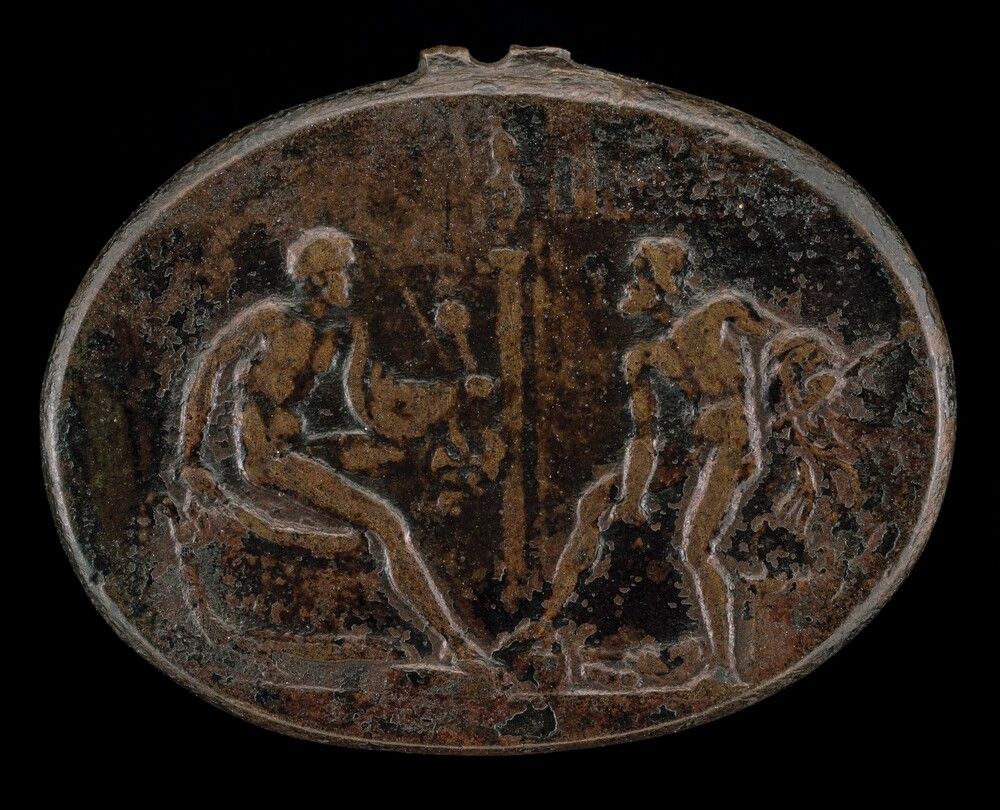
Diomedes, Ulysses and the Palladium - Roman 15th Century, after the Antique, mid 15th century, bronze//Dark brown patina
National Gallery of Art, Washington, DC, 1957.14.162. CC0
Ancient sources disagree about which of the two heroes actually carried off the Palladium. Apollodorus's own narrative gives Odysseus the larger role, but the same passage records what it calls a more prevalent rival tradition, in which Diomedes bore the image away himself while Odysseus secretly plotted to kill his companion afterward and claim sole credit, foiled only when moonlight flashed off his drawn sword and warned Diomedes in time. The Greek proverb 'Diomedes's necessity', for someone forced into an act against their will, comes from this same story.
Also Connected
9 recorded connections, each with the ancient line behind it.
Allies
-

When Paris shoots one of Nestor's horses, Diomedes takes the old man onto his own chariot and drives at Hector.
-

Diomedes and Odysseus sneak into Troy together to steal the sacred Palladium; ancient sources disagree on which of the two actually carried it off.
-
Virgil names Diomedes and Ulysses together as the two Greeks who carried the Palladium away from Troy's citadel.
Enemies
-
Diomedes crushes Aeneas's hip with a boulder and would have killed him had Aphrodite not carried him away.
-

Diomedes wounds Aphrodite in the wrist with his spear as she carries her son Aeneas from the battlefield, then taunts her as she flees.
-

With Athena driving his chariot and deflecting the god's first spear-throw, Diomedes wounds Ares in the belly, and the war god bellows loud enough to frighten both armies.
Connected
-
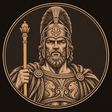
When Agamemnon proposes abandoning the siege after a disastrous night of fighting, Diomedes rebukes him publicly and vows to fight on even without him.
-
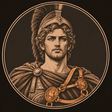
Diomedes's grandfather Oeneus hosted Bellerophon for twenty days, a guest-friendship that stops Diomedes and Bellerophon's grandson Glaucus from fighting at Troy.
-
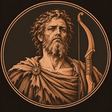
Diomedes sails with Odysseus to Lemnos to bring Philoctetes and the bow of Heracles to Troy. Sophocles gives this errand to Neoptolemus instead.
Where Accounts Differ
- palladium-theft-diomedes-vs-odysseus
- Apollodorus's own Epitome narrative credits Odysseus with the larger share of the Palladium theft, but the same passage records a rival tradition, which it calls more prevalent, crediting Diomedes as the one who actually carried the image off. This entry records both rather than resolving the disagreement.
Read the full source verification →
Mythology
Appears In
Related Terms
Referenced By
Sources
- Homer, Iliad 2.559-568
- Homer, Iliad 5.330-352
- Homer, Iliad 5.846-863
- Homer, Iliad 9.32-49
- Apollodorus, Epitome 5.13
- Timothy Gantz, Early Greek Myth (1993)