The Trojan Cycle
The Trojan Cycle covers the legendary Greek siege of Troy: its cause, its fighters, and how it ended. Homer's Iliad narrates only a few weeks near the war's tenth year, built around Achilles's quarrel with Agamemnon and his fight with the Trojan prince Hector. Apollodorus supplies what Homer leaves out: the Judgement of Paris as cause, Helen's departure with Paris as its spark, and the Trojan Horse as its end.
Sections on this page
Overview
The Trojan Cycle is not one story. It is a set of ancient poems and later prose accounts that together cover a war supposed to have lasted ten years. Homer's Iliad is the earliest and most complete piece of it, but it narrates only a few weeks near the very end of that decade. The poem assumes its audience already knows how the war started and how it will finish. The Judgement of Paris, the abduction of Helen, and the fall of Troy by the trick of the wooden horse all happen either before the Iliad opens or after it closes. The fullest surviving connected account of all three comes centuries later, in Apollodorus's Epitome.
The war's two most consequential Greek fighters anchor the cycle from opposite ends. Achilles is the Iliad's own subject. His anger at Agamemnon, his grief at the death of his companion Patroclus, and his killing of Hector drive the entire poem. Odysseus matters less for how he fights than for how he ends the siege and gets home afterward. That homecoming was central enough to Greek storytelling that it gave the language a word, nostos, for the journey itself. Other major figures on both sides, Helen, Paris, Hector, Agamemnon, Menelaus, Ajax and Diomedes, belong to this same cluster of stories.
Ancient sources do not agree on some of the cycle's most basic facts. Homer places Helen in Troy throughout the siege, blaming herself but never clearly consenting to or resisting her abduction. Herodotus reports a rival, rationalizing tradition instead. In it, the real Helen never reaches Troy at all, and the Greeks besiege the city for a decade over a woman who is sitting out the war in Egypt. Achilles fares no better for consistency. The invulnerability that supposedly protects him everywhere except his heel is a detail the Iliad never mentions. It is first securely attested only in a Roman poem written more than a thousand years after Homer.
In This Topic (16)
-

Achilles Character
Achilles is the greatest warrior of the Trojan War, famed for his near-invulnerability and his fatal heel.
The Iliad's central figure, though the poem covers only a few weeks of his role in the war and never mentions the invulnerability later tradition gives him.
-

Odysseus Character
Odysseus is the cunning Greek hero of the Trojan War whose ten-year journey home became the Odyssey.
-

Helen Character
Helen is the daughter of Zeus whose abduction by the Trojan prince Paris supposedly launched the Trojan War, though one ancient historian says she was never at Troy at all.
The cycle's most contested figure. Homer keeps her at Troy throughout the siege; Herodotus reports an Egyptian tradition in which she never arrives there at all.
-

Paris Character
Paris is the Trojan prince whose judgment among three rival goddesses, and his abduction of Helen, are the mythic cause of the Trojan War.
-
Hector Character
Hector is Troy's greatest warrior and chief defender, killed by Achilles after slaying his companion Patroclus.
-

Agamemnon Character
Agamemnon is the king of Mycenae who commands the combined Greek army at Troy, whose insult to Achilles nearly cost the Greeks the war.
-
Menelaus Character
Menelaus is the Spartan king whose wife Helen's abduction by Paris gave the Greeks their reason to besiege Troy, and one of the few major fighters to survive the war.
-
Ajax Character
Ajax the Great, son of Telamon, is the second-mightiest Greek warrior at Troy, whose day-long duel with Hector ends in a draw and whose suicide follows his loss of Achilles's armor to Odysseus.
-

Diomedes Character
Diomedes is the king of Argos and one of the fiercest Greek warriors at Troy, famed for wounding two Olympian gods in a single day of battle.
-
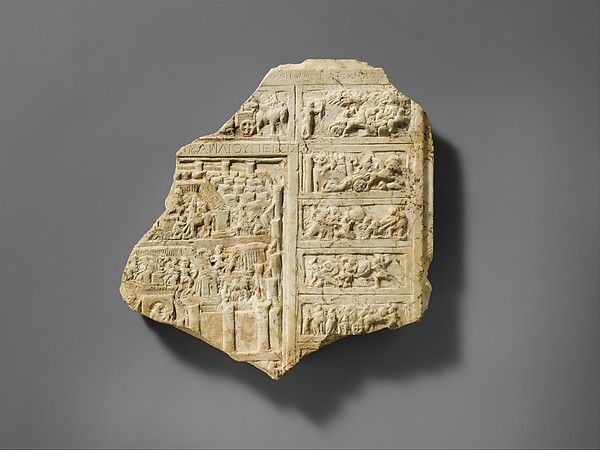
The Trojan War Story
The Trojan War is the legendary ten-year siege of Troy fought by a coalition of Greek kings under Agamemnon, sparked by the Trojan prince Paris taking Helen from her husband Menelaus. Homer's Iliad, the fullest surviving account, actually narrates only a few weeks near the war's tenth year: the quarrel between Achilles and Agamemnon, Patroclus's death, and Hector's death.
The event this cluster is named for. Its own page is filed separately from this hub because the two are different subjects: the war itself, and the group of pages about it.
-
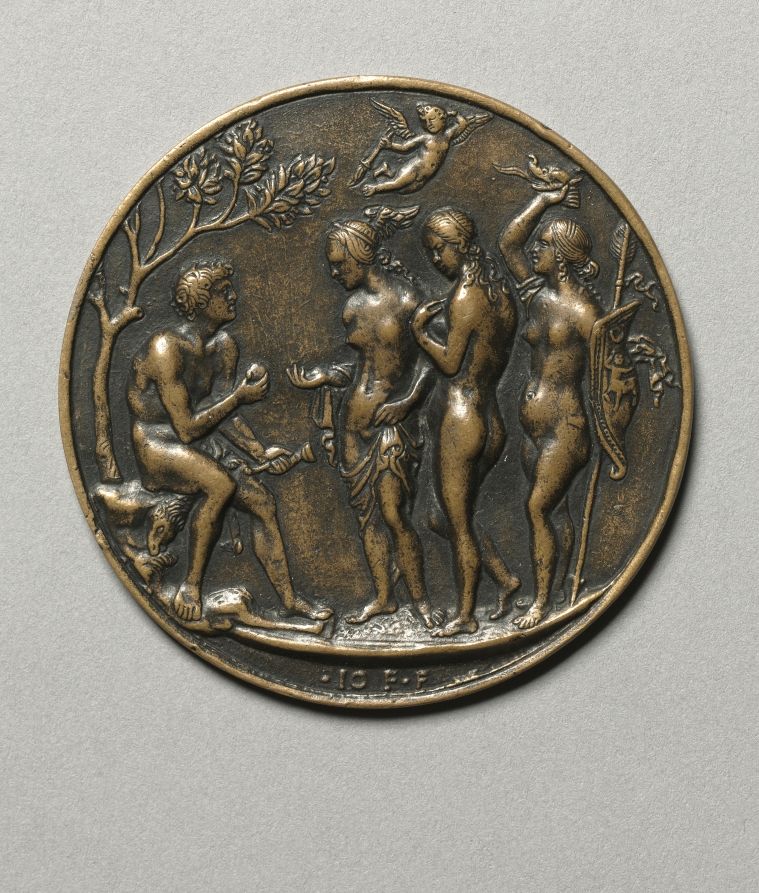
The Judgement of Paris Story
The Judgement of Paris is the divine beauty contest that gives the Trojan War its mythic cause. At the wedding of Peleus and Thetis, three goddesses bribe the Trojan prince Paris for a golden apple marked "for the fairest," and his choice of Aphrodite's reward, Helen, sets the whole war in motion.
The mythic cause of the war: Paris's choice among three goddesses, which won him Helen and the two goddesses' lasting hostility to Troy.
-
House of Atreus Story
The House of Atreus is the royal family of Mycenae whose members kill one another across five generations, from Tantalus to Orestes. The sources trace the curse to a chariot race won by treachery, a golden lamb and a banquet of children. In Aeschylus it ends only when Athena and an Athenian jury acquit Orestes of killing his mother.
The family history behind the war's leaders: Agamemnon and Menelaus are sons of Atreus, and the curse on the house runs from Pelops to Orestes's trial in Aeschylus.
-
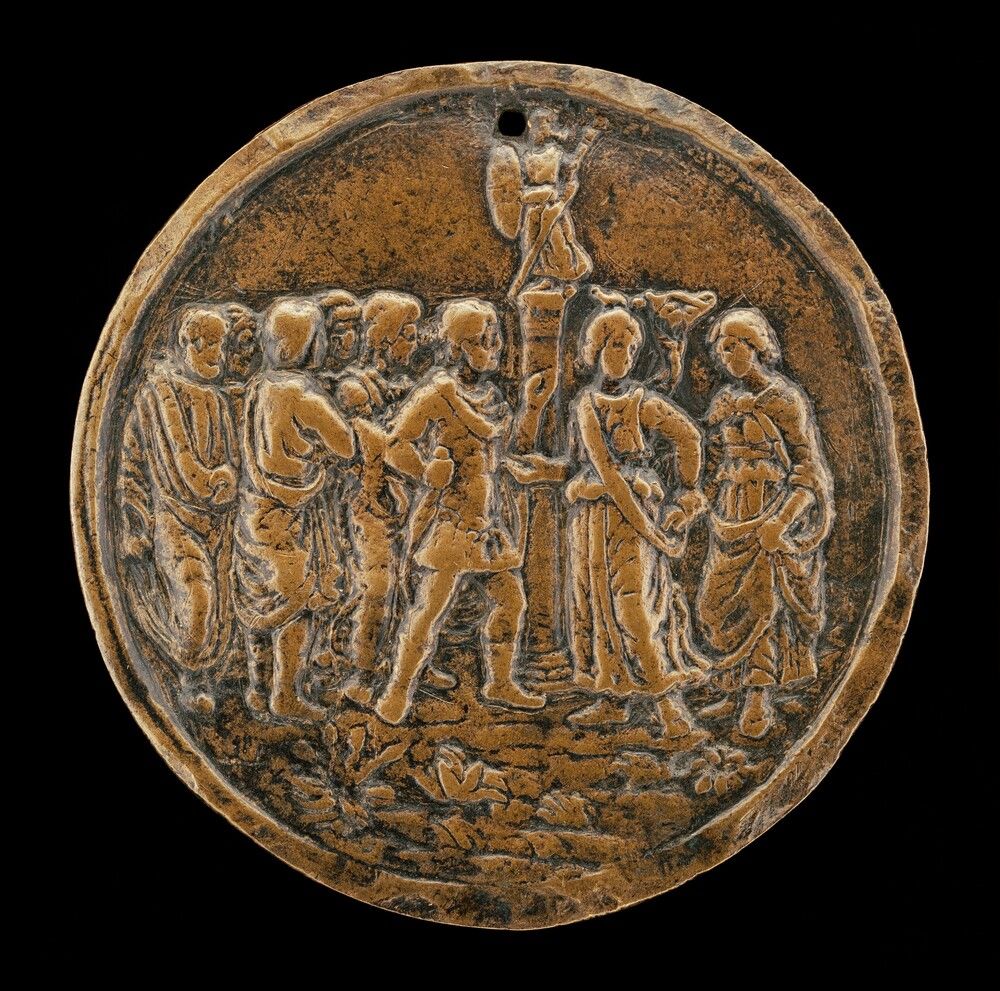
Iphigenia in Aulis Story
Iphigenia in Aulis is the episode in which the Greek fleet, held in port by contrary winds, is told it cannot sail for Troy until Agamemnon offers his daughter to Artemis. He lures her to the camp with a false wedding to Achilles. Euripides has her accept the altar, and his ending replaces her with a deer.
The price of the war's launch: the fleet cannot sail from Aulis until Agamemnon gives up his daughter, and Aeschylus and Euripides disagree over whether she dies.
-

Briseis Character
Briseis is the captive woman Agamemnon takes from Achilles in Book 1 of the Iliad, the loss that makes Achilles leave the fighting.
The captive whose seizure by Agamemnon sets off the quarrel the Iliad is built around.
-

Eris Character
Eris is the Greek goddess of Strife, a daughter of Night who stirs up quarrelling in battle and, in Apollodorus, throws the apple that leads to the Judgement of Paris.
The goddess of Strife, who throws the apple that leads to the Judgement of Paris in Apollodorus and drives the fighting in the Iliad.
-
The Fall of Troy Story
Troy falls in a single night. The Greeks hide armed men in a wooden horse, sail out of sight to Tenedos, and leave the Trojans to drag the horse inside their own walls. The hidden men climb out in the dark and open the gates to the returning fleet. The Iliad ends before this, so the account rests on the Odyssey, Virgil, Apollodorus and Quintus Smyrnaeus.
The war's last night, which the Iliad does not narrate: the horse, the sack and the sources that tell it differently.
Was Helen taken to Troy willingly, or did she go there at all?
Ancient sources disagree sharply, and not only about her willingness. Homer's Iliad keeps Helen at Troy for the whole siege. She calls herself shameless and wishes she had died before following Paris, but the poem never resolves whether she went by force or by choice. Herodotus reports a separate, rationalizing Egyptian tradition instead. In it, the real Helen never reached Troy at all. Winds drove Paris's ship to Egypt, and King Proteus kept her there once he learned how she had been taken, so Paris sailed on to Troy without her. The Trojans told the Greeks the truth throughout the siege and were simply not believed. On this version, the ten-year war was fought over a woman who was never in the city.
Herodotus, Histories 2.112-2.120
Was Achilles invulnerable, and where does the story of his heel come from?
Not in the earliest tradition. Homer's Iliad never mentions Thetis dipping the infant Achilles in the River Styx. It treats him as a formidable but ordinarily mortal fighter, one who expects to die at Troy rather than one who cannot be wounded. That expectation is explicit in his own words, when Thetis tells him he can choose a long, obscure life at home or a short life with lasting glory at Troy. The Styx-dipping story, with the heel left dry and vulnerable where Thetis held him, is a later addition. It is first securely attested in the Roman poet Statius's unfinished Achilleid, written more than a thousand years after the Iliad.
Statius, Achilleid
What caused the Trojan War?
The cycle gives the war a mythic cause several steps removed from the fighting itself. At a wedding feast, the goddess Strife threw a golden apple meant for the fairest, and Zeus sent Hera, Athena and Aphrodite to the Trojan prince Paris to judge between them. Each goddess offered him a bribe. Paris chose Aphrodite's offer of the most beautiful woman alive, which won him Helen and earned Troy the lasting hatred of the two goddesses he passed over. Homer's Iliad only alludes to this judgement in a single late passage, calling Paris's choice a grievous lust that brought disaster. The full story survives complete only in the much later Apollodorus. The Trojan Horse, by contrast, is how the war ended after ten years of failed siege, not what started it.
Apollodorus, Epitome 3.2
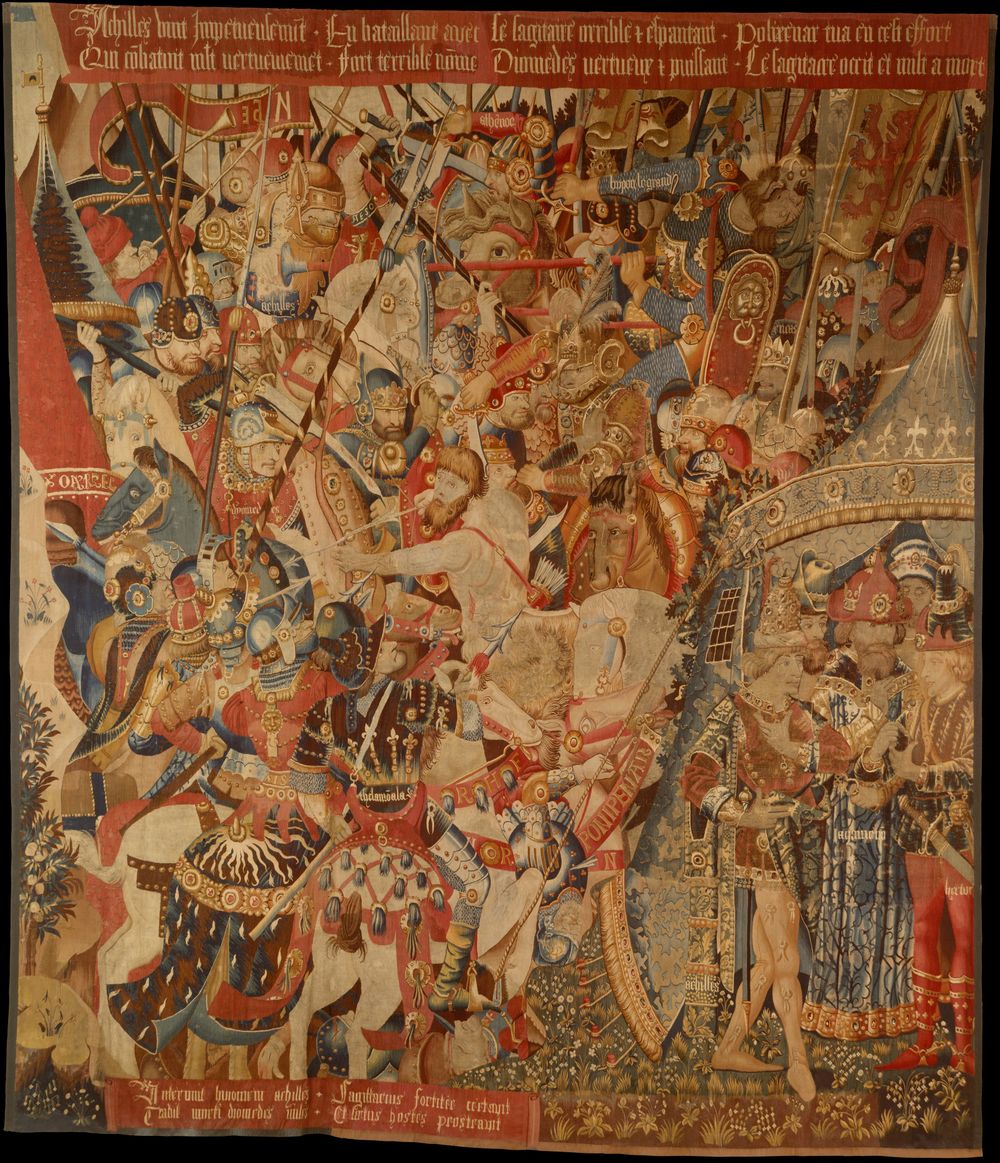
The Battle with the Sagittary and the Conference at Achilles' Tent - South Netherlandish, ca. 1470-90, Tapestry, wool and silk
Metropolitan Museum of Art, New York, NY, 52.69. CC0
Where Accounts Differ
- helen-in-troy-vs-helen-in-egypt
- achilles-heel-absent-from-homer
- judgement-of-paris-allusion-vs-full-narrative
- Herodotus's own account of Helen in Egypt has no phantom or substitute Helen in it; he argues from probability that the Trojans would have returned her rather than lose their city, and reports this as the more credible version. A separate, more supernatural strand of the same non-Trojan-Helen tradition, in which a phantom is fought over at Troy while the real Helen waits elsewhere, belongs to Stesichorus and Euripides rather than to Herodotus, and is recorded here as a distinct variant rather than folded into his account.
- The Achilles-heel invulnerability story is absent from Homer entirely and is recorded here as a later addition, not as an unstated part of the Iliad's own account.
- Homer's Iliad never narrates the Judgement of Paris; it is alluded to once, briefly, near the poem's end. The connected story of the judgement is preserved complete only in much later prose sources.
Related Terms
Referenced By
Sources
- Homer, Iliad 24.25-30
- Herodotus, Histories 2.112-2.120
- Apollodorus, Epitome 3.2
- Statius, Achilleid
- Jonathan S. Burgess, The Death and Afterlife of Achilles (2009)