Dreams
Dreams are the Oneiroi, children of Night in Hesiod's Theogony, born without a father beside Sleep and Death. Hesiod names them only as a tribe. In Homer's Iliad one Dream acts as a messenger: Zeus sends it to Agamemnon in the likeness of Nestor, carrying a false promise that Troy will fall that day.
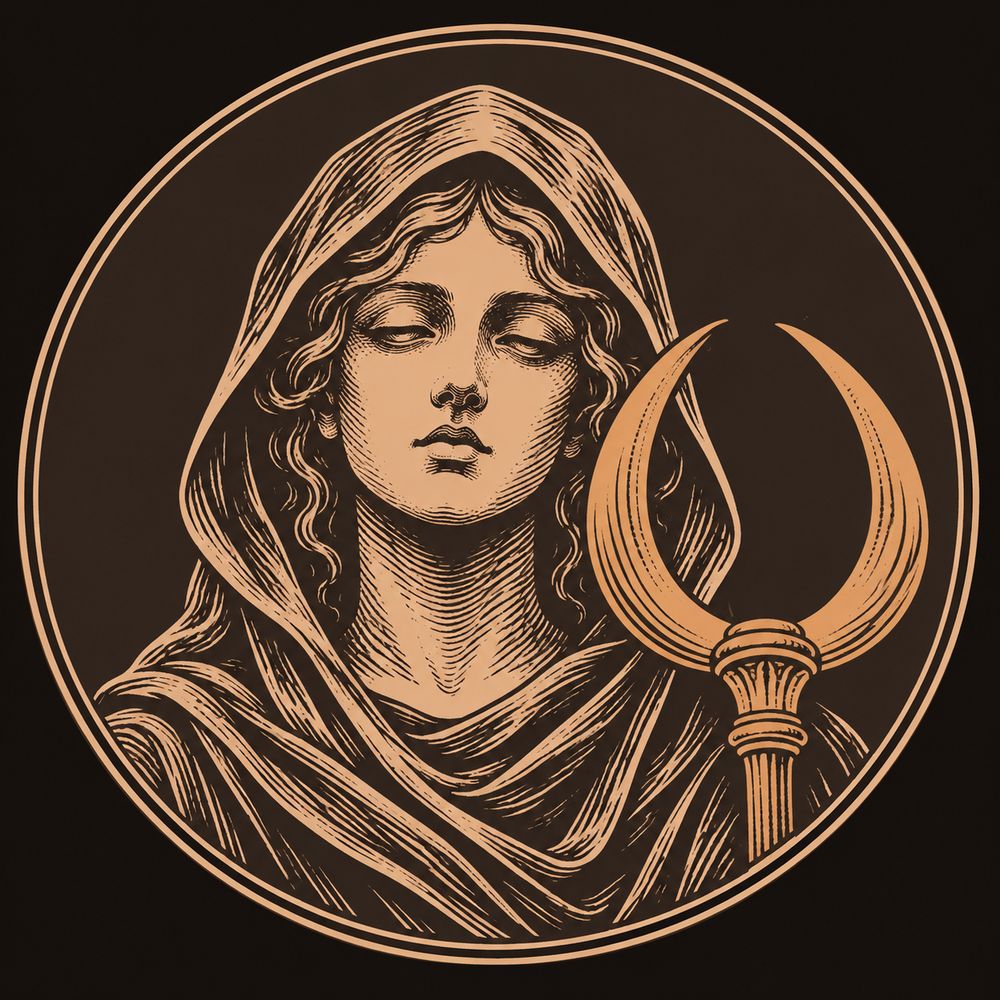
Dreams holding the gate of horn
Generated by AI from this page's own facts, not an ancient image or evidence of anything. How this site uses generated images
Sections on this page
See Dreams in the Greek family tree.
Core Myth
Hesiod's Theogony lists Dreams among the children of Night. He says she bore Sleep and the tribe of Dreams, and that she lay with none (Hesiod, Theogony 211-213). The same list gives her Death, Doom, Blame, Woe, Nemesis, Deceit and Strife (Hesiod, Theogony 211-225). Dreams are therefore brothers and sisters of Sleep, not his servants. Hesiod gives the tribe no individual names and no tales.
Homer gives a Dream a task. In the Iliad Zeus cannot sleep. He decides to send a baneful dream to Agamemnon, son of Atreus, and orders it to the Achaean ships (Homer, Iliad 2.1-47). The Dream stands above the head of the sleeping king in the likeness of Nestor, son of Neleus. It tells Agamemnon to arm the long-haired Achaeans at once. Then it departs. Agamemnon wakes believing that he will take Priam's city that day. The poet calls this a foolish belief, because Agamemnon does not know what Zeus intends. Zeus intends grief for both Trojans and Greeks.
The Iliad treats this as an ordinary way for the gods to act. Achilles proposes asking a seer, a priest or an interpreter of dreams, because a dream too is from Zeus (Homer, Iliad 1.62-63). The Odyssey adds a doubt about which dreams to trust. Penelope says there are two gates of dreams, one of horn and one of ivory. Dreams that pass the ivory gate deceive, and those that pass the horn gate come true. She cannot tell by which gate her own dream came (Homer, Odyssey 19.560-569). The poem also names a place. On the road to the underworld the dead go past the streams of Oceanus, the gates of the sun and the land of dreams (Homer, Odyssey 24.11-14).
The Dream of the Iliad belongs to the Trojan Cycle, and it sets the Greek army in motion with a lie from Zeus.
Who is the Greek god of dreams?
Greek myth has no single god of dreams in the earliest sources. Hesiod names the Oneiroi, a tribe of Dreams born to Night, and gives no leader. Homer speaks of one Dream when Zeus uses it as a messenger. Sleep, called Hypnos, is a separate brother, and he is the god of sleep rather than of what is seen in it.
Hesiod, Theogony 211-225
Is Morpheus a real Greek god?
Morpheus belongs to Roman literature, not to the earliest Greek sources. Ovid makes him a son of Sleep who imitates human forms, in the Latin Metamorphoses. Hesiod and Homer name no Morpheus. The sources checked here give him no cult and no myth outside Ovid's story of Ceyx and Halcyone, so he is better called a literary figure than a god of Greek worship.
Ovid, Metamorphoses 11.633-649
What is Greek for dream?
The Greek word is oneiros, and its plural is oneiroi. English translators write the singular with a capital letter when Homer treats a dream as a figure who acts, as in the Iliad. Hesiod's tribe of Dreams is the plural in the same sense, a group of beings born to Night.
Hesiod, Theogony 211-225
How did the Greeks tell a true dream from a false one?
Homer says they could not always tell. Penelope describes two gates of dreams. Dreams that come through polished horn are fulfilled, and those that come through sawn ivory deceive. She says she does not know through which gate her dream came. The Iliad shows the other side: a Dream sent by Zeus gives Agamemnon a false hope, and nothing in the dream itself marks it as false.
Homer, Odyssey 19.560-569
Where is the land of dreams in Homer?
The Odyssey puts it on the way to the underworld. When the souls of the dead travel there, they pass the streams of Oceanus, the rock Leucas, the gates of the sun and the land of dreams. The poem gives no more detail about the place, and it does not say who lives there.
Homer, Odyssey 24.11-14
Later Traditions
The best-known individual dream-spirit comes from a Roman source. Ovid, writing in Latin, has Juno send Iris to the court of Sleep. Sleep there chooses Morpheus from his thousand sons because Morpheus can imitate the form, voice and manner of a human. Ovid names two more sons, Icelos, called Phobetor by men, who takes the shape of animals, and Phantasos, who takes the shape of things without life (Ovid, Metamorphoses 11.633-649). Morpheus then takes the shape of the drowned Ceyx and stands at the bedside of his wife Halcyone. Neither Hesiod nor Homer names Morpheus. The sources checked here give no Greek-language account of him.
Lineage
See the full family tree2 recorded relations, each with the ancient line behind it.
Parents
-

Night bore Sleep and the tribe of Dreams, and lay with none.
Siblings
-

Hesiod lists Sleep and the tribe of Dreams together among the children Night bore.
Also Connected
2 recorded connections, each with the ancient line behind it.
Connected
-
A Dream sent by Zeus visits Agamemnon in the likeness of Nestor and tells him to arm the Achaeans.
-

Zeus decides to send a baneful Dream to Agamemnon and orders it to the Achaean ships.
Where Accounts Differ
- Dreams as a tribe or as one messenger
- Hesiod makes Dreams a tribe born to Night, while Homer's Iliad acts through one Dream sent by Zeus. The sources checked here do not reconcile the two. Morpheus appears only in Ovid, a Roman source.
Read the full source verification →
Mythology
Appears In
Related Terms
Referenced By
Sources
- Hesiod, Theogony 211-213
- Hesiod, Theogony 211-225
- Homer, Iliad 1.62-63
- Homer, Iliad 2.1-47
- Homer, Odyssey 19.560-569
- Homer, Odyssey 24.11-14
- Ovid, Metamorphoses 11.633-649