The Theban Cycle
The Theban Cycle is the Greek myth cycle of Thebes and its royal house. Cadmus founds the city, Oedipus unknowingly kills his father Laius and marries his mother, and his sons kill each other in the war of the Seven Against Thebes. Antigone buries one brother against the king's order. Ten years later the Epigoni, sons of the fallen Seven, take the city.
Sections on this page
Overview
The Theban Cycle gathers the Greek myths of one city and one family, from the founding of Thebes to its capture by the sons of the Seven. It begins with Cadmus, the Phoenician prince whom the oracle at Delphi told to follow a cow and build a city where she lay down. His fight with the dragon of the spring is told in Cadmus and the Dragon. Hesiod's Theogony already names his five children by Harmonia, among them Semele, mother of Dionysus. Apollodorus traces the royal line from his son Polydorus through Labdacus to Laius, and from Laius to Oedipus.
The cycle's centre is the house of Laius. An oracle warned Laius against fathering a son, and he fathered one anyway and had the baby exposed. The boy grew up in Corinth, killed Laius on the road without knowing him, and won the throne by answering the riddle told in Oedipus and the Sphinx. The prize included the widowed queen, his own mother. Their sons Eteocles and Polynices inherited both a quarrel over the throne and their father's curse. The brothers killed each other at the gates in the war of the Seven Against Thebes. Their sister Antigone guided her blind father in exile. In Sophocles's Antigone she dies for burying Polynices against King Creon's edict.
Little of the cycle's oldest poetry survives. Pausanias knew an epic called the Oedipodia and another called the Thebaid, which some credited to Homer and which he ranked just below the Iliad and Odyssey. Herodotus mentions a poem on the sons of the Seven, while doubting that Homer wrote it. What remains are brief passages in Homer and Hesiod, three plays of Sophocles, Aeschylus's Seven Against Thebes, Euripides's Phoenissae, and the prose summary in Apollodorus's Library. These sources disagree on basic facts: whether Oedipus kept his throne, who bore his children, where he died, and how Antigone's story ended.
In This Topic (6)
-
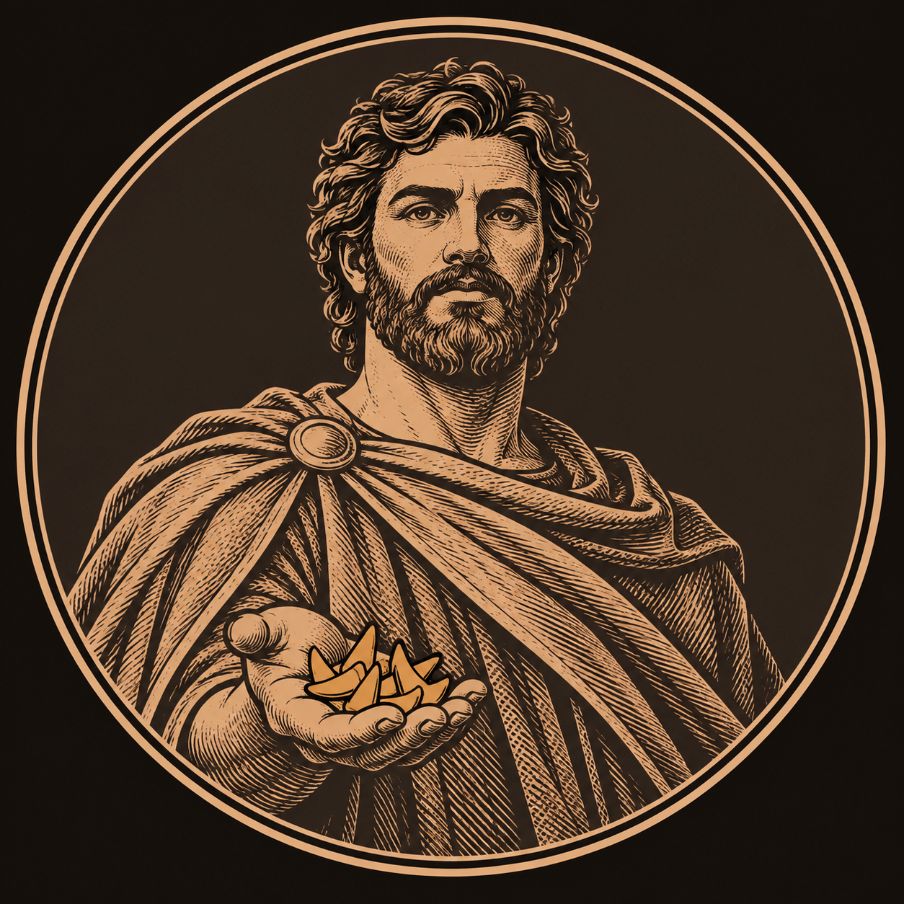
Cadmus Character
Cadmus is the Phoenician prince who searched for his sister Europa, killed the serpent of Ares, and founded Thebes, ending his life transformed into a serpent.
Founder of the city and of its royal line. Oedipus descends from him through Polydorus, Labdacus and Laius, so the family whose ruin the cycle follows is his house.
-
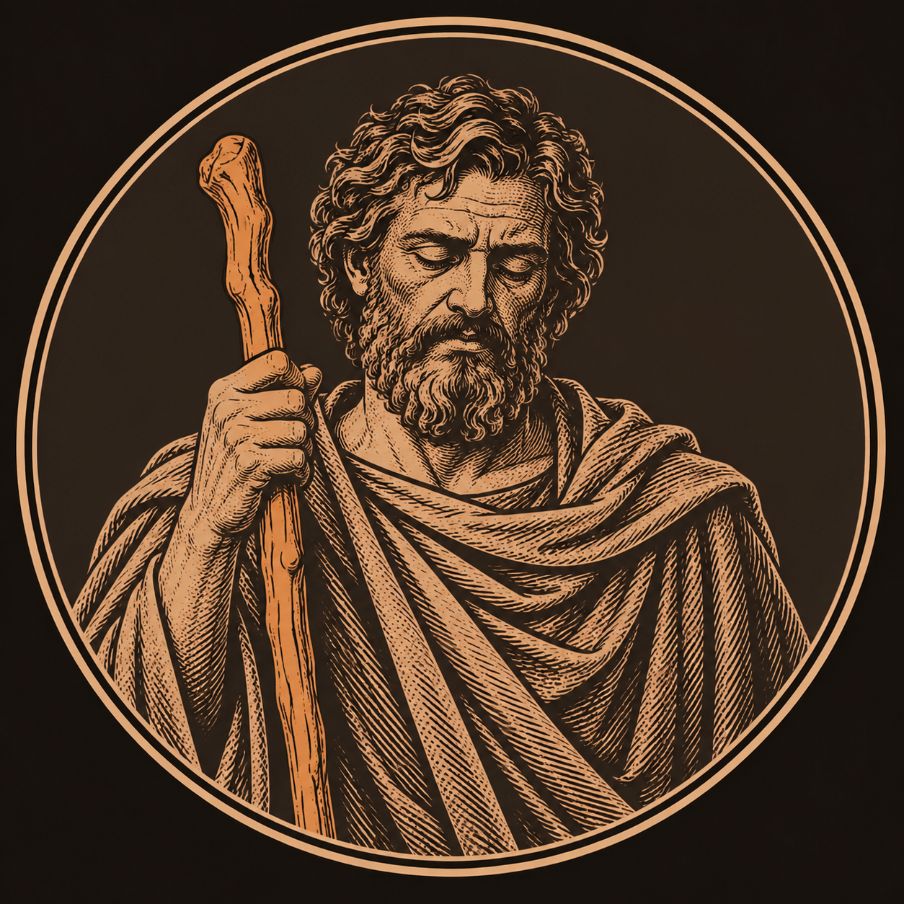
Oedipus Character
Oedipus is the king of Thebes who killed his father and married his mother without knowing either was his parent, the best-known case in Greek myth of a prophecy fulfilled by the flight from it.
-
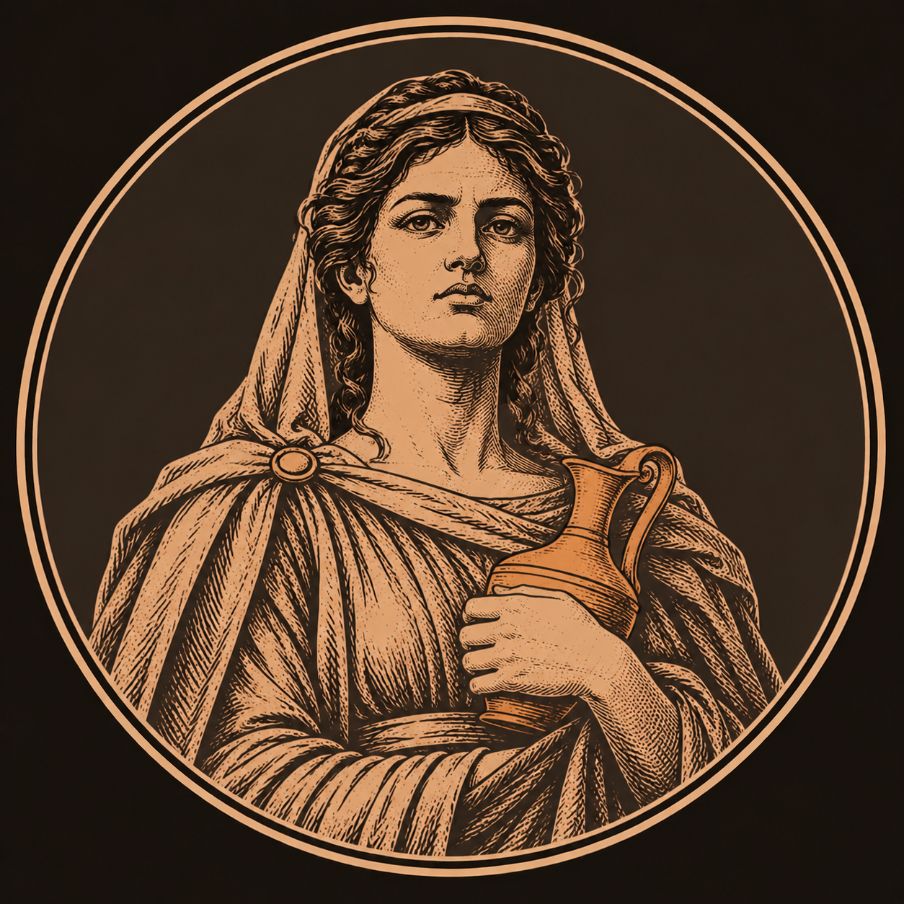
Antigone Character
Antigone is the daughter of Oedipus who buried her brother Polynices against a royal edict and died for it in Sophocles's tragedy.
-
Oedipus and the Sphinx Story
A winged monster sat above Thebes and devoured the Thebans who could not answer her riddle. Creon, ruling after Laius's death, promised the kingdom and Laius's widow to whoever solved it. Oedipus, newly arrived from Corinth, answered that the riddle meant man. The Sphinx threw herself from the citadel, and Oedipus married the queen, who was his own mother.
-
Seven Against Thebes Story
The Seven Against Thebes is the failed war that seven champions from Argos fought to put Polynices, son of Oedipus, on the Theban throne after his brother Eteocles refused to share it. Every champion except the Argive king Adrastus died, and the two brothers killed each other in single combat, fulfilling the curse their father had laid on them.
-
Cadmus and the Dragon Story
Cadmus and the dragon is the founding story of Thebes. Following a cow to the place where she lay down, Cadmus sent his companions to a spring sacred to Ares, where a dragon killed them. He killed it, sowed its teeth on Athena's advice, and armed men rose from the earth and fought one another. Five survived, and Cadmus later served Ares for the killing.
The founding episode itself. Apollodorus names the five sown men who survived the dragon's teeth, so the city whose ruin the cycle follows begins here.
Did Oedipus know he was fulfilling the prophecy?
No, and on this the ancient sources agree more than on almost anything else in the cycle. Apollodorus says Oedipus left Corinth believing himself the son of his nominal parents, the very people the Delphic warning seemed to threaten. In Sophocles's Oedipus Tyrannus he pieces the truth together only years into his reign. Homer's Odyssey has the gods reveal it straightway, yet still calls the marriage a deed done in ignorance. The people who knew the prophecy were his parents: Laius heard the oracle and fathered a son anyway. In Oedipus at Colonus the old king makes this his defence. The oracle was given before he was born, he killed his father without knowing him, and neither he nor his mother knew the truth when they married.
Sophocles, Oedipus at Colonus 960-999
Why is Laius cursed in Oedipus Rex?
Sophocles never names a cause, and the other ancient sources give more than one. The answer most often repeated today is the abduction of Chrysippus. Apollodorus reports that Laius, exiled from Thebes and received as a guest by Pelops, fell in love with Pelops's son Chrysippus while teaching him to drive a chariot, and carried him off. Apollodorus does not link that act to the oracle or to any curse. Aeschylus's Seven Against Thebes names a different offence. Apollo told Laius three times at his Pythian oracle that he would save the city if he died childless, and Laius disobeyed. The chorus calls it an ancient transgression that lasts into the third generation.
Apollodorus, Library 3.5.5; Aeschylus, Seven Against Thebes 742-791
Is Oedipus a victim of fate or his own actions in Oedipus Rex?
Sophocles gives him both in a single speech. After blinding himself, Oedipus cries that Apollo brought his sufferings to pass, but that the hand that struck his eyes was his own. The prophecy fixed what would happen, and his own choices, including the flight from Corinth meant to avoid it, carried it out. The tragedians also treat the fate as inherited rather than his alone. The chorus of Aeschylus's Seven Against Thebes sees Laius's disobedience working on into the third generation. In Oedipus at Colonus the old king suggests the gods were perhaps angry with his race from of old. The chorus of Sophocles's Antigone tells his daughter that she is paying for some crime of her father's.
Sophocles, Oedipus Tyrannus 1329-1335
Does Homer mention Oedipus?
Yes, twice, and his Thebes is not the tragedians' Thebes. In the Odyssey, Odysseus sees Epicaste, Homer's name for Jocasta, among the dead. The gods revealed the incest straightway, and she hanged herself. Oedipus went on ruling the Cadmeans, left with the woes that a mother's avengers bring. The Iliad mentions Mecisteus coming to Thebes for the burial of Oedipus, so Homer's king dies at home. Neither passage mentions the Sphinx, the blinding, the exile or Antigone. Pausanias later used the Odyssey to argue that Oedipus had no children by his mother, naming Euryganeia instead. Homer also knows the war: in the Iliad, Sthenelus boasts that the sons took the city their fathers could not.
Homer, Odyssey 11.271-280; Homer, Iliad 23.679-680
Who were the Epigoni?
The Epigoni, a name meaning the ones born later, were the sons of the Seven who fell at Thebes. Apollodorus says they marched ten years afterwards to avenge their fathers, when an oracle promised victory under Alcmaeon, son of Amphiaraus. His list includes Diomedes, son of Tydeus, Sthenelus, son of Capaneus, and Thersander, son of Polynices. Laodamas, son of Eteocles, killed Aegialeus, son of Adrastus, and was killed by Alcmaeon. On the seer Tiresias's advice the Thebans abandoned the city by night, and the Argives pulled down its walls. Pausanias tells it differently: Laodamas escaped to Illyria, and Thebes was handed to Thersander. Herodotus knew an epic on this war but doubted that Homer wrote it.
Apollodorus, Library 3.7.2-3.7.4; Pausanias, Description of Greece 9.5.13-9.5.14
Where Accounts Differ
- oedipus-kept-ruling-in-homer-vs-exiled-in-sophocles
- jocasta-or-euryganeia-as-mother-of-his-children
- chrysippus-or-disobeyed-oracle-as-cause-of-the-curse
- alcmaeon-or-thersander-leads-the-epigoni
- laodamas-killed-or-escaped-to-illyria
- homeric-authorship-of-the-theban-epics
- What happened to Oedipus after the truth came out depends on the source. Homer's Odyssey (11.271-280) has the gods reveal the incest straightway, after which Oedipus goes on ruling Thebes, and the Iliad (23.679-680) places his burial there. Sophocles's Oedipus Tyrannus has him blind himself and ask to be cast out, and Oedipus at Colonus has him die at Colonus near Athens.
- The mother of Oedipus's four children is disputed. Apollodorus (Library 3.5.8) gives Jocasta, as do the tragedians. Pausanias (9.5.10-9.5.11) argues from Homer that Oedipus had no children by his mother and names Euryganeia, citing the lost epic Oedipodia.
- The cause of the family's ruin differs by source. Apollodorus (3.5.5) records that Laius carried off Chrysippus, son of his host Pelops, but does not connect it to the oracle. Aeschylus's Seven Against Thebes (742-757) blames Laius's disobedience to Apollo's advice to die childless. In Sophocles's Oedipus at Colonus (964-965) Oedipus suggests only that the gods were perhaps angry with his race from of old.
- The leader of the Epigoni differs. Apollodorus (3.7.2) says an oracle named Alcmaeon, son of Amphiaraus. Pausanias (9.9.4) says Thebes was attacked by Thersander and the Epigoni.
- The fate of Laodamas, son of Eteocles, differs. Apollodorus (3.7.3) has Alcmaeon kill him in battle. Pausanias (9.5.13) has him withdraw by night to Illyria with any Thebans willing to follow, and Herodotus (5.61) says the Cadmeans driven out in his reign went to the Encheleis.
- Authorship of the lost Theban epics was already doubted in antiquity. Pausanias (9.9.5) reports that Callinus and many good authorities credited the Thebaid to Homer. Herodotus (4.32) names Homer as the poet of the Epigoni only with the reservation, if that is truly the work of Homer.
Related Topics
Related Terms
Referenced By
Sources
- Homer, Odyssey 11.271-280
- Homer, Iliad 4.404-410
- Homer, Iliad 23.679-680
- Hesiod, Theogony 975-978
- Hesiod, Works and Days 161-163
- Herodotus, Histories 4.32
- Herodotus, Histories 5.61
- Aeschylus, Seven Against Thebes 742-791
- Sophocles, Oedipus Tyrannus 771-813
- Sophocles, Oedipus Tyrannus 1329-1335
- Sophocles, Oedipus at Colonus 960-999
- Sophocles, Antigone 853-875
- Euripides, Phoenissae 1625-1682
- Apollodorus, Library 3.5.5
- Apollodorus, Library 3.5.7
- Apollodorus, Library 3.5.8
- Apollodorus, Library 3.7.2
- Apollodorus, Library 3.7.3
- Apollodorus, Library 3.7.4
- Pausanias, Description of Greece 9.5.10-9.5.11
- Pausanias, Description of Greece 9.5.13-9.5.14
- Pausanias, Description of Greece 9.9.4
- Pausanias, Description of Greece 9.9.5
- Apollodorus, Library 3.4.1-3.4.2
- Timothy Gantz, Early Greek Myth (1993)
- J. G. Frazer, Apollodorus: The Library (Loeb, 1921), notes to 3.5-3.7