Achilles vs. Hector
Achilles and Hector are the two chief fighters of the Iliad, and the poem sets them against each other in book 22. Hector stands outside Troy's walls to face Achilles after Patroclus's death. Achilles kills him with a spear through the neck, refuses any ransom, and in book 24 gives the body back to Priam.
Sections on this page

How They Compare
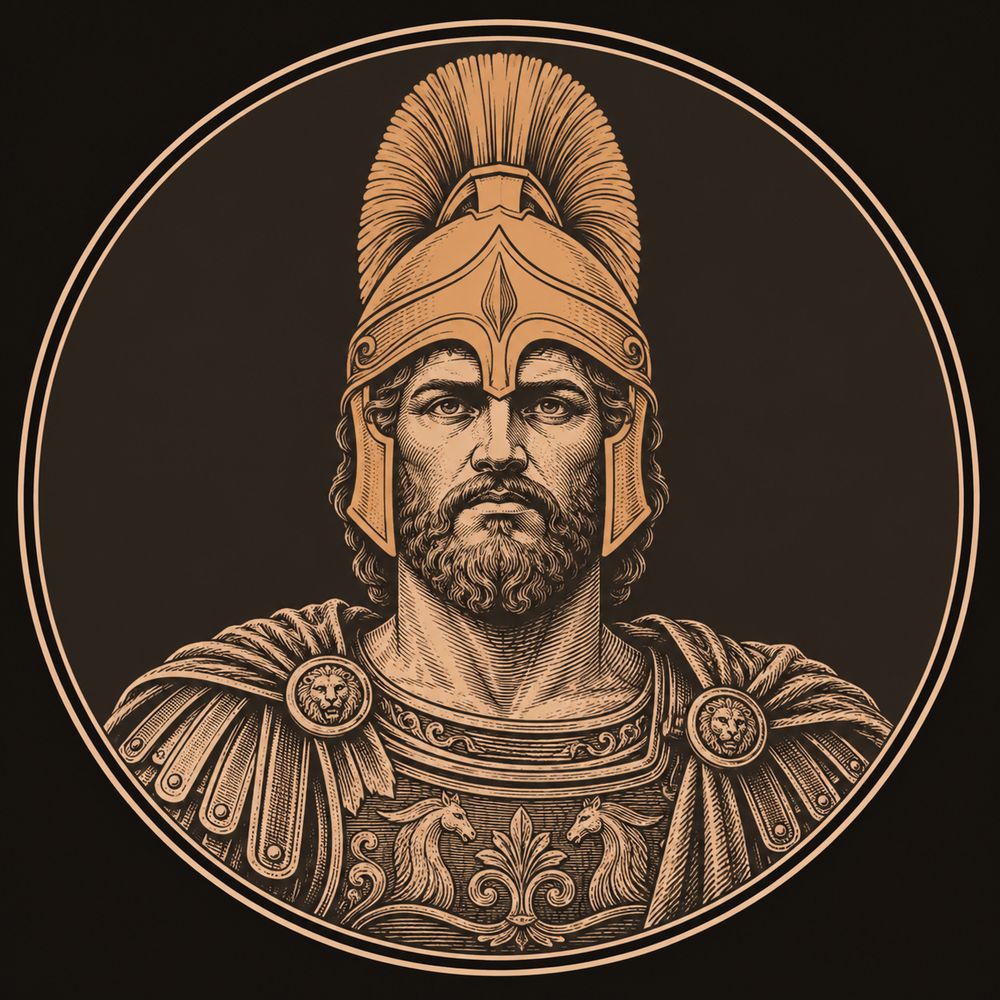
The clash between Achilles and Hector is told in Homer as one chain of events: Hector kills Patroclus, Achilles returns to battle for revenge, and the duel follows under Troy's walls in book 22. The page sets out what causes the fight, what each says and does in it, and how book 24 closes the matter.
Side by Side
| Aspect | Achilles | Hector |
|---|---|---|
| Reason for the fight | Achilles goes out to find Hector because Hector killed Patroclus and stripped his armor. | Hector stays outside the walls because he fears the reproach of Polydamas and the Trojans. |
| Offer of terms | Achilles tells Hector to talk no more of covenants, since lions and men make no oaths. | Hector proposes that the gods witness a pact to return the loser's body. |
| Knowledge of the outcome | Achilles says he will accept his own fate whenever Zeus brings it. | Hector learns that Athena has beguiled him only when Deiphobus is not beside him. |
| Dying words | Achilles answers Hector's plea by wishing he could carve and eat the flesh raw. | Hector begs for burial and warns that Paris and Apollo will kill Achilles at the Scaean gate. |
| Part in the burial scene | Achilles weeps for his father and for Patroclus as Priam kneels, and then raises the old man. | Hector is the dead son for whom Priam weeps at Achilles' feet. |
Shared between both
- the two foremost warriors of the Iliad
- men who know they will die in the war
- fighters who choose to fight rather than withdraw
What is the difference between Achilles and Hector?
In Iliad 22 the difference is in what each says before the fight. Hector offers an oath that the winner will give back the loser's body (Iliad 22.248-259). Achilles rejects any agreement and says there will be no oaths between them until one has fallen (Iliad 22.260-267). Hector's reasons for standing are shame before the Trojans (Iliad 22.99-110), while Achilles speaks of revenge for his comrade.
Homer, Iliad 22.248-267
How did Achilles defeat Hector?
Achilles throws first and misses, and Athena returns his spear to him unseen. Hector's own cast strikes Achilles' shield and bounces away. With no second spear, Hector calls for Deiphobus and finds no one there. He draws his sword and charges, and Achilles' spear goes through the neck at the gap above the armor (Iliad 22.273-327).
Homer, Iliad 22.273-327
Does Hector really fight Achilles?
Yes. Priam begs his son to come inside the walls (Iliad 22.38-76), but Hector decides it is better to meet Achilles man to man or die before the city (Iliad 22.99-110). Hector does first run from Achilles, and he stops running only after Athena, in the form of Deiphobus, offers to stand beside him (Iliad 22.248-255).
Homer, Iliad 22.99-110
Did Achilles regret killing Hector?
The Iliad does not say that he did. Achilles answers Hector's death with the words that he will accept his own fate when Zeus brings it (Iliad 22.365-366). In book 18 he already says he will go and find Hector (Iliad 18.112-126). When Priam comes for the body in book 24, Achilles weeps for his father and for Patroclus, not for Hector (Iliad 24.507-512).
Homer, Iliad 22.365-366
Where does the conflict between Achilles and Hector come from?
It comes from the death of Patroclus. Hector strikes him in the belly, and the dying man tells Hector that he will soon die under Achilles' hands (Iliad 16.818-861). Achilles tells Thetis that he has lost Patroclus and that Hector stripped the armor from him (Iliad 18.79-96). He then says he will go out and find Hector (Iliad 18.112-126).
Homer, Iliad 16.818-861
What do Achilles and Hector have in common?
Both accept death as the price of staying in the fight. Achilles says he will take his fate when Zeus wills it (Iliad 18.112-126), and Hector says it is better to perish gloriously before the city than to go inside the gates (Iliad 22.99-110). Euripides also names them together long after Homer, when his Andromache recalls that the son of Thetis dragged Hector round the walls on his chariot (Euripides, Andromache 103-108).
Euripides, Andromache 103-108
The Two Rivals
Sources
- Homer, Iliad 16.818-861
- Homer, Iliad 18.79-96
- Homer, Iliad 18.112-126
- Homer, Iliad 22.38-76
- Homer, Iliad 22.99-110
- Homer, Iliad 22.248-267
- Homer, Iliad 22.273-327
- Homer, Iliad 22.328-366
- Homer, Iliad 24.507-512
- Euripides, Andromache 103-108