Ajax
Ajax, son of Telamon, called Ajax the Great to separate him from the smaller Ajax the Lesser, was the most physically powerful Greek champion at Troy after his cousin Achilles. Homer calls him the bulwark of the Achaeans for defending the ships and camp; later tradition has him lose Achilles's armor to Odysseus and kill himself in shame.
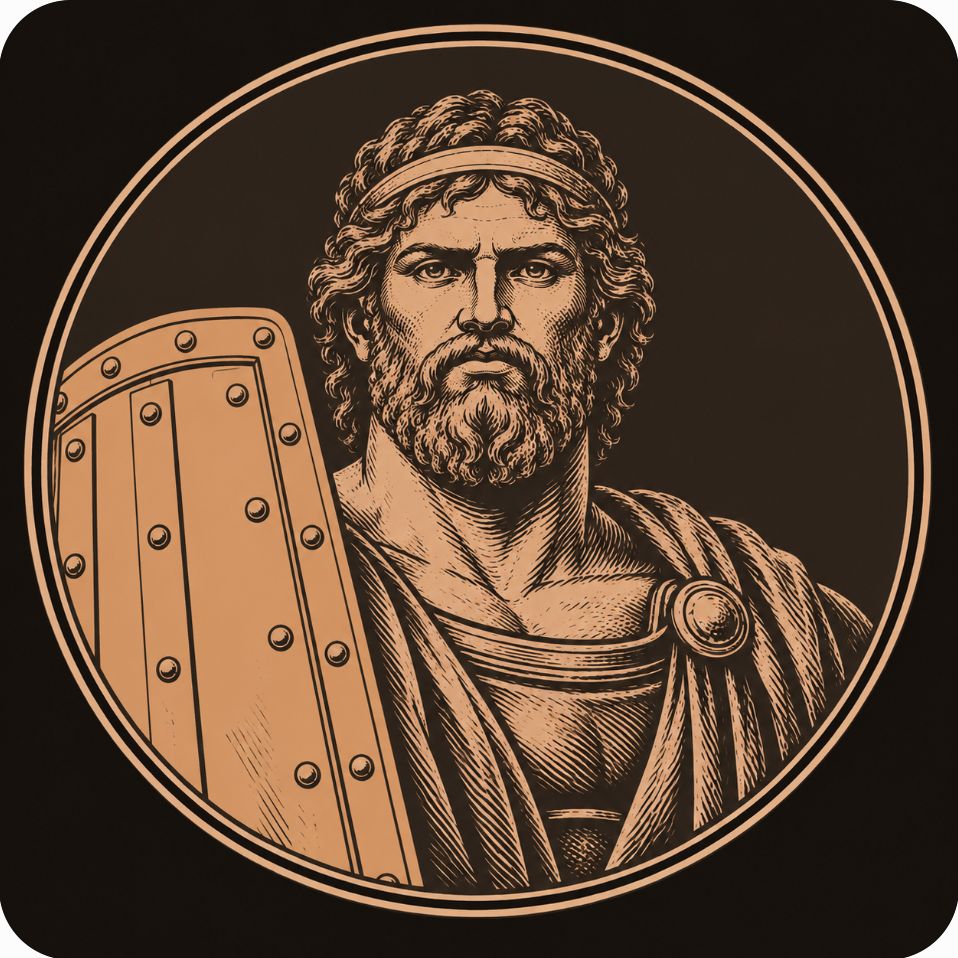
Ajax the Great, bulwark of the Achaeans
Generated by AI from this page's own facts, not an ancient image or evidence of anything. How this site uses generated images
Sections on this page
Core Myth
Ajax, son of King Telamon of Salamis, is the towering second-greatest warrior of the Greek army at Troy, ranked below only his cousin Achilles. Homer calls him the bulwark of the Achaeans: unlike Achilles's glory-seeking aggression, Ajax's role in the Iliad is mainly defensive, holding the Greek ships and camp against Trojan assaults behind a massive shield of sevenfold ox-hide and bronze. His most famous single feat is a full day's duel with Hector, fought in single combat before both armies until heralds call it off at nightfall as a draw. The two warriors part as respectful enemies and exchange gifts: Hector gives Ajax his sword, and Ajax gives Hector his war-belt.
The Iliad ends before Achilles dies, but later tradition, dramatized fully in Sophocles's tragedy Ajax, continues the story: after Achilles is killed, the Greek leaders must decide who deserves his divine armor, Ajax for his raw strength or Odysseus for his cunning speeches. They award it to Odysseus, and Ajax cannot bear the disgrace. Athena drives him mad, and in his fury he slaughters the army's captured livestock, mistaking the animals for the commanders who judged against him. When he comes to his senses and realizes what he has done, Ajax falls on his sword in despair - the very sword Hector had given him as a token of respect after their duel.
Is this Ajax the same person as Ajax the Lesser?
No. This Ajax, son of Telamon and king of Salamis, is a different and much more prominent figure than Ajax the Lesser, son of Oileus, a smaller, faster commander from Locris. Homer's Catalogue of Ships in the Iliad lists them as separate men leading separate contingents from separate cities; the two are alike only in name and in fighting on the same Greek side at Troy.
Homer, Iliad, Book 2
Who won the duel between Ajax and Hector?
Neither. Ajax and Hector fight in single combat for a full day, trading spear-casts and then blows with boulders and swords, until heralds sent by Zeus call the fight off at nightfall as an even match. Rather than parting as enemies, the two exchange gifts of respect: Hector gives Ajax his sword, and Ajax gives Hector his war-belt.
Homer, Iliad 7.206-312
Why did Ajax kill himself?
After Achilles's death, the Greek army awards his divine armor to Odysseus rather than to Ajax, judging cunning speech over raw strength. Ajax cannot bear the humiliation; Sophocles's tragedy Ajax has Athena drive him mad so that he slaughters the army's livestock believing them to be the commanders who voted against him, and when his sanity returns and he grasps what he has done, shame drives him to fall on his own sword.
Sophocles, Ajax
What sword did Ajax use to kill himself?
In Sophocles's tragedy Ajax, he kills himself with the sword Hector gave him as a gift of mutual respect after their inconclusive duel in the Iliad, planting it upright in the ground of enemy Trojan soil before falling on it. The detail turns a token of a fair fight between honorable enemies into the instrument of Ajax's own death.
Sophocles, Ajax
What happened to Ajax's body after his death?
Agamemnon, still resentful, forbade the usual cremation given to the Greek dead at Troy, so Ajax alone among those who fell at Ilium was buried whole in a coffin rather than burned, at a site called Rhoeteum on the Trojan coast.
Apollodorus, Epitome 5.7
Later Traditions
Homer's Iliad never narrates Achilles's death, the contest for his armor, or Ajax's suicide; all three belong to later tradition, developed dramatically by Sophocles and summarized plainly by Apollodorus's Epitome, which adds that Agamemnon refused to let Ajax's body be burned, so that he alone among the dead at Troy was buried whole, in a coffin, at Rhoeteum.
This Ajax, son of Telamon, is frequently confused with a different, far more minor figure of the same war: Ajax the Lesser, son of Oileus, a smaller and faster Locrian commander. The sacrilege at the fall of Troy belongs to that lesser man: Apollodorus says the Locrian Ajax found Cassandra clinging to Athena's wooden image and violated her. Homer's own Catalogue of Ships lists the two as separate commanders leading separate contingents, and every ancient reference to 'Ajax the Great' or 'Telamonian Ajax' means the hero on this page, not his lesser namesake.
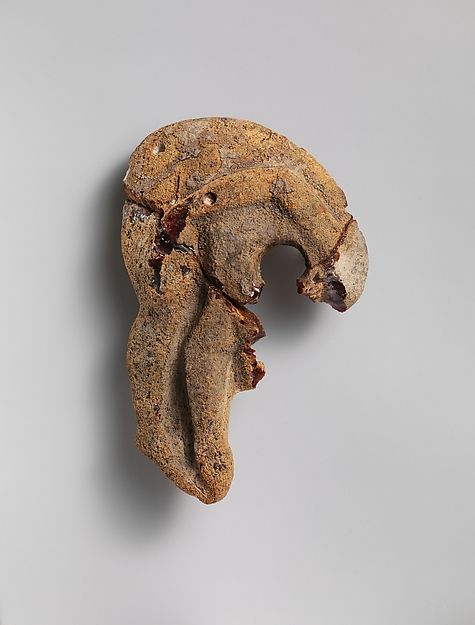
Pendant: Ajax carrying the body of Achilles - Etruscan, 6th–5th century BCE, Amber
Metropolitan Museum of Art, New York, NY, 1992.267.2. CC0
Also Connected
6 recorded connections, each with the ancient line behind it.
Allies
-

Ajax and Achilles are first cousins, sons of Telamon and Peleus, both sons of Aeacus, and fight side by side as the two greatest Greek champions at Troy.
-
In the fierce fight over Patroclus's corpse, Apollodorus says, Ajax rescued the body with difficulty.
Enemies
-
Ajax and Hector fight a full day's single combat outside Troy that ends in a draw at nightfall; the two part as respectful enemies and exchange gifts, Hector's sword for Ajax's war-belt.
-

After Achilles's death, the Greek leaders award his armor to Odysseus over Ajax; unable to bear the disgrace, Ajax is driven mad and to suicide, the central action of Sophocles's Ajax.
-
In Ovid the chiefs award the arms of Achilles to Ulysses after both men speak, and Ajax then kills himself.
Connected
-
Peleus is the brother of Telamon, the father of Ajax, which makes him Ajax's uncle.
Where Accounts Differ
- ajax-lesser-disambiguation
- telamon-peleus-kinship-variant
- Homer's Iliad never narrates Achilles's death, the contest for his armor, or Ajax's suicide; those events are supplied by later tradition, dramatized fully in Sophocles's Ajax and summarized plainly in Apollodorus's Epitome.
- Apollodorus records a variant genealogy from Pherecydes in which Telamon was Peleus's friend rather than his brother, which would make Ajax and Achilles close comrades rather than literal first cousins; this entry follows the mainstream account in which both are sons of Aeacus.
- This Ajax, son of Telamon, is routinely confused with the more minor Ajax the Lesser, son of Oileus; the two are distinguished as separate commanders as early as Homer's own Catalogue of Ships.
Read the full source verification →
Mythology
Appears In
Related Terms
Referenced By
Sources
- Homer, Iliad, Book 2
- Homer, Iliad, Book 3
- Homer, Iliad 7.206-312
- Apollodorus, Library 3.12.6
- Apollodorus, Epitome 5.6
- Apollodorus, Epitome 5.7
- Sophocles, Ajax
- Apollodorus, Epitome 5.22
- Timothy Gantz, Early Greek Myth (1993)