Fury
A fury, in Greek myth, is an Erinys, a goddess who pursues anyone guilty of shedding the blood of kin.

Drop of blood that falls on Gaia
Generated by AI from this page's own facts, not an ancient image or evidence of anything. How this site uses generated images
Sections on this page
In Practice
English translators call the Erinyes the Furies. Hesiod says they were born from the drops of blood that fell on Gaia when Kronos wounded his father Ouranos (Theogony 176-206). The longer entry on the Furies covers their names and parentage.
Aeschylus gives the fullest picture of how a fury looks. In the Eumenides the Pythia at Delphi finds a band of sleeping women around Orestes. She says they are not women but Gorgons, and then that she cannot compare them to Gorgons either. They are wingless, black and disgusting. They snore with foul breath, and hateful drops fall from their eyes (Eumenides 46-59). Apollo calls them old women and ancient children, with whom no god, man or beast ever mingles (Eumenides 64-90).
Homer shows what a fury can do. Iris tells Poseidon that the Erinyes always follow to aid the elder-born (Iliad 15.204). When Achilles's horse Xanthus begins to foretell his death, the Erinyes stop the horse's voice (Iliad 19.404-418). Aeschylus has Prometheus say that the Fates and the unforgetting Furies steer Necessity (Prometheus Bound 511-518). The Furies of the Eumenides add a claim of their own: there is a time when fear is good and should sit as a guardian of the heart (Eumenides 517-525).
In Homer the fury is not yet the hunter of Orestes. The Odyssey praises Orestes for avenging his father and mentions a funeral feast for Aegisthus and for his hateful mother (Odyssey 3.303-310). Aeschylus makes the Furies the pursuers of Orestes and ends the pursuit at Athens. Athena offers them a cavernous sanctuary and shining thrones at their hearths (Eumenides 794-807). The Furies then go to the places below the earth (Eumenides 1021-1031). The whole sequence belongs to the House of Atreus and the Returns.
What is a fury from Greek mythology?
A fury is a goddess of vengeance whom Greek poets call an Erinys. Hesiod derives the Erinyes from the blood of Ouranos's wound. In Homer they enforce a curse and side with the elder against the younger. In Aeschylus's Eumenides they form the chorus that hounds Orestes for the killing of Clytemnestra, until Athena's court acquits him and she persuades them to accept a home at Athens.
Hesiod, Theogony 176-206
What powers do Furies have?
The sources show three. Homer's Iris says the Erinyes aid the elder-born, and the Erinyes stop Xanthus when he speaks of Achilles's death. Aeschylus's Prometheus names the Furies with the Fates as the steersmen of Necessity. In the Eumenides they threaten to let loose venom on the land, drops that it cannot endure, when they are denied the punishment of Orestes.
Homer, Iliad 19.404-418
What do the Furies look like?
Aeschylus describes them through the Pythia, who calls them not women but something like Gorgons, and yet not Gorgons. They are wingless, black and disgusting, and they snore with repulsive breath. Apollo calls them old women and ancient children. The Pythia's own words show that the poet leaves the form unsettled.
Aeschylus, Eumenides 46-59
Do the Furies ever stop pursuing Orestes?
In the Eumenides they do. After the tied vote at Athens, Athena says they are not dishonored and offers them a cavernous sanctuary in a righteous land, where they will sit on shining thrones at their hearths. A procession then leads them to the places below the earth. The play does not say the Furies lose their power. It says they accept a new seat of honor in Athens.
Aeschylus, Eumenides 794-807
Does Homer send the Furies after Orestes?
The Odyssey passages checked here do not. Nestor tells Telemachus that Orestes killed Aegisthus and gave a funeral feast for him and for his hateful mother. The poem treats the son as a model for Telemachus and does not mention a pursuit. The Furies who hunt a matricide belong to Aeschylus and the later tragedians, which is why this page places that scene in the Eumenides.
Homer, Odyssey 3.303-310
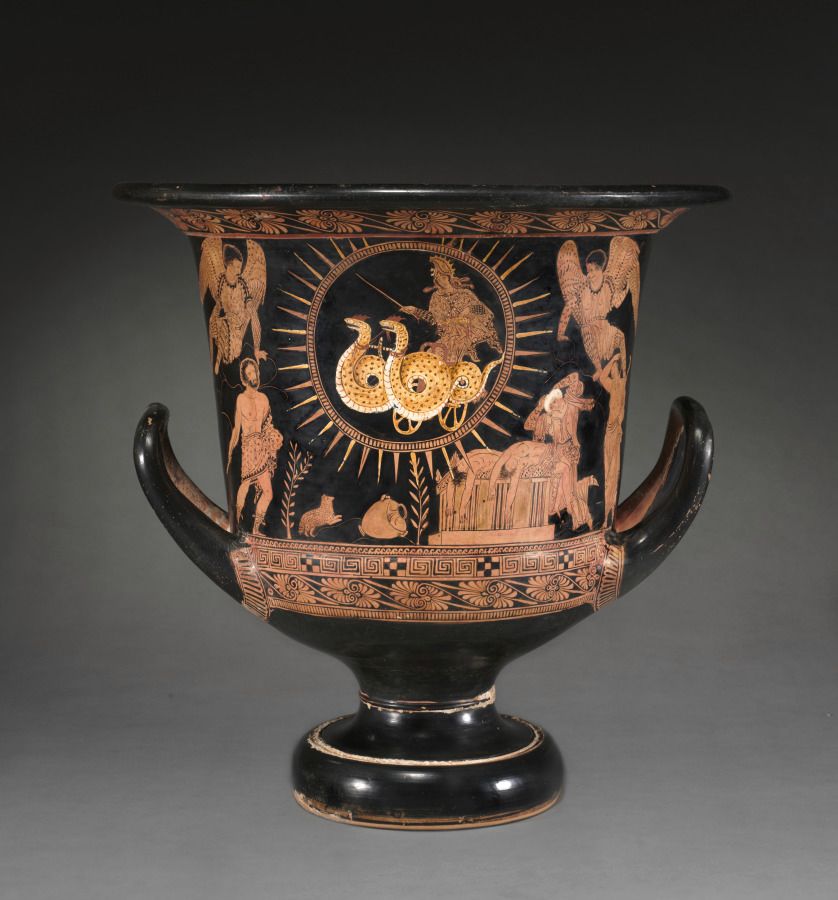
Red-Figure Calyx-Krater (Mixing Vessel): Medea in Chariot (A); Telephos with Baby Orestes (B) - South Italian, Lucanian, c. 400 BCE, ceramic
The Cleveland Museum of Art, Cleveland, OH, 1991.1. CC0
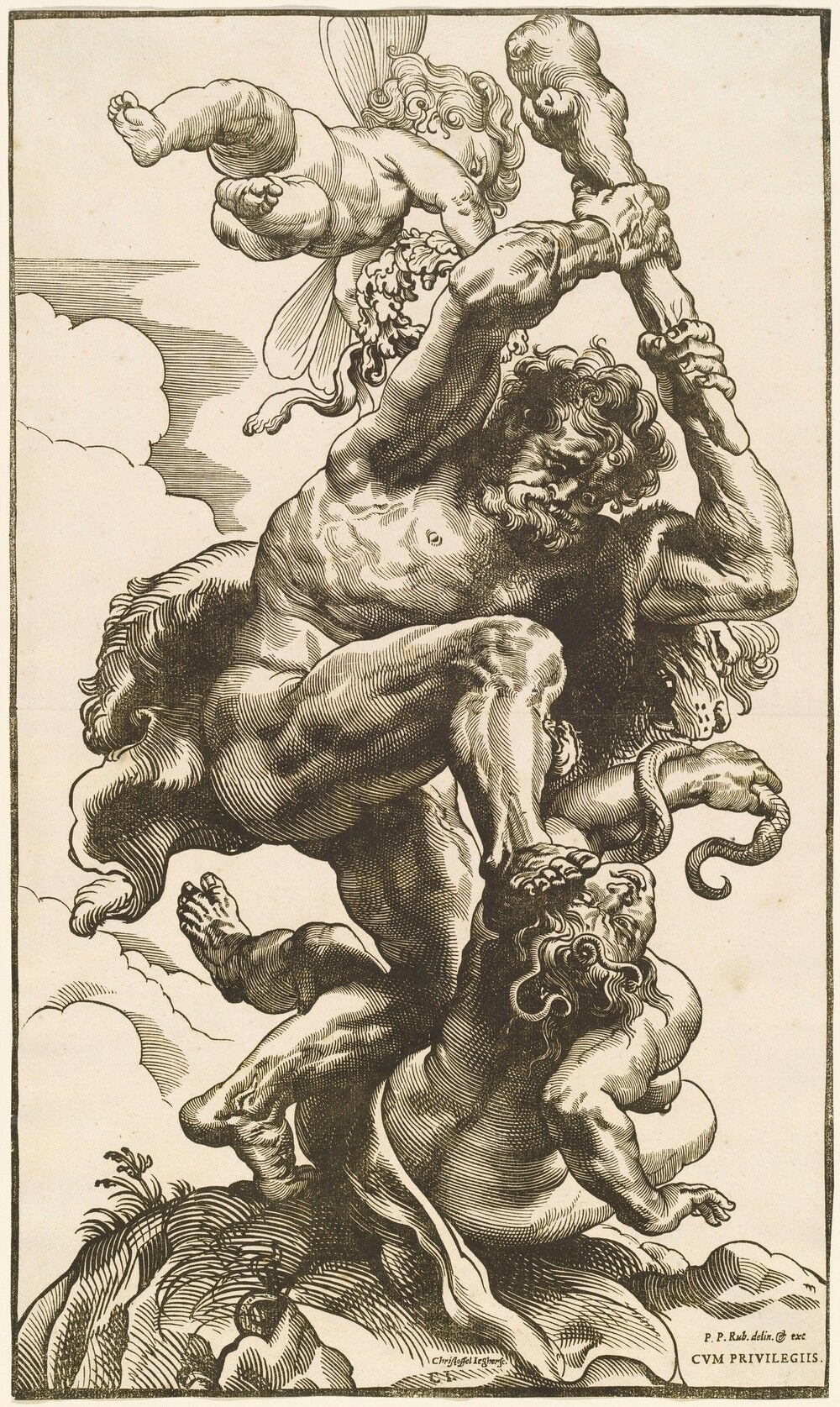
Hercules Fighting the Fury and the Discord - Christoffel Jegher after Sir Peter Paul Rubens, 1630, woodcut on laid paper
National Gallery of Art, Washington, DC, 1973.60.1. CC0
Where Accounts Differ
- orestes-without-furies-in-homer-vs-pursued-in-aeschylus
- Homer's Odyssey praises Orestes and mentions no Furies at his deed, while Aeschylus makes the Furies his pursuers and the trial at Athens the end of the pursuit. Both are reported here and neither is chosen.
Where This Appears
Referenced By
Sources
- Hesiod, Theogony 176-206
- Homer, Iliad 15.204
- Homer, Iliad 19.404-418
- Homer, Odyssey 3.303-310
- Aeschylus, Prometheus Bound 511-518
- Aeschylus, Eumenides 46-59
- Aeschylus, Eumenides 64-90
- Aeschylus, Eumenides 517-525
- Aeschylus, Eumenides 794-807
- Aeschylus, Eumenides 1021-1031