Athena
Athena is a major Olympian goddess of wisdom, strategic warfare, and craftsmanship, born fully armed from the head of Zeus after he swallowed her pregnant mother, Metis. She won Athens from Poseidon by gifting the city the olive tree, and she protects heroes such as Odysseus, Perseus, and Heracles.

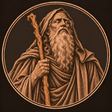
Athena, bronze engraved medallion
Generated by AI from this page's own facts, not an ancient image or evidence of anything. How this site uses generated images
Sections on this page
Greek vs Roman: Athena vs. Minerva → See how Minerva differs.
Rivals: Athena vs. Ares → See how Ares differs.
What does the name "Athena" mean? →
See Athena in the Greek family tree. Looking for a name of your own? Try the mythological name generator.
Core Myth
Hesiod records that Zeus took the Titaness Metis as his first consort, then swallowed her whole on learning a prophecy that her second child would depose him; her first child, Athena, was already growing inside him. When it came time for the birth, Hephaestus (in some tellings, Prometheus) split Zeus's skull with an axe, and Athena sprang out fully grown and armed, giving a great war cry that shook Olympos. Because she carries her mother's cunning intelligence, metis, together with her father's authority, she becomes the Olympian most associated with strategic thought rather than the raw force that gods like Ares represent.
Her contest with Poseidon for patronage of Athens is the clearest statement of what she offers a city. Each god presented the citizens with a gift: Poseidon struck the Acropolis with his trident and produced a spring of seawater, while Athena planted the first olive tree, a lasting source of food, oil, and wood. The Athenians, or in some versions a court of gods, judged the olive more valuable and gave the city to Athena, who named it after herself. She went on to serve as the personal patron of individual heroes rather than commanding armies herself - she guides Odysseus home through the Odyssey, even holding back the dawn on his first night back with Penelope, arms and directs Perseus against Medusa, and coaches Heracles through several of his labors. Apollodorus says she gave him bronze castanets, made by Hephaestus, to scare the Stymphalian Birds out of their wood. In the Gigantomachy, Apollodorus has her hurl the island of Sicily onto the fleeing giant Enceladus. In Odyssey Book 6 she sends a dream to the Phaeacian princess Nausicaa, so that the girl will find the shipwrecked Odysseus (Odyssey 6.1-40).
Why was Athena born from Zeus's head?
Zeus had swallowed her mother, the Titaness Metis, while Metis was pregnant, after learning a prophecy that her next child would overthrow him. Athena kept growing inside Zeus himself, and when it was time for her to be born, Hephaestus split his skull with an axe and she emerged fully grown, fully armed, and shouting a war cry. Being born this way, from Zeus alone, is part of why later tradition treats her as the emphatically paternal Olympian, loyal to her father's order.
Hesiod, Theogony 924-926
How did Athena become the patron of Athens?
She and Poseidon each offered the city a gift to win its favor. Poseidon struck the rock of the Acropolis and produced a spring of seawater; Athena planted an olive tree, useful for food, oil, and wood. The city judged the olive the better gift and took her as patron, and the city itself was named for her.
Apollodorus, Library 3.14.1
Is Athena a virgin goddess?
Yes - Athena, along with Artemis and Hestia, is one of the three Olympian goddesses who never marry and resist the advances of male gods, an identity closely tied to her epithet Parthenos, "the maiden," which also names her temple, the Parthenon. Hephaestus attempts to force himself on her at one point; she fends him off, and his spilled seed on the earth produces Erichthonius, an early king of Athens she then raises herself.
Apollodorus, Library 3.14.6
How is Athena different from Ares as a war god?
Both preside over war, but the tradition consistently frames Athena as strategy and discipline and Ares as chaos and bloodlust. Athena favors the side that fights with better planning and just cause, appearing in the Iliad to restrain rash warriors and guide tactics, while Ares simply enjoys slaughter for its own sake and is disliked by the other gods, including his own father Zeus.
Homer, Iliad 5.888-898
Why did Athena turn Arachne into a spider?
Arachne, a mortal weaver, boasted that her skill surpassed the goddess's own and wove a tapestry depicting the gods' scandals and abuses. Athena, offended by both the arrogance and the subject matter, destroyed the tapestry; when Arachne tried to hang herself in despair, Athena transformed her into a spider, condemned to weave forever. The story is Ovid's, not part of the earlier Greek tradition, and functions as a warning against hubris toward the gods.
Ovid, Metamorphoses 6.1-145
Why is Athena also called Pallas Athena?
Ancient sources never settle on one origin. Apollodorus records a training accident behind one Pallas connected to Athena: Triton's winged daughter Pallas sparred with the young Athena, and Zeus's aegis startled her mid-match just as Athena's own blow killed her; Athena then carved a memorial image, the Palladium, in her likeness. Other sources instead tie the epithet to a giant named Pallas whom Athena flays in the war with the giants. Apollodorus does not himself say which story, if either, explains the name.
Apollodorus, Library 3.12.3
Who is Athena's Roman counterpart?
Minerva. The Romans identified her closely with Athena, keeping her associations with wisdom and crafts, though Minerva's public cult, centered on the Capitoline Hill alongside Jupiter and Juno, placed less emphasis on the war-goddess role that Athena carries throughout Greek epic.
Later Traditions
In Roman religion Athena was identified with Minerva, who absorbed her role as goddess of wisdom and crafts but carried a less warlike public image. In Virgil's Aeneid, the serpents that kill Laocoon flee to her citadel and hide beneath the goddess's feet and shield. Athenian civic religion built its central festival, the Panathenaia, around her, presenting her a new robe (peplos) woven by the city's women. Later philosophical and Renaissance traditions turned her into a general symbol of reasoned civilization set against instinct and violence, an association that persists in her frequent use as an emblem for universities and libraries.
Modern Influence
Athena remains one of the most recognizable figures from Greek mythology, frequently appearing in literature, art, and as a symbol of wisdom and learning in institutional imagery.

Marble head and torso of Athena - Roman, 1st–2nd century CE, Marble, Pentelic
Metropolitan Museum of Art, New York, NY, 24.97.15. CC0
Lineage
See the full family tree2 recorded relations, each with the ancient line behind it.
Parents
-

Zeus swallowed Metis while she carried Athena; the birth from his head is told by later authors.
-

Zeus swallowed the pregnant Metis; Athena was born from his head.
Also Connected
12 recorded connections, each with the ancient line behind it.
Allies
-
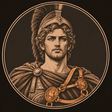
Athena brought Bellerophon the golden bridle in a dream so he could tame Pegasus.
-
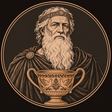
Nestor recognizes Athena when she leaves as a sea-eagle and vows her a heifer with gilded horns. In Iliad Book 11 he says she roused the Pylians for battle against the Epeians.
-
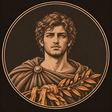
After his acquittal on equal votes, Orestes hails Pallas as the saviour of his house and swears that Argos will never march against Athens.
-
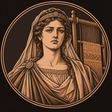
Athena puts the contest of the bow into Penelope's heart, setting up the suitors' deaths, and elsewhere in the Odyssey sends her sleep when she weeps for Odysseus.
-
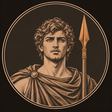
Athena, disguised as Mentes and then Mentor, sends Telemachus to Pylos and Sparta and sails with him; Nestor recognises her when she leaves as a sea-eagle.
Enemies
-

When the gods join battle at Troy, Ares attacks Athena first, and she knocks him down with a boulder.
Connected
-
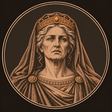
At Hector's bidding Hecuba brings her finest robe to Athena's temple for Troy's sake, but the goddess denies the prayer.
-
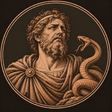
In Virgil the serpents take refuge at the feet of Athena's image after killing Laocoön, and the Trojans read his death as the price of striking the horse. In Quintus Smyrnaeus, Athena herself blinds him and sends the serpents against his sons.
-
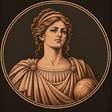
Athena appears to Nausicaa in a dream and sends her to the river so that she will meet Odysseus.
-

Athena dressed her and taught her skilled needlework, one of several gods who each contributed a gift to her making.
-
-

Apollodorus makes Triton's winged daughter Pallas a training partner of the young Athena; Athena kills her by accident when Zeus's aegis startles her mid-match, and memorializes her as the wooden image known as the Palladium.
Where Accounts Differ
- birth variant
- Birth variant: some sources attribute the role of head-splitter to Prometheus rather than Hephaestus.
Read the full source verification →
Mythology
Appears In
Equivalent Figures
Related Terms
Referenced By
- Comparison Athena vs. Ares
- Comparison Athena vs. Minerva
- Term Cassandra
- Story Daedalus and the Labyrinth
- Term Epithet
- Term Fury
- Term Giants
- Topic Greek Goddesses: Primordial, Titan, Olympian and Lesser
- Term Ithaca
- Term Nostos
- Story Seven Against Thebes
- Story The Fall of Troy
- Topic The Olympian Gods
- Term Trident
- Term Trojan Horse
Sources
- Homer, Odyssey
- Homer, Iliad 5.888-898
- Hesiod, Theogony 924-926
- Apollodorus, Library 3.14.1
- Pindar, Olympian Ode 7
- Apollodorus, Library 2.5.6
- Apollodorus, Library 1.6.2
- Virgil, Aeneid 2.225-227
- Homer, Odyssey 6.1-40
- Susan Deacy, Athena (2008)
- Timothy Gantz, Early Greek Myth (1993)