Trident
The trident is the three-pronged spear carried by Poseidon in Greek mythology and by his Roman counterpart Neptune, a weapon and scepter that marks its holder as ruler of the sea and master of earthquakes.
Poseidon's trident, engraved in bronze
Generated by AI from this page's own facts, not an ancient image or evidence of anything. How this site uses generated images
Sections on this page
In Practice
Apollodorus places its origin in the same act that arms Zeus and Hades. Zeus freed the Cyclopes from imprisonment in Tartarus. They gave thunder and the thunderbolt to Zeus, a helmet of invisibility to Hades, and the trident to Poseidon. This equipped the three brothers for the war against the Titans. Once the Titans were defeated, the brothers divided the cosmos by lot. The trident became the permanent mark of Poseidon's rule over the sea, exactly as the thunderbolt marks Zeus's rule over the sky.
The trident's power is not limited to the water. Poseidon's oldest and most persistent epithet, Earth-Shaker, reflects a belief that striking the ground with the trident could split rock and cause tremors. This strike appears directly in the best-known trident story: the contest between Poseidon and Athena for patronage of Athens. Apollodorus describes Poseidon striking the middle of the Acropolis with his trident to produce a spring of seawater. Athena, called to witness by Cecrops, plants an olive tree. The twelve gods judge Athena's gift the more valuable. Cecrops's testimony that she planted it first decides the contest in her favor, and the city takes her name rather than Poseidon's.
As a weapon of the sea itself, the trident appears again in Roman epic doing the opposite of destruction. Virgil's Aeneid shows Neptune calming, not raising, a storm. He uses his trident to lever ships off the rocks and part the shoals so the Trojan fleet can survive. The same object that shatters the earth in the Athens story restores order to the waves in the Aeneid. This reflects the god's double authority over the sea's calm and its violence, and over the solid earth beneath it, rather than any real disagreement between the sources.
The trident's visual identity has stayed remarkably stable from antiquity onward. It is a long-shafted, three-pronged spear. Unlike Zeus's bolt and Hades' invisibility, it is a weapon anyone could recognize on sight. This is part of why it remains the most immediately identifiable attribute of Poseidon and Neptune in art, coinage, and later popular culture. It still stands in for the sea god himself long after the myths that first explained where it came from.
Who gave Poseidon his trident?
The Cyclopes gave it to him. Apollodorus records that after Zeus freed the Cyclopes from Tartarus, they armed the three brothers for the war against the Titans: thunder and the thunderbolt for Zeus, a helmet of invisibility for Hades, and the trident for Poseidon. Once the Titans were defeated, the trident became the fixed symbol of Poseidon's rule over the sea when the cosmos was divided by lot.
Apollodorus, Library 1.2.1
Can the trident really cause earthquakes in the myths?
Yes - Poseidon's oldest epithet, Earth-Shaker, reflects exactly this belief, and the clearest example is the contest for Athens, where Apollodorus describes Poseidon striking the Acropolis with his trident and producing a spring of seawater on the spot. The trident's power over solid ground, not only over waves, is treated as an ordinary part of its function rather than an exceptional case.
Apollodorus, Library 3.14.1
What happened in the contest between Poseidon and Athena for Athens?
Poseidon struck the Acropolis with his trident and brought forth a spring of seawater; Athena, called to witness by King Cecrops, planted an olive tree. The twelve gods judged the two gifts and ruled in Athena's favor, largely because Cecrops testified that she had planted her gift first, and the city took her name rather than Poseidon's.
Apollodorus, Library 3.14.1
Does the trident only destroy, or can it also calm the sea?
Both. In Virgil's Aeneid, Neptune uses his trident not to raise a storm but to end one, levering grounded ships free of the rocks and parting the shoals so the Trojan fleet can escape safely. The same object that shatters rock in the Athens myth restores calm water here, reflecting the god's full authority over the sea rather than a single fixed use for the weapon.
Virgil, Aeneid 1.144-146
Is the trident unique to Poseidon, or does Hades or Zeus carry one too?
It belongs to Poseidon alone among the three brothers armed by the Cyclopes. Zeus received the thunderbolt and Hades a helmet that grants invisibility; only Poseidon was given the trident, and the three weapons together mark the three-way division of the cosmos after the Titans were defeated, sky to Zeus, sea to Poseidon, and the underworld to Hades.
Apollodorus, Library 1.2.1
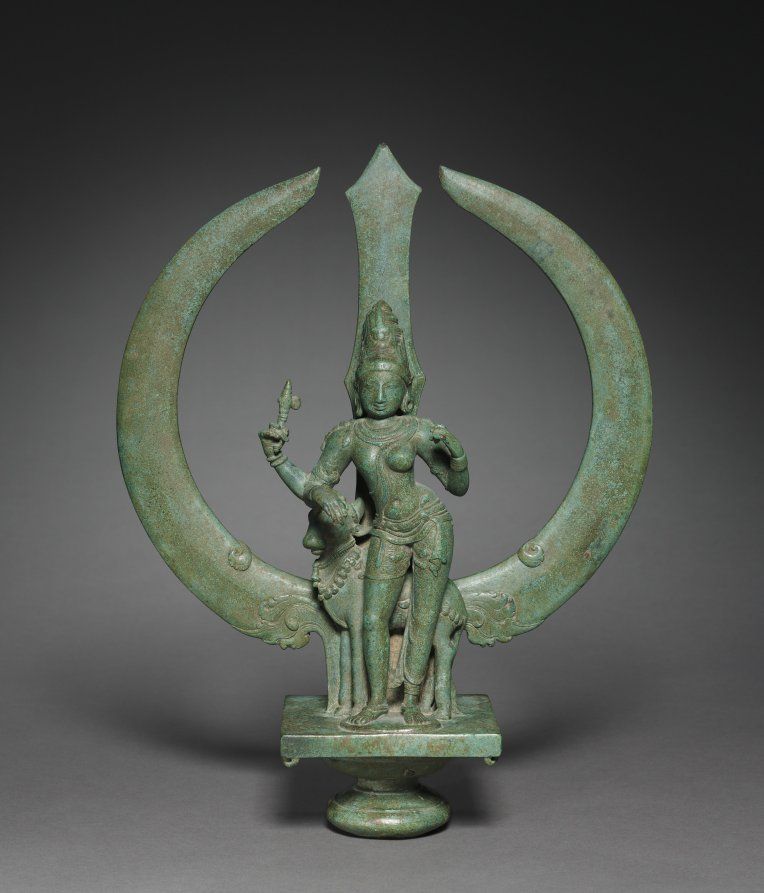
Trident with Shiva as Half-Woman (Ardhanarishvara) - South India, Tamil Nadu, Chola period (900-13th Century), c. 1050, bronze
The Cleveland Museum of Art, Cleveland, OH, 1969.117. CC0
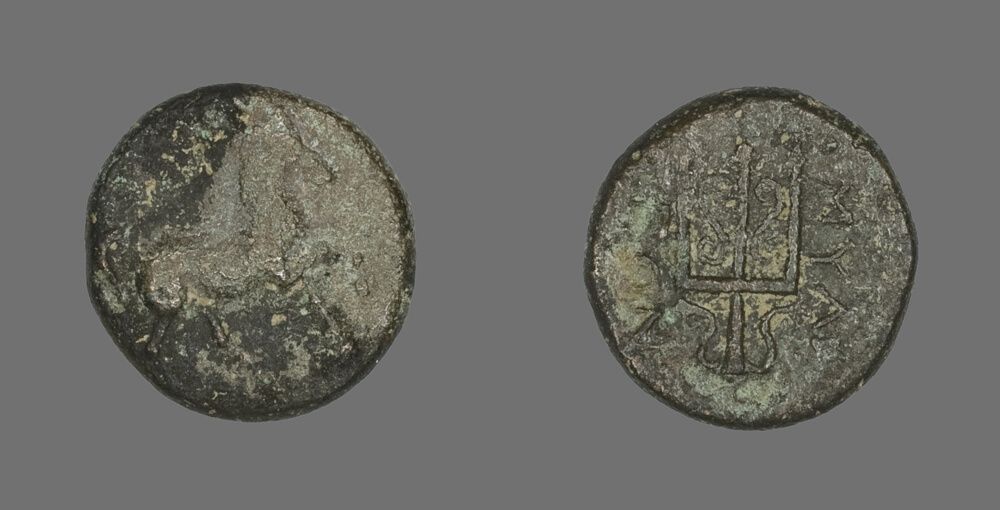
Coin Depicting a Horse - Ancient Greece, 2nd century BCE, Bronze
The Art Institute of Chicago, Chicago, IL, 1920.2993. CC0
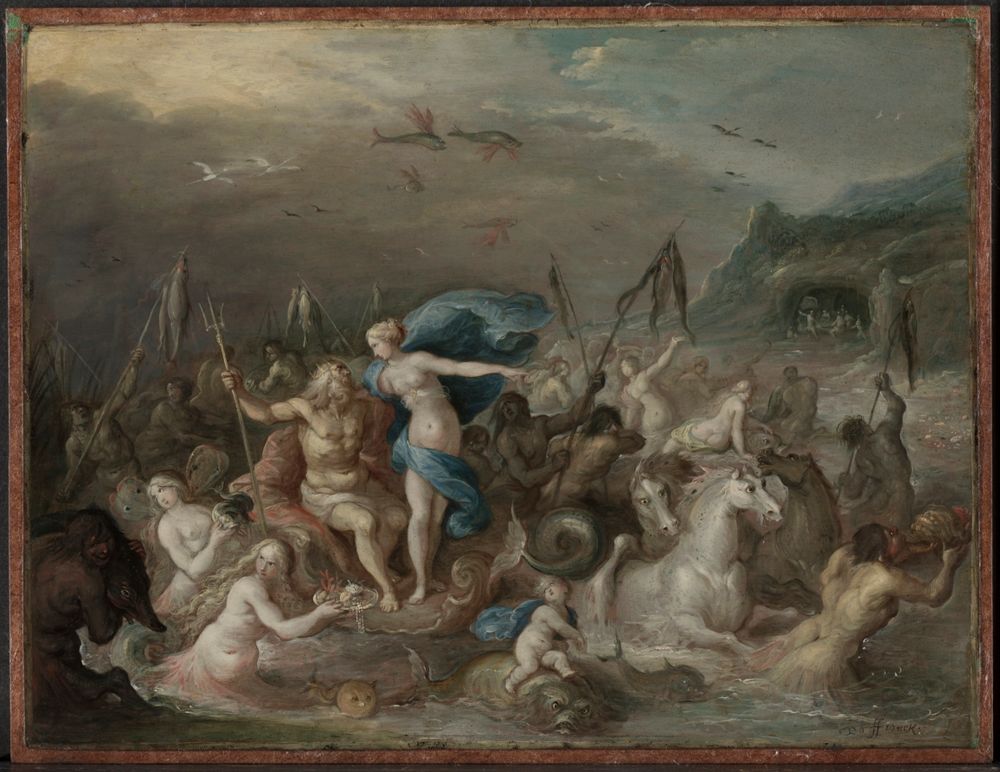
The Triumph of Neptune and Amphitrite - Flanders, 1630s, oil on copper, mounted on wood
The Cleveland Museum of Art, Cleveland, OH, 1982.245. CC0
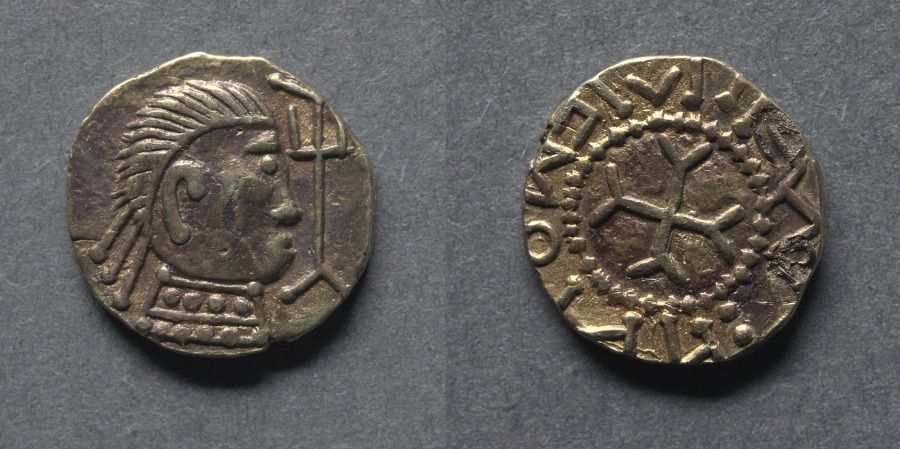
Witmen Tremissis: Bust and Trident (obverse); Cross Fourchée (reverse) - England, Anglo-Saxon, early 7th century, early 600s, gold
The Cleveland Museum of Art, Cleveland, OH, 1969.159. CC0
Where This Appears
Sources
- Apollodorus, Library 1.2.1
- Apollodorus, Library 3.14.1
- Virgil, Aeneid 1.144-146