Poseidon
Poseidon is one of the three chief Olympian gods, ruling the seas after the Titans' defeat. He is known for his volatile temperament, his trident, and his rivalry with Athena over the patronage of Athens, a contest he lost and resented for the rest of the tradition.

Poseidon, Olympian god of the sea
Generated by AI from this page's own facts, not an ancient image or evidence of anything. How this site uses generated images
Sections on this page
Greek vs Roman: Poseidon vs. Neptune → See how Neptune differs.
Rivals: Zeus vs. Poseidon → See how Zeus differs.
What does the name "Poseidon" mean? →
See Poseidon in the Greek family tree. Looking for a name of your own? Try the mythological name generator.
Core Myth
Poseidon was one of the six children of the Titans Cronus and Rhea, swallowed at birth like his siblings and freed when Zeus overthrew Cronus. After the Titanomachy, Homer has Poseidon describe how the three brothers cast lots for the world: Zeus won the sky, Poseidon the sea, and Hades the world below, with earth and Olympus left common to all three, a point Poseidon uses in the Iliad to insist he answers to no one, Zeus included, in his own domain. He dwelt in a golden palace beneath the waves and wielded his iconic trident, which could cause earthquakes and summon or calm storms at will.
His best-known contest is with Athena for the patronage of Attica. Apollodorus records that Poseidon struck the Acropolis with his trident to produce a saltwater spring, while Athena planted the first olive tree; Zeus appointed the twelve gods to judge between the two gifts, and they ruled for Athena on the testimony of King Cecrops, who had witnessed her planting first. Poseidon's resentment at the loss recurs across the tradition: he floods the Thriasian plain in retaliation in one version of the story, and his hostility toward Athenian heroes in other myths is sometimes read as a continuation of this old grudge.
How did Poseidon end up ruling the sea instead of the sky or underworld?
After the Titanomachy, the three sons of Cronus cast lots for the world, as Poseidon himself explains in the Iliad: Zeus won the sky, Poseidon the sea, and Hades the world below, with earth and Olympus held in common. Poseidon treats this as making him Zeus's equal in his own sphere rather than his subordinate, a point he makes explicitly when Zeus tries to give him orders through a messenger.
Homer, Iliad 15.187-193
Why did Poseidon lose the contest for Athens to Athena?
Poseidon struck the Acropolis with his trident and produced a saltwater spring; Athena planted the first olive tree. Zeus set the twelve Olympian gods to judge between the two gifts, and King Cecrops of Athens testified that Athena had planted hers first, which decided the verdict in her favor. The city took her name rather than his.
Apollodorus, Library 3.14.1
Why was Poseidon so hostile to Odysseus in the Odyssey?
Odysseus blinded Poseidon's son, the Cyclops Polyphemus, while escaping his cave, and then made the mistake of shouting his own name back at the wounded Cyclops as his ship pulled away. Polyphemus used that name to call down a curse from his father, asking that Odysseus reach home late, having lost all his men, and find trouble waiting there - a curse the rest of the Odyssey largely fulfills.
Homer, Odyssey 9.526-536
Did Poseidon ever fight on the losing side in a war among the gods?
In the Iliad's Theomachy, the gods split into factions to support either the Greeks or the Trojans, and Poseidon backs the Greeks. He faces Apollo directly on the battlefield but the two withdraw from the fight without striking a blow, unlike some of the other divine pairings, since Apollo declines to come to real blows with his uncle over mortals not worth a quarrel between gods.
Homer, Iliad 21.435-460
Is Poseidon's temper connected to earthquakes as well as storms?
Yes - his epithet Earth-Shaker (Ennosigaios) is used throughout Homer specifically for his power to shake the ground, distinct from his control of the sea itself, and ancient audiences associated seismic activity with his anger or his physical passage across the earth. The trident functions as the instrument for both powers in the tradition, striking rock to split earth or open springs just as it stirs or calms the sea.
Homer, Iliad 20.57-66
Later Traditions
Poseidon's temper appears repeatedly outside this one contest. He is the god behind Odysseus's decade of wandering in the Odyssey, punishing him for blinding his son the Cyclops Polyphemus, and he contests Athena's favor again in myths involving other cities and heroes. In Odyssey Book 7 Athena says he fathered Nausithous, father of King Alcinous, so Alcinous's daughter Nausicaa is his great-granddaughter (Odyssey 7.56-63). In Ovid's contest of Arachne and Athena, the weaver's tapestry shows him courting mortals as a bull, a ram, a horse, a bird and a dolphin. In Hesiod he lies with Medusa, and the winged horse Pegasus springs from her neck, as told in Bellerophon and Pegasus. In Roman religion he was identified with Neptune, whose own cult grew increasingly tied to naval power as Rome's fleets expanded. In Virgil's Aeneid, Laocoon is a priest of Neptune chosen by lot, and he is sacrificing a bull when the serpents come. In the Gigantomachy, he chases the giant Polybotes to Cos and throws a broken-off piece of the island onto him.

Stater (Coin) Depicting the God Poseidon - Pesto, 480-400 BCE, Silver
The Art Institute of Chicago, Chicago, IL, 1923.1161. CC0
11 recorded relations, each with the ancient line behind it.
Parents
-

Kronos swallowed each child at birth; Zeus alone escaped and later forced the others back up.
-

Siblings


Children
-

-

Poseidon's grievance for his blinded son drives the wanderings of Odysseus.
-

disputed
Disputed parentage: Apollodorus has Poseidon lie with Aethra the same night as Aegeus, so both are named as father.
-

Hesiod names Triton as the son born of Poseidon and Amphitrite, living with both parents in their golden undersea palace.
Also Connected
15 recorded connections, each with the ancient line behind it.
Allies
-
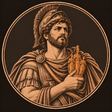
Poseidon rescues Aeneas from Achilles because he is fated to survive and carry on the line of Dardanus as king among the Trojans.
Enemies
-
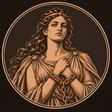
Angered by Cassiepea's boast against the Nereids, Poseidon sent a flood and a sea monster, and Ammon's oracle demanded Andromeda.
Connected
-

Poseidon marries the Nereid Amphitrite, and together they have a son, Triton, who lives with them in their undersea palace.
-
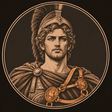
Pindar's Athena calls Poseidon the Tamer Bellerophon's father in the Greek and has him sacrifice a bull to the god; Homer and Apollodorus make Glaucus, son of Sisyphus, his father.
-

Angered at Odysseus, Poseidon rouses all four cardinal winds together, Boreas among them, to wreck his raft.
-

Geryon's father Chrysaor, not yet a separate entity in this corpus, was said to be Poseidon's son by Medusa - the sea god's bloodline lies behind Geryon's far-western, ocean-edge myth.
-
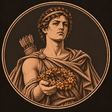
Theseus's curse, granted by Poseidon, sends the bull from the sea that wrecks his chariot.
-
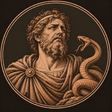
Virgil makes Laocoön a priest of Neptune, the Roman counterpart of Poseidon, chosen by lot, and has him killed at the altar during a sacrifice to that god.
-
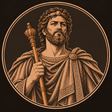
Poseidon sent Minos a bull to sacrifice; Minos kept it, and Poseidon made the bull savage.
-
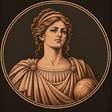
Nausicaa's great-grandfather is Poseidon, through Nausithous and Alcinous, and she describes his temple at the Phaeacian assembly place.
-
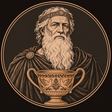
Apollodorus makes Poseidon the father of Neleus by Tyro. In the Odyssey, Telemachus finds Nestor and the Pylians sacrificing black bulls to Poseidon.
-

Homer's Odyssey calls Proteus "the servant of Poseidon," tending his seals near the Egyptian island of Pharos, a subordinate role rather than a stated parentage.
-
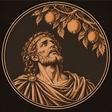
In Pindar's first Olympian Ode, Poseidon falls in love with Tantalus's son Pelops and carries him off from the banquet Tantalus gave the gods at Sipylus.
-

Poseidon rivaled his brother Zeus in courting Thetis until the same prophecy that turned Zeus away made him withdraw as well.
-
Distinct from the parentage the two also share: in Ovid's account of Deucalion's flood, Neptune personally commands Triton to sound his conch shell so its blast can recall the receding floodwaters, a specific act of service rather than a restatement of Triton's birth.
Read the full source verification →
Mythology
Appears In
Equivalent Figures
Related Terms
Referenced By
Sources
- Homer, Odyssey 9.526-536
- Homer, Iliad 15.187-193
- Apollodorus, Library 3.14.1
- Apollodorus, Library 1.6.2
- Virgil, Aeneid 2.201-204
- Ovid, Metamorphoses 6.87-145
- Hesiod, Theogony 278-286
- Homer, Odyssey 7.56-63
- Timothy Gantz, Early Greek Myth (1993)