Rhea
Rhea is the Titaness mother of the first Olympians - Zeus, Hera, Poseidon, Hades, Demeter, and Hestia - by her brother-husband Kronos. When Kronos began swallowing each child to escape a prophecy of his overthrow, Rhea hid the infant Zeus on Crete and tricked Kronos into swallowing a stone instead, setting up the eventual Titanomachy.

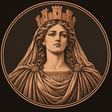
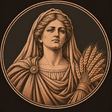
Rhea, Titaness mother of the Olympian gods
Generated by AI from this page's own facts, not an ancient image or evidence of anything. How this site uses generated images
Sections on this page
See Rhea in the Greek family tree.
Core Myth
Rhea was a Titaness, daughter of Uranus and Gaia, and the sister-wife of Kronos. Hesiod names her among the six children of Uranus and Gaia and states plainly that she lay with Kronos and bore him Hestia, Demeter, Hera, Hades, Poseidon, and Zeus. Kronos, warned that a child of his own would overthrow him just as he had overthrown his own father, swallowed each of the first five as soon as they were born, giving Rhea no living child and, in Hesiod's words, unceasing grief. When she was about to bear Zeus, Rhea appealed to her parents Uranus and Gaia for a way to save him and to make Kronos pay for what he had done to his own father. On their advice, she traveled to Crete to give birth to Zeus in secret, and handed Kronos a great stone wrapped in swaddling clothes in place of the child. Kronos swallowed it, believing it was his sixth son.
Why did Rhea have to hide Zeus's birth?
Her husband Kronos had learned that he was fated to be overthrown by one of his own children, just as he had overthrown his own father Uranus, and so he swallowed each child whole as Rhea bore them. By the time she was due to bear her sixth child, Rhea had already lost five and appealed to her parents Uranus and Gaia for a way to save this one and see Kronos punished.
Hesiod, Theogony 453-467
How did Rhea trick Kronos into not swallowing Zeus?
On the advice of Uranus and Gaia, Rhea traveled to Crete to give birth in secret, then handed Kronos a great stone wrapped in swaddling clothes in place of the newborn. Kronos swallowed it without noticing the substitution, believing he had disposed of his sixth child exactly as he had the first five.
Hesiod, Theogony 468-491
What happened to Rhea's other children after Kronos swallowed them?
They stayed alive inside Kronos until Zeus, grown to strength in hiding, forced his father to disgorge them. Hestia, Demeter, Hera, Hades, and Poseidon emerged in reverse of the order they had been swallowed, and together with Zeus they went on to defeat Kronos and the Titans in the Titanomachy.
Hesiod, Theogony 492-506
Is Rhea the same goddess as Cybele?
They were identified with each other rather than being the same figure from the start. Cybele was an Anatolian mother goddess whose cult spread into the Greek and then Roman world, and later Greek and Roman writers equated her with Rhea because both were maternal Titan-like figures associated with mountains, lions, and ecstatic music. The identification is a later syncretism, not part of Hesiod's own account of Rhea.
Hesiod, Theogony 453-467
Later Traditions
Zeus grew to strength hidden away, and it was through Rhea's deception that he survived to force Kronos to disgorge his siblings and lead them against the Titans. In later traditions Rhea was identified with the Anatolian mother goddess Cybele, and her cult, especially as Magna Mater, became important in Hellenistic and Roman religion, where her rites included ecstatic music and the tambourine and lion imagery still associated with her today. The Romans had a second name for her: Lactantius, writing around 300 CE, says Latin speakers call Saturn's sister and wife Rhea Ops (Divine Institutes 1.13).
Lineage
See the full family tree14 recorded relations, each with the ancient line behind it.


Siblings
-

Both are counted among the twelve original Titans in Hesiod's Theogony.
-

Both are counted among the twelve original Titans in Hesiod's Theogony.
-

Both are Titans.
-

Both are counted among the twelve original Titans in Hesiod's Theogony.
-

Both are counted among the twelve original Titans in Hesiod's Theogony.
-

Both are counted among the twelve original Titans in Hesiod's Theogony.


Also Connected
2 recorded connections, each with the ancient line behind it.
Connected
-
Strabo says the Phrygians and the Trojans around Ida worship Rhea under the names Mother of the Gods, Idaea, Dindymene, Cybele and Cybebe.
-
Lactantius calls Saturn's sister Rhea the goddess Latin calls Ops. No earlier source used here makes the same equation, so it is a partial match.
Read the full source verification →
Mythology
Related Terms
Referenced By
Sources
- Hesiod, Theogony 453-506
- Apollodorus, Library 1.1.5-1.1.7
- Lactantius, Divine Institutes 1.13
- Timothy Gantz, Early Greek Myth (1993)