The Titanomachy
The Titanomachy is the ten-year war between Kronos's Titans and Zeus's Olympians for control of the cosmos. Neither side could force a result until Zeus freed the Cyclopes and Hundred-Handers, imprisoned since Ouranos's own reign, from Tartarus. Their thunderbolts and hurled rocks broke the stalemate, and most Titans were bound in Tartarus in turn.
Sections on this page
What Led To It
The war's roots lie in Kronos's own rise to power. He had overthrown his father Ouranos at Gaia's urging and taken the throne of the cosmos for himself. The births that led to that throne, from Chaos to Ouranos's fall, are told in Creation from Chaos. He then learned from Gaia and the dying Ouranos that a son of his own was fated to overthrow him in turn, exactly as he had overthrown his father. To stop that prophecy from having anyone left to fulfill it, Kronos swallowed each child Rhea bore him as soon as it was born. Rhea, helped by Gaia, hid her sixth child, Zeus, on Crete and gave Kronos a stone wrapped in cloth to swallow in his place. Zeus grew to adulthood in secret. He then forced Kronos to disgorge the stone and, after it, his five swallowed children, who emerged alive and in reverse order. Zeus led those freed siblings into the war against their own father.
The Myth
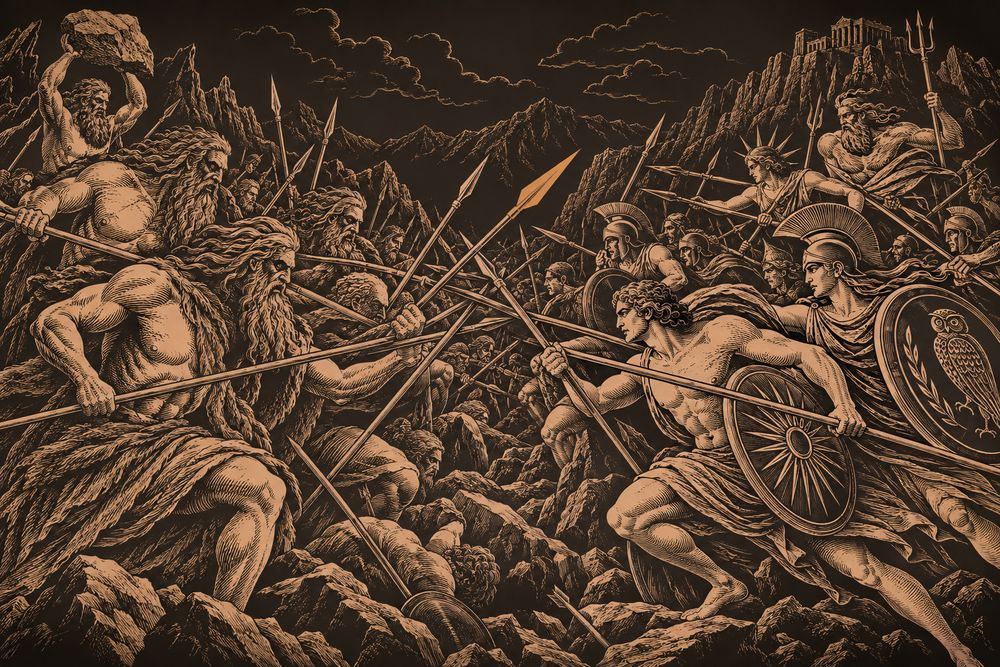
The Titans and Olympians locked in stalemate
Generated by AI from this page's own facts, not an ancient image or evidence of anything. How this site uses generated images
For the first ten years, neither side could force the war to a decision. Hesiod's Theogony describes the two armies fighting continually with bitter wrath, the issue hanging evenly balanced the whole time. Kronos and the other Titans held one side. Zeus and his freed Olympian siblings held the other, neither able to break the deadlock through strength alone.
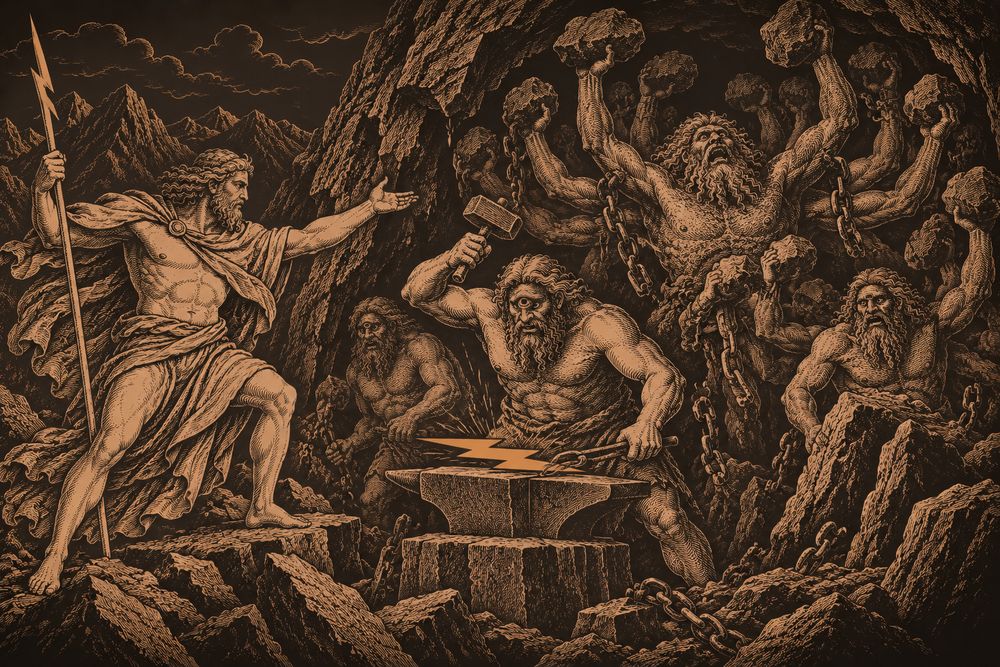
Zeus frees the Cyclopes and the Hundred-Handers
Generated by AI from this page's own facts, not an ancient image or evidence of anything. How this site uses generated images
Zeus broke it by going to Tartarus rather than the battlefield. Ouranos had once imprisoned his own monstrous children there out of jealousy at their size and strength. Among them were the three Cyclopes and the three Hundred-Handers - Cottus, Briareus and Gyges, each with a hundred arms. Zeus freed them and brought their strength into the war. The Cyclopes forged his thunderbolt, the weapon that would become his signature. The Hundred-Handers raised fierce fighting of their own, launching three hundred rocks at once and overshadowing the Titans with missiles. Between the thunderbolt and that barrage, the ten-year stalemate finally gave way.
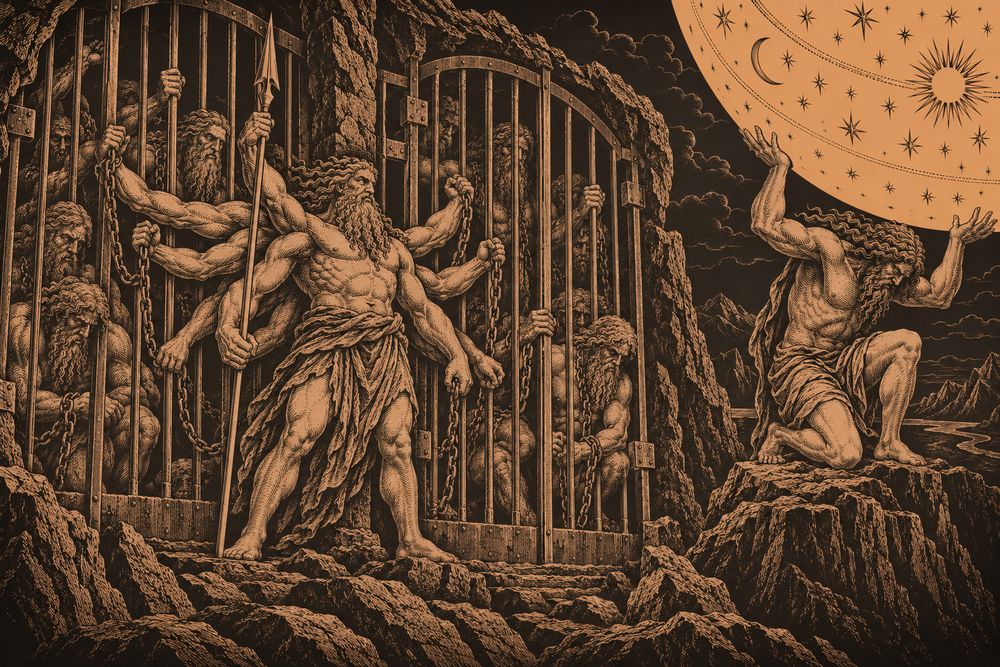
The Titans bound, Atlas condemned
Generated by AI from this page's own facts, not an ancient image or evidence of anything. How this site uses generated images
Defeat did not fall equally on every Titan. Most of the males who had fought were bound in bitter chains beneath the earth, as far down as the heavens stand above it, with the freed Hundred-Handers set to guard them behind bronze gates. Atlas, son of the Titan Iapetus, received an individual sentence instead: to stand at the western edge of the world, holding up the sky itself. Prometheus, Iapetus's other son, took the Olympians' side rather than his own family's. His own conflict with Zeus, over fire and the treatment of humanity, still lay ahead of him as a separate story. The Titanesses were not described as punished at all. Several, including Rhea, continued to appear active in later myth and cult alongside the Olympians who had just defeated their brothers.
What Followed
The Titans' defeat did not immediately settle who ruled what. Homer has Poseidon describe how he, Zeus and Hades divided the world between them afterward by drawing lots. Zeus won the sky, Poseidon the sea, and Hades the world below, with earth and Olympus left common to all three. Nor did the Titanomachy end every challenge to the new order. Zeus's rule was tested again later, separately, by Typhon and by the war Greek tradition calls the Gigantomachy, against Gaia's other monstrous children. Kronos's own fate afterward is not settled the same way twice: Hesiod's own poem leaves him bound in Tartarus with the other defeated Titans, but a later, softer tradition instead has Zeus release him to rule over the Isles of the Blessed.
What caused the Titanomachy?
Kronos had learned from Gaia and the dying Ouranos that he was fated to be overthrown by one of his own sons, exactly as he had overthrown his own father. He swallowed each child Rhea bore to stop that prophecy, but Rhea saved Zeus in secret. Once Zeus grew up and forced Kronos to disgorge his siblings, war between the two generations followed directly from that same succession pattern repeating itself.
Hesiod, Theogony 453-467
How long did the Titanomachy last, and how was the stalemate broken?
Ten full years of continuous fighting with the issue hanging evenly balanced on both sides, according to Hesiod. Zeus broke the deadlock not through battlefield strength but by freeing the Cyclopes and the Hundred-Handers from Tartarus, where Ouranos had originally imprisoned them. The Cyclopes' thunderbolt and the Hundred-Handers' barrage of hurled rocks were what finally overwhelmed the Titans.
Hesiod, Theogony 636-638
What happened to the Hundred-Handers, and why did they matter to the war's outcome?
Cottus, Briareus and Gyges, the three Hundred-Handers, had been imprisoned in the earth by Ouranos out of jealousy at their size and strength. Zeus freed them for the fight against the Titans. Their combined arms let them launch three hundred rocks at once, a barrage Hesiod credits with overshadowing the Titans and helping force their surrender after ten years of standstill.
Hesiod, Theogony 617-663
Were all the defeated Titans punished the same way?
No. Most of the male Titans who had fought were bound in chains beneath the earth in Tartarus, guarded by the freed Hundred-Handers. Atlas alone received an individual sentence instead of confinement: to hold up the sky at the world's western edge. The Titanesses were not described as punished at all.
Hesiod, Theogony 717-735
How did Zeus, Poseidon and Hades divide the world after the Titans fell?
Homer has Poseidon describe it directly: the three brothers cast lots. Zeus won the sky, Poseidon the sea, and Hades the world below, with the earth and Mount Olympus left common to all three rather than assigned to any one of them.
Homer, Iliad 15.187-193
Where Accounts Differ
- kronos-fate-after-the-war
- Hesiod's Theogony leaves Kronos imprisoned in Tartarus with the other defeated Titans; a later, softer tradition instead has Zeus release him to rule over the Isles of the Blessed. This entry follows Hesiod's own ending and records the later variant rather than resolving the disagreement.
Read the full source verification →
Mythology
Figures In This Myth
Related Terms
Referenced By
Sources
- Hesiod, Theogony 453-467
- Hesiod, Theogony 636-638
- Hesiod, Theogony 617-663
- Hesiod, Theogony 717-735
- Homer, Iliad 15.187-193
- Hesiod, Theogony 116-210
- Timothy Gantz, Early Greek Myth (1993)