Apollo
Apollo, son of Zeus and the Titaness Leto, was born with his twin sister Artemis on the island of Delos. According to the Homeric Hymn to Apollo, Hera had barred every other land from receiving their pregnant mother. He killed the serpent guarding Delphi and made its oracle his own, and Homer and Hesiod credit him with prophecy, music, archery, healing, and plague.

Apollo, Olympian god of light and music
Generated by AI from this page's own facts, not an ancient image or evidence of anything. How this site uses generated images
Sections on this page
What does the name "Apollo" mean? →
See Apollo in the Greek family tree. Looking for a name of your own? Try the mythological name generator.
Core Myth
Apollo was the son of Zeus and the Titaness Leto, and twin brother of Artemis. According to the Homeric Hymn to Apollo, he was born on the island of Delos. Leto had found every other land too afraid of Hera's anger to receive her. He killed the serpent guarding Delphi, named Python in the later account of Apollodorus, and claimed the oracle there as his own. That oracle became the most important prophetic site in the Greek world. Apollo led the Muses and was patron of music and poetry. He was also a god of healing, though in the Iliad he sends plague on the Achaean camp with his arrows. His loves were often tragic. Ovid's Metamorphoses tells how Daphne was transformed into a laurel tree to escape him, and how his beloved Hyacinthus was killed by a discus. Ovid also has him give King Midas the ears of an ass for disputing the verdict that set Apollo's lyre above Pan's pipes. Cassandra accepted his gift of true prophecy but refused him in return, and because a god's gift cannot be taken back, he cursed her instead: she would go on prophesying truly and never be believed. Apollodorus's Epitome says Apollo sent the serpents that devoured the sons of Laocoon. In the Gigantomachy, he shoots the giant Ephialtes in the left eye. Apollodorus's Epitome has him and Paris shoot Achilles in the ankle at the Scaean Gate (Epitome 5.3).
What is Apollo the god of?
Homer and Hesiod present Apollo as presiding over several domains at once: prophecy and the Delphic oracle, music and the lyre, archery, and healing. His arrows could also send plague. In the Iliad, Book 1, he inflicts plague on the Achaean camp with those same arrows after Agamemnon insults his priest. His later identification with Helios, the sun, is not found in either Homer or Hesiod.
Homer, Iliad, Book 1
Why did Apollo kill Python at Delphi?
Ancient sources disagree. The Homeric Hymn to Apollo has him kill an unnamed female serpent, later called Delphyne. She guarded a spring near Delphi and had been set there by Hera to trouble mortals. Apollo founds his temple over her body. Apollodorus, writing much later, names the serpent Python and makes it the guardian of the oracle itself. Apollo kills it to take possession of the shrine. Hyginus adds a further motive: that Python had hunted the pregnant Leto at Hera's command.
Who is Apollo's twin sister?
Apollo's twin is Artemis, goddess of the hunt and wild places; both are children of Zeus and the Titaness Leto. The Homeric Hymn to Apollo describes Leto's labor on Delos but gives no birth order between the two. Apollodorus's Bibliotheca adds a detail absent from the hymn: Artemis was born first and immediately acted as midwife. Hera had detained Eileithyia, goddess of childbirth, so Artemis helped deliver her brother instead.
Where was Apollo born?
Apollo was born on the island of Delos, according to the Homeric Hymn to Apollo. The hymn describes Leto wandering the Aegean while pregnant, turned away by land after land for fear of Hera. Delos finally agreed to receive her, in exchange for becoming the site of Apollo's temple. Leto is said to have labored nine days and nights before Eileithyia, goddess of childbirth, was able to reach her.
Is Apollo the god of the sun?
Not in the earliest sources. In Homer and Hesiod's Theogony, the sun is Helios, a separate Titan who drives his own chariot across the sky. Apollo's domains there are prophecy, music, archery, and healing. The identification of Apollo with the sun developed later in antiquity and is not attested in either the Homeric Hymn to Apollo or Hesiod's Theogony.
When did Apollo become identified with the sun?
In the fifth century BCE at the earliest, and fully only among later philosophers. Homer's Odyssey still gives the sun its own god, Helios, who complains to Zeus when Odysseus's crew eat his cattle. The earliest clear equation is a fragment of Euripides's lost Phaethon, where the boy's mother calls the sun Apollo, the destroyer, punning on his name. The Stoics made it theology. Cicero's Stoic speaker says Apollo is called Sol, the sun, and Macrobius, around 400 CE, argues at length that Apollo and the sun are one god. Horace's hymn for the Secular Games still greets Sol and Apollo separately.
Homer, Odyssey 12.374-388; Cicero, De Natura Deorum 2.68; Macrobius, Saturnalia 1.17
Later Traditions
In later antiquity, Apollo became increasingly identified with Helios, the sun god. Roman religion adopted Apollo almost unchanged, making him one of the few Greek gods to retain his original name.
Virgil gives him a part in the war in Latium. Arruns prays to Apollo of Soracte for the death of the huntress Camilla. Apollo grants half the prayer and denies Arruns a safe return (Aeneid 11.768-835).
Homer keeps Apollo and the sun apart. In the Odyssey the sun has its own god, Helios, whose cattle Odysseus's men slaughter and who takes his complaint to Zeus in person (Odyssey 12.374-388). The first clear equation of the two comes in fifth-century Athens. In a fragment of Euripides's lost Phaethon, the dead boy's mother calls the sun Apollo, punning on the Greek verb apollumi, to destroy.
Philosophers turned the pun into doctrine. Cicero's Stoic speaker says that Apollo is called Sol, the sun, and Diana Luna, the moon (De Natura Deorum 2.68). Macrobius, writing about 400 CE, has a speaker argue that Apollo and the sun are one god (Saturnalia 1.17). By late antiquity the identification was common, but it was a reading of the old god, not his original character.

Bronze statuette of Apollo - Greek, ca. 500 BCE, Bronze
Metropolitan Museum of Art, New York, NY, 07.286.91. CC0
4 recorded relations, each with the ancient line behind it.


Siblings

Children
-

Apollo fathers Asclepius with the mortal Coronis, then rescues the infant from her funeral pyre after having her killed for taking another lover.
Also Connected
11 recorded connections, each with the ancient line behind it.
Allies
-
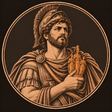
Apollo hides the wounded Aeneas from Diomedes, carries him to his temple on Pergamus to be healed, and leaves a phantom in his place.
-
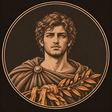
Apollo promises never to abandon his suppliant, admits he persuaded Orestes to kill his mother, and sends him to Athens under Hermes's escort.
Enemies
-
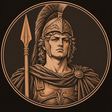
At the close of Euripides's Orestes, Apollo foretells that Neoptolemus will die by a Delphian sword when he demands satisfaction for Achilles's death. Pindar's sixth Paean makes Apollo his killer.
Connected
-
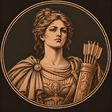
Arruns prays to Apollo to help him kill Camilla, and Apollo grants half the prayer: her death, but not his safe return.
-

Apollo confronted Heracles alongside his sister Artemis when he found him carrying her sacred hind through Arcadia.
-
Ovid has Cupid answer Apollo's mockery by shooting him with an arrow that causes love for Daphne.
-
Apollo's forced love for Daphne, and his pursuit of her through the woods, ends only when she prays to be turned into the laurel he then adopts as his sacred tree.
-
Apollodorus says Apollo sent the serpents that devoured Laocoön's sons as a sign. Hyginus makes Laocoön Apollo's priest, punished for marrying against the god's will.
-
Pausanias reports that the Eoeae and the Minyad had Apollo help the Curetes and kill Meleager, against Homer's account of the Erinys.
-
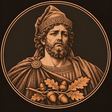
In Ovid's Metamorphoses, Apollo gives Midas the ears of an ass after Midas alone calls the verdict of the music contest on Mount Tmolus unjust.
-
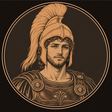
Apollo throws Patroclus back from the wall of Troy three times, then strikes him from behind and knocks off his helmet, leaving him open to Euphorbus and Hector.
Where Accounts Differ
- Python/Delphyne naming
- twin birth order
- solar identification
- Serpent at Delphi: the Homeric Hymn to Apollo has Apollo kill an unnamed female serpent, later tradition calling her Delphyne, who guards a spring near Delphi; Apollodorus names the serpent Python and makes it the guardian of the oracle itself; Hyginus gives Python the further motive of having hunted the pregnant Leto at Hera's order.
- Birth order of the twins: the Homeric Hymn to Apollo gives no birth order for Apollo and Artemis. Apollodorus's Bibliotheca adds that Artemis was born first and served as midwife for Apollo's birth, because Hera had detained Eileithyia, goddess of childbirth.
- Solar identification: Homer and Hesiod keep Apollo distinct from Helios, the sun-Titan who drives the sun's chariot. Apollo's identification with the sun is a later development in antiquity and is not attested in either source.
- The earliest clear equation of Apollo with the sun is a pun in a fragment of Euripides's lost Phaethon. Cicero reports it as the Stoic view (De Natura Deorum 2.68), and Macrobius argues for it at length (Saturnalia 1.17). Horace's Carmen Saeculare still addresses Sol and Apollo in separate stanzas.
Read the full source verification →
Mythology
Appears In
Equivalent Figures
Related Terms
Referenced By
Sources
- Homeric Hymn to Apollo 1-178
- Hesiod, Theogony
- Homer, Iliad 1.43-52
- Apollodorus, Library
- Hyginus, Fabulae
- Ovid, Metamorphoses
- Aeschylus, Agamemnon 1195-1215
- Ovid, Metamorphoses 11.146-193
- Apollodorus, Library 1.6.2
- Apollodorus, Epitome 5.18
- Virgil, Aeneid 11.768-793
- Virgil, Aeneid 11.794-835
- Apollodorus, Epitome 5.3
- Homer, Odyssey 12.374-388
- Euripides, Phaethon
- Cicero, De Natura Deorum 2.68
- Macrobius, Saturnalia 1.17
- Fritz Graf, Apollo (2009)
- Timothy Gantz, Early Greek Myth (1993)