Helios
Helios is the son of the Titans Hyperion and Theia, and the personification of the sun itself, driving a chariot each day from east to west across the sky. Because nothing escapes the sun's light, Helios appears throughout Greek myth as the god who witnesses what others cannot: he tells Demeter who took Persephone, and tells Hephaestus of Aphrodite's affair with Ares.

Helios, the Titan of the sun
Generated by AI from this page's own facts, not an ancient image or evidence of anything. How this site uses generated images
Sections on this page
See Helios in the Greek family tree.
Core Myth
Hesiod's Theogony gives Helios's parentage plainly: Theia, one of the original Titans, was subject in love to her brother Hyperion and bore him three children who share dominion over light - great Helios the sun, Selene the moon, and Eos the dawn who shines upon everyone living on earth and the gods in wide heaven alike. Helios himself is not a major actor in most myths; his role is instead to be present at everything, since his daily crossing of the sky in a chariot from east to west means his light falls on events no other god witnesses directly. Homer's Odyssey uses exactly this quality in one of its best-known scenes: when Aphrodite takes Ares as a lover behind her husband Hephaestus's back, it is Helios, having seen the affair from the sky, who reports it to Hephaestus, letting the smith-god catch the pair in an unbreakable net of his own forging.
The Homeric Hymn to Demeter puts Helios's all-seeing role at the very center of its plot. When Persephone vanishes and Demeter searches the earth for her without success, she turns to Helios directly, since nothing that happens under the sun can stay hidden from him. Addressed there by the epithet "son of Hyperion," Helios confirms what Demeter could not otherwise learn - that Hades, with Zeus's own prior consent, carried Persephone into the underworld - setting in motion the rest of the story of the seasons.
Who are Helios's parents, and what do their names mean for him?
Hesiod names his parents as the Titans Hyperion and Theia, siblings from the first generation of Titans. Helios's own name is Greek for "sun," and his patronymic epithet, "son of Hyperion" or Hyperionides, appears wherever a source wants to stress his divine origin rather than simply naming him.
Hesiod, Theogony 371-374
How did Helios help solve the mystery of Persephone's disappearance?
When Demeter could find no one else who had witnessed her daughter's abduction, she appealed directly to Helios, reasoning that his light falls on everything that happens on earth. He confirmed that Hades had carried Persephone into the underworld with Zeus's own prior consent, giving Demeter the one piece of information no search of the earth itself could have provided.
Homeric Hymn to Demeter 74-89
Did Helios play a role in exposing Aphrodite and Ares's affair?
Yes. Homer's Odyssey has Helios spot the two lovers together from the sky and report it to Aphrodite's husband, Hephaestus, who then forges an unbreakable net to trap the pair together in bed and expose them before the other gods. Helios himself never confronts anyone directly; he only supplies the information his constant vantage point makes impossible to miss.
Homer, Odyssey 8.266-294
Is Helios the same figure as Apollo?
Not originally. Helios and Apollo are distinct gods throughout the earliest sources, Helios as the literal sun in its chariot and Apollo as an Olympian associated with prophecy, music, and archery. Later Greek and Roman writers increasingly blurred the two together as solar imagery attached itself to Apollo, but Hesiod and Homer keep them separate figures with separate parentage.
Hesiod, Theogony 371-374
Who are Helios's most famous children?
Tradition credits him with several figures who appear in later, better-known myths of their own: the sorceress Circe, who detains Odysseus on his voyage home; Aeetes, the king of Colchis who guards the Golden Fleece; and Phaethon, whose disastrous attempt to drive his father's own sun chariot ends in his death.
Did Orpheus worship Helios as Apollo?
In one tradition, yes. A later summary of Aeschylus's lost play the Bassarids, preserved in the star-myth handbook attributed to Eratosthenes, says Orpheus stopped honoring Dionysus. He held the sun, whom he called Apollo, to be the greatest of the gods, and climbed Mount Pangaion before dawn to greet it rising. Dionysus, angered, sent his Bassarids, the Thracian maenads, who tore Orpheus apart. The story is one of the earliest places where Helios and Apollo are treated as a single god, generations before the Stoics made the equation a doctrine.
Later Traditions
Later Greek and Roman tradition kept expanding what an all-seeing, chariot-driving sun god could plausibly be asked to witness or father: Helios's descendants, in various tellings, include the sorceress Circe, the ill-fated charioteer Phaethon, and Aeetes, keeper of the Golden Fleece, tying the sun god into several of Greek myth's best-known later adventures even though he rarely appears as a character in their action himself.
In Latin the sun is Sol. Horace's Carmen Saeculare hails Sol in one stanza and invokes Apollo in Rome in a later, separate one (Carmen Saeculare 9-12; 33-36).
Helios and Apollo begin as two gods with two families. Hesiod makes Helios a child of the Titans Hyperion and Theia, and in the Odyssey it is Helios, not Apollo, who demands that Zeus punish the men who ate his cattle (Odyssey 12.374-388). The merger starts in the fifth century BCE. A summary of Aeschylus's lost Bassarids, preserved in the star-myth handbook attributed to Eratosthenes, has Orpheus honor the sun as the greatest god and call him Apollo. In a fragment of Euripides's lost Phaethon, the boy's mother names the sun Apollo, the destroyer. Later the Stoics made the equation doctrine, as Cicero reports (De Natura Deorum 2.68).
5 recorded relations, each with the ancient line behind it.
Parents
-

Hyperion and Theia are the parents of Helios, Selene, and Eos.
-

Theia and Hyperion are the parents of Helios, Selene, and Eos.
Siblings
-

Helios rules the sky by day and Eos opens it each dawn, alongside their sister Selene who governs the night.
-

Helios rules the sky by day and Selene by night, alongside their sister Eos who opens each dawn.
Children
-

Homer names Circe's mother as the Oceanid Perse, and names her brother as Aeetes, keeper of the Golden Fleece.
Also Connected
4 recorded connections, each with the ancient line behind it.
Connected
-
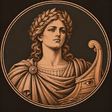
Some Romans equated Apollo with the sun, but Helios is the Greek sun god and Rome's own sun god is Sol. Horace addresses Sol and Apollo in separate stanzas (Carmen Saeculare 9-12, 33-36). Cicero's Stoic speaker reports the equation (De Natura Deorum 2.68).
-

Helios, having seen Aphrodite and Ares together from the sky, told Hephaestus, prompting him to trap the pair in a net of his own forging.
-

Hesiod says the shining Sun never looks upon Sleep's dwelling as he crosses the heaven, whether rising or setting.
-
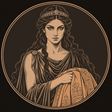
Medea is Helios's granddaughter through her father Aeetes; in Euripides's Medea, Helios sends her a winged, dragon-drawn chariot that carries her out of Corinth beyond Jason's reach after the deaths of her children.
Where Accounts Differ
- apollo-helios-identification
- Helios and Apollo: Hesiod and Homer keep them separate gods with separate parents. The identification appears first in fifth-century tragedy, in the Orpheus of Aeschylus's lost Bassarids (known from a later summary) and a fragment of Euripides's lost Phaethon, and becomes Stoic doctrine by Cicero's time. Horace still addresses Sol and Apollo separately.
Read the full source verification →
Mythology
Appears In
Related Terms
Referenced By
Sources
- Hesiod, Theogony 371-374
- Homeric Hymn to Demeter 74-89
- Homer, Odyssey 8.266-294
- Horace, Carmen Saeculare 9-12
- Horace, Carmen Saeculare 33-36
- Homer, Odyssey 12.374-388
- Euripides, Phaethon
- Cicero, De Natura Deorum 2.68
- Timothy Gantz, Early Greek Myth (1993)