Medea
Medea is a sorceress and princess of Colchis, granddaughter of the sun god Helios and a devoted priestess of Hecate. Struck with love for Jason by Eros's arrow, she helps him complete Aeetes's impossible tasks and steal the Golden Fleece, then flees with him. Ancient sources disagree sharply about what she does afterward, especially whether she or the Corinthians killed her own children at Corinth.
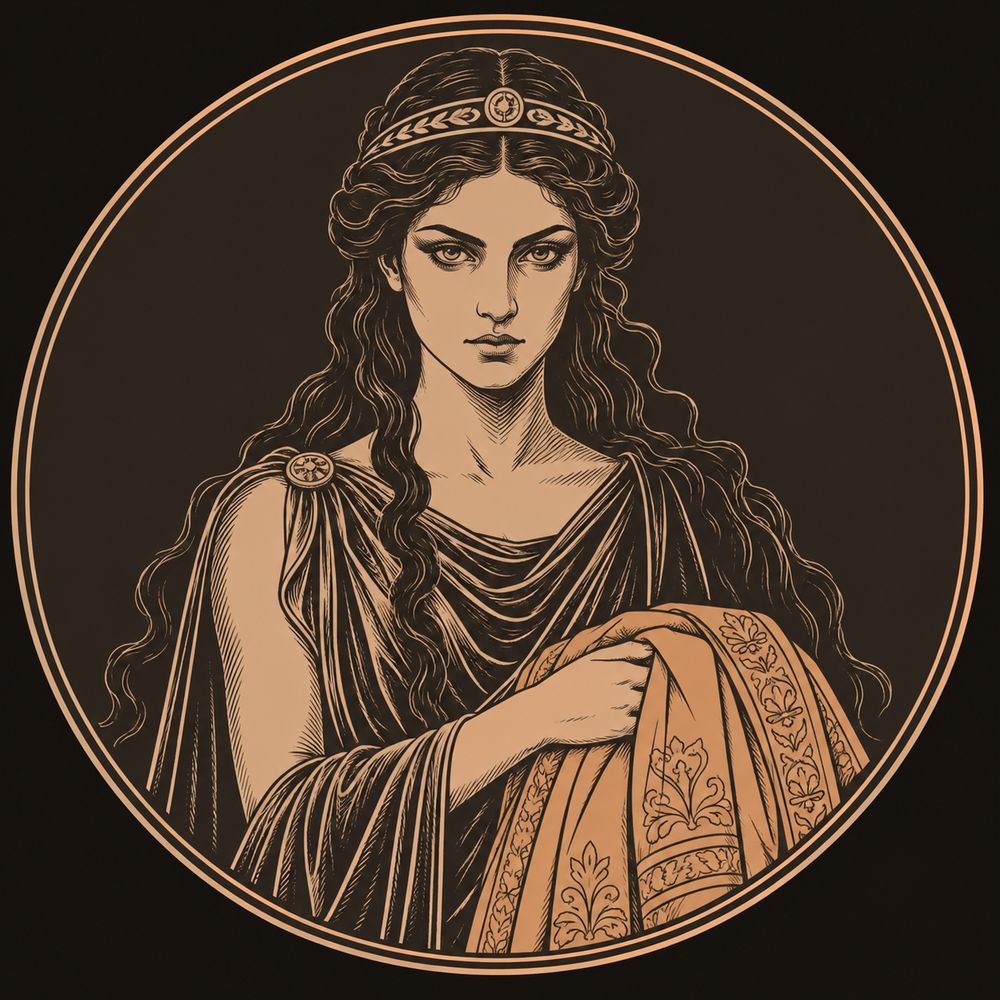
Medea, Colchian princess and sorceress
Generated by AI from this page's own facts, not an ancient image or evidence of anything. How this site uses generated images
Sections on this page
Core Myth
Medea was the daughter of King Aeetes of Colchis and Idyia, an Oceanid. That parentage made her a granddaughter of the sun god Helios and a niece of the sorceress Circe. Apollonius of Rhodes gives her a role in Hecate's own temple, spending her days learning to handle magic herbs under the goddess's teaching rather than in her father's house. When Jason and the Argonauts reached Colchis seeking the Golden Fleece, Hera and Aphrodite arranged for Eros to shoot Medea with a love-arrow. Apollonius devotes long, sympathetic attention to her fear before she decides to help a stranger against her own father. Aeetes had set Jason an apparently fatal task: yoke two fire-breathing bronze bulls, sow a field with dragon's teeth, and defeat the armed warriors that sprang from them. Medea gave Jason a protective drug and made him swear to marry her and take her to Greece. She then told him how to survive the earth-born warriors, led him by night to the sacred grove, and put the fleece's guardian serpent to sleep so he could take it.
The two accounts of what happened next during the escape do not agree. Apollodorus's Library has Medea's brother Apsyrtus sail with the fleeing pair. When Aeetes catches up, she kills her brother herself, cutting his body into pieces and throwing them into the sea. Her father stops the chase to gather the remains. Apollonius of Rhodes tells a darker but different story. There, Medea lures Apsyrtus into a nighttime ambush at a temple of Artemis, promising to betray the Argonauts to him, and it is Jason, not Medea, who strikes the killing blow while she looks away. Both versions agree the murder was a genuine atrocity. Apollodorus reports that Zeus sent a storm against the Argo in anger, and Apollonius has the ship itself refuse to sail on until Circe purifies Jason and Medea of the bloodshed at Aeaea. Back in Iolcus, Jason's uncle Pelias still refused to give up the throne he had usurped. So Medea persuaded Pelias's own daughters to kill and boil their father, falsely promising that her drugs would restore him to youth. She proved the method first on a ram, boiled into a convincing lamb. Pelias's son Acastus then expelled Jason and Medea from the city.
Was Medea a hero or a villain?
Ancient sources give sharply different answers. Apollonius of Rhodes, writing the fullest account of Colchis, presents Medea sympathetically. She is a young woman shot with love against her will by Eros, tormented by fear before she betrays her own father to save a stranger. Euripides's later tragedy makes her far more frightening: a wronged wife whose intelligence and magic turn entirely toward revenge, killing a princess, a king, and finally her own sons. Both readings come from real, surviving ancient texts, not one distorting the other.
Apollonius of Rhodes, Argonautica, Book 3
How did Medea help Jason win the Golden Fleece?
Aeetes set Jason a task meant to kill him: yoke two fire-breathing bronze bulls, sow a field with dragon's teeth, and defeat the armed warriors that sprang up from them. Medea, already in love with Jason, secretly gave him a protective drug to smear on his body and shield before the trial. She also told him to throw a stone into the crowd of earth-born warriors so they would turn on each other. She then lulled the guardian serpent to sleep so Jason could take the fleece from its sacred grove.
Apollodorus, Library 1.9.23
Did Medea kill her own brother Apsyrtus?
Sources disagree on both the manner of the killing and who did it. Apollodorus's Library has Medea kill Apsyrtus herself during the escape from Colchis, cutting his body into pieces and scattering them in the sea to delay their pursuing father. Apollonius of Rhodes tells a different story. There, Medea lures her brother into an ambush at a temple, but it is Jason who draws his sword and kills him, while Medea turns her eyes away rather than watch.
Apollodorus, Library 1.9.24
Did Medea really kill her own children?
In Euripides's Medea, the most famous version, yes. She kills her two sons by Jason as the final act of her revenge after he abandons her for a political marriage in Corinth, then escapes in a chariot sent by her grandfather Helios. But Apollodorus also records another tradition in which Medea leaves the children as suppliants at Hera's altar and the Corinthians kill them instead. Pausanias found this second version fixed in Corinth's own local cult, naming the children Mermerus and Pheres and recording their tomb and the yearly sacrifices offered to appease their deaths.
Euripides, Medea 1236-1250
What happened to Medea after she left Jason?
She fled to Athens and married King Aegeus, bearing him a son, Medus. When Aegeus's unrecognized son Theseus arrived in the city, Medea saw him as a rival to her own son's inheritance. She persuaded Aegeus to poison him at a banquet. Aegeus recognized Theseus by the sword and sandals he carried only moments before the cup was drunk. He knocked it from his hands and banished Medea from Athens instead.
Apollodorus, Epitome 1.5-1.6
Later Traditions
Exiled from Iolcus, Jason and Medea settled in Corinth. Euripides's tragedy Medea picks up the story years later: King Creon has betrothed his daughter Glauce to Jason, and Jason abandons Medea for the advantage of the match. Medea sends Glauce a robe and crown steeped in poison. It burns the princess and her father Creon to death when he tries to save her. What happens to Medea's own children is where the ancient sources split most sharply. Euripides has Medea kill her two sons herself, judging that hurting Jason through them mattered more than sparing them. She then escapes Corinth in a winged chariot sent by her grandfather Helios, out of Jason's reach. Apollodorus records this version but also names another tradition entirely, in which Medea leaves the children as suppliants on the altar of Hera and the Corinthians kill them instead. Pausanias, describing Corinth centuries later, found the Corinthian version already fixed in local memory and cult. He names the children Mermerus and Pheres, records their tomb near the city's market, and reports that the Corinthians stoned them for bringing Glauce her poisoned gifts. The killing was so shocking that yearly sacrifices were later required to appease it.
Medea fled next to Athens and married King Aegeus. Pausanias adds that her flight afterward carried her as far as the land later renamed Media in her honor. When Aegeus's unrecognized son Theseus arrived in the city, Medea saw him as a threat to her own son's claim to the throne. She persuaded Aegeus to poison him at a feast. Aegeus recognized Theseus by his sword only just before the cup reached his lips, dashed it away, and banished Medea instead. The oldest surviving source on Medea, Hesiod's Theogony, knows nothing of any of this violence. It simply records her birth to Aeetes and Idyia and her marriage to Jason, who takes her to Iolcus after his labors. By her he has a son, Medeius, raised in the mountains by the centaur Chiron. That short, conflict-free genealogy is centuries older than Euripides's tragedy. It is a reminder that the murderous Medea most readers know is a later, contested elaboration, not the whole of her ancient tradition.
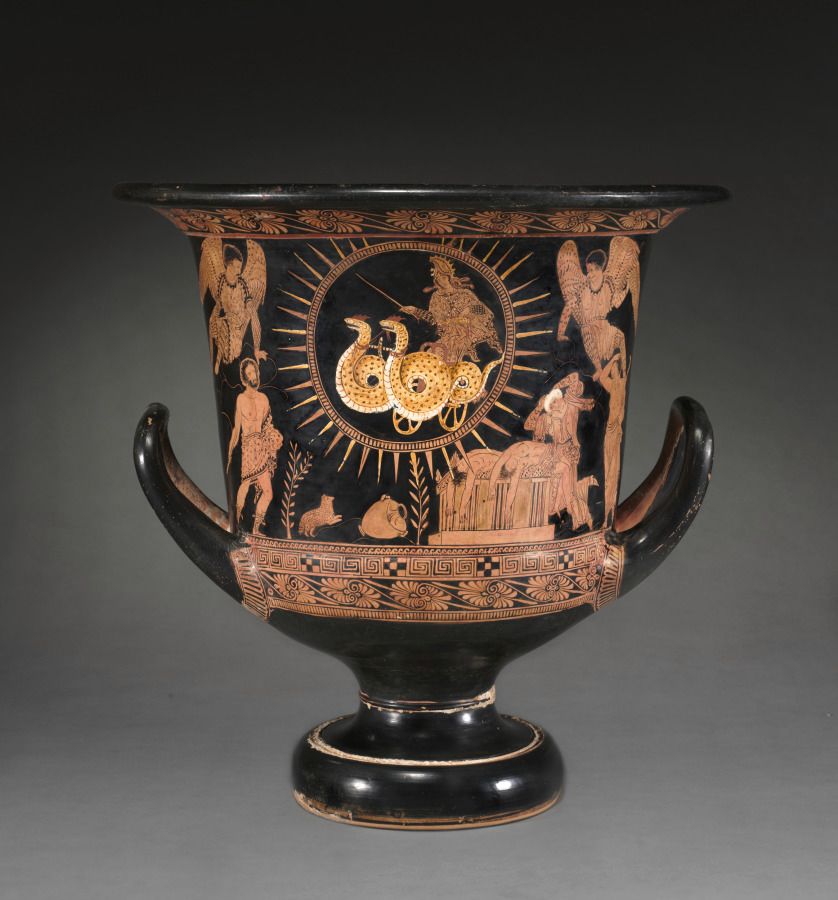
Red-Figure Calyx-Krater (Mixing Vessel): Medea in Chariot (A); Telephos with Baby Orestes (B) - South Italian, Lucanian, c. 400 BCE, ceramic
The Cleveland Museum of Art, Cleveland, OH, 1991.1. CC0
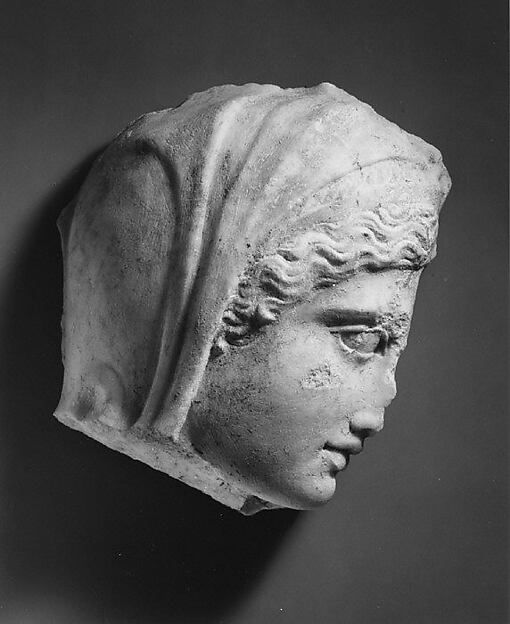
Marble relief fragment with the head of Medea - Roman, 1st–2nd century CE, Marble
Metropolitan Museum of Art, New York, NY, 23.160.86. CC0
Also Connected
6 recorded connections, each with the ancient line behind it.
Enemies
-

Married to Aegeus in Athens, Medea sees the unrecognized Theseus as a threat to her own son's inheritance and persuades Aegeus to poison him; Aegeus recognizes Theseus by his sword just before the cup is drunk and banishes Medea instead.
Connected
-
Medea, living with Aegeus in Athens, tried to poison the returning Theseus.
-

Circe, Medea's aunt, ritually purifies Jason and Medea at Aeaea for the murder of Medea's brother Apsyrtus.
-

Medea is Helios's granddaughter through her father Aeetes; in Euripides's Medea, Helios sends her a winged, dragon-drawn chariot that carries her out of Corinth beyond Jason's reach after the deaths of her children.
-

Medea makes Jason swear to marry her and take her to Greece before she helps him win the Golden Fleece; years later in Corinth he abandons her for a political marriage, and she takes a devastating revenge.
-
Pausanias reports that Medea, leaving Corinth after Jason sailed away, handed the kingdom over to Sisyphus. Pindar's thirteenth Olympian Ode names both in its praise of Corinth.
Where Accounts Differ
- who killed Apsyrtus
- who killed Medea's children
- Who kills Apsyrtus, and how, differs by source. Apollodorus's Library has Medea murder and dismember her brother herself during the escape from Colchis, while Apollonius of Rhodes has her lure him into an ambush where Jason, not Medea, deals the fatal blow.
- Whether Medea or the Corinthians killed her children is the corpus's central disagreement. Euripides's tragedy, the most influential version, has Medea kill them herself. Apollodorus records a rival tradition in which the Corinthians kill the children at Hera's altar. Pausanias found that version fixed in Corinth's own local cult and cult-founding legend, independent of Euripides's play.
- Hesiod's Theogony, the earliest surviving source on Medea, describes only her birth and her marriage to Jason, ending in a son, Medeius, raised by Chiron. It contains no trace of the Corinthian tragedy that later tradition, especially Euripides, built around her.
Read the full source verification →
Mythology
Appears In
Related Terms
Referenced By
Sources
- Apollonius of Rhodes, Argonautica, Book 3
- Apollonius of Rhodes, Argonautica, Book 4
- Apollodorus, Library 1.9.23
- Apollodorus, Library 1.9.24
- Apollodorus, Library 1.9.27
- Apollodorus, Library 1.9.28
- Apollodorus, Epitome 1.5-1.6
- Euripides, Medea 1236-1250
- Euripides, Medea 1317-1322
- Pausanias, Description of Greece 2.3.6-2.3.11
- Hesiod, Theogony 956-962
- Hesiod, Theogony 992-1002
- Timothy Gantz, Early Greek Myth (1993)