The Argonaut Cycle
The Argonaut Cycle covers Jason's quest for the Golden Fleece: why King Pelias sent him to Colchis, the crew of heroes who sailed with him, and the sorceress Medea whose help won him the Fleece. Apollonius of Rhodes's Argonautica is the fullest surviving connected account. Euripides's earlier tragedy Medea focuses on only the story's aftermath, and gives Medea a far darker reputation than Apollonius does.
Sections on this page
Overview
The Argonaut Cycle gathers the Greek myths built around one voyage: Jason's quest for the Golden Fleece aboard the ship Argo. The fullest surviving connected telling is Apollonius of Rhodes's Argonautica. This site's own narrative account, Jason and the Golden Fleece, follows it. King Pelias sends Jason to Colchis expecting the voyage to kill him. Jason returns instead with the Fleece and a wife, the Colchian sorceress Medea.
Jason did not sail alone. The crew he assembled, the Argonauts, gathered many of the era's most famous heroes onto one ship for one voyage. Ancient sources disagree even on the exact roster, and Apollodorus even counts the huntress Atalanta among the crew, but two members recur everywhere and matter beyond this one story. The musician Orpheus joins specifically for his music. He later saves the whole crew from the Sirens by singing loudly enough to drown them out. Heracles joins too, and looms so large over the expedition that a few ancient sources make him its leader outright. Apollonius's own canonical version disagrees: Heracles leaves the voyage in Mysia, before the Argo even reaches Colchis. He is searching for his companion Hylas, pulled into a spring by nymphs.
Medea is the cycle's most contested figure by far. Apollonius spends much of his third book on her fear and hesitation before she helps Jason against her own father. He frames her choice as an internal struggle, one that Aphrodite and Eros set in motion rather than simple infatuation. Euripides's tragedy Medea was staged more than two centuries before Apollonius wrote his epic. It gives her the opposite reputation: a wronged, unpunished woman who murders her own children to complete Jason's ruin. The Fleece itself may have a real, mundane origin behind the golden myth. The geographer Strabo later reported that peoples near Colchis caught gold dust washed down mountain streams using fleecy sheepskins. He says this practice was itself taken as the source of the legend.
In This Topic (6)
-

Jason Character
Jason is the Greek hero who led the Argonauts on the quest for the Golden Fleece.
-
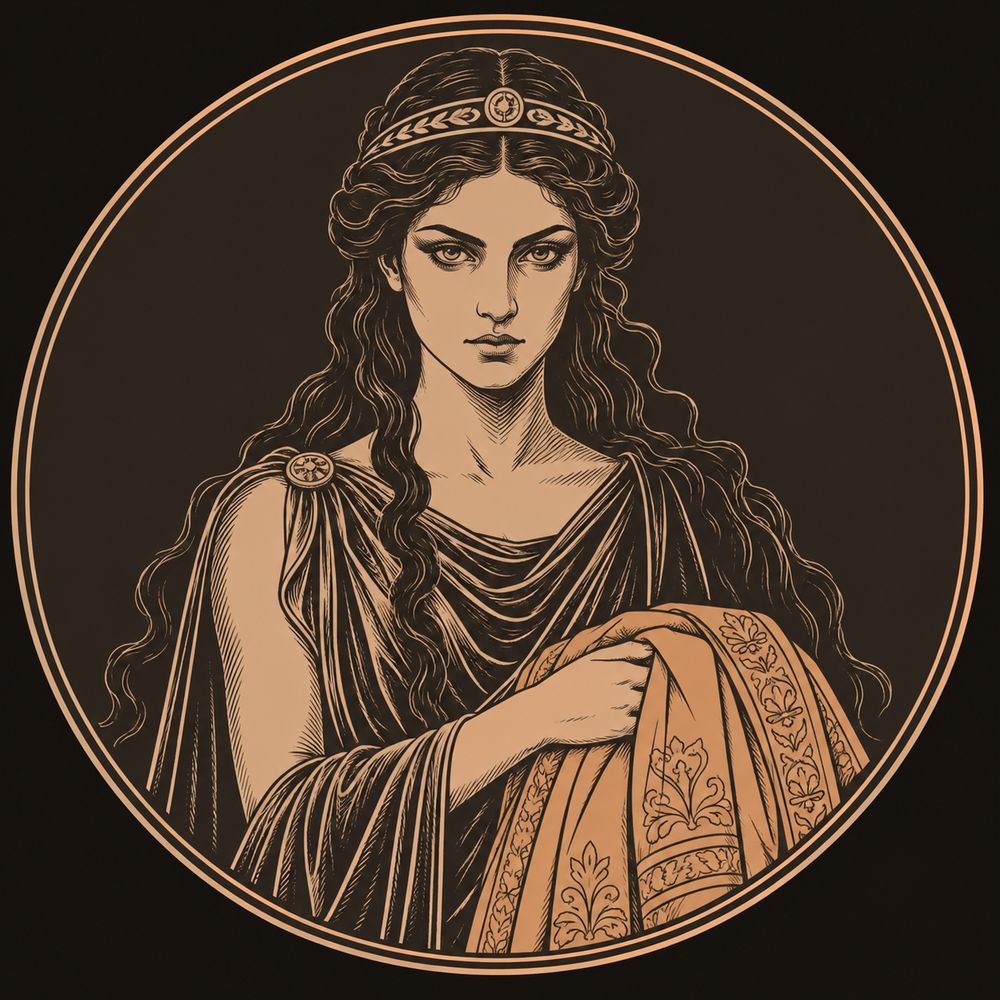
Medea Character
Medea is the Colchian sorceress whose magic wins Jason the Golden Fleece. Her later acts against her own family made her one of the most disputed figures in Greek myth.
The cycle's most contested figure. Apollonius frames her help to Jason as a reluctant, love-driven struggle; Euripides's Medea makes her a child-killing villain instead.
-

Orpheus Character
Orpheus is the legendary musician whose singing could charm all living things and even move the gods of the underworld.
Joins the Argonauts specifically for his music, not for combat; his role in this cluster is the outward voyage and the Sirens episode, distinct from his own better-known underworld story.
-
Jason and the Golden Fleece Story
To reclaim the throne his uncle Pelias had stolen, Jason assembled the greatest heroes of Greece into a crew called the Argonauts and sailed the ship Argo to the distant land of Colchis to retrieve the Golden Fleece, succeeding only with the help of the Colchian sorceress Medea.
-
Golden Fleece Term
The Golden Fleece is the wool of a divine, flying, golden-haired ram in Greek mythology, and the object of the Argonauts' quest under Jason. The ram itself begins as a rescue: sent by the gods, or by the children's own mother Nephele, to save Phrixus and Helle from being sacrificed by their father Athamas at the urging of a scheming stepmother, it carries them off through the air. Helle falls into the strait later named for her, the Hellespont, but Phrixus reaches Colchis safely. In Colchis, Phrixus sacrifices the ram in gratitude and gives its fleece to King Aeëtes, who hangs it in a sacred grove of Ares, guarded afterward by a sleepless, unblinking serpent. Retrieving it from that guarded grove, years later, becomes the task King Pelias sets for Jason, intending the voyage as a death sentence rather than a real errand, since the fleece's guardian is meant to make the theft impossible. Apollonius of Rhodes adds a divine motive behind Jason's eventual success that has nothing to do with the fleece itself: Hera favors Jason because Pelias had neglected her worship, and she arranges for Aphrodite to make Aeëtes's daughter Medea fall in love with him, since the fleece cannot realistically be taken from its guarded grove by force or stealth alone. The fleece functions in the story less as an end in itself than as the impossible condition that forces Jason to acquire allies - the Argonauts for the voyage, Medea for the theft - he could not have succeeded without. As a symbol, the fleece stands for legitimate kingship and divine favor rather than simple wealth: obtaining it is what finally lets Jason press his claim to the throne Pelias had usurped from his father, tying an object from a children's rescue story generations earlier directly into a dispute over royal succession in Jason's own generation.
-
Argonauts Term
The Argonauts are the crew of heroes who sail with Jason aboard the ship Argo to retrieve the Golden Fleece from Colchis, one of Greek myth's largest single gatherings of named heroes in one story. The name comes directly from the ship: Argo, built with Athena's guidance, and nautai, sailors, so the Argonauts are literally "the sailors of the Argo" rather than a fixed order or brotherhood with its own separate identity outside the voyage. Apollonius of Rhodes's Argonautica opens with an extended catalogue naming the crew one by one, tracing each hero's home city and lineage before the ship even leaves harbor. Among those named are Orpheus, brought along specifically for his music, Heracles, Telamon and Peleus, the future fathers of Ajax and Achilles, the twins Castor and Pollux, and the seer Idmon, who reportedly joins knowing the voyage will cost him his life. Apollodorus's Library gives an independent, overlapping list naming roughly fifty heroes in total, including Theseus, Meleager and the huntress Atalanta, confirming that the core roster was stable across different ancient authors even where the exact edges of the list varied. The crew's size and pedigree is the point: assembling this many major heroes, several of whom belong to the generation before the Trojan War, in a single ship for a single voyage makes the Argo one of the few places in Greek myth where figures from otherwise separate hero-cycles meet and act together. Heracles's presence is itself debated within antiquity, since he leaves the expedition partway through, in most versions to search for his lost companion Hylas, meaning even one of the crew's most famous members does not complete the full voyage. Because the roster is assembled from more than one ancient source rather than fixed in any single canonical text, later retellings vary in exactly who they include, adding or omitting minor figures depending on the author's own regional or narrative interests, while the core group named by both Apollonius and Apollodorus remains constant across the tradition.
Was Medea a hero or a villain?
Ancient sources give sharply different answers because they focus on different parts of her life. Apollonius of Rhodes, telling the Colchis episode, gives Medea real sympathy. Aphrodite and Eros make her fall violently in love with Jason. Apollonius spends much of his third book on her fear and hesitation before she betrays her father Aeetes to help him. Euripides's Medea, set years later in Corinth after Jason has abandoned her for a political remarriage, shows the opposite side. There she poisons Jason's new bride, kills the bride's father, and finally kills her own two sons by Jason. She judges that hurting him mattered more than sparing them, and escapes unpunished on a chariot sent by her grandfather Helios. Neither portrait cancels the other; ancient audiences read them as two acts of the same woman's story rather than as a contradiction to resolve.
Apollonius of Rhodes, Argonautica, Book 3; Euripides, Medea 1236-1250
Did Heracles sail with the Argonauts the whole way?
Not in the version this site's own pages follow. Apollonius has Heracles sail as far as Mysia, where his young companion Hylas is pulled into a spring by nymphs while fetching water. Heracles searches for him so long that the Argo sails on without them. The era's greatest hero drops out of the story before it even reaches Colchis. This was not the only ancient account of his role. Other traditions, preserved only in later scholarly commentary on Apollonius, disagreed about exactly why and where Heracles left the crew. At least one made him the expedition's leader rather than an early departure. Apollonius's Mysia version is the one that dominated later retelling and the one this site's Jason and Argonauts pages follow.
Apollonius of Rhodes, Argonautica 1.1207-1272
Is the Golden Fleece myth based on a real ancient practice?
Possibly, for the object itself if not the quest built around it. The geographer Strabo, writing centuries after the myth was already established, reported a real practice. Peoples living near Colchis in the Caucasus mountains collected gold dust carried down by mountain torrents, using perforated troughs and fleecy sheepskins that trapped the fine gold flakes in the wool. Strabo says this practice was itself already taken as the origin of the golden fleece legend in his own time. The explanation accounts for a golden fleece as an object worth crediting to that region. It does not explain the serpent guardian, the sorceress, or the quest narrative later tradition built around it.
Strabo, Geography 11.2.19
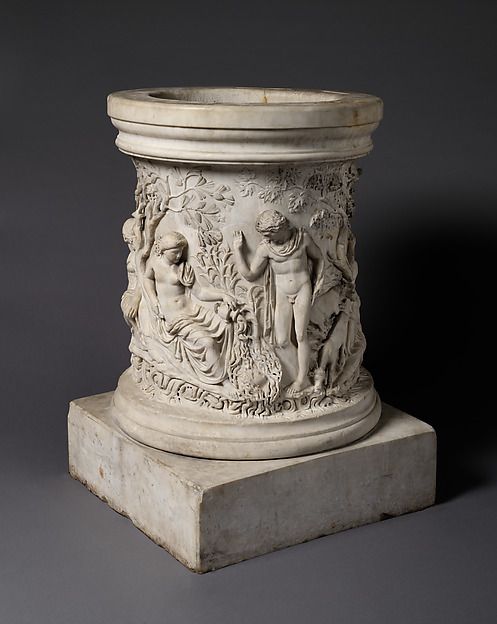
Puteal (wellhead) with Narcissus and Echo, and Hylas and the Nymphs - Roman, 2nd century, Marble
Metropolitan Museum of Art, New York, NY, 2019.7. CC0
Where Accounts Differ
- medea-sympathetic-in-apollonius-vs-villain-in-euripides
- heracles-left-at-mysia-vs-rival-traditions
- Apollonius of Rhodes, Argonautica has no live-checkable edition in this site's source registry (accessMethod: local-file); its book-and-line references here were verified by hand against the Perseus Digital Library's Greek text rather than by the automated citation validator.
- The claim that some ancient sources made Heracles the Argonauts' leader, or gave a different reason for his early departure, is recorded here as a documented variant of the tradition rather than as a citable line reference, since those accounts survive only through later scholarly commentary rather than in a work this site's registry can check.
Related Terms
Referenced By
Sources
- Apollonius of Rhodes, Argonautica
- Euripides, Medea
- Pindar, Pythian Ode 4
- Apollodorus, Library 1.9.16-1.9.28
- Strabo, Geography 11.2.19
- Timothy Gantz, Early Greek Myth (1993)