Theseus
Theseus is the national hero of Athens, celebrated for entering the Labyrinth of Crete, slaying the Minotaur, and finding his way back out again with the help of Ariadne's thread, which he followed in reverse. Later Athenian tradition also credits him with uniting the independent villages of Attica into a single Athenian state, a political achievement Plutarch ranks alongside his monster-slaying.

Theseus, slayer of the Minotaur
Generated by AI from this page's own facts, not an ancient image or evidence of anything. How this site uses generated images
Sections on this page
What does the name "Theseus" mean? →
See Theseus in the Greek family tree. Looking for a name of your own? Try the mythological name generator.
Core Myth
Theseus was the son of Aegeus, king of Athens (or in some versions, of the god Poseidon). On his journey from Troezen to Athens, he defeated six notorious bandits, establishing himself as a hero. Once he reached Athens, Aegeus sent him against the bull ravaging Marathon, and Theseus killed it. In Apollodorus this is the Cretan Bull, which Heracles had brought to Eurystheus and then set free. His greatest feat was entering the Labyrinth of King Minos - born, a generation earlier, from Zeus's abduction of Europa - on Crete to face the Minotaur - a half-man, half-bull monster to which Athens was forced to send tribute of youths. With the help of Ariadne, Minos's daughter, who gave him a ball of thread to navigate the maze, Theseus slew the Minotaur and led the captives to safety. He later became king of Athens and was credited with unifying the scattered communities of Attica into a single state.
Was Theseus the son of Aegeus or of Poseidon?
Sources disagree, and some hold both accounts at once. Aegeus lay with Theseus's mother Aethra the same night Poseidon did, in the version Apollodorus records, which lets Theseus be raised as Aegeus's heir while still carrying divine parentage that explains his exceptional strength and the sea's frequent aid to him.
Apollodorus, Epitome 1.7-1.9
How did Ariadne help Theseus escape the Labyrinth?
She gave him a ball of thread before he entered, which he unwound as he went and followed back out after killing the Minotaur. Plutarch attributes the idea to the engineer Daedalus, who had built the Labyrinth for Minos and told Ariadne how to solve it, making the escape a matter of engineering knowledge rather than luck.
Plutarch, Life of Theseus 19
Why did Theseus abandon Ariadne on Naxos?
Plutarch admits the sources disagree and lists several explanations current in his own day: that Theseus had fallen for another woman, that Ariadne was pregnant and left behind for practical reasons, or that the god Dionysus appeared and claimed her, leaving Theseus no real choice but to sail on without her.
Plutarch, Life of Theseus 20
Why did Aegeus kill himself when Theseus returned from Crete?
Theseus had agreed to swap his ship's black sail for a white one if he survived the Minotaur, but forgot to do so on the return voyage. Seeing the black sail from a cliff and assuming his son was dead, Aegeus threw himself into the sea, which was afterward named the Aegean in his memory.
Plutarch, Life of Theseus 22
What did Theseus do for Athens besides kill the Minotaur?
Later writers credit him with the synoikismos, uniting the independent villages of Attica into a single Athenian state with one government, and with founding or reorganizing the Panathenaic festival. Plutarch treats these political achievements as at least as important to Theseus's status as his monster-slaying, which is why Athenians ranked him alongside Heracles rather than beneath him.
Plutarch, Life of Theseus 24-25
Later Traditions
The Athenians elevated Theseus to a national hero on par with Heracles. Plutarch wrote a full biography comparing him to Romulus of Rome, treating the two as parallel city-founders whose myths could be measured against each other despite the gap between legend and history. His legend was used to legitimize Athenian democratic institutions, since later writers credited him with the synoikismos, the political union of Attica's scattered villages into a single Athenian state. On Crete after killing the Minotaur, Theseus abandoned Ariadne on the island of Naxos, a detail Plutarch treats as morally troubling enough to record several conflicting excuses circulating in his own sources, including the claim that Theseus loved another woman and the claim that the god Dionysus took Ariadne for himself and forced Theseus to leave her behind. Later in life Theseus joined his friend Pirithous in an attempt to abduct Persephone from the underworld for Pirithous to marry; Hades trapped both men on a stone bench there, and only Theseus was eventually freed, pulled loose by Heracles during his own descent to fetch Cerberus, while Pirithous remained trapped below.
Theseus also joined Heracles on his expedition against the Amazons and carried off one of them as his bride. Apollodorus names her Antiope, or in some accounts Melanippe, but notes that the poet Simonides called her Hippolyte. By her Theseus had a son, Hippolytus, whom Apollodorus later calls "the son he had by the Amazon."

Marble sarcophagus with garlands and the myth of Theseus and Ariadne - Roman, ca. 130–150 CE, Marble, Luni and Pentelic
Metropolitan Museum of Art, New York, NY, 90.12a, b. CC0
3 recorded relations, each with the ancient line behind it.
Parents
-
-

disputed
Disputed parentage: Apollodorus has Poseidon lie with Aethra the same night as Aegeus, so both are named as father.
Also Connected
7 recorded connections, each with the ancient line behind it.
Allies
-
Theseus received the exiled Oedipus at Colonus in Attica, where he died.
Enemies
-
Married to Aegeus in Athens, Medea sees the unrecognized Theseus as a threat to her own son's inheritance and persuades Aegeus to poison him; Aegeus recognizes Theseus by his sword just before the cup is drunk and banishes Medea instead.
Connected
-
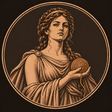
She gave him the thread for the Labyrinth on his oath to marry her, and he left her on Naxos.
-

Daedalus told Ariadne to give Theseus a thread to unwind and follow back out of the Labyrinth, the trick that let Theseus escape after killing the Minotaur.
-
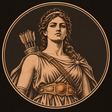
Most sources name Theseus's Amazon bride Antiope or Melanippe; Apollodorus reports that Simonides called her Hippolyte.
-

Minos imprisoned Daedalus and Icarus specifically because Daedalus had helped Ariadne give Theseus the thread that let him escape the Labyrinth.
-
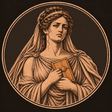
Theseus married Phaedra, who bore him Acamas and Demophon.
Where Accounts Differ
- parentage variant
- why Ariadne was left on Naxos
- Parentage variant: some sources name Poseidon rather than Aegeus as Theseus's father; Apollodorus holds both by having Aethra sleep with each on the same night.
- Plutarch himself records at least three competing explanations for why Theseus left Ariadne on Naxos and does not choose between them.
Read the full source verification →
Mythology
Appears In
Related Terms
Referenced By
Sources
- Plutarch, Life of Theseus 19
- Plutarch, Life of Theseus 20
- Plutarch, Life of Theseus 22
- Plutarch, Life of Theseus 24-25
- Apollodorus, Epitome 1.7-1.9
- Ovid, Metamorphoses
- Apollodorus, Library 2.5.7
- Apollodorus, Epitome 1.5-1.6
- Apollodorus, Epitome 1.16
- Apollodorus, Epitome 1.18
- Henry J. Walker, Theseus and Athens (1995)
- Timothy Gantz, Early Greek Myth (1993)