Hippolyta
Hippolyta, spelled Hippolyte in Greek sources, was a queen of the Amazons who wore the belt of Ares. Fetching that belt was the ninth labor of Heracles. Apollodorus says Hera's false rumor turned the handover into a fight in which Heracles killed her. Other sources let her live: Apollonius has her ransom a captive sister with the belt, and Megara showed her tomb.
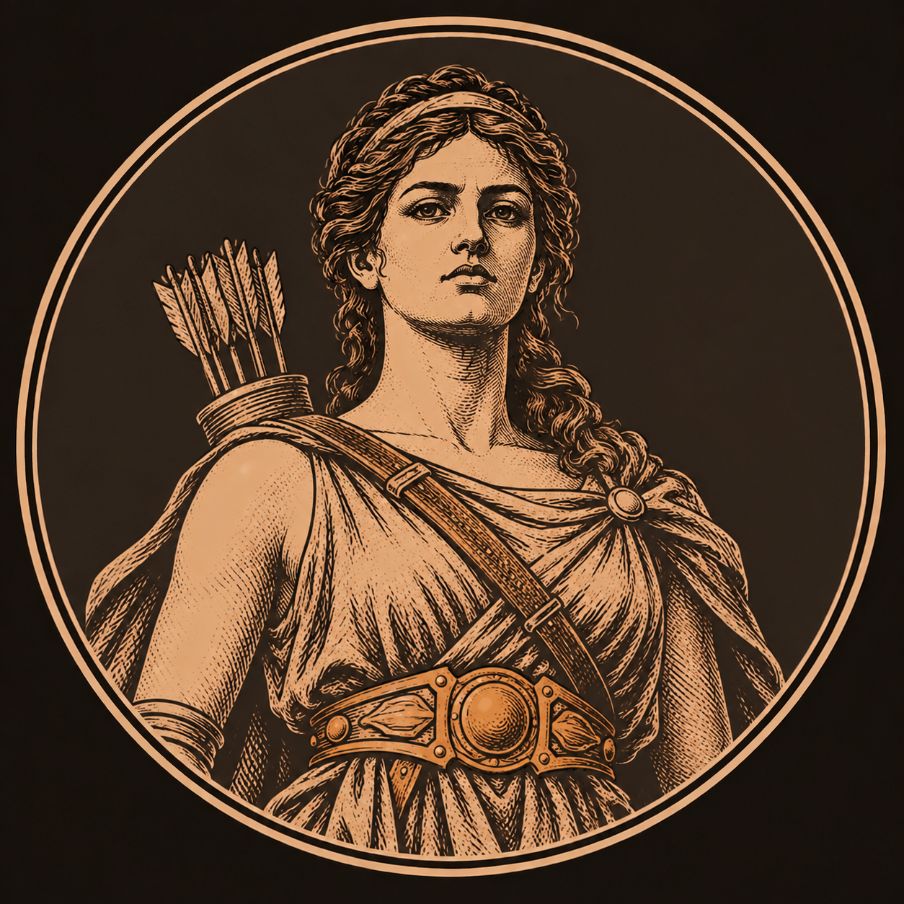
Hippolyta, bronze medallion illustration
Generated by AI from this page's own facts, not an ancient image or evidence of anything. How this site uses generated images
Sections on this page
Core Myth
Apollodorus names the belt of Hippolyte as the ninth labor that Eurystheus set Heracles. She was queen of the Amazons, a warlike people living by the river Thermodon. She wore the belt of Ares as a sign that she stood above all the other Amazons. Apollodorus says the errand began with a wish: Admete, the daughter of Eurystheus, wanted the belt for herself.
Heracles sailed with a band of volunteers in a single ship. On the way he fought the sons of Minos on Paros and helped King Lycus in Mysia against the Bebryces. He then put in at the harbor of Themiscyra. Hippolyte came down to the ship, asked why he had come, and promised to give him the belt. The labor could have ended there without a blow.
It did not, because of Hera. In Apollodorus's account the goddess took the form of an Amazon and went through the crowd. She told them the strangers were carrying off their queen. The Amazons armed, mounted their horses and charged the ship. Heracles saw them coming in arms and suspected treachery. He killed Hippolyte, stripped the belt from her body, fought off the rest and sailed away toward Troy. This is the version most modern retellings follow, and it makes Hippolyta a casualty of Hera's lifelong hatred of Heracles rather than of any quarrel of her own.
Other ancient writers tell the labor without her death. Apollonius of Rhodes, describing the voyage of the Argonauts past the Amazon coast, says Heracles ambushed Melanippe, a daughter of Ares. Hippolyte then gave him her glittering belt as her sister's ransom, and he sent the captive back unharmed. Apollonius also places Hippolyte as ruler of the Themiscyreian Amazons, one of three separate Amazon tribes.
Euripides's Heracles recalls the same exploit in a choral ode without naming the queen. The chorus sings of a voyage over the Euxine against the mounted Amazons to fetch her gold-embroidered belt. Those spoils, it says, are kept safe in Mycenae. Diodorus Siculus, in Book 4 of his Library of History, has a pitched battle in which Heracles kills Amazon champions one by one. There the commander Melanippe is ransomed for her girdle, and Diodorus does not say what became of Hippolyte herself.
What was Hippolyta known for?
She is known above all for her belt. Apollodorus describes Hippolyte as queen of the Amazons by the river Thermodon, wearing the belt of Ares as a sign of her rank over the other Amazons. Eurystheus sent Heracles to bring that belt back as his ninth labor, because his daughter Admete wanted it. A second, Athenian tradition remembers her as the Amazon who became the wife of Theseus, though most ancient writers give that role to Antiope instead.
Apollodorus, Library 2.5.9
What did Hercules do to Hippolyta?
It depends on the source. In Apollodorus, Hippolyte welcomes Heracles at Themiscyra and promises him the belt, but Hera, disguised as an Amazon, spreads a rumor that the strangers are kidnapping the queen. When the Amazons charge, Heracles suspects treachery, kills Hippolyte and takes the belt. Apollonius of Rhodes tells a gentler story. Heracles ambushes her sister Melanippe, and Hippolyte hands over her belt as ransom. He then releases his captive unharmed, and no one dies.
Apollonius of Rhodes, Argonautica 2.966-969
Who killed Hippolyta in Greek mythology?
The best-known answer is Heracles, in Apollodorus's account of the ninth labor, after Hera's rumor turns a peaceful meeting into a fight. But the ancient sources do not agree. Apollonius has her survive by ransoming her sister. The Megarians told Pausanias that Hippolyte outlived Heracles, led the Amazons against Athens, and after their defeat fled to Megara, where she died of grief. Stories of Theseus's Amazon wife, sometimes named Hippolyte, have her killed at his wedding to Phaedra or in battle.
Pausanias, Description of Greece 1.41.7
Who is Hippolyta in love with?
In the ancient sources that give her a love story, it is Theseus. Isocrates says Hippolyte broke the laws of the Amazons, fell in love with Theseus and followed him to Athens as his consort, which provoked the Amazon invasion of Attica. Plutarch reports that the historian Cleidemus also named Theseus's Amazon wife Hippolyta. Most writers, though, give Theseus a different bride, Antiope. Shakespeare's A Midsummer Night's Dream keeps the pairing: its Hippolyta is about to marry Theseus.
Apollodorus, Epitome 1.16-1.17
Later Traditions
A second story attaches Hippolyta to Theseus, and it is the source of most of the confusion around her name. Apollodorus's Epitome says Theseus joined Heracles against the Amazons and carried off an Amazon bride. Most writers call her Antiope, some call her Melanippe, but the poet Simonides calls her Hippolyte. Plutarch's Life of Theseus also prefers Antiope, yet reports that the Athenian historian Cleidemus named Theseus's Amazon wife Hippolyta. In Cleidemus's version, peace between the Amazons and Athens was made through her.
Isocrates, in his Panathenaicus, gives the fullest romance under her name. Hippolyte broke the laws of her people, fell in love with Theseus, followed him to Athens and lived with him there. The Amazons marched on Athens to take her back.
Her death in this Athenian cycle is told several ways. The Epitome says the Amazon bore Theseus a son, Hippolytus, yet Theseus later married Phaedra, and his Amazon wife arrived in arms at the wedding with her followers. The guests shut the doors and killed her, though others say Theseus killed her in battle. Plutarch records a tradition that she fell fighting at Theseus's side, struck by the Amazon Molpadia. Pausanias tells that story of Antiope and says her monument stood at the entrance to Athens.
Pausanias keeps both women apart in a second passage, at Megara. There he saw the tomb of Hippolyte, whom the Megarians called Antiope's sister and the leader of the Amazons against Athens. After their defeat she fled to Megara with a few survivors. Despairing of ever reaching Themiscyra again, she died of grief, and the Megarians buried her in a tomb shaped like an Amazon's shield.
Latin epic borrows her name for a comparison. Virgil likens the band of the Volscian huntress Camilla to Thracian women who fight in Amazon arms around Hippolyta (Aeneid 11.648-663).
Modern Influence
Shakespeare's A Midsummer Night's Dream follows the Theseus tradition rather than Apollodorus. The play opens with Theseus, Duke of Athens, days from his wedding to Hippolyta, and he admits he wooed her with his sword. Titania later calls her Theseus's warrior love, the bouncing Amazon. In Act 4 Hippolyta recalls hunting a bear in Crete with Hercules and Cadmus.
DC Comics made her Wonder Woman's mother. Queen Hippolyte first appeared in All Star Comics #8 (December 1941), created by William Moulton Marston and Harry G. Peter. That origin reworks the ninth labor: Hercules tricks the queen out of her magic girdle. From 1958 the comics spelled her name Hippolyta.
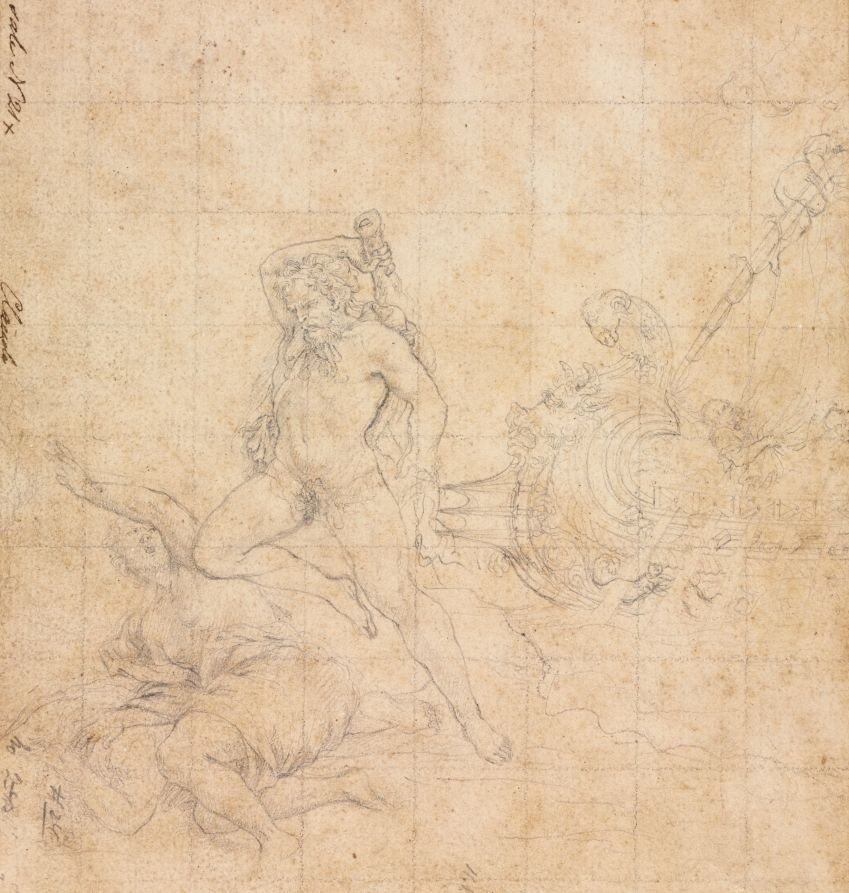
Hercules and the Girdle of Hippolyta - Italy, first quarter 1600, graphite; squared in graphite
The Cleveland Museum of Art, Cleveland, OH, 1954.674.1. CC0
Also Connected
5 recorded connections, each with the ancient line behind it.
Enemies
-

In Apollodorus Hippolyte promises Heracles the belt of Ares, Hera's rumour turns the Amazons against him, and he kills her; other accounts let her live.
Connected
-

Hippolyte's belt, the object of the ninth labor, was the belt of Ares.
-
Virgil compares Camilla and her women to the Thracian Amazons around Hippolyta and Penthesilea. Camilla is an Italian virgin warrior, not an Amazon.
-

Hera, disguised as an Amazon, spread the rumour that Heracles meant to carry off their queen, which turned the meeting into a battle.
-

Most sources name Theseus's Amazon bride Antiope or Melanippe; Apollodorus reports that Simonides called her Hippolyte.
Where Accounts Differ
- whether Heracles killed Hippolyta
- how the belt changed hands
- Theseus's Amazon bride: Hippolyta or Antiope
- how Theseus's Amazon wife died
- Whether Heracles killed Hippolyta is disputed. Apollodorus's Library has him kill her after Hera, disguised as an Amazon, provokes an attack on his ship. Apollonius of Rhodes has no killing at all: Heracles captures her sister Melanippe and Hippolyte pays the belt as ransom. Diodorus Siculus (Library of History, Book 4) also has Melanippe ransomed for the girdle and does not report Hippolyte's death. The Megarian tradition in Pausanias has her survive to lead the Amazons against Athens.
- The name of Theseus's Amazon bride differs by source. Apollodorus's Epitome gives Antiope, or Melanippe, and notes that Simonides called her Hippolyte. Plutarch's Life of Theseus prefers Antiope but reports that Cleidemus named her Hippolyta, and Isocrates's Panathenaicus also calls her Hippolyte. Pausanias treats them as two women, with Hippolyte as Antiope's sister, and Diodorus has Heracles give Antiope to Theseus as a captive.
- The death of Theseus's Amazon wife is told in several ways. Apollodorus's Epitome has her killed by the guests at Theseus's wedding to Phaedra, or by Theseus in battle. Plutarch and Pausanias record that she was shot by the Amazon Molpadia while fighting beside Theseus, Pausanias under the name Antiope. Plutarch also reports, and rejects as invention, a Theseid in which Heracles killed the invading Amazons.
- Isocrates's Panathenaicus and Diodorus Siculus's Library of History are named in prose only. Neither is yet a registered, line-checkable source on this site, so no passage number from them is cited.
Read the full source verification →
Mythology
Appears In
Related Terms
Referenced By
Sources
- Apollodorus, Library 2.5.9
- Apollodorus, Epitome 1.16-1.17
- Apollonius of Rhodes, Argonautica 2.776-779
- Apollonius of Rhodes, Argonautica 2.966-969
- Apollonius of Rhodes, Argonautica 2.987-1000
- Euripides, Heracles 408-415
- Pausanias, Description of Greece 1.2.1
- Pausanias, Description of Greece 1.41.7
- Pausanias, Description of Greece 5.10.9
- Plutarch, Life of Theseus 26-28
- Virgil, Aeneid 11.648-663
- James George Frazer, notes to Apollodorus, The Library 2.5.9 and Epitome 1.16 (1921)
- William Shakespeare, A Midsummer Night's Dream, Act 1 Scene 1, Act 2 Scene 1 and Act 4 Scene 1
- William Moulton Marston and Harry G. Peter, All Star Comics #8 (DC, December 1941)