Amazons
The Amazons are a nation of warrior women in Greek myth, said to live by the river Thermodon under queens of their own.
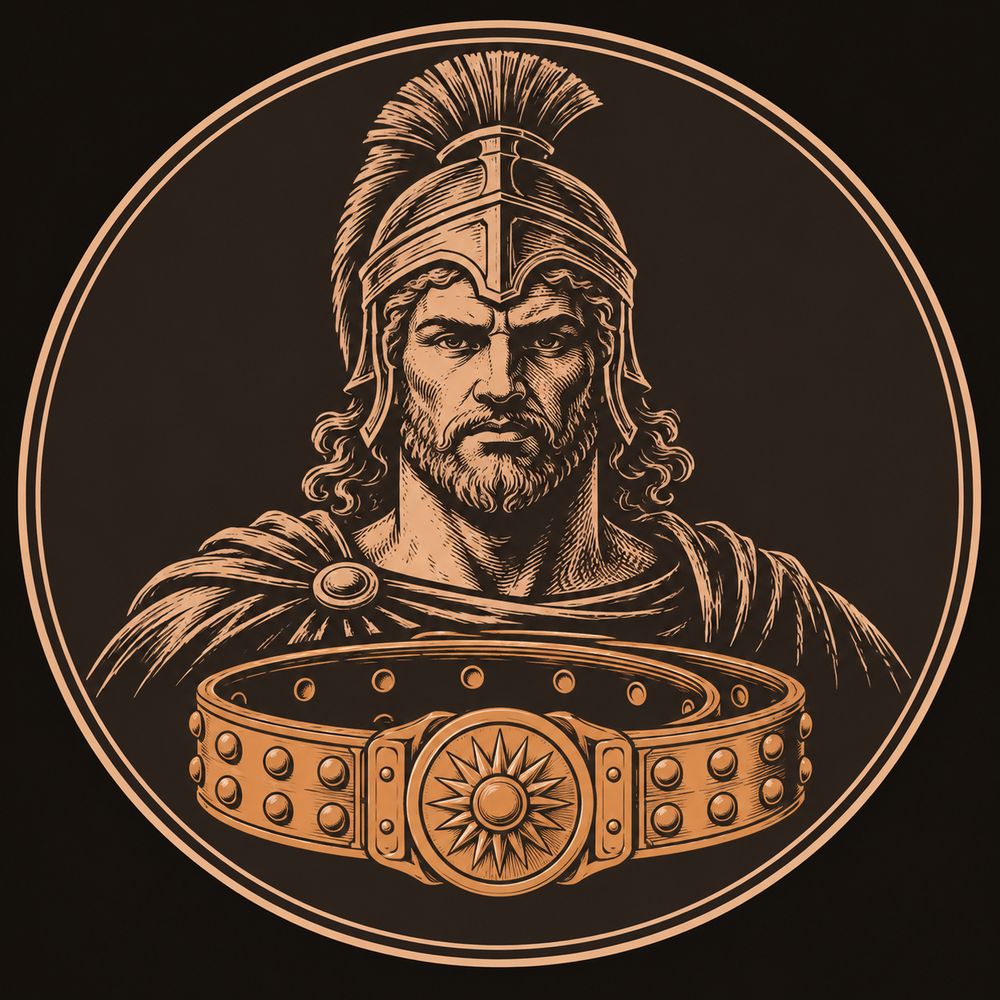
Belt of Ares
Generated by AI from this page's own facts, not an ancient image or evidence of anything. How this site uses generated images
Sections on this page
In Practice
Heroes meet them in war: Heracles, Theseus, Bellerophon and Achilles each fight them in some source. Greek writers also make them daughters of Ares, and Herodotus places their descendants in Scythia.
Apollodorus gives the best-known setting. Hippolyte was queen of the Amazons, who dwelt about the Thermodon, a people great in war. She wore the belt of Ares, and Eurystheus sent Heracles to fetch it because his daughter Admete wanted it. Hera, disguised as an Amazon, told the crowd that the strangers were carrying off their queen. In this version Heracles kills Hippolyte and takes the belt (Library 2.5.9). Apollonius of Rhodes adds that the Amazons did not live in one city. They were scattered over the land in three tribes: the Themiscyreians, the Lycastians and the Chadesians (Argonautica 2.987-1000). The ninth labor belongs to the Heracles Cycle, and its queen has her own page, Hippolyta.
Athens told a second story. Apollodorus says Theseus joined Heracles against the Amazons and carried off Antiope, or as some say Melanippe, whom the poet Simonides called Hippolyte. The Amazons then marched on Athens and took up a position about the Areopagus. The Athenians under Theseus defeated them (Epitome 1.16). Aeschylus makes the Hill of Ares the seat and camp of the Amazons, who came with an army in resentment against Theseus (Eumenides 685-690).
The Amazons also appear in the Trojan story. In the Iliad Priam recalls that he fought as an ally of the Phrygians on the day the Amazons came (Iliad 3.184-189). Homer lists the Amazons as the third trial of Bellerophon in Lycia, after the Chimera and the Solymi (Iliad 6.184-186). Apollodorus's Epitome has the Amazon Penthesilia, daughter of Otrere, come to Troy. She killed many Greeks, among them Machaon, and was herself killed by Achilles, who fell in love with her after her death (Epitome 5.1).
Who was the Greek goddess of the Amazons?
The sources checked here name no single goddess as their patron. Callimachus says the Amazons set up an image of Artemis at Ephesus, beneath an oak trunk, and danced a war-dance around it in shields and armour. A male god is tied to them as well. Aeschylus says they sacrificed to Ares on the hill that took his name, and Hippolyte's belt was the belt of Ares.
Callimachus, Hymn to Artemis 237-247
Are Amazons daughters of Ares?
Yes, in the sources that give them a father. Apollonius of Rhodes says the Amazons of the Doeantian plain were by race daughters of Ares and the nymph Harmonia, and he calls Melanippe a daughter of Ares. Apollodorus's Epitome calls Penthesilia the daughter of Otrere and Ares. The sources checked here do not say whether every Amazon is his daughter or only the queens.
Apollonius of Rhodes, Argonautica 2.987-1000
Were Amazons female warriors?
Yes, and that is how every source presents them. Homer calls them women the peers of men when Bellerophon kills them. Herodotus describes the Sauromatae, whose people he traces to the Amazons, and says their women hunt on horseback and go to war dressed like the men. A girl there does not marry until she has killed an enemy in battle. Herodotus describes these descendants, not the Amazons themselves.
Herodotus, Histories 4.116-4.117
What race were the Amazons?
The Greek sources checked here give them a homeland, not a race. Apollodorus places them on the Thermodon. Herodotus says the Scythians called them Oiorpata, which he glosses as man-killers. In his story captive Amazons overpowered their Greek captors at sea and landed in Scythian country. Young Scythians then joined them, and their children became the Sauromatae, who speak Scythian imperfectly.
Herodotus, Histories 4.110-4.111
Where Accounts Differ
- name-of-theseus-amazon-bride
- belt-labor-killing-or-ransom
- The name of Theseus's Amazon bride differs. Apollodorus, Epitome 1.16, gives Antiope, or as some say Melanippe, and reports that Simonides called her Hippolyte. The sources checked here do not reconcile the names.
- The ninth labor ends differently by source. Apollodorus, Library 2.5.9, has Heracles kill Hippolyte after Hera's rumor. Apollonius of Rhodes, Argonautica 2.966-969, has Hippolyte give the belt as ransom for her sister Melanippe and Heracles send his captive back unharmed.
Where This Appears
Sources
- Apollodorus, Library 2.5.9
- Apollodorus, Epitome 1.16-1.17
- Apollodorus, Epitome 5.1
- Homer, Iliad 3.184-189
- Homer, Iliad 6.184-186
- Aeschylus, Eumenides 685-690
- Herodotus, Histories 4.110-4.111
- Herodotus, Histories 4.116-4.117
- Apollonius of Rhodes, Argonautica 2.966-969
- Apollonius of Rhodes, Argonautica 2.987-1000
- Callimachus, Hymn to Artemis 237-247