Leto
Leto is the daughter of the Titans Koios and Phoibe and the mother of Apollo and Artemis by Zeus. Pregnant and pursued by Hera's anger, she is refused by every land in turn until the small floating island of Delos agrees to receive her, on the promise that her son will build his temple there.

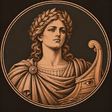
Leto, Titaness mother of Apollo and Artemis
Generated by AI from this page's own facts, not an ancient image or evidence of anything. How this site uses generated images
Sections on this page
See Leto in the Greek family tree.
Core Myth
Hesiod places Leto among the children of the Titans Koios and Phoibe and calls her the gentlest in Olympos, mild to men and to the immortals. He records the essential fact in two lines: she lay with Zeus and bore Apollo and Artemis, the loveliest children of all the sky-dwellers.
The long version is the Homeric Hymn to Apollo. Leto, heavy with child, travels the islands and the mainland asking for a place to give birth, and every one refuses her out of fear: the child will be a great god, and no ordinary rock wants him. Only Delos, poor and floating and with nothing to lose, considers it, and even Delos asks for a promise first. Leto swears a great oath that Apollo will build his first temple there. After nine days and nights of labour, holding a palm tree, she gives birth.
Hera is the pressure behind the story. In later tellings she is the one who forbids the earth to receive Leto and sends the serpent Python after her. What the Hymn describes is the refusal itself, land after land, rather than the machinery behind it, and the effect is to make Delos the centre of Apollo's cult by an act of hospitality rather than of power.
Why could Leto not find a place to give birth?
Every land refused her. The Homeric Hymn to Apollo has her travel from island to island and along the mainland asking for a birthplace, and each one is afraid: the god she carries will be powerful and demanding, and no poor rock wants that. Only Delos agrees, and only after Leto swears that Apollo will build his temple there. Later authors attribute the refusals to Hera forbidding the earth to receive her.
Homeric Hymn to Apollo 89-126
Who were Leto's parents?
Hesiod makes her the daughter of the Titans Koios and Phoibe, which puts her in the generation before the Olympians and makes Apollo and Artemis grandchildren of Titans on their mother's side. This matters for how the two are described: they belong to the Olympian order through Zeus while carrying Titan descent through Leto, and Hesiod calls her the gentlest of those on Olympos.
Hesiod, Theogony 404-410
Where was Apollo born, Delos or Ortygia?
The sources disagree, and some try to hold both. The Homeric Hymn to Apollo places the birth on Delos after nine days of labour. Other accounts separate the twins and put Artemis on Ortygia and Apollo on Delos, which conveniently explains two competing cult claims. Ortygia is itself identified with several different places in antiquity, including Delos itself, so the disagreement is partly about geography and partly about which sanctuary got to claim the event.
Later Traditions
Later authors expand the persecution. Ovid tells of Lycian peasants who refuse the thirsty Leto a drink from their pond and are turned into frogs, and of the Niobids, killed by Apollo and Artemis after Niobe boasts of having more children than Leto. Callimachus makes the wandering the centre of his Hymn to Delos. In Rome she is Latona, and her cult is largely attached to her children rather than held on her own account. Livy sets Latona with Apollo in Rome on one of three couches at the city's first lectisternium (Livy 5.13.5-6).
Lineage
See the full family tree4 recorded relations, each with the ancient line behind it.
Parents
-

Coeus and his sister-wife Phoebe are Leto's parents.
-

Leto later bears Apollo and Artemis to Zeus, making Phoebe their great-grandmother.


Also Connected
2 recorded connections, each with the ancient line behind it.
Connected
-
Apollo and Latona head the six gods of the first lectisternium (Livy 5.13.6). At the Ludi Apollinares Latona receives a gilded heifer beside Apollo's gilded ox (Livy 25.12.13).
-

Hera detains Eileithyia to delay Leto's labor on Delos until Apollo can finally be born.
Where Accounts Differ
- birthplace of Artemis
- Hera's role in the refusals
- The Homeric Hymn puts both births on Delos. Other accounts separate the twins and place Artemis on Ortygia, an island identified differently by different authors.
- Hera's role in the refusals is explicit in later authors and only implied in the Homeric Hymn, which describes the fear of the lands without naming its cause.
Read the full source verification →
Mythology
Related Terms
Referenced By
Sources
- Hesiod, Theogony 918-920
- Hesiod, Theogony 404-410
- Homeric Hymn to Apollo 89-126
- Livy, Ab Urbe Condita 5.13.5-6