Naiads
The Naiads are the nymphs of fresh water in Greek myth: springs, fountains, streams and rivers.
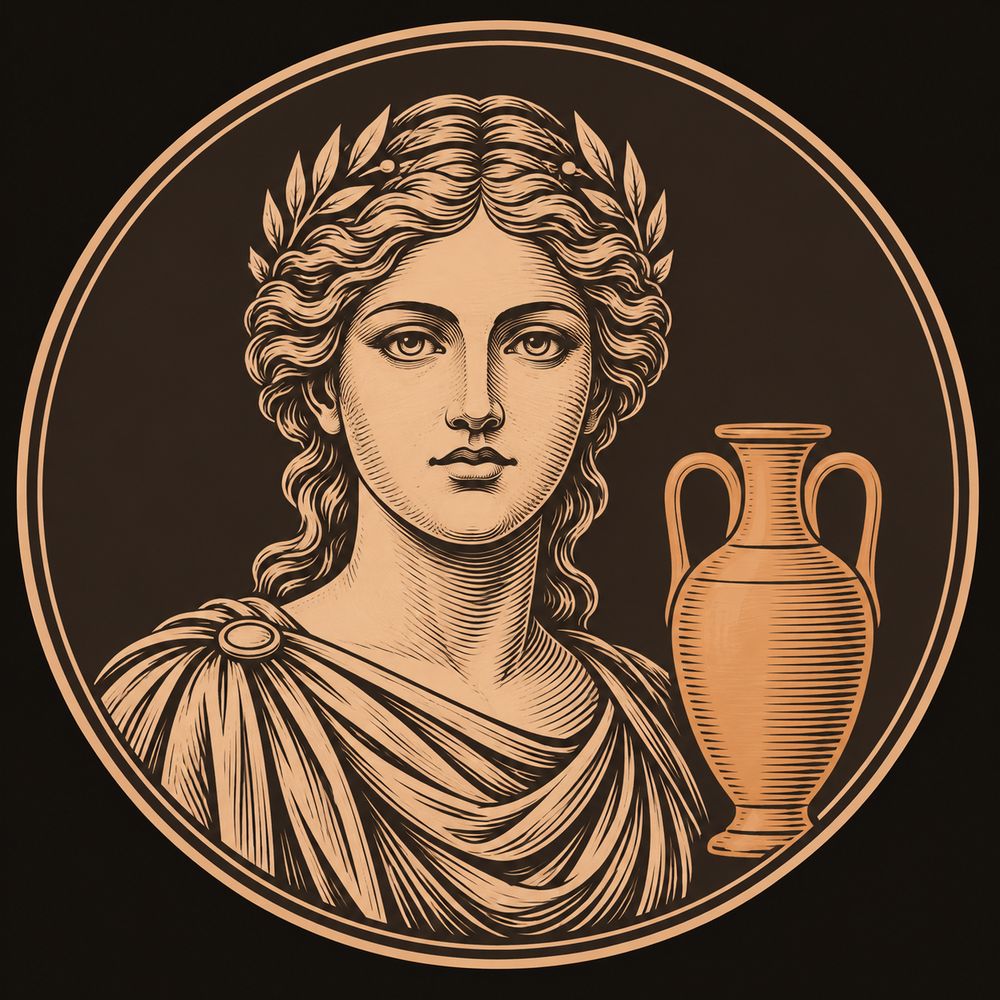
Water jar of the Naiads
Generated by AI from this page's own facts, not an ancient image or evidence of anything. How this site uses generated images
Sections on this page
In Practice
Homer names a cave on Ithaca as sacred to the Naiads and speaks of nymphs of the springs that feed the rivers. The word marks a kind of nymph, not one family, and the sources checked here give the Naiads no single father.
Homer uses the name for the nymphs of a particular place. Near the harbor of Phorcys on Ithaca stands a shadowy cave sacred to the Naiads, with stone mixing bowls and jars, bees, and long stone looms where the nymphs weave. The cave has two doors. Men enter by the northern one, and the southern is for the immortals (Odyssey 13.102-112). A spring on the road to the town has an altar to the nymphs beside it. Ithacus, Neritus and Polyctor made the fountain, and passers-by made offerings there (Odyssey 17.205-211).
Homer also shows the wider class. Odysseus, hearing girls' cries on the shore, wonders whether they are nymphs who haunt the mountain peaks, the springs of the rivers and the grassy meadows (Odyssey 6.122-124). The nymphs who sport with Artemis on the mountains are daughters of Zeus (Odyssey 6.102-109). When Zeus calls the gods to assembly, no river stays away except Ocean, and no nymph of the groves, the springs that feed the rivers, or the grassy meadows (Iliad 20.4-9). Hesiod gives the water nymphs a parent. The three thousand slender-ankled daughters of Oceanus are scattered over the earth, and they serve the earth and the deep waters alike (Theogony 346-366).
Naiads bear children to mortals and gods. In the Iliad a Naiad nymph conceives Satnius by the herdsman Enops on the banks of the river Satnioeis (Iliad 14.442-445). Apollodorus makes Dictys and Polydectes the sons of Magnes and a Naiad nymph (Library 2.4.3).
The sea nymphs have their own page, Nereids, and the wider group is traced in Nymphs, Muses and minor divinities.
What is the difference between a nymph and a naiad?
Nymph is the wider word and Naiad is one kind of nymph, the kind that belongs to water. Homer lists nymphs of the mountain peaks, the springs that feed the rivers, and the grassy meadows, so the label follows the place the nymph haunts. A Naiad is therefore always a nymph, but a nymph of a mountain or a meadow is not a Naiad.
Homer, Odyssey 6.122-124
Are Naiads daughters of Poseidon?
The sources checked here do not make Poseidon their father. Homer calls the nymphs who attend Artemis on the mountains daughters of Zeus. Hesiod gives the water nymphs of his catalogue to Oceanus, and the sea-nymph Nereids to Nereus. Poseidon's wife Amphitrite is a Nereid, which ties him to sea nymphs by marriage, not by birth.
Homer, Odyssey 6.102-109
Were Naiads worshipped at springs?
Homer shows that they were. The Odyssey describes an altar to the nymphs built over a spring on Ithaca, with a grove of poplars around the water, where travellers made offerings. The cave of the Naiads in the harbor has a door for mortals and a door for immortals. Together the two passages place the Naiads at real, visitable water sources.
Homer, Odyssey 17.205-211
What are Naiads and Dryads?
Naiads belong to water and Dryads to trees. The Homeric Hymn to Aphrodite describes nymphs whose lives are tied to a pine or oak that grows up with them and withers when they die. The sources checked here tell no such story of the nymphs of springs, whom Homer places beside the cave and the fountain instead.
Homeric Hymn to Aphrodite 256-272
Did Naiads have children with mortals?
Yes, in both epic and the handbook tradition. The Iliad has a Naiad nymph conceive Satnius by a herdsman who tends his flocks by a river, and Ajax son of Oileus kills him in battle. Apollodorus names a Naiad as the mother of the brothers Dictys and Polydectes, who settle on the island of Seriphos.
Homer, Iliad 14.442-445
Where Accounts Differ
- parentage-of-water-nymphs
- The parentage of water and country nymphs differs. Homer, Odyssey 6.102-109, calls the nymphs who attend Artemis daughters of Zeus, while Hesiod, Theogony 346-366, makes the three thousand nymphs who serve the waters daughters of Oceanus. The sources checked here do not reconcile the two.
Where This Appears
Sources
- Homer, Odyssey 6.102-109
- Homer, Odyssey 6.122-124
- Homer, Odyssey 13.102-112
- Homer, Odyssey 17.205-211
- Homer, Iliad 14.442-445
- Homer, Iliad 20.4-9
- Hesiod, Theogony 240-264
- Hesiod, Theogony 346-366
- Homeric Hymn to Aphrodite 256-272
- Apollodorus, Library 2.4.3