Nymphs, Muses and Minor Divinities
Nymphs are minor goddesses bound to a place: a spring, a tree, a mountain or the sea. The Muses are the nine daughters Mnemosyne, Memory, bore to Zeus, and Hesiod names them one by one. Homer counts both groups among the gods, yet the Homeric Hymn to Aphrodite says tree nymphs die with their trees, so the line between them and mortals is not sharp.
Sections on this page
Overview
Below the Olympians, Greek myth is crowded with goddesses who rule no domain of their own. Most are nymphs, each tied to one feature of the land or sea. Homer's Odyssey places them on the steep peaks of mountains, in the springs of rivers and in grassy meadows. Hesiod's Theogony names the fifty Nereids of the sea, daughters of Nereus, and lists the Oceanids, daughters of Ocean and Tethys. Several of these sea nymphs carry whole myths. Thetis is the mother of Achilles, and Galatea is the Nereid the Cyclops courts in Theocritus and Ovid.
Nymphs are also the women that heroes and gods most often meet in the wild. Calypso, whom Homer calls both a nymph and a goddess, keeps Odysseus on her island for seven years. Daphne escapes Apollo as a laurel, and Callisto, a huntress in Artemis's band, ends as a bear among the stars. Ovid's nymph Echo loses every word but the last ones she hears. Maia bears Hermes in a cave on Mount Cyllene, and the goat-footed god Pan roams the mountains with dancing nymphs in his Homeric Hymn.
The Muses are a different kind of minor goddess, defined by what they do rather than where they live. Hesiod says Mnemosyne bore them to Zeus after nine nights with him, and that they taught Hesiod himself to sing while he shepherded lambs under Mount Helicon. Homer calls on a single Muse at the start of each epic. His only count of them comes at the funeral of Achilles in the Odyssey, where nine Muses sing the lament. Later writers did not all agree that there had always been nine.
In This Topic (12)
-
Nymph Term
Nymphs are the minor female nature spirits of Greek mythology, tied to a particular place or natural feature rather than to a domain the way an Olympian god is. A nymph is typically bound to one mountain, spring, tree, or stretch of sea, and the word covers a large family of overlapping local classes: Naiads for fresh water, Oreads for mountains, Dryads and Hamadryads for trees, and Nereids for the sea, among others. Individually named nymphs such as Calypso, Thetis, Galatea, and Daphne sit alongside countless unnamed ones who exist in the sources only as a place's resident spirit. The Homeric Hymn to Aphrodite gives the clearest ancient statement of what a nymph actually is, in the story Aphrodite tells Anchises about his future son by a mountain nymph. The deep-breasted mountain nymphs, she says, rank with neither mortals nor immortals: they live very long lives on sacred food, but a nymph's life is bound to a single tree that springs up alongside her at birth, and when death approaches, the tree withers first and the nymph's life leaves the light of the sun in the same moment the tree does. This tied fate, one life bound to one growing thing, is what sets nymphs apart from the fully immortal Olympians on one side and from short-lived mortals on the other. Homer's Odyssey shows what a nymph's home actually looks like in cult and daily imagination, in the description of the cave sacred to the Naiads near the harbor on Ithaca. Inside, the poem describes stone mixing bowls and jars, bees storing honey, and long stone looms where the nymphs weave sea-purple cloth, a scene that treats the nymphs as active, working presences at a real, visitable local landmark rather than as distant abstractions. Caves, springs, and groves sacred to nymphs were genuinely worshipped at across the Greek world, making them one of the most locally rooted layers of Greek religious practice. Nymphs regularly appear in myth as companions of major gods, most often Artemis, Dionysus, and Pan, and as the mothers or love interests of heroes and gods alike, since a nymph's long but not fully immortal lifespan and her attachment to a real, nameable place made her a natural bridge figure connecting a myth to a specific landscape. Their male counterparts in Dionysus's retinue, the Satyrs, share the same nature-spirit status but a very different register, wildness played for comedy and appetite rather than the nymphs' more contemplative and place-bound presence.
-
Nereids Term
The Nereids are the fifty sea-nymph daughters of the old sea-god Nereus and the Oceanid Doris, listed by name in a long catalogue near the start of Hesiod's Theogony. Hesiod's list includes figures who go on to have their own independent mythologies, such as Thetis, mother of Achilles, and Amphitrite, wife of Poseidon, alongside many names, including Galatea, that survive chiefly as entries in this catalogue or in a handful of later stories. Nereus himself was known to Greek poets as the "Old Man of the Sea," a truthful, shape-shifting figure distinct from the sea's other, more violent gods, and the character of his daughters follows him: gentle rather than threatening, a crowd of sisters more often glimpsed together than singled out. Like the Muses, whom Hesiod presents as nine sisters of one mind, the Nereids are more often named together than singled out (Theogony 53-62). Collectively, the Nereids appear in myth as helpful, benevolent sea-spirits rather than as threats, in clear contrast to the strait's other sea-dwelling figures, Scylla and Charybdis. Apollonius of Rhodes's Argonautica has Hera personally ask Thetis and her Nereid sisters to guide the Argo safely between Scylla's cliff and Charybdis's whirlpool on the ship's return voyage, physically passing the vessel hand to hand through the danger the way dolphins might play with a ball in calm water - the clearest surviving scene of the Nereids acting together as a group. Individual Nereids also carry their own separate stories once they step out of the collective catalogue. Galatea, one of the fifty, becomes the object of the Cyclops Polyphemus's unrequited love in later pastoral poetry, and Ovid frames her own account of that story as being told directly to Scylla - one Nereid confiding in a figure who is, in Homer's telling, simply a monster with no such context at all. Later Greek and Roman art returned to the Nereids often, most commonly showing them riding sea creatures such as dolphins or hippocamps as a wedding procession for Poseidon and Amphitrite, a scene with no single canonical literary source but a consistent visual tradition across vase painting, mosaic, and sarcophagus relief.
-

Thetis Character
Thetis is a shape-shifting sea goddess courted by Zeus and Poseidon until a prophecy turned them away, and the mother of Achilles by the mortal Peleus.
The Nereid with the largest part in epic. Her marriage to a mortal produces Achilles, and she rises from the sea with her sisters to mourn him.
-

Galatea Character
Galatea is the sea-nymph loved without success by the Cyclops Polyphemus, whose jealousy over her love for Acis turns fatal.
A name from Hesiod's catalogue of Nereids that later poets turned into a whole story, the Cyclops's hopeless courtship.
-
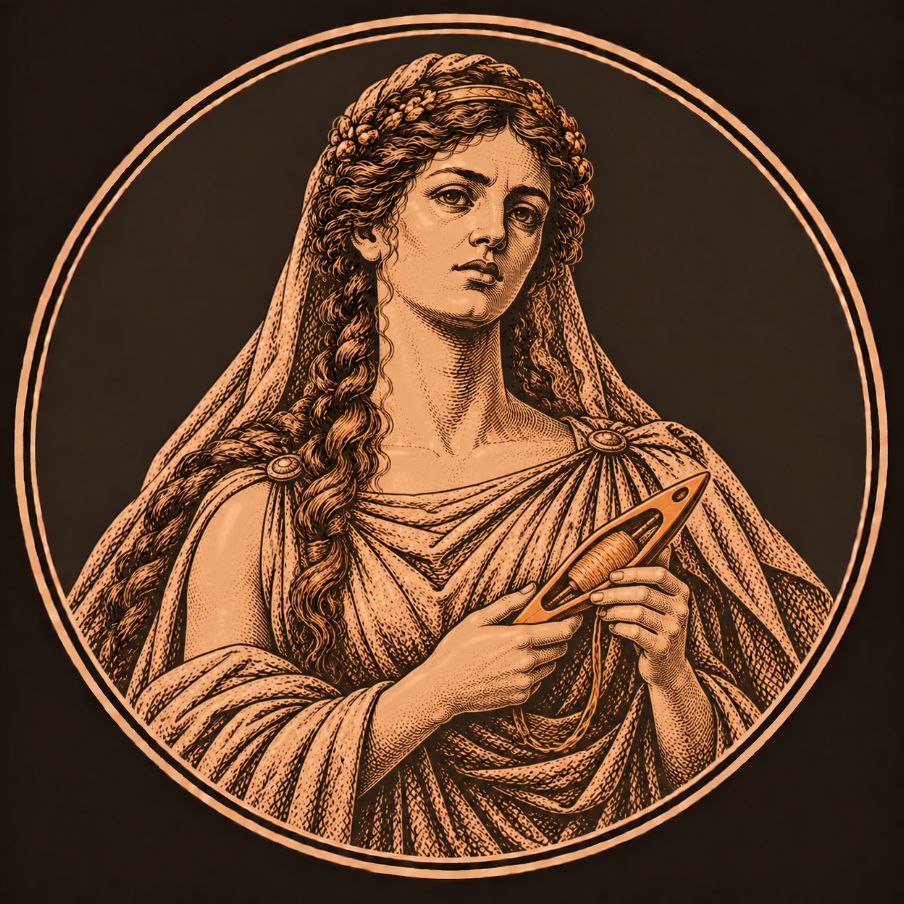
Calypso Character
Calypso is the nymph of Ogygia who keeps Odysseus on her island for seven years, offers him immortality, and lets him go only when Zeus sends Hermes to order it.
-
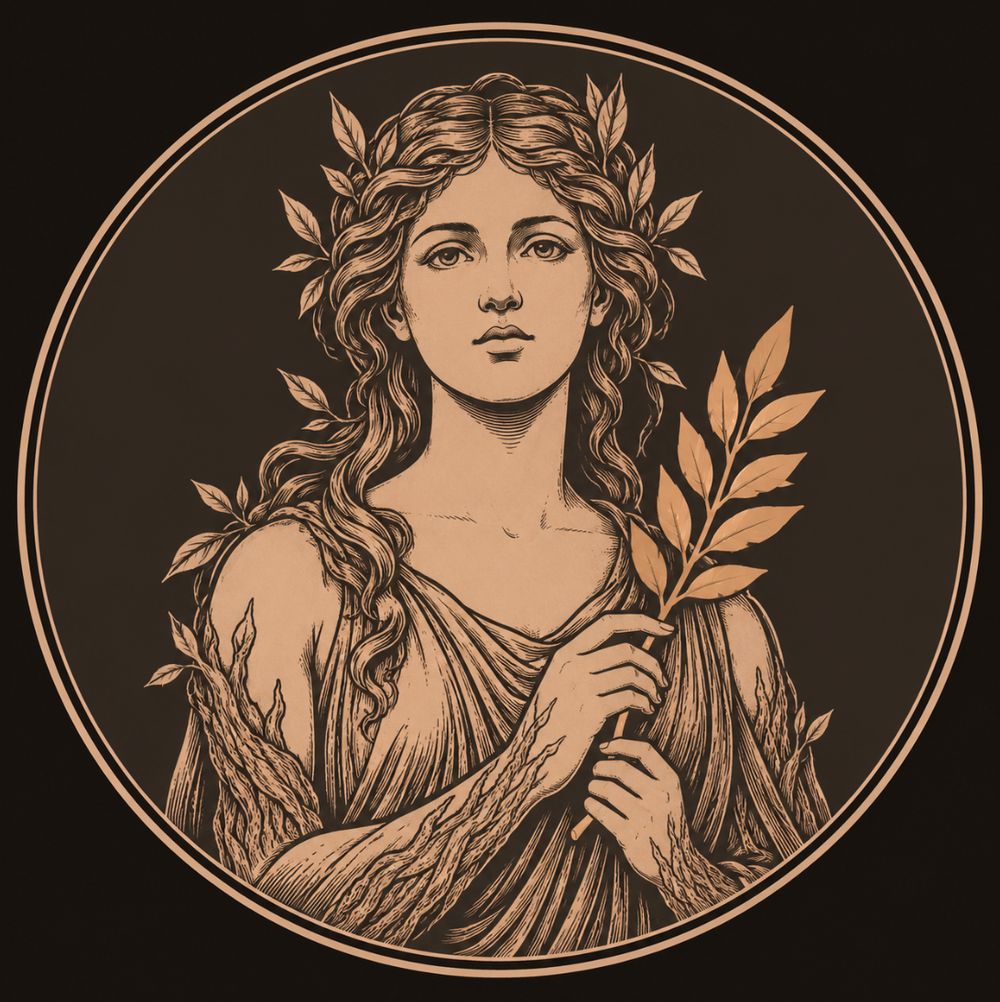
Daphne Character
Daphne is the naiad Apollo chases through the woods after Eros's arrow strikes him, and who escapes marriage only by praying to be turned into a laurel tree.
-
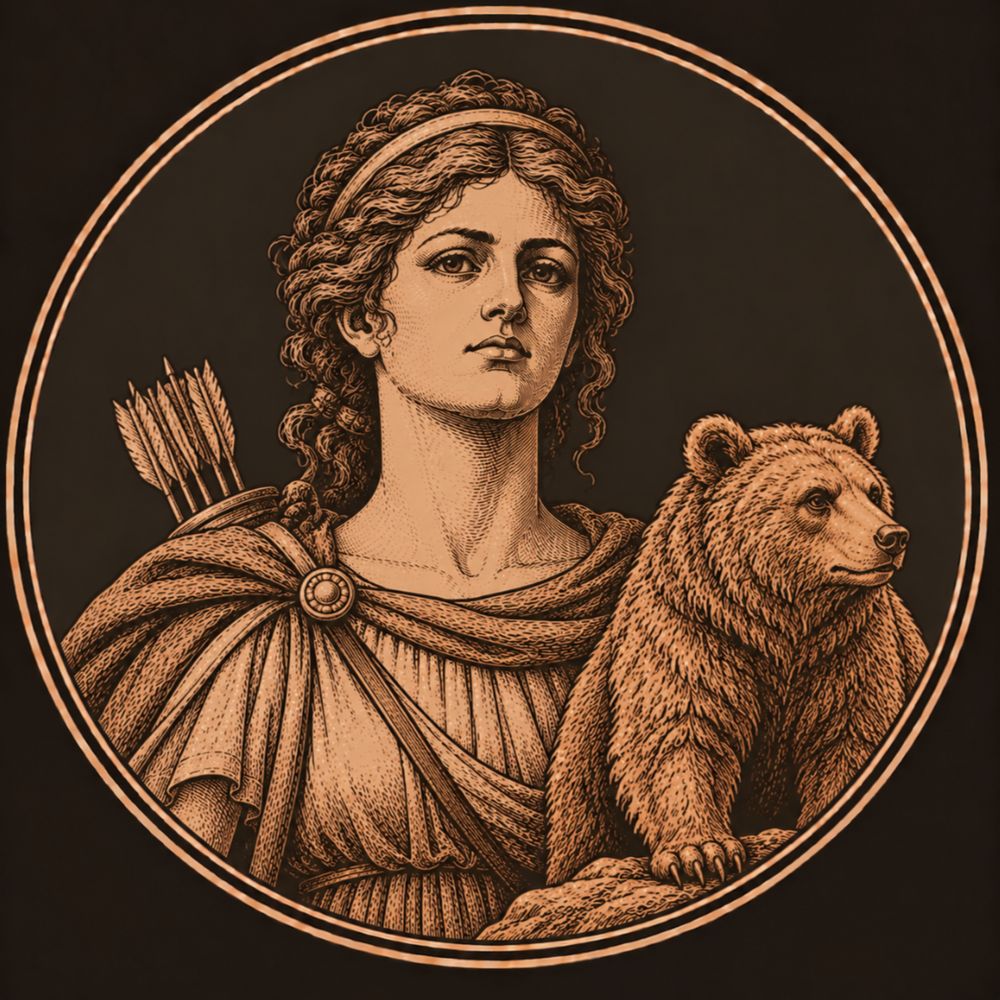
Callisto Character
Callisto is the Arcadian huntress and companion of Artemis whom Zeus wronged, mother of Arcas, changed into a bear and set among the stars.
-
Narcissus and Echo Story
Narcissus and Echo is Ovid's story of two failed loves punished the same way. Echo, a nymph cursed to only repeat the last words spoken to her, falls for the beautiful Narcissus and wastes away to a voice alone when he rejects her. Narcissus is punished in turn: he falls in love with his own reflection in a pool, unable to possess what he sees, and wastes away until a flower is found where his body lay.
-

Maia Character
Maia is the eldest of the Pleiades in Greek myth and the mother of Hermes, who bore him in a cave on Mount Kyllene.
The Homeric Hymn to Hermes calls her a nymph, and her son is born in her cave. One of the Pleiades, she shows how a nymph's child could become an Olympian.
-

Pan Character
Pan is the goat-legged god of the wild who so delighted the other gods at his birth that his name became the Greek word for "all."
Not a nymph but the god most often found among them. His Homeric Hymn has him range the mountains with the nymphs who dance and sing with him.
-

Mnemosyne Character
Mnemosyne is the Titaness of Memory whose nine nights with Zeus produced the nine Muses.
A Titaness rather than a minor goddess herself, included as the mother of the Muses in Hesiod's Theogony.
-
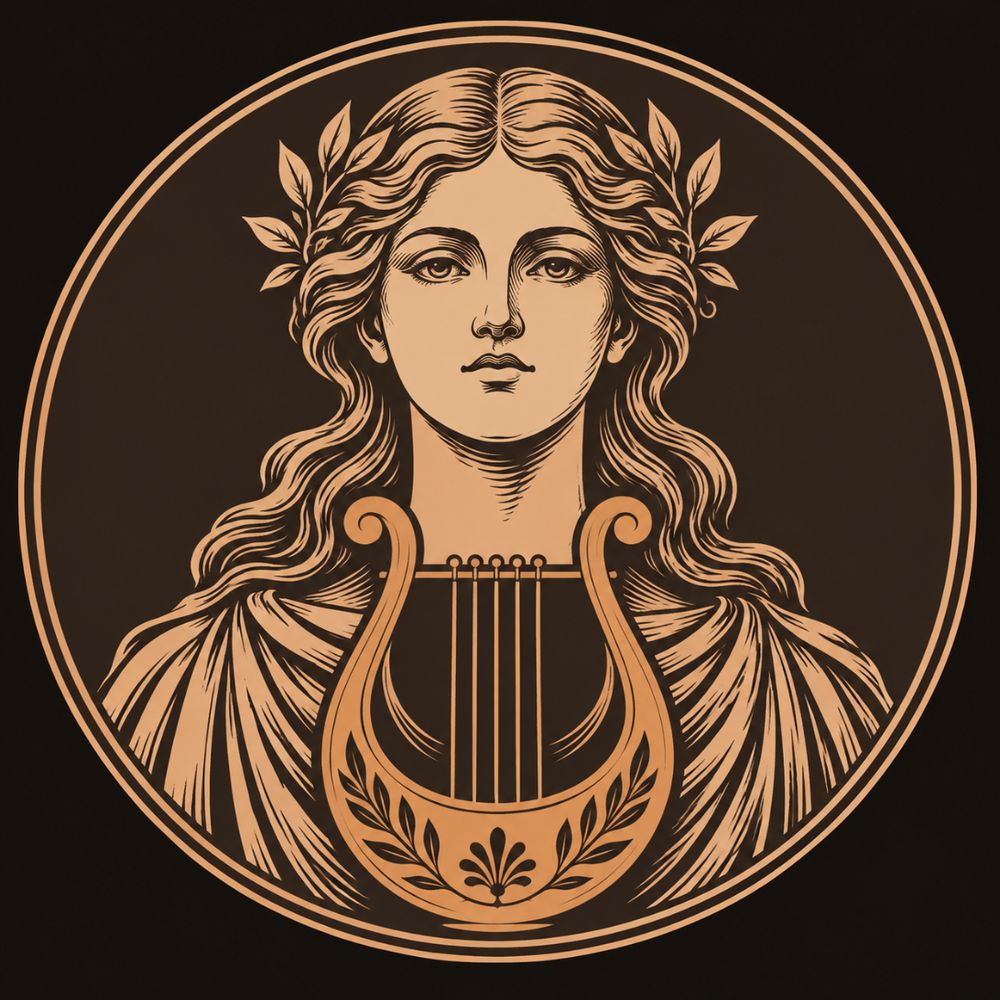
Muses Term
The Muses are the Greek goddesses of song, usually nine daughters of Zeus and Mnemosyne, whose name means Memory. Hesiod makes them the source of a poet's voice, and Homer opens both epics by asking one of them to tell the story (Theogony 53-62; Iliad 2.484-493; Odyssey 1.1-10). Hesiod tells how they were born. Zeus lay with Mnemosyne for nine nights in Pieria, and she bore nine daughters of one mind, whose hearts are set on song (Theogony 53-62). They live on Mount Helicon, where Hesiod says they met him as a shepherd, gave him a staff of laurel and breathed a divine voice into him so that he could sing of things that will be and things that were (Theogony 22-34). Their gifts are not limited to poets. Hesiod says that a king whom the Muses honour at birth receives sweet dew on his tongue, so that gracious words flow from his lips, and that singers and harpers on earth come from the Muses and Apollo (Theogony 80-103). He gives the Muses one shared task: they sing first of the race of the gods, and the house of Zeus is glad at their voices (Theogony 36-52). He assigns no separate art to each daughter. Homer treats them as goddesses who know what mortals can only hear. Before the catalogue of ships he asks the Muses of Olympus for help because they are present and know all things, while men hear only report (Iliad 2.484-493). In the Odyssey the bard Demodocus is a man whom the Muse loved above all others. She took away his sight and gave him sweet song (Odyssey 8.62-64). At the funeral of Achilles, nine Muses answer one another with sweet voices and lead the dirge (Odyssey 24.60-62). They belong to the wider company of minor Greek goddesses, though they are defined by what they do rather than by a place, as a nymph is. The number nine was not the only one on record. Pausanias reports that the sons of Aloeus held the Muses to be three, and that a Macedonian named Pierus later set up nine at Thespiae and gave them the names in use (Description of Greece 9.29.2-9.29.3).
How many Muses were there?
Nine is the standard number, but it was not the only one. Hesiod's Theogony names nine daughters of Zeus and Mnemosyne: Clio, Euterpe, Thalia, Melpomene, Terpsichore, Erato, Polyhymnia, Urania and Calliope, the chief of them all. Homer's Odyssey also has nine Muses sing the lament for Achilles. Pausanias, describing Mount Helicon in the second century CE, reports an older count. The sons of Aloeus, the first to sacrifice to the Muses on Helicon, held that there were three, named Melete, Mneme and Aoede, or Practice, Memory and Song. Pausanias credits a Macedonian named Pierus with setting up nine Muses later and giving them the names they now have.
Hesiod, Theogony 75-79; Homer, Odyssey 24.58-62; Pausanias, Description of Greece 9.29.2-9.29.3
Did each Muse have her own art?
Not in the earliest sources. Hesiod names nine Muses and gives them one task together. They sing of the gods, and they give sweet speech to the kings they favor and songs to the poets they teach. He singles out only Calliope, the chief of them, because she attends on revered kings. Their names suggest something of their character, such as Clio from glory or Urania from the heavens, but Hesiod assigns no separate art to each. The tidy division familiar today, with Clio for history, Urania for astronomy and Calliope for epic, belongs to much later antiquity, and ancient writers never settled on a single fixed list.
Hesiod, Theogony 75-103
Were nymphs immortal?
They were long-lived and divine, but not always deathless. Homer counts the nymphs among the gods. When Zeus calls an assembly on Olympus, every river comes except Ocean, and every nymph of the groves, springs and meadows. The Odyssey calls Calypso both a nymph and a goddess, and she offers Odysseus immortality as a gift that is hers to give. The Homeric Hymn to Aphrodite draws the line differently for tree nymphs. It says they rank with neither mortals nor immortals. They live a long time and eat heavenly food, but each one's life is bound to her pine or oak, and when the tree dies, she dies with it.
Homer, Iliad 20.4-9; Homer, Odyssey 1.13-15; Homer, Odyssey 5.135-136; Homeric Hymn to Aphrodite 256-272
Where Accounts Differ
- three-or-nine-muses
- nymph-mortality
- muses-arts-later-assignment
- Hesiod and Homer's Odyssey give nine Muses. Pausanias reports an older Helicon tradition of three, Melete, Mneme and Aoede, and says the nine and their present names were introduced later.
- Homer treats nymphs as gods who attend Zeus's assembly, while the Homeric Hymn to Aphrodite says tree nymphs are neither mortal nor immortal and die with their trees. The two are recorded here as different answers, not merged into one.
- Hesiod names the Muses but gives none of them a separate art. The assignment of one art to each Muse is a later development and varies between ancient writers.
Related Topics
Related Terms
Sources
- Hesiod, Theogony 22-34
- Hesiod, Theogony 53-62
- Hesiod, Theogony 75-103
- Hesiod, Theogony 240-264
- Hesiod, Theogony 346-366
- Homer, Iliad 20.4-9
- Homer, Odyssey 1.13-15
- Homer, Odyssey 5.135-136
- Homer, Odyssey 6.122-124
- Homer, Odyssey 24.58-62
- Homeric Hymn to Aphrodite 256-272
- Homeric Hymn to Pan 1-30
- Pausanias, Description of Greece 9.29.2-9.29.3
- Jennifer Larson, Greek Nymphs: Myth, Cult, Lore (2001)
- Timothy Gantz, Early Greek Myth (1993)