Love and Transformation
Every myth in this cluster turns love into a transformation: Daphne becomes a laurel to escape Apollo, Narcissus becomes a flower unable to leave his own reflection, Pygmalion's statue becomes a living woman, Zeus becomes a bull to take Europa, and Psyche is made a goddess after losing and regaining Eros. Four of the five survive in full only through Ovid's Metamorphoses; Eros and Psyche survives at all only through a later, different Latin author, Apuleius, with no Greek version behind it whatsoever.
Sections on this page
Overview
Ask which of these five stories is Greek and the honest answer is: it depends which part of the story matters. Europa's abduction is the cluster's one genuinely pre-existing Greek fact - Homer's Iliad already names Minos and Rhadamanthys as her sons by Zeus, centuries before Ovid ever wrote a line, even though the fullest surviving account of the abduction itself is still Ovid's. Daphne and Narcissus and Echo sit in between: Pausanias records real, independent Greek local traditions for both - an Arcadian Daphne pursued by a suitor named Leucippus before Apollo ever appears, a Boeotian Narcissus mourning a dead twin rather than admiring himself - but Pausanias wrote a century after Ovid, so these are different tellings, not proof of an older one. Pygmalion has no Greek version at all behind Ovid's Latin; the statue he loves is unnamed in every ancient source, and the name Galatea attached to her by modern retellings appears nowhere in antiquity. Eros and Psyche breaks the pattern entirely rather than fitting it loosely: it is not a thin Greek myth Ovid filled out, but a story with no Greek behind it whatsoever, first told a full century after Ovid by a different Latin author, Apuleius, inside a novel rather than a mythological compendium. Callisto sits on the Greek side of the same scale: Apollodorus names Hesiod, Asius and Pherecydes as older sources for who she was. Atalanta and the Race ends in a transformation too, since in Ovid the lovers become lions.
In This Topic (8)
-
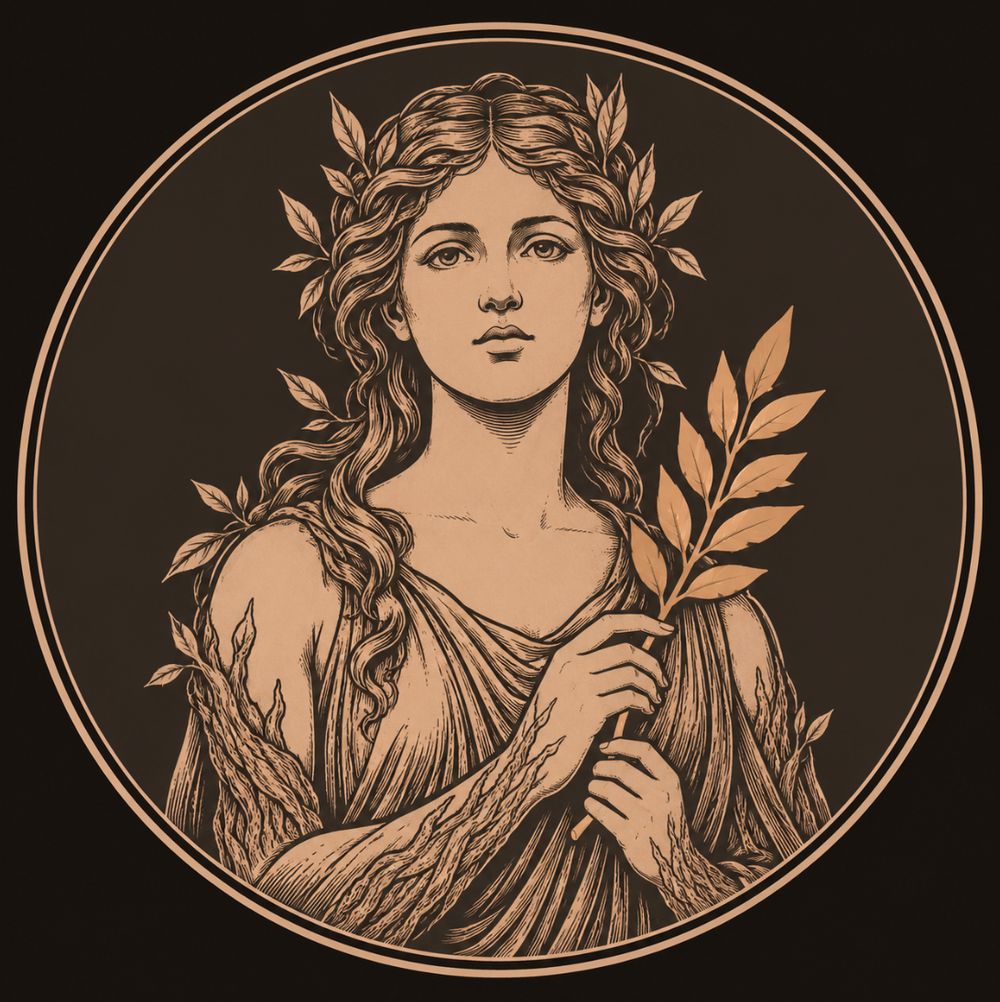
Daphne Character
Daphne is the naiad Apollo chases through the woods after Eros's arrow strikes him, and who escapes marriage only by praying to be turned into a laurel tree.
-
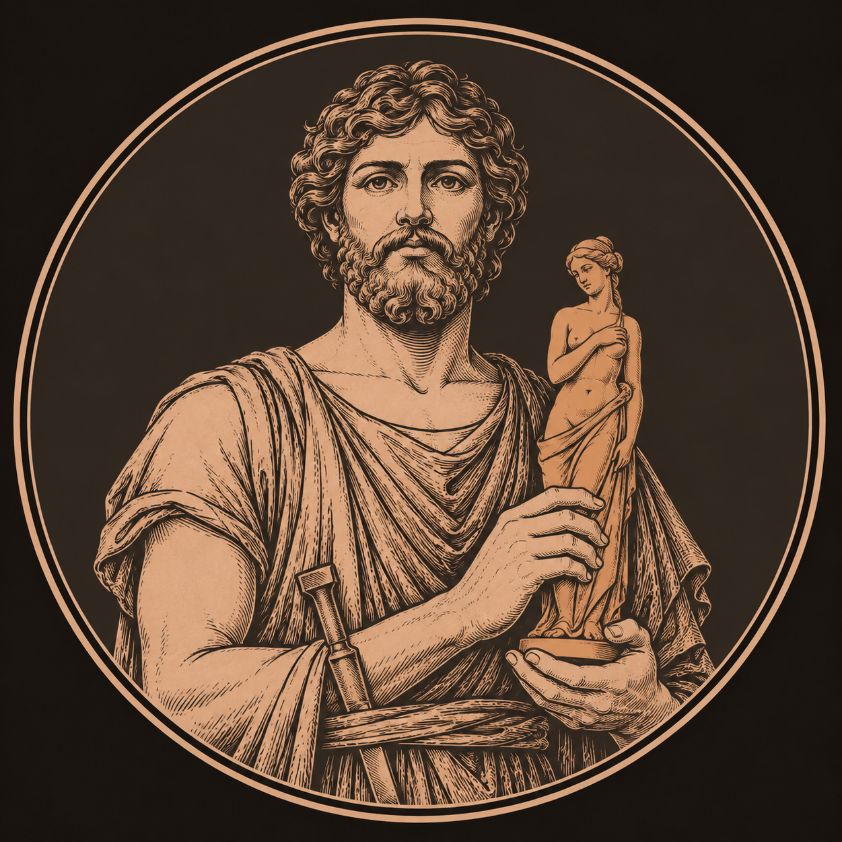
Pygmalion Character
Pygmalion is the sculptor who carves an ivory woman so lifelike he falls in love with his own work, and whose prayer at Aphrodite's festival brings the statue to life.
No Greek version of this story is attested at all; Ovid's Latin is the earliest and only ancient telling.
-
Narcissus and Echo Story
Narcissus and Echo is Ovid's story of two failed loves punished the same way. Echo, a nymph cursed to only repeat the last words spoken to her, falls for the beautiful Narcissus and wastes away to a voice alone when he rejects her. Narcissus is punished in turn: he falls in love with his own reflection in a pool, unable to possess what he sees, and wastes away until a flower is found where his body lay.
-
Eros and Psyche Story
Eros and Psyche survives only inside Apuleius's Latin novel The Golden Ass, told there as a story-within-a-story. A mortal princess so beautiful people worship her over Aphrodite marries an unseen husband on the condition she never look at him; when she breaks the condition with a lamp, she loses him and must complete four impossible tasks set by his furious mother before the couple can be reunited and Psyche made a goddess herself.
The cluster's real outlier: not a thin Greek myth Ovid expanded, but a story with no Greek original at all, first surviving in Apuleius, a different and later Latin author than Ovid.
-
The Abduction of Europa Story
The Abduction of Europa tells how Zeus, disguised as a tame white bull, wins the trust of the Phoenician princess Europa on a beach and carries her out to sea to Crete. There he reveals himself, and their union produces Minos, Rhadamanthys and, in later tradition, Sarpedon - Minos above all shaping Crete's own legendary kingship and law.
The cluster's one genuinely pre-Ovidian fact: Homer's Iliad already names Europa's sons by Zeus, though the fullest surviving abduction narrative is still Ovid's.
-
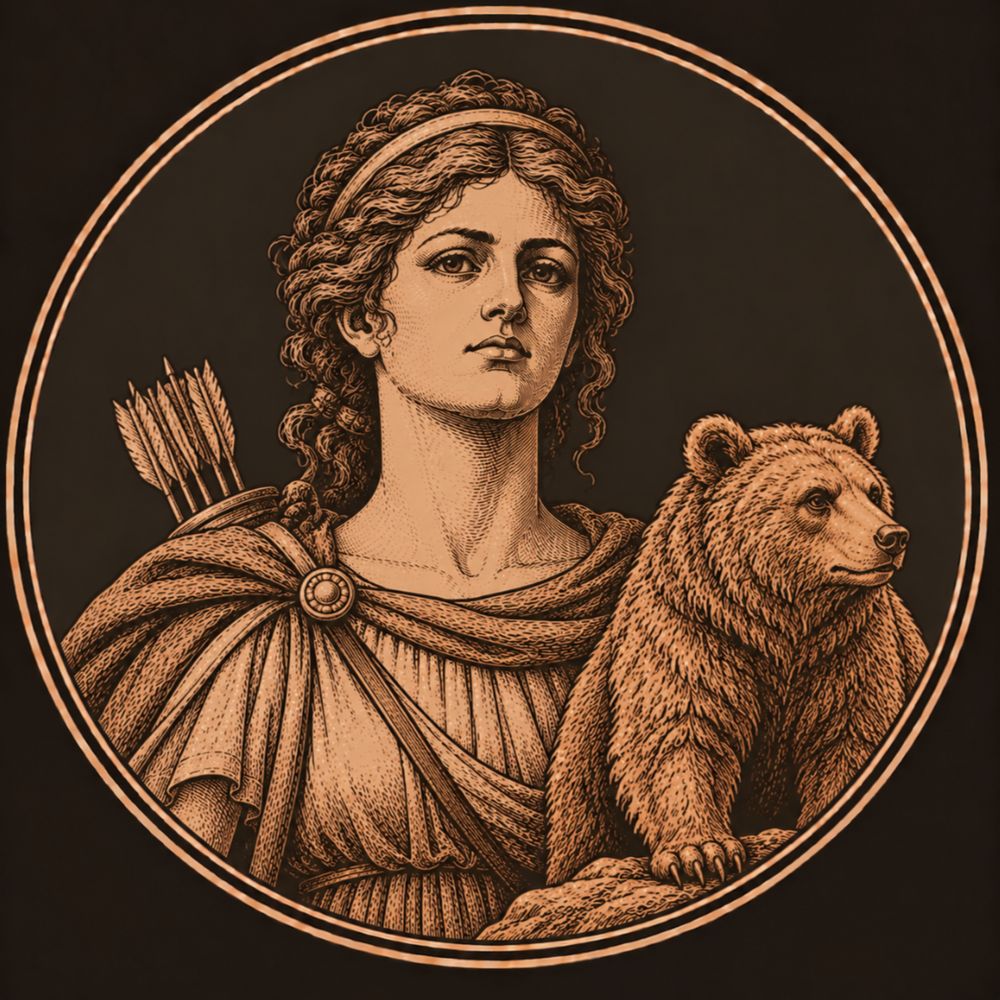
Callisto Character
Callisto is the Arcadian huntress and companion of Artemis whom Zeus wronged, mother of Arcas, changed into a bear and set among the stars.
Unlike the Ovid-only stories here, Callisto has an early Greek pedigree: Apollodorus reports Hesiod and other early poets on her change into a bear, well before Ovid tells it in Metamorphoses 2.
-
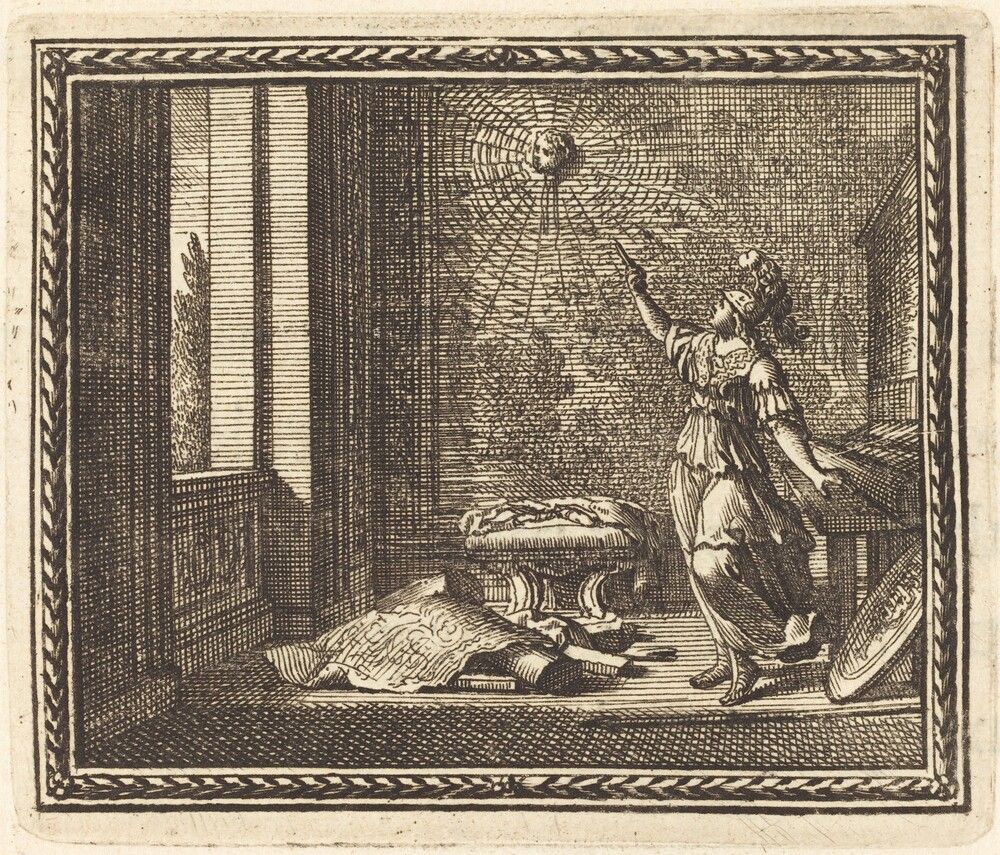
Arachne and Athena Story
Arachne was a mortal weaver of Lydia who would not admit that Athena had taught her, and who challenged the goddess to a contest. In Ovid's telling, Athena wove a warning about presumption while Arachne wove the gods' seductions, and Athena could find no flaw in her rival's work. Enraged, Athena tore the tapestry, struck Arachne, and after Arachne tried to hang herself, turned her into the first spider.
Like Pygmalion, a story whose only full ancient telling is Ovid's, in Metamorphoses 6; no earlier Greek version has been found.
-
Atalanta and the Race Story
Atalanta and the race is the myth of a huntress who would marry only the man who outran her, and who killed the men she caught. One suitor won with three golden apples from Aphrodite, which he dropped so she would stop to pick them up. Ovid names him Hippomenes and Apollodorus names him Melanion. Both end with the couple turned into lions.
The one story here with two full ancient versions, Ovid's Hippomenes and Apollodorus's Melanion, and both end with the lovers turned into lions.
Is the story of Eros and Psyche Greek or Roman?
Roman, and later Roman at that. It survives only inside Apuleius's 2nd-century-CE Latin novel The Golden Ass, a full century after Ovid, with no attested Greek original behind it at all - unlike the cluster's other myths, which at least have a thinner Greek record for Ovid to have expanded.
Apuleius, Metamorphoses 4.28-31
Which of these myths exist before Ovid?
Only Europa's, in outline. Homer's Iliad already names Minos and Rhadamanthys as Zeus and Europa's sons, centuries before Ovid, though the abduction scene itself is only fully narrated in his Metamorphoses. Daphne and Narcissus have independent Greek versions recorded by Pausanias, but he wrote after Ovid, so those are different accounts, not evidence of an earlier one. Pygmalion and Psyche have no pre-Ovidian, or in Psyche's case no Greek, version at all.
Homer, Iliad 14.321-322
Is Pygmalion's statue really named Galatea?
No. Ovid never names her - she is only "the ivory girl" or "the maiden" in his Latin - and no other ancient source names her either. Galatea is a post-classical addition with no ancient basis, and it is also a different figure entirely from the sea-nymph Galatea covered elsewhere on this site.
Ovid, Metamorphoses 10.243-297
Where Accounts Differ
- how much of each member myth predates Ovid, versus surviving only through his retelling
- This hub does not restate each member's own full question set or line-level citations; it draws the connecting line the cluster's members share - transformation as love's outcome - and the one question that actually separates them: how much, if any, of each story predates Ovid's Latin.
Related Terms
Referenced By
Sources
- Ovid, Metamorphoses 1.452-567
- Ovid, Metamorphoses 3.339-510
- Ovid, Metamorphoses 10.243-297
- Ovid, Metamorphoses 2.833-875
- Apuleius, Metamorphoses 4.28-6.24
- Homer, Iliad 14.321-322
- Pausanias, Description of Greece 8.20.2-4
- Pausanias, Description of Greece 9.31.7-9
- Apollodorus, Library 3.8.2
- Ovid, Metamorphoses 10.652-716
- Timothy Gantz, Early Greek Myth (1993)