Eurydice
Eurydice is the wife of Orpheus, who dies of a snake bite and is lost to him a second time in the underworld. Apollodorus says Pluto agreed to send her up if Orpheus did not turn round on the way, and he did. Ovid adds the wedding omen and her farewell, while Plato says the gods showed only a wraith.
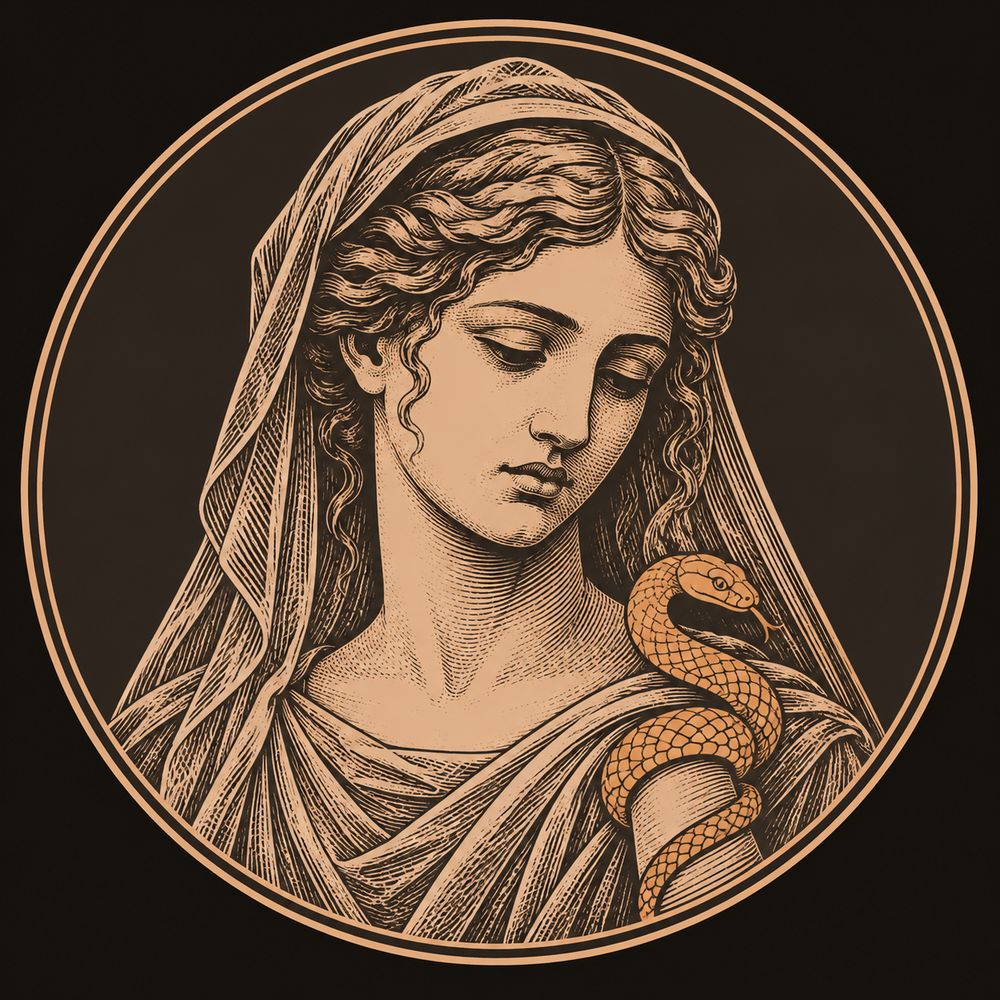
Eurydice with the serpent that bit her
Generated by AI from this page's own facts, not an ancient image or evidence of anything. How this site uses generated images
Sections on this page
Core Myth
Eurydice is the wife of Orpheus, the singer of Thrace. The sources give her little life of her own. Apollodorus says that when his wife Eurydice died, bitten by a snake, Orpheus went down to Hades, wanting to bring her up. He persuaded Pluto to send her up. The god promised to do so if Orpheus did not turn round on the way until he came to his own house. Orpheus disobeyed, turned and saw his wife, and she went back (Library 1.3.2).
Ovid gives the wedding. Hymen came to the marriage of Orpheus and Eurydice but brought no good omen, and his torch only smoked. Soon afterward the bride walked with a company of Naiads, and a serpent bit her ankle. She died (Metamorphoses 10.1-10). Ovid tells this in the same poem that holds the myths of love and transformation, but her story ends in no changed body. Orpheus went down by the Taenarian gate. The condition was that he must not turn his eyes back until he had left the valleys of Avernus, or the gift would be lost (Metamorphoses 10.50-52).
In Ovid the rulers of the dead, Hades and Persephone, are moved by his song and grant the request. Near the surface Orpheus turned to look, and she slipped away. Her last word was a farewell that he could barely hear. Ovid adds that she had nothing to complain of against her husband except that he loved her greatly (Metamorphoses 10.56-63).
Virgil tells her death differently in the fourth book of the Georgics. There the cause is told to the beekeeper Aristaeus. Eurydice fled from his pursuit along a river and trod on a huge water-snake in the grass. A chorus of her dryad companions cried out at her death (Georgics 4.453-460). Virgil says Proserpina had laid down the law of the return. Orpheus, forgetful and overcome in mind, looked back (Georgics 4.487-491).
Is Eurydice Hades' daughter?
No source checked here makes her a daughter of Hades. Apollodorus calls her the wife of Orpheus, Ovid places her among Naiads at her wedding, and Virgil gives her dryad companions. Hades and Persephone appear only as the rulers who allow her to leave. Two other Eurydices in the myths have named fathers, Lacedaemon and Clymenus, and neither is Hades.
Apollodorus, Library 1.3.2
Did Eurydice actually love Orpheus?
Apollodorus and Plato say nothing of her feelings. Ovid is the only source checked here that lets her answer. She does not reproach Orpheus when he looks back. Ovid asks what she had to complain of except that she was loved, and her last word is a farewell. That is the poet's judgment of her, not a speech of hers.
Ovid, Metamorphoses 10.1-85
What did Orpheus do to Eurydice?
Apollodorus says he disobeyed the condition, turned and saw his wife, and she went back. Virgil calls him forgetful and overcome in mind. Plato blames him for a different fault, that he came down alive instead of dying for love, and says the gods showed him only a wraith. Ovid has her go without blame for him.
Virgil, Georgics 4.487-491
Are there other women called Eurydice in Greek myth?
Yes. Apollodorus says Acrisius had a daughter Danae by Eurydice, a daughter of Lacedaemon. The Odyssey names the wife of Nestor as Eurydice, the eldest daughter of Clymenus. Neither woman has any link to Orpheus in those passages, so a source that says only Eurydice needs its context checked.
Apollodorus, Library 2.2.2
Later Traditions
Plato gives a harsher account in the Symposium. Phaedrus says the gods sent Orpheus back from Hades without his wife, showing him only a wraith of the woman for whom he came. He lacked the spirit to die for love as Alcestis did, and he had contrived to enter Hades alive. The gods then laid on him the penalty he deserved (Plato, Symposium). The full descent story is told on its own page.
Ovid ends the pair's story below the earth. After Orpheus's death his shade goes down and finds Eurydice. They walk together, sometimes with him ahead and sometimes behind, and he can look back at her without harm (Metamorphoses 11.61-66).
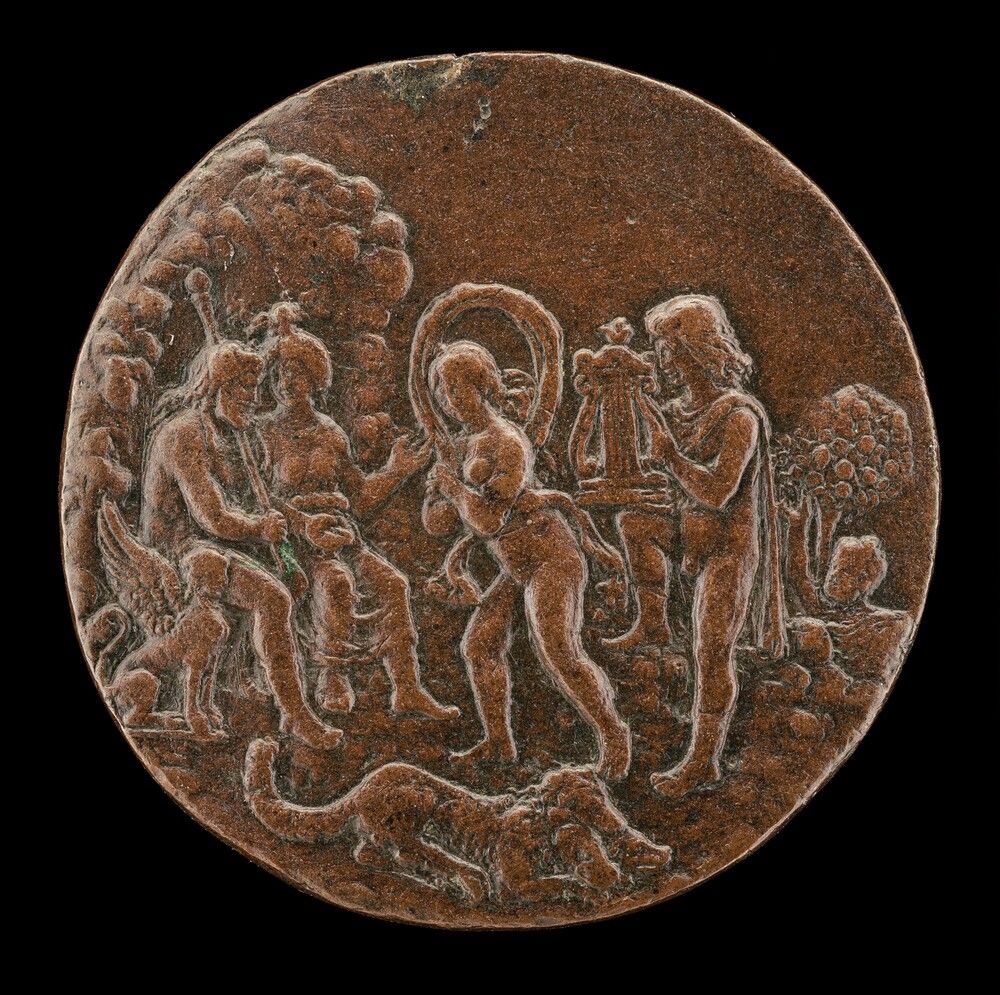
Orpheus and Eurydice Before Pluto and Proserpine - Master of the Orpheus Legend, fourth quarter 15th century, bronze//Medium brown patina
National Gallery of Art, Washington, DC, 1957.14.233. CC0
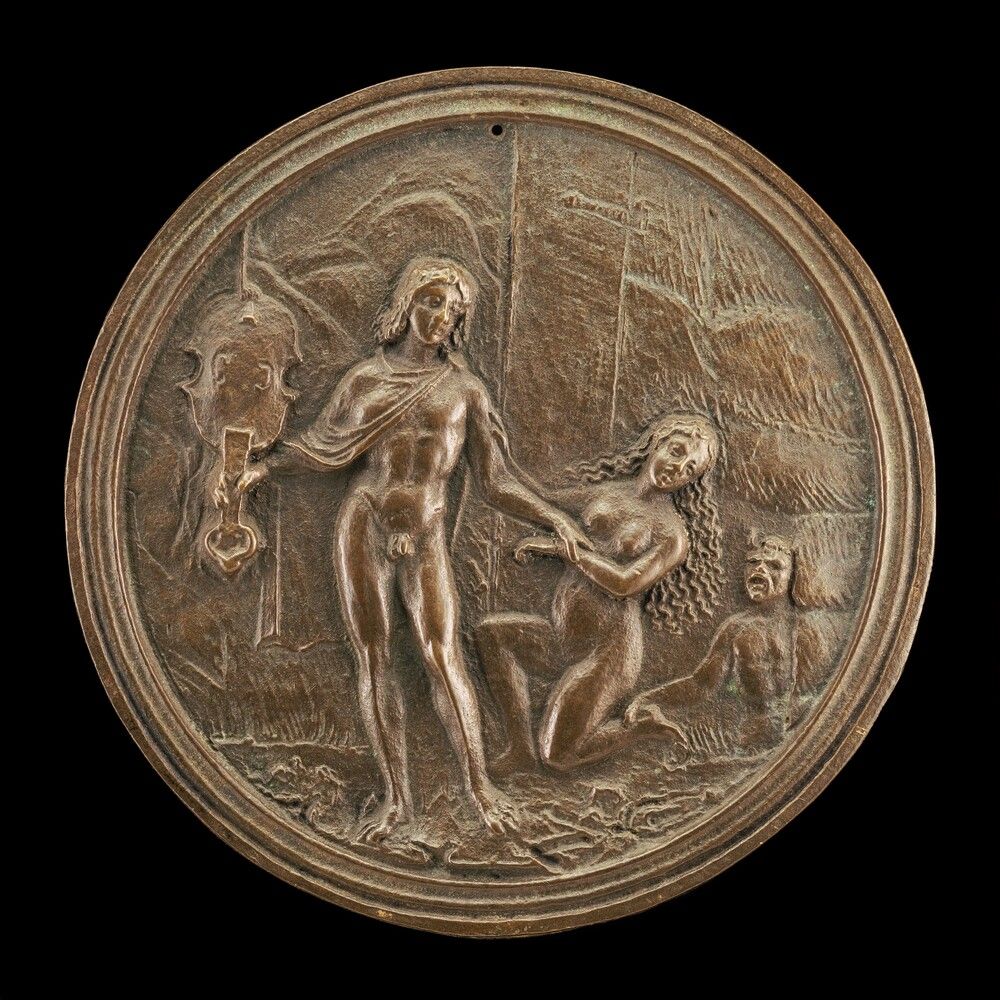
Orpheus Losing Eurydice - Attributed to Moderno, late 15th - early 16th century, bronze//Black patina
National Gallery of Art, Washington, DC, 1957.14.332. CC0
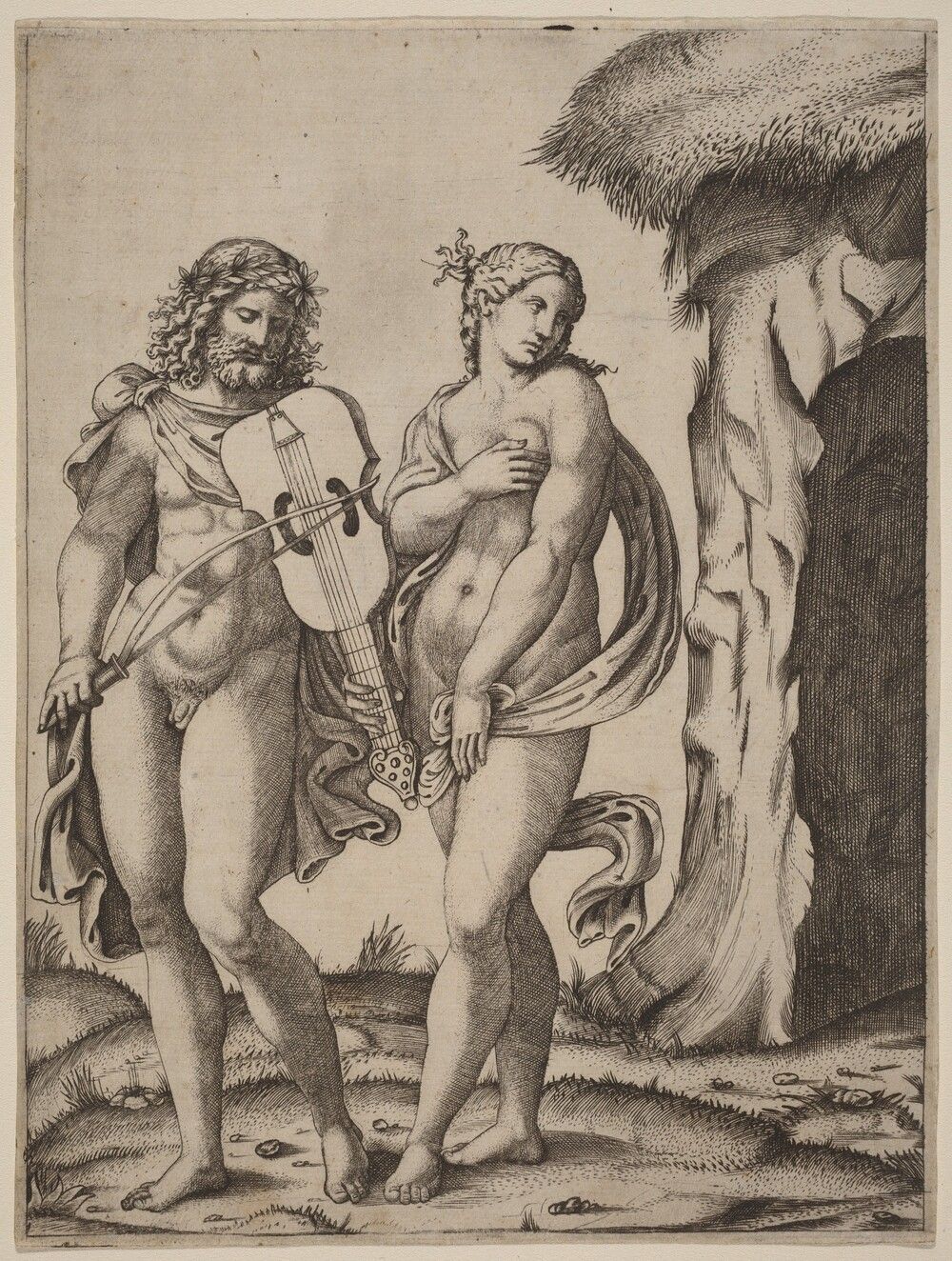
Orpheus and Eurydice - Marcantonio Raimondi, c. 1509, engraving on laid paper
National Gallery of Art, Washington, DC, 1941.1.65. CC0
Also Connected
1 recorded connection, each with the ancient line behind it.
Connected
-

Apollodorus says that when his wife Eurydice died of a snake bite, Orpheus went down to Hades to bring her up.
Where Accounts Differ
- how Eurydice died: at her wedding or fleeing Aristaeus
- release or wraith in Plato's Symposium
- Eurydice's death is told two ways. Apollodorus and Ovid say only that a snake bit her, and Ovid places it at her wedding among the Naiads. Virgil says she was fleeing Aristaeus when she trod on a water-snake.
- Whether Orpheus truly won her release differs by source. Apollodorus, Virgil and Ovid have her led up and lost when he looks back. Plato's Symposium has the gods show him only a wraith, as a penalty for his lack of courage.
Read the full source verification →
Mythology
Appears In
Related Terms
Referenced By
Sources
- Apollodorus, Library 1.3.2
- Apollodorus, Library 2.2.2
- Ovid, Metamorphoses 10.1-85
- Ovid, Metamorphoses 11.61-66
- Virgil, Georgics 4.453-527
- Plato, Symposium
- Homer, Odyssey 3.464-468