Fauns
Fauns are the rustic spirits of the Latin countryside, and Faunus is the single Italian god who shares their name.

Wild olive sprig sacred to Faunus
Generated by AI from this page's own facts, not an ancient image or evidence of anything. How this site uses generated images
Sections on this page
In Practice
Virgil makes Faunus the father of King Latinus and gives him an oracle at Albunea (Virgil, Aeneid 7.45-49; 7.81-95). Virgil and Ovid also use the plural Fauni for woodland powers, and Ovid lists them beside the satyrs as a separate kind (Ovid, Metamorphoses 1.192-193).
Virgil gives Faunus a short line of descent. Picus was Faunus' father, and the line of Picus ascends to Saturn. Faunus wed the nymph Marica of Laurentian stem, and their son was Latinus (Aeneid 7.45-49). Troubled by omens, Latinus seeks the oracle of his sacred sire in the groves under Albunea. The priest lies on the fleeces of the offered flock, sees flitting shapes and hears voices (Aeneid 7.81-95).
The plural fauns are a looser group. Virgil calls on the Fauni, gods of the countryside, together with the Dryad maidens (Virgil, Georgics 1.10-12). Ovid has Jupiter count fauns, satyrs and mountain-dwelling silvani among the rustic divinities (Metamorphoses 1.192-193). In the Marsyas story, fauns and satyrs mourn together (Metamorphoses 6.392-394). The satyrs have their own page. The passages checked here keep the two names apart and describe no body shape for the fauns. Later Roman and modern usage pictures the fauns as half-man and half-goat, equates Faunus with the Greek Pan and treats fauns and satyrs as one kind. That is a later equation, not a claim these passages make.
Roman writers tie Faunus to Greek Pan through the Lupercalia. Livy says the festival goes back to Evander's Arcadians, who honoured the Lycaean Pan, whom the Romans later called Inuus (Livy, Ab Urbe Condita 1.5). Livy does not use the name Faunus there. The Greek god has his own page, Pan.
Plutarch says the Luperci slaughter goats and also sacrifice a dog (Plutarch, Life of Romulus 21). A note in Perrin's translation glosses the Luperci as priests of Faunus, the Roman Pan. The date, the run and the rival origin stories are set out on the Lupercalia page.
What is a faun?
In the sources checked here a faun is one of the Fauni, rustic divine powers of the Latin countryside, named in the plural and kept apart from the one god Faunus. Virgil invokes them with the Dryad maidens as gods of country people, and Ovid counts them among the rustic divinities. Neither author tells a story about them or describes their form.
What do fauns do?
The passages checked here give them roles rather than deeds. Country people call on them in Virgil's Georgics, which invokes the Fauni among the gods of farming. In Ovid they weep with the satyrs, the nymphs and the herdsmen when Marsyas is flayed. The prophecy belongs to the god Faunus, not to the group: in the Aeneid Latinus sleeps on sheep fleeces at his shrine and hears voices.
Virgil, Georgics 1.10-12; Ovid, Metamorphoses 6.382-400; Virgil, Aeneid 7.81-95
What is a faun vs satyr?
In Ovid they are two names in one list. Jupiter counts fauns and satyrs separately among the rustic divinities, and the mourners of Marsyas include both, with the satyrs called his brothers. The sources checked here do not merge them or give fauns the satyrs' ties to Dionysus. The blended goat-legged figure is a later picture, not a claim these passages make.
Ovid, Metamorphoses 1.192-193; Ovid, Metamorphoses 6.382-400
Is Faunus the same god as Pan?
Not in the passages checked here. Livy names the god of the Arcadian feast as the Lycaean Pan and says the Romans later called him Inuus, with no mention of Faunus. The link between Faunus and Pan comes from Plutarch's translator, who glosses the Luperci as priests of Faunus, the Roman Pan. The identification is a Roman and later reading, not a line in Virgil.
Which tree was sacred to Faunus?
A wild olive. In the last book of the Aeneid a bitter-leaved wild olive had stood on the battlefield, dear to Faunus and honoured by sailors saved from the sea, who nailed offerings to it. The Trojans cut it down to clear the ground, and Aeneas's spear stuck fast in its root while Turnus prayed to Faunus.
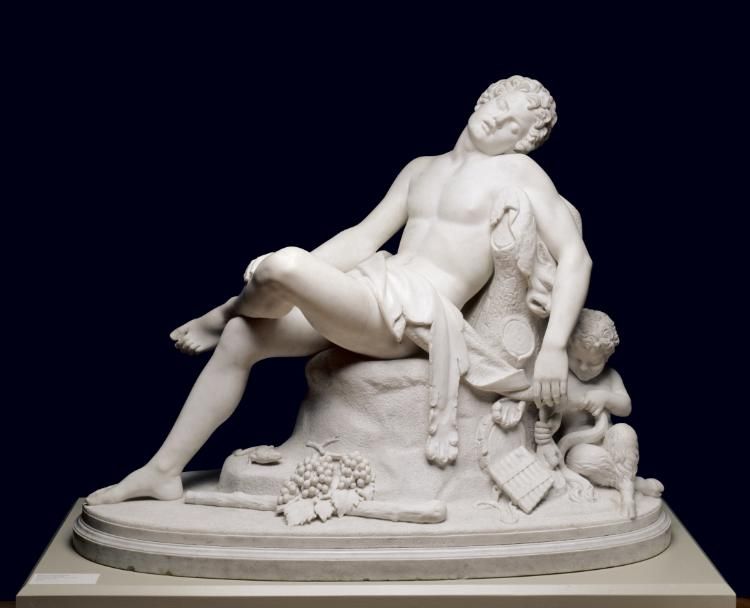
The Sleeping Faun - United States, modeled 1864, carved c. 1870, marble
The Cleveland Museum of Art, Cleveland, OH, 1997.15. CC0
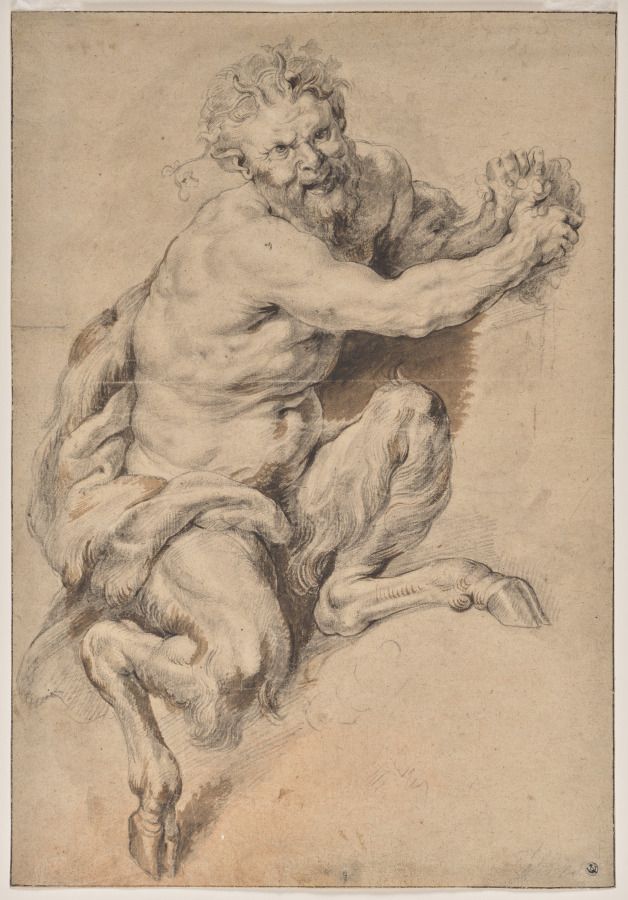
A Faun Grasping a Bunch of Grapes - Flanders, after 1616–18, black chalk and brush and brown wash; framing lines in pen and black ink
The Cleveland Museum of Art, Cleveland, OH, 1943.341. CC0
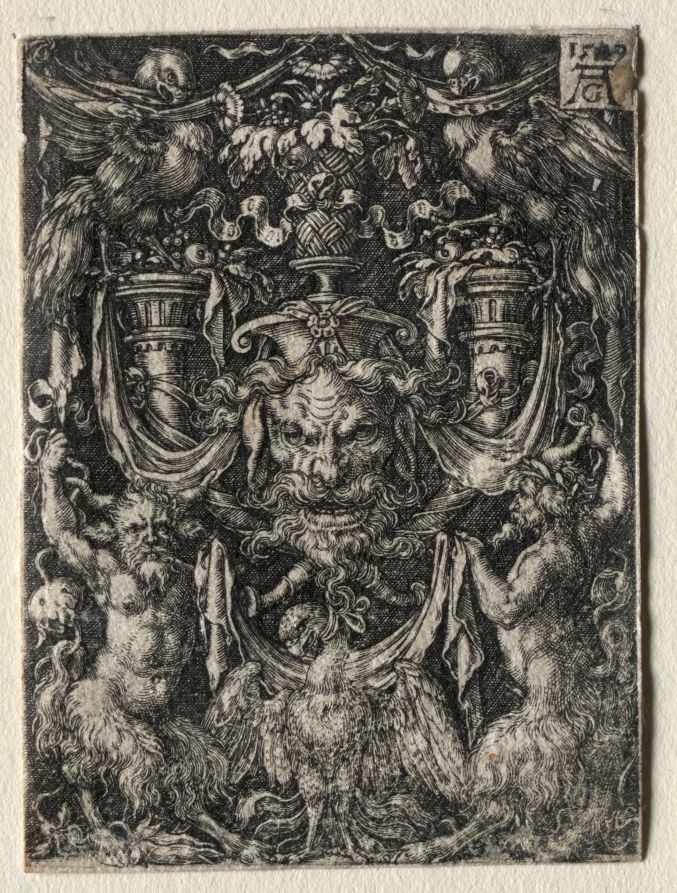
Ornament Design with a Mask and an Eagle between Two Fauns Below - Germany, 1509, engraving
The Cleveland Museum of Art, Cleveland, OH, 1922.498. CC0