Ithaca
Ithaca is the island home of Odysseus in Greek myth, the land he spends the Odyssey trying to reach.
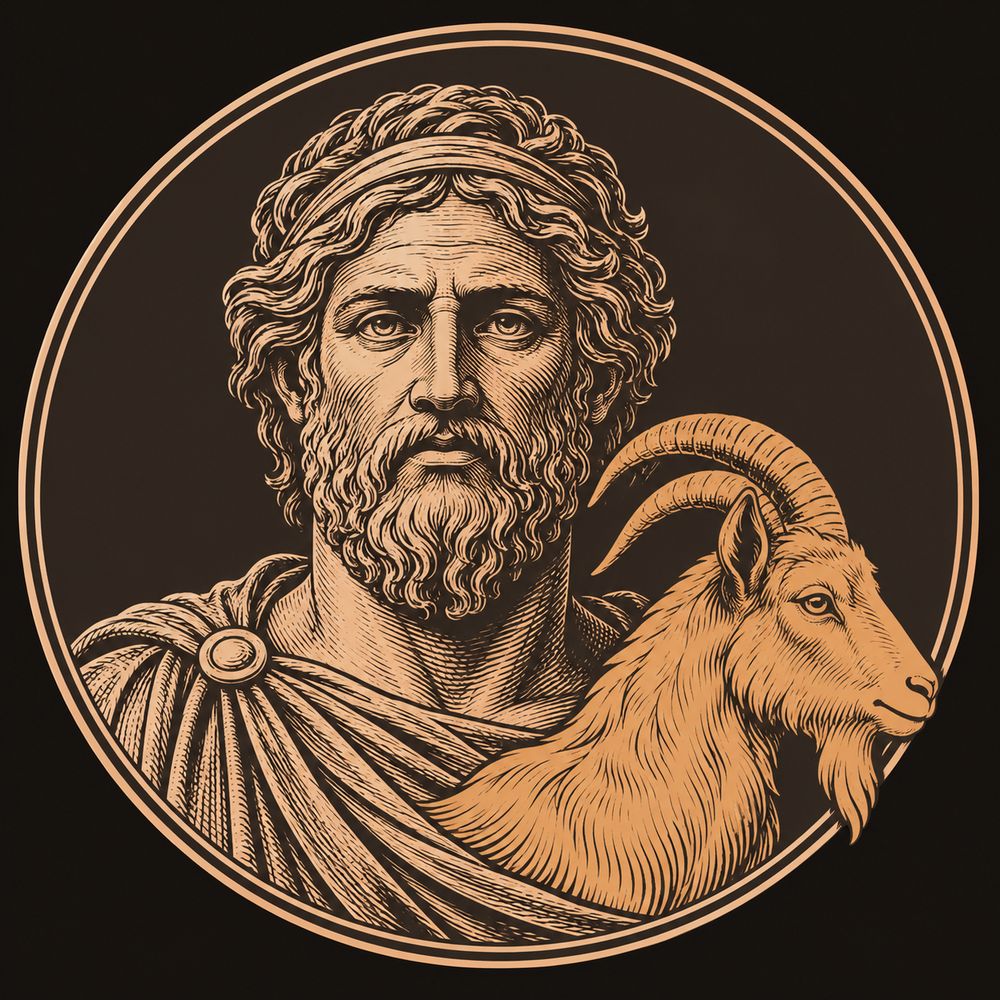
Goat grazing on Ithaca's rugged pasture
Generated by AI from this page's own facts, not an ancient image or evidence of anything. How this site uses generated images
Sections on this page
In Practice
Homer calls it clear-seen and rugged, a good nurse of young men, and sets it among Dulichium, Same and Zacynthus. Later sources add that Odysseus dies there, struck down by his son Telegonus.
Odysseus names the island himself. He says he dwells in clear-seen Ithaca, where there is a wooded mountain, Neriton, conspicuous from afar. Around it lie many isles close together: Dulichium, Same and wooded Zacynthus. He calls it a rugged isle, but a good nurse of young men (Odyssey 9.21-27). Telemachus tells Menelaus that Ithaca has no wide courses and no meadow, only pasture for goats (Odyssey 4.605-606). When the ship brings the hero home, it puts in at a harbor of Phorcys, the old man of the sea, in the land of Ithaca (Odyssey 13.102-112). Its king is Odysseus, son of Laertes.
Other characters place him there from far away. Proteus tells Menelaus that the man shedding tears on the island of Calypso is the son of Laertes, whose home is in Ithaca (Odyssey 4.555-560). In the same speech Proteus tells Menelaus that the gods will send him to the Elysian plain (Odyssey 4.561-569).
The men who crowd the palace are not all Ithacans. Telemachus counts the suitors for his father: 52 from Dulichium, 24 from Same, 20 from Zacynthus and 12 from Ithaca itself (Odyssey 16.245-253).
Apollodorus carries the story past the Odyssey. In his Epitome Odysseus marries Callidice and reigns over the Thesprotians. He then hands that kingdom to his son and goes to Ithaca, where he finds Poliporthes, whom Penelope had borne to him (Epitome 7.35). Telegonus, son of Odysseus and Circe, comes to the island and drives off some cattle. Odysseus defends them, and Telegonus wounds him with a spear barbed with the spine of a sting-ray. Odysseus dies of the wound (Epitome 7.36).
Why is Ithaca, Greece so famous?
Ithaca is famous as the home of Odysseus, the goal of the Odyssey's long voyage. The poem already treats the name as widely known. Athena, speaking to Odysseus after he lands, calls the island rugged and narrow, but not poor, since corn and wine grow there. She adds that the name of Ithaca has reached even the land of Troy. The fame comes from the hero, not from wealth or size.
Homer, Odyssey 13.237-249
Is Ithaca Greek or Trojan?
Ithaca is Greek. Its king Odysseus fought on the Greek side at Troy. In Euripides, the herald Talthybius tells the captive Trojan queen Hecuba that Odysseus, king of Ithaca, has taken her to be his slave. The island appears in the poem among Achaean lands, and the suitors come from neighbouring islands of the same group.
Euripides, Trojan Women 271-278
What did Odysseus do in Ithaca?
He reclaims his house. In Book 22 of the Odyssey he strips off his rags and springs to the great threshold with the bow. He then addresses the suitors and says he will shoot at a mark no man has yet hit. Before that, on landing, he is hidden from view: Athena sheds a mist over him to make him unrecognizable.
Homer, Odyssey 22.1-5
Who is the god of Ithaca?
The sources checked here name no patron god of the island. Athena is the divine figure closest to the hero in Ithaca, since she disguises him on his arrival. The only place on the island tied to a deity by name is the harbor of Phorcys, the old man of the sea, where the ship lands.
Homer, Odyssey 13.187-196
Where This Appears
Referenced By
Sources
- Homer, Odyssey 9.21-27
- Homer, Odyssey 4.605-606
- Homer, Odyssey 13.102-112
- Homer, Odyssey 4.555-560
- Homer, Odyssey 4.561-569
- Homer, Odyssey 16.245-253
- Homer, Odyssey 13.187-196
- Homer, Odyssey 13.237-249
- Homer, Odyssey 22.1-5
- Apollodorus, Epitome 7.35
- Apollodorus, Epitome 7.36
- Euripides, Trojan Women 271-278