Polydectes
Polydectes was the king of the island of Seriphos, a son of Magnes and brother of Dictys in Apollodorus's Library. He wanted Perseus's mother Danaë. To get the grown Perseus out of the way, he staged a collection of wedding gifts, and Perseus promised him the Gorgon's head. Perseus returned with Medusa's head and turned Polydectes to stone. Dictys became king after him.
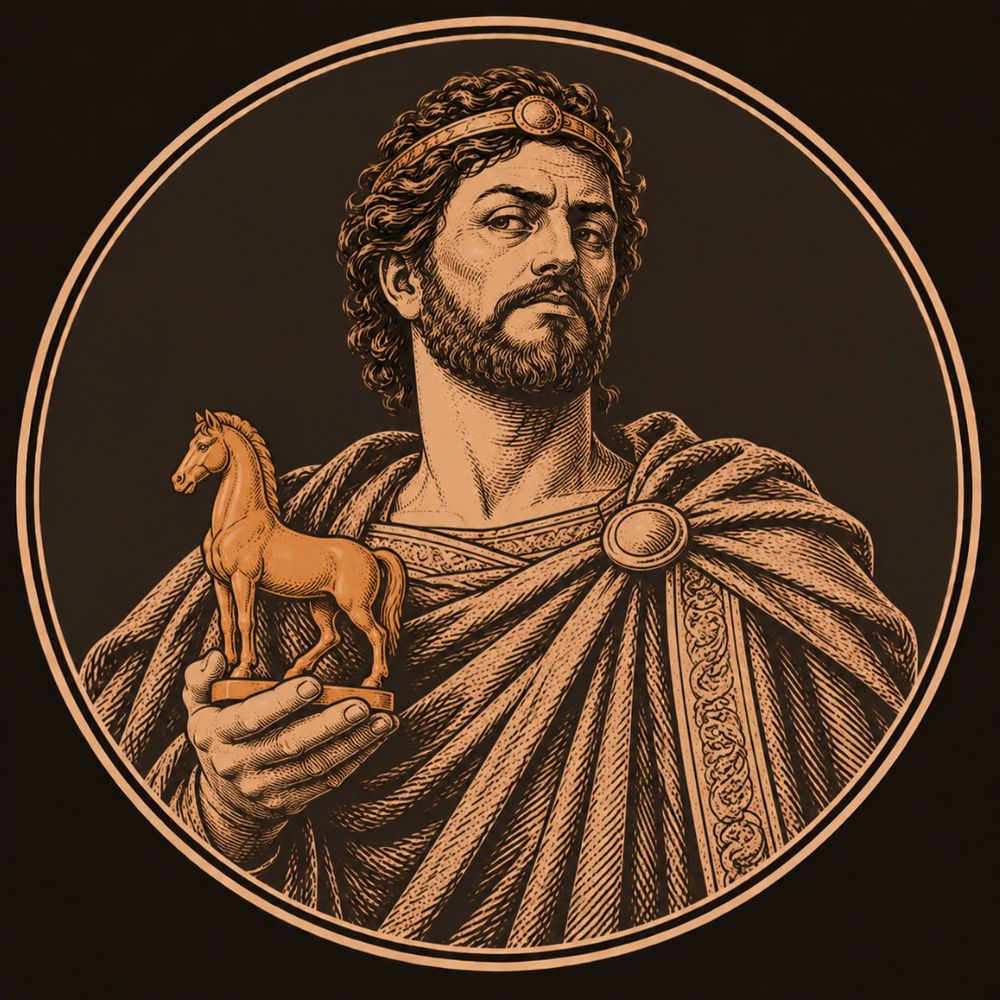
Polydectes, bronze medallion illustration
Generated by AI from this page's own facts, not an ancient image or evidence of anything. How this site uses generated images
Sections on this page
Core Myth
Apollodorus's Library makes Polydectes and Dictys the sons of Magnes and a Naiad nymph, and says the two brothers settled the island of Seriphos. When Acrisius cast his daughter Danaë and her baby into the sea in a chest, it washed ashore on Seriphos. Dictys took up the boy Perseus and raised him. By then Polydectes ruled the island.
Apollodorus says Polydectes fell in love with Danaë but could not get near her, because Perseus had grown to manhood. So he called his friends together, Perseus among them, on a pretext. He claimed to be collecting gifts toward a bride-price for Hippodamia, daughter of Oenomaus. Perseus boasted that he would not refuse even the Gorgon's head. Polydectes asked the others for horses. When Perseus brought no horse, the king held him to his word and ordered him to bring the head.
That demand launched the whole quest told in Perseus and Medusa: the Graeae, the nymphs with the winged sandals, and the beheading of Medusa among the Gorgons.
While Perseus was away, Polydectes turned to force. Apollodorus says that on his return Perseus found Danaë and Dictys taking refuge at the altars because of the king's violence. Perseus walked into the palace, where Polydectes had gathered his friends. He turned his own face away and held up the head. Everyone who looked at it became stone, each fixed in the pose he happened to strike. Perseus then made Dictys king of Seriphos. He returned his borrowed equipment to Hermes and gave the head to Athena.
Pindar's Pythian 12 frames the same ending as a grim wedding present. Perseus repaid Polydectes with a deadly wedding gift, the head itself, for the long slavery of his mother and her forced marriage bed. Pythian 10 says Perseus came back bringing stony death to the islanders. Ovid's Metamorphoses gives Polydectes a last scene of his own. The king refuses to believe Perseus ever killed Medusa and calls the feat a fraud. Perseus answers by showing him the proof, and the king's face becomes bloodless stone.
Why did Polydectes want Medusa's head?
He did not really want the head. He wanted Perseus gone. Apollodorus says Polydectes loved Danaë but could not reach her while her grown son stood in the way. He gathered his friends on the pretext of collecting a wedding gift for Hippodamia and asked each for horses. Perseus had boasted he would bring even the Gorgon's head. With no horse to offer, he was held to that boast. The king expected the errand to kill him.
Apollodorus, Library 2.4.2
What did Polydectes do to Danae?
The sources disagree sharply. Apollodorus says Polydectes could not get access to Danaë at first, and later used violence. Perseus came home to find her and Dictys sheltering at the altars from him. Pindar's Pythian 12 goes further, speaking of her long slavery and a forced marriage bed. Strabo says the king meant to marry her against her will. Hyginus's fable 63 reverses all of this: Polydectes marries Danaë and raises Perseus himself.
Pindar, Pythian Ode 12.10-16
What did Perseus do to Polydectes?
He turned him to stone with Medusa's head. Apollodorus says Perseus entered the palace while Polydectes sat among his friends. Looking away himself, he held up the head, and every man who saw it was frozen in his pose. Ovid adds that the king had just called Medusa's death a fraud, so the head served as proof. Afterward Perseus made Dictys king of Seriphos.
Apollodorus, Library 2.4.3
Who killed Polydectes?
In most ancient accounts Perseus did, using the severed head of Medusa. Apollodorus, Pindar's Pythian 12 and Ovid's Metamorphoses all end the king's life that way. Strabo widens the punishment to all the Seriphians who had helped him. One Latin handbook breaks ranks. Hyginus's fable 63 has Polydectes die with no killer named, and his funeral games become the place where Perseus accidentally kills Acrisius.
Ovid, Metamorphoses 5.177-249
Was Polydectes the brother of Dictys?
Apollodorus says so twice. He names both as sons of Magnes and a Naiad nymph who settled Seriphos, and he calls Polydectes the brother of Dictys when the king enters Perseus's story. The two brothers end on opposite sides. Dictys raises Perseus and shelters Danaë, and Perseus makes him king once Polydectes is stone. Hyginus's fable 63 calls Dictys only a fisherman and says nothing of any kinship with the king.
Apollodorus, Library 1.9.6
Later Traditions
Not every ancient writer made Polydectes a villain. Hyginus's Fabulae, a Latin handbook, gives a gentler story in fable 63. There the fisherman Dictys brings the mother and child to King Polydectes, who marries Danaë and raises Perseus in a temple of Minerva. When Acrisius comes to reclaim them, Polydectes pleads for them. He later dies of no stated cause, and at his funeral games Perseus's discus strikes Acrisius by accident. The very next fable, 64, returns to the familiar plot. Polydectes grows afraid of Perseus's prowess, plots to kill him by treachery, and is turned to stone.
The island kept the story. Strabo's Geography says Seriphos was the scene of the tale of Dictys and the chest. He adds that Perseus turned all the Seriphians to stone, because they had helped the king try to marry Danaë against her will. Strabo adds that comic poets joked the island was so rocky because the Gorgon had made it so. Pausanias saw the scene painted at Athens. In the picture gallery beside the Acropolis gateway, one painting showed Perseus traveling to Seriphos, carrying Medusa's head to Polydectes.
Also Connected
2 recorded connections, each with the ancient line behind it.
Enemies
-

Danae and Dictys fled to the altars from his violence; Hyginus instead has him marry her.
Connected
-

Polydectes held Perseus to his boast of bringing the Gorgon's head.
Where Accounts Differ
- how Polydectes treated Danaë
- how Polydectes died
- who was turned to stone on Seriphos
- whether Dictys was his brother
- How Polydectes treated Danaë differs by source. Apollodorus says he could not reach her while Perseus was grown and later drove her to the altars with violence. Pindar's Pythian 12 speaks of her long slavery and forced bed, and Strabo of a marriage against her will. Hyginus's fable 63 has Polydectes marry her and raise Perseus kindly.
- How Polydectes died is not settled. Apollodorus, Pindar and Ovid have Perseus turn him to stone with Medusa's head. Hyginus's fable 63 has him die with no cause given, his funeral games becoming the scene of Acrisius's death, while fable 64 in the same collection has him petrified after plotting against Perseus.
- Who else was turned to stone varies. Apollodorus petrifies Polydectes and the friends gathered in his palace. Ovid's scene centers on the king alone. Pindar's Pythian 10 and 12 and Strabo's Geography extend the stony death to the islanders of Seriphos, and Strabo says they had helped the king against Danaë.
- The family link rests on Apollodorus, who makes Polydectes and Dictys brothers, sons of Magnes and a Naiad. Hyginus's fable 63 names Dictys only as a fisherman and gives no kinship to the king.
Read the full source verification →
Mythology
Appears In
Related Terms
Referenced By
Sources
- Apollodorus, Library 1.9.6
- Apollodorus, Library 2.4.1
- Apollodorus, Library 2.4.2
- Apollodorus, Library 2.4.3
- Pindar, Pythian Ode 12.10-16
- Pindar, Pythian Ode 10.45-48
- Ovid, Metamorphoses 5.177-249
- Strabo, Geography 10.5.10
- Pausanias, Description of Greece 1.22.7
- Hyginus, Fabulae 63
- Hyginus, Fabulae 64
- Timothy Gantz, Early Greek Myth (1993)