Peleus
Peleus was a son of Aeacus of Aegina who went into exile after the killing of his half-brother Phocus and settled in Phthia. He sailed with the Argonauts and hunted the Calydonian boar. The gods gave him the Nereid Thetis as a wife, and their son was Achilles. The Iliad shows him grown old at home while his only son fights and dies young at Troy.
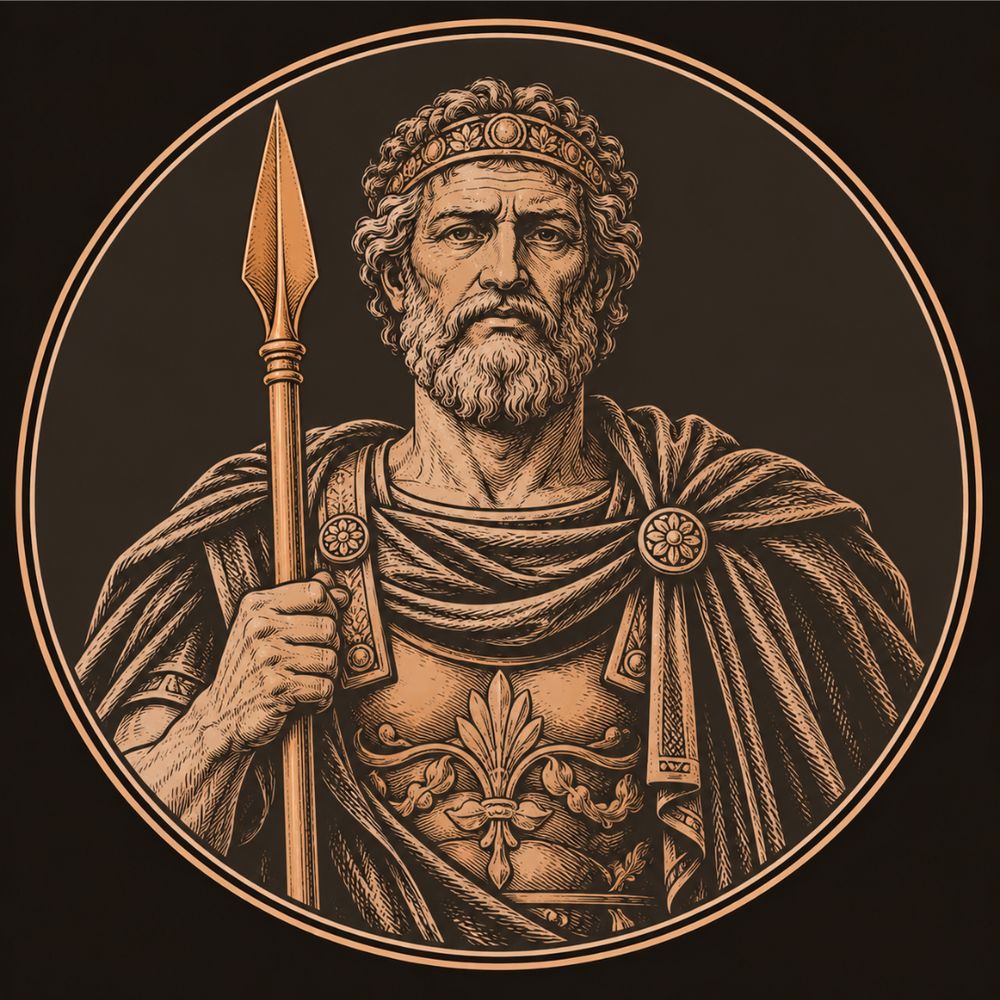
Peleus, bronze medallion illustration
Generated by AI from this page's own facts, not an ancient image or evidence of anything. How this site uses generated images
Sections on this page
See Peleus in the Greek family tree.
Core Myth
Apollodorus makes Peleus and Telamon the sons of Aeacus, whom Zeus fathered on the nymph Aegina, on the island later named after her. Aeacus also fathered Phocus on the Nereid Psamathe. Phocus excelled at athletics, and his half-brothers plotted against him. The lot fell to Telamon, who killed him with a thrown quoit, and Peleus helped hide the body. When the murder came out, Aeacus drove both brothers from the island.
Peleus fled to Phthia, where King Eurytion purified him and gave him his daughter Antigone and a third of the land. On the hunt for the Calydonian boar he threw a spear at the animal and killed Eurytion by accident. Apollodorus's list of the boar hunters names him beside the huntress Atalanta. He fled again, to Acastus at Iolcus, and was purified a second time. There Astydamia, the wife of Acastus, fell in love with him. Rejected, she drove his wife to hang herself and told Acastus that Peleus had tried to seduce her.
Acastus would not kill a man he had purified himself. He took Peleus hunting on Mount Pelion instead, hid his sword in cow dung while he slept, and left him. Apollodorus says the centaurs caught Peleus and would have killed him, but Chiron saved him and gave back the sword. Peleus later took Iolcus with Jason and the Dioscuri, killed Astydamia, and marched his army into the city between the pieces of her body.
His marriage came out of a quarrel among the gods. Zeus and Poseidon both wanted Thetis, until Themis warned that her son would be mightier than his father. Pindar has Themis name Peleus as the most pious man on the plain of Iolcus. On Chiron's advice Peleus seized Thetis and held on while she became fire, water and a beast. The gods celebrated the wedding on Pelion with feasting and song.
Their son was Achilles. Apollodorus says Thetis hid the baby in fire by night to burn away his mortal part. Peleus saw him writhing in the flames and cried out, and Thetis left for the sea and the Nereids. Peleus took the child to Chiron to be raised. In the Iliad, Achilles tells Priam that the gods gave his father wealth, a kingdom and a goddess for a wife. They also gave him only one son, doomed to an early death far from home.
Who is Peleus in Greek mythology?
Peleus was a son of Aeacus of Aegina and the father of Achilles. Exiled for the killing of his half-brother Phocus, he was purified by Eurytion at Phthia and later by Acastus at Iolcus. He hunted the Calydonian boar, sailed with the Argonauts, and survived a plot by Acastus on Mount Pelion. The gods then gave him the sea goddess Thetis as a wife. Apollodorus tells most of this. Homer adds the picture of Peleus grown old at home while Achilles fights at Troy.
Apollodorus, Library 3.13.1-3.13.7
Why did Peleus and Telamon kill Phocus?
Apollodorus says it was jealousy: Phocus, their half-brother by the Nereid Psamathe, excelled at athletics. The two brothers plotted against him and drew lots. Telamon killed Phocus with a quoit during a match, and Peleus helped hide the body in a wood. Ovid instead calls Peleus guilty of his brother's blood, and Apollonius blames both brothers. Pindar refuses to tell the story at all, saying silence is often wiser.
Apollodorus, Library 3.12.6
How did Peleus win the hand of Thetis in Greek mythology?
He wrestled her. In Apollodorus, Chiron advised Peleus to seize Thetis and hold her fast. She turned into fire, then water, then a beast, but he did not let go until she returned to her own shape. Ovid has Proteus give the advice and Thetis become a bird, a tree and a tigress. The match was arranged from above: Zeus and Poseidon gave her up after a prophecy that her son would outdo his father.
Apollodorus, Library 3.13.5
What gifts did the gods give at the wedding of Peleus and Thetis?
Apollodorus names two. Chiron gave Peleus an ash spear, and Poseidon gave him the immortal horses Balius and Xanthus. The Iliad says Chiron cut the spear on Pelion and that only Achilles could wield it. Achilles also says the gods gave Peleus a splendid suit of armour on his wedding day. Hector stripped that armour from Patroclus, which is why Thetis goes to Hephaestus for a new set.
Apollodorus, Library 3.13.5
Why did Thetis abandon Peleus?
Because he interrupted her attempt to make their son immortal. Apollodorus says Thetis secretly laid the baby in the fire at night to destroy the mortal part he inherited from his father. Peleus saw the child writhing in the flames and cried out. Thwarted, Thetis left her son and went to the Nereids. Apollonius tells the same story and adds that she left in anger and never came back to his house.
Apollodorus, Library 3.13.6
What promise does Thetis make to Peleus in Euripides Andromache?
At the end of the play, Thetis appears to Peleus as he mourns his grandson Neoptolemus. She tells him to bury the body at Delphi and wait in the cave of the Sepian rock. From there she will come with fifty Nereids to fetch him. She promises to free him from mortal ills and make him a god. He will live with her in the halls of Nereus and see Achilles on the island of Leuce.
Euripides, Andromache 1231-1272
Later Traditions
The poets tell the courtship differently. In the Iliad, Thetis tells Hephaestus that Zeus forced her alone of the sea goddesses to marry a mortal. She endured his bed against her will. Catullus says the opposite: Peleus burned for Thetis and she did not scorn a mortal husband. Ovid gives the prophecy about her son to Proteus, not Themis. His Proteus also teaches Peleus to bind her in her sleep so she cannot escape through her changing shapes.
Apollonius of Rhodes names both sons of Aeacus in his catalogue of the Argonauts, and says they left Aegina in exile after killing their brother Phocus. On the voyage home, Thetis appears to Peleus alone on the Tyrrhenian shore with a message from Hera. Apollonius then explains the pain it causes him. She had not come to him since she left their marriage in anger, when he cried out on seeing their baby in the fire.
Euripides puts Peleus on stage as an old man in the Andromache. He arrives in time to stop Menelaus from killing Andromache and her son, and attacks Menelaus as a coward who could not keep his own wife. After the death of his grandson Neoptolemus, Thetis appears and promises to make Peleus a god who will live with her in the halls of Nereus. Apollodorus gives him a plainer end: the sons of Acastus drove him out of Phthia, and he died.
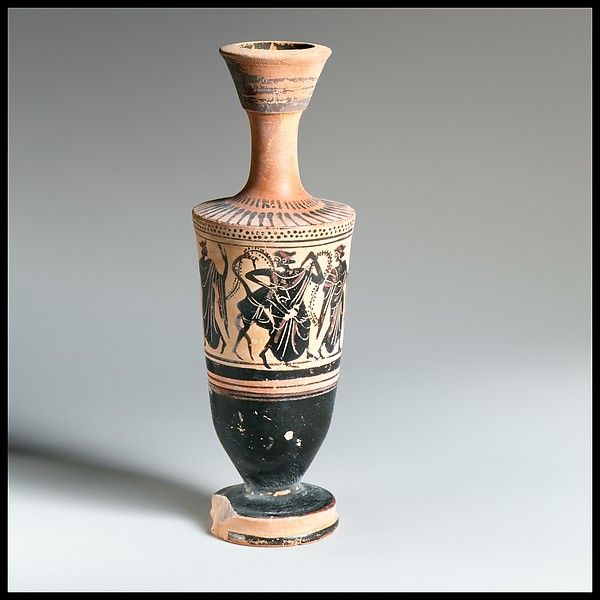
1 recorded relation, each with the ancient line behind it.
Children
-

Peleus is the mortal father of Achilles; he interrupts Thetis's attempt to make the child immortal and brings him to Chiron to be raised.
Also Connected
11 recorded connections, each with the ancient line behind it.
Allies
-
In Euripides's Andromache, the aged Peleus arrives in time to stop Menelaus from killing Andromache and her son.
-

Peleus lays waste Iolcus together with Jason and the Dioscuri in revenge on Acastus.
Enemies
-
In Euripides's Andromache the aged Peleus stops Menelaus from killing Andromache and her child and denounces him as a coward.
Connected
-
Peleus is the brother of Telamon, the father of Ajax, which makes him Ajax's uncle.
-
Atalanta wrestles Peleus at the funeral games for Pelias and wins.
-

Hera says she raised Thetis herself and gave her to Peleus as his wife.
-
Peleus is his grandfather. In Euripides's Trojan Women, Neoptolemus sails from Troy in haste on hearing that Acastus has driven Peleus from his kingdom.
-
When Menoetius brought the young exile from Opus, Peleus received Patroclus into his house, reared him and named him Achilles's squire.
-

Themis warns that Thetis's son will be stronger than his father and counsels that she be given to Peleus, the most pious man of Iolcus.
-

Peleus wins the Nereid Thetis by holding her through her changes of shape, and the gods celebrate the marriage on Pelion.
-

Zeus fathers Aeacus on Aegina, making him the grandfather of Peleus.
Where Accounts Differ
- who killed Phocus
- who prophesied about Thetis's son
- who advised Peleus to seize Thetis
- whether Thetis consented to the marriage
- whether Apollo attended the wedding
- the name of Acastus's wife
- whether Peleus took Iolcus alone
- whether Peleus died or became immortal
- Who killed Phocus differs by source. Apollodorus (Library 3.12.6) has the lot fall to Telamon, with Peleus helping to hide the body. Apollonius (Argonautica 1.90-94) says the two brothers killed him together. Ovid (Metamorphoses 11.266-270) calls Peleus guilty of his brother's blood, and in his account Peleus believes Psamathe sent the wolf that savages his herds (11.352-409). Pindar (Nemean Odes 5.9-18) declines to tell the story.
- The warning about Thetis's son comes from Themis in Pindar (Isthmian Ode 8.26-47), Apollodorus (Library 3.13.5) and Apollonius (Argonautica 4.790-809), from Prometheus in a variant Apollodorus records, and from Proteus in Ovid (Metamorphoses 11.221-265). Apollodorus also records that Thetis refused Zeus because Hera had raised her, and Hera claims in the Iliad (24.59-63) that she herself gave Thetis to Peleus. Pindar (Nemean Odes 5.22-37) instead makes the marriage Zeus's reward for Peleus's refusal of Acastus's wife.
- Who advised the capture also varies: Chiron in Apollodorus (Library 3.13.5), Proteus in Ovid (Metamorphoses 11.221-265). Pindar says Chiron arranged the marriage (Nemean Odes 3.55-58) and that Peleus overcame fire and lions to win her (Nemean Odes 4.54-68).
- Thetis's consent is contested. In the Iliad (18.429-434) she says she endured a mortal's bed against her will. Catullus (64.19-30) says she did not scorn to marry a mortal.
- Apollo's place at the wedding differs. Hera in the Iliad (24.59-63) says Apollo sat at the feast with his lyre, and Pindar (Nemean Odes 5.22-37) has him lead the Muses' song on Pelion. Catullus (64.278-302) says Apollo and his sister stayed away.
- Acastus's wife is Astydamia in Apollodorus (Library 3.13.3) and Hippolyte in Pindar (Nemean Odes 4.54-68, 5.22-37). Pindar arms Acastus with the sword of Daedalus for an ambush, where Apollodorus has him hide Peleus's own sword in dung.
- Apollodorus (Library 3.13.7) has Peleus sack Iolcus with Jason and the Dioscuri. Pindar (Nemean Odes 3.32-36) says he took it alone, without an army.
- The order of events differs in Ovid, who sends Peleus to be purified by Acastus only after his marriage and his stay with Ceyx at Trachis (Metamorphoses 11.352-409). In Apollodorus the purification at Iolcus comes before the marriage.
- Peleus's end is disputed. Euripides (Andromache 1231-1272) has Thetis promise to make him immortal and take him to the halls of Nereus. Apollodorus (Epitome 6.13) says he was expelled from Phthia by the sons of Acastus and died.
- Apollonius of Rhodes is cited from the site's local copy of R. C. Seaton's translation, which carries no line numbers. The book-and-line references were checked against the Greek text on Perseus (Scaife).
Read the full source verification →
Mythology
Appears In
Related Terms
Referenced By
Sources
- Apollodorus, Library 1.8.2
- Apollodorus, Library 1.9.16
- Apollodorus, Library 3.12.6
- Apollodorus, Library 3.13.1-3.13.7
- Apollodorus, Library 3.13.5
- Apollodorus, Library 3.13.6
- Apollodorus, Epitome 6.13
- Homer, Iliad 16.140-144
- Homer, Iliad 18.84-87
- Homer, Iliad 18.429-434
- Homer, Iliad 24.59-63
- Homer, Iliad 24.534-542
- Pindar, Nemean Odes 3.32-36
- Pindar, Nemean Odes 3.55-58
- Pindar, Nemean Odes 4.54-68
- Pindar, Nemean Odes 5.9-18
- Pindar, Nemean Odes 5.22-37
- Pindar, Isthmian Ode 8.26-47
- Euripides, Andromache 545-610
- Euripides, Andromache 1231-1272
- Catullus, Carmina 64.19-30
- Catullus, Carmina 64.278-302
- Apollonius of Rhodes, Argonautica 1.90-94
- Apollonius of Rhodes, Argonautica 4.790-809
- Apollonius of Rhodes, Argonautica 4.851-879
- Ovid, Metamorphoses 11.217-220
- Ovid, Metamorphoses 11.221-265
- Ovid, Metamorphoses 11.266-270
- Ovid, Metamorphoses 11.352-409