Phocis
Phocis is a region of central Greece, and the Phocians are its people.
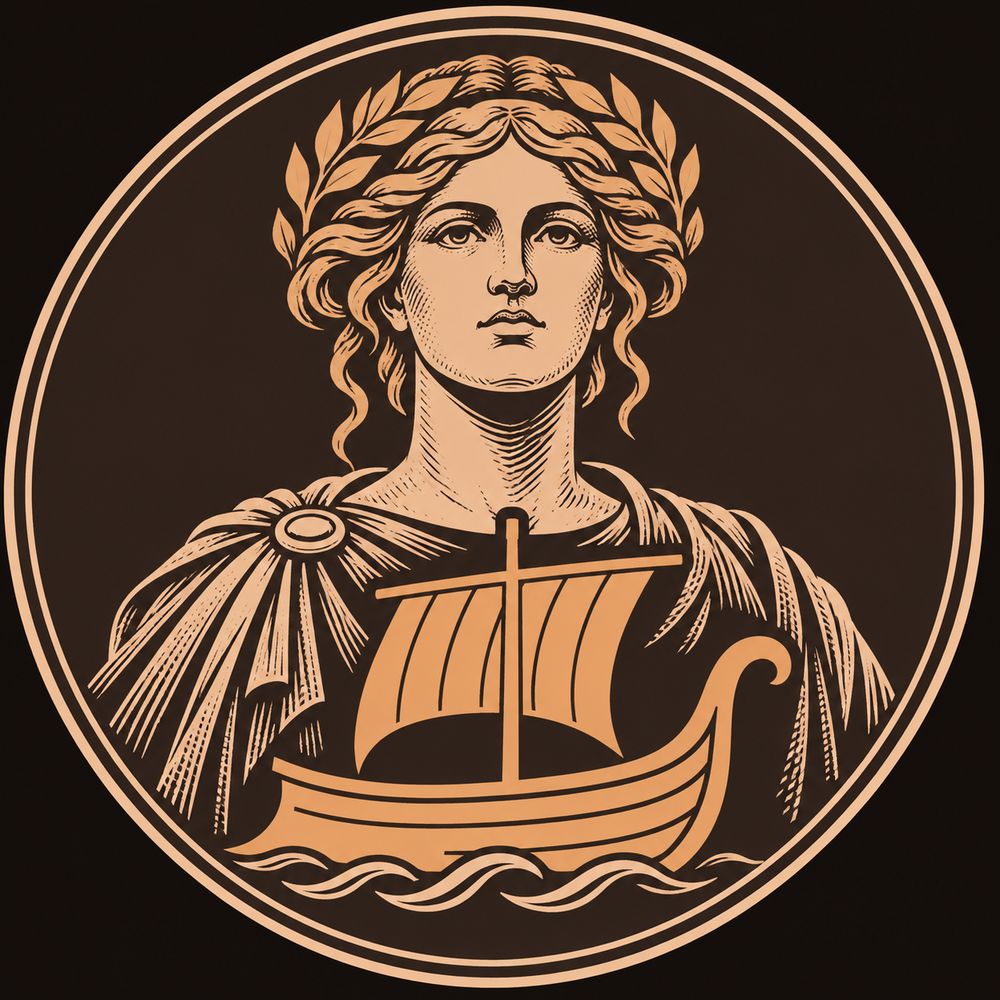
Black ship of the Phocian contingent
Generated by AI from this page's own facts, not an ancient image or evidence of anything. How this site uses generated images
Sections on this page
In Practice
Homer's Iliad lists Pytho, Crisa, Daulis and Panopeus among the Phocian towns (Iliad 2.517-526). Tragedy makes it the home of Strophius, who raised Orestes beside his own son Pylades (Apollodorus, Epitome 6.24).
The Iliad's catalogue gives the region its shape. The Phocians held Cyparissus and rocky Pytho, sacred Crisa, Daulis and Panopeus, and Lilaea by the springs of the river Cephisus. Forty ships followed their leaders, and the Phocians were drawn up beside the Boeotians on the left (Iliad 2.517-526). Pytho is the old name of the sanctuary at Delphi. Euripides has Pylades call Delphi the citadel of Phocis (Euripides, Orestes 1090-1100).
The region matters most in the story of Orestes. Apollodorus says Electra smuggled her brother out and gave him to Strophius the Phocian to bring up, together with Pylades (Apollodorus, Epitome 6.24). Pindar places the aged Strophius at the foot of Parnassus (Pindar, Pythian Ode 11.34-37). Orestes later goes back to Mycenae in company with Pylades and kills his mother and Aegisthus (Apollodorus, Epitome 6.25). The tale of Orestes is told on his own page.
Phocis returns at the end of the house's story. In Euripides's Electra the Dioscuri tell Pylades to go home with Electra and to conduct Orestes to the land of Phocis (Euripides, Electra 1280-1285). The wider cluster of homecomings is gathered in the returns from Troy.
Who were the Phocians?
In the Iliad they are a contingent of the Greek army. Schedius and Epistrophus, sons of Iphitus, son of Naubolus, command them. They bring forty black ships and hold towns around Parnassus, including Pytho and Crisa. The poet places them next to the Boeotians on the left of the line. Later, Pausanias calls the Phocian chieftains the longest and fiercest attackers of the wealth of the god at Delphi.
Where did Pylades come from?
Pylades is the son of Strophius the Phocian, so Phocis is his home. Apollodorus says Strophius brought up Orestes together with Pylades, his own son. In Euripides's Iphigenia in Tauris Pylades speaks of shame before Argos and Phocis of the many mountain folds if he returned without Orestes. Pausanias adds that Orestes married Electra to Pylades, and that Hellanicus gives their children as Medon and Strophius.
Was Phocus the founder of Phocis?
The sources checked here do not say so. Hesiod says Aeacus loved a goddess who bore Phocus. Pindar calls Phocus the son of the goddess Psamatheia, born by the shore of the sea. He places Phocus at an altar of Zeus with the sons of Endais, among the Aeacids of Aegina. Neither passage connects Phocus to the region of Phocis.
Did the Phocians ever attack Delphi?
Pausanias says they did. He lists the attacks the sanctuary suffered from a Euboean pirate, the Phlegyans, Pyrrhus son of Achilles, part of the army of Xerxes and the Gauls. Among them he names the Phocian chieftains, whose assaults on the god's wealth lasted longest and were the fiercest. The passage does not say when these attacks took place.
Where This Appears
Referenced By
Sources
- Homer, Iliad 2.517-526
- Apollodorus, Epitome 6.24
- Apollodorus, Epitome 6.25
- Pindar, Pythian Ode 11.34-37
- Euripides, Orestes 1090-1100
- Euripides, Electra 1280-1285
- Euripides, Iphigenia in Tauris 674-685
- Pausanias, Description of Greece 2.16.7
- Pausanias, Description of Greece 10.7.1
- Hesiod, Theogony 1008-1010
- Pindar, Nemean Odes 5.9-18