Parnassus
Parnassus is the mountain in central Greece above Delphi, where Apollo built his oracle.
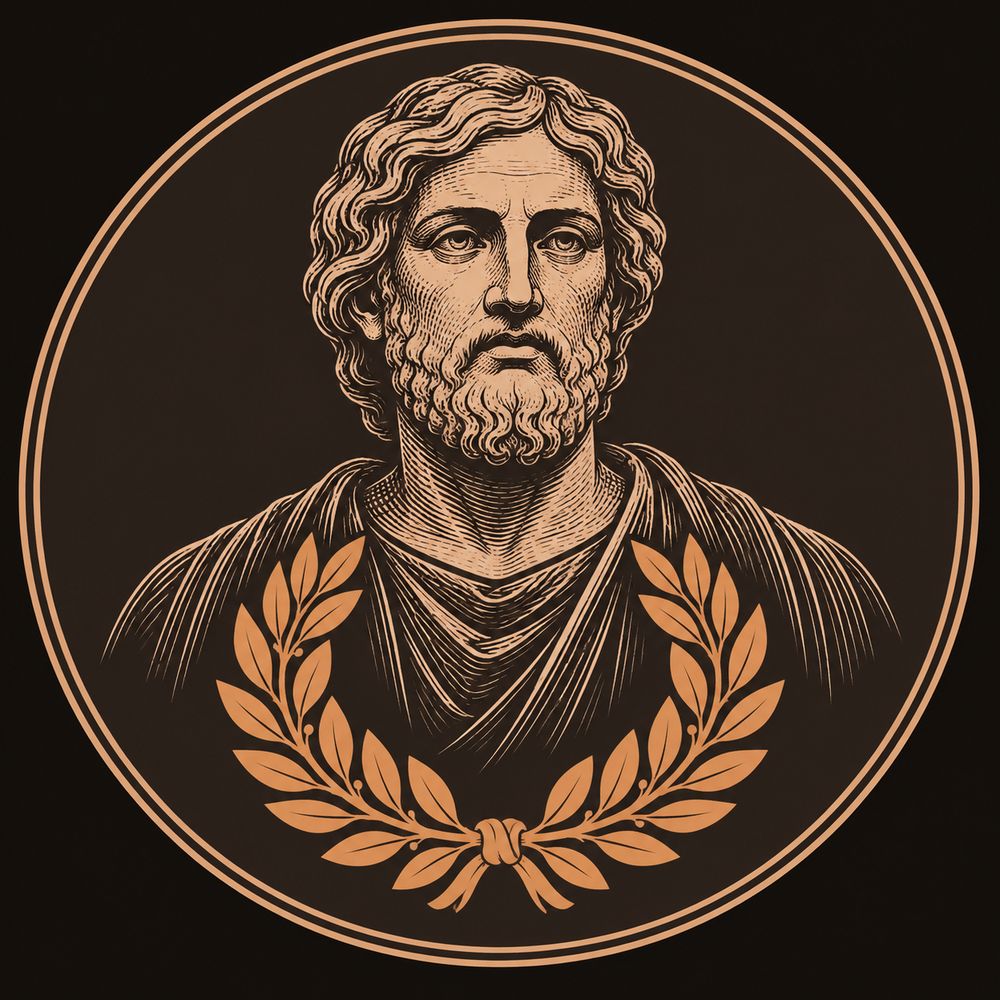
Laurel wreath from the mountain
Generated by AI from this page's own facts, not an ancient image or evidence of anything. How this site uses generated images
Sections on this page
In Practice
The Homeric Hymn to Apollo places the temple site at Crisa beneath snowy Parnassus (Homeric Hymn to Apollo 280-300). Poets also set Zeus's fixed stone, Deucalion's landing and Odysseus's boar hunt on this mountain.
The hymn describes the spot closely. A cliff hangs over it from above, and a hollow, rugged glade runs beneath. There Apollo resolved to make his lovely temple, the sanctuary of Delphi (Homeric Hymn to Apollo 280-300).
Hesiod says Zeus set the stone that Cronos had swallowed in the wide-pathed earth at goodly Pytho under the glens of Parnassus, as a sign and a marvel to mortal men (Hesiod, Theogony 497-506). The same passage says Zeus freed his father's brothers from their bonds. They remembered the kindness and gave him thunder and the thunderbolt. Hesiod names these brothers elsewhere, and the Cyclopes page covers them.
Apollodorus brings the flood hero to the mountain. He says Deucalion floated in the chest for nine days and nights and drifted to Parnassus, where he landed and sacrificed to Zeus (Apollodorus, Library 1.7.2). Pindar says Pyrrha and Deucalion came down from Parnassus and made their first home, by the ordinance of Zeus (Pindar, Olympian Ode 9.40-60). The full account is in the story of Deucalion's flood.
The Odyssey ties the mountain to the family of Odysseus's mother. Autolycus tells his daughter's husband to name the child Odysseus. He says the boy may come, once grown, to his mother's kin at Parnassus (Homer, Odyssey 19.394-412). The young Odysseus later climbs the wooded mountain with the sons of Autolycus and kills a great boar there (Homer, Odyssey 19.428-451).
Why is Mount Parnassus famous?
It is famous as the mountain of Delphi. The Homeric Hymn to Apollo says Apollo chose a hollow glade under its cliff for his temple. Pindar also names it as the source of the laurel garland that crowned a Pythian victor, who returned from Cirrha wearing it.
Who is Parnassus in Greek mythology?
In the passages checked here, Parnassus is a mountain and never a person. Hesiod, the Homeric Hymn to Apollo, Pindar, Aeschylus and Homer all use the name for a place, and none gives it parents or a story of its own. The sources checked here do not say whether a hero called Parnassus lay behind the name, so this page does not claim one.
Where did Deucalion's chest come to rest?
Apollodorus says it came to rest on Parnassus after nine days and nine nights on the sea. Deucalion then landed and sacrificed to Zeus, the god of Escape. Pindar gives a shorter version in which Pyrrha and Deucalion simply came down from Parnassus. Neither passage names a particular peak or spot on the mountain.
How does Parnassus figure in the story of Odysseus?
It is where Odysseus's maternal grandfather Autolycus lived. The Odyssey says the boy was to visit his mother's kin there once grown. The poem then tells of a hunt on the wooded slopes, where Odysseus struck a great boar on the shoulder with his spear and the beast fell dead.
Does Parnassus appear in Aeschylus's Libation Bearers?
Yes, as a dialect. Orestes plans to reach the palace gate disguised as a stranger with Pylades, as a guest and ally of the house. He says both of them will speak the speech of Parnassus. He names Apollo's decree as the reason for the plan.
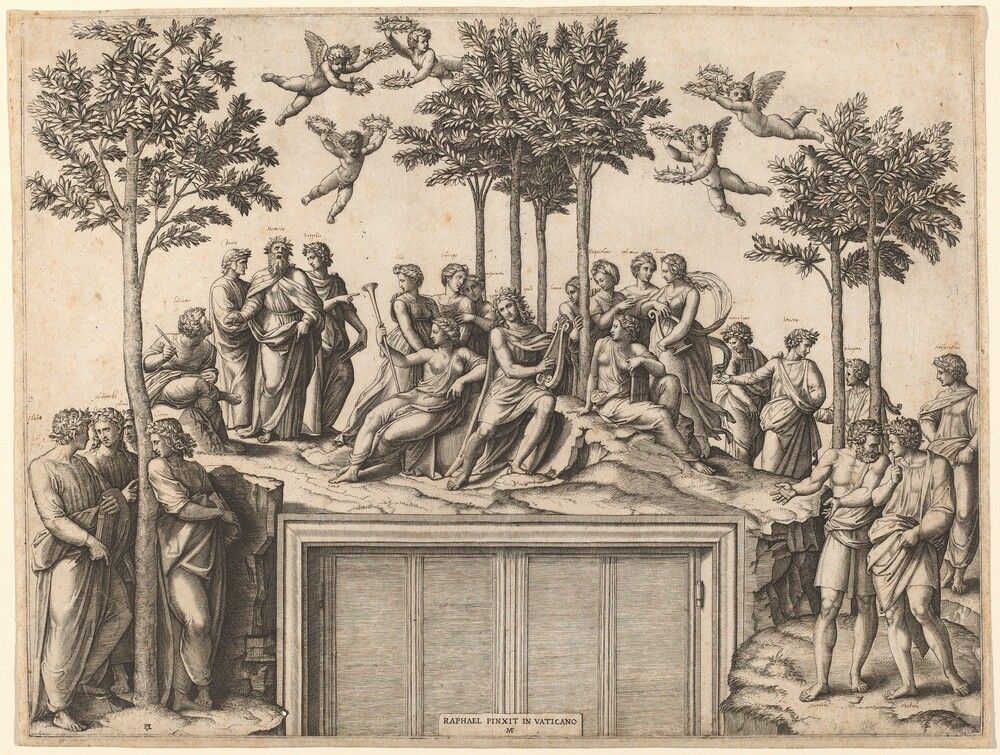
Apollo on Parnassus - Marcantonio Raimondi after Raphael, 1515/1520, engraving
National Gallery of Art, Washington, DC, 1972.31.1. CC0
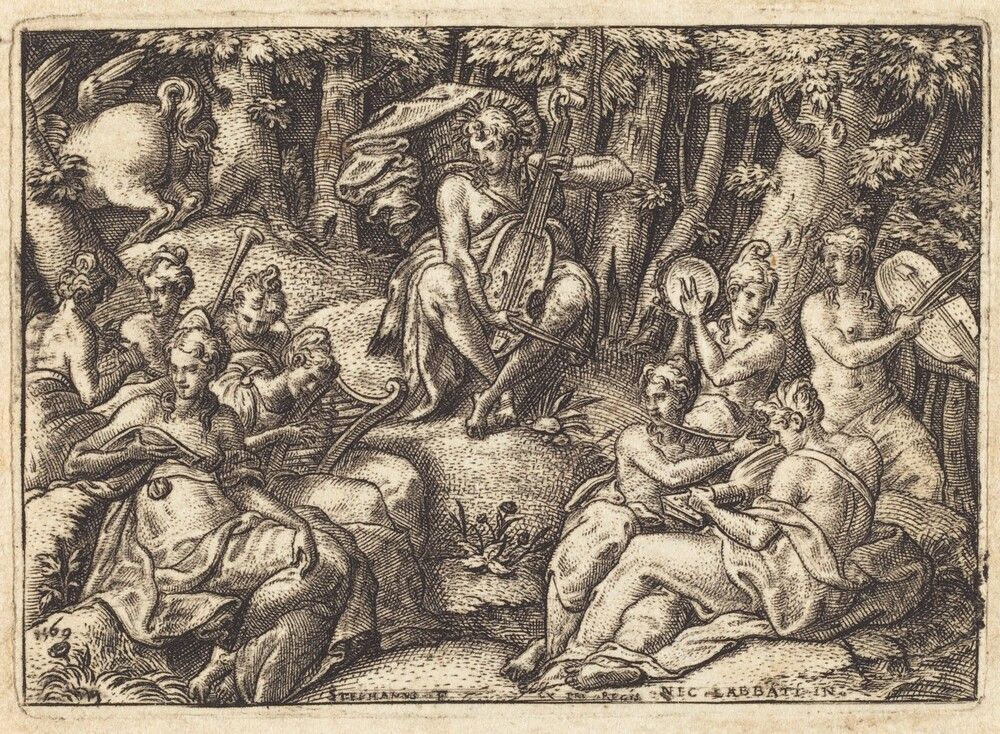
Apollo on Mount Parnassus - Etienne Delaune after Niccolò dell' Abate, 1569, engraving
National Gallery of Art, Washington, DC, 1982.20.1. CC0
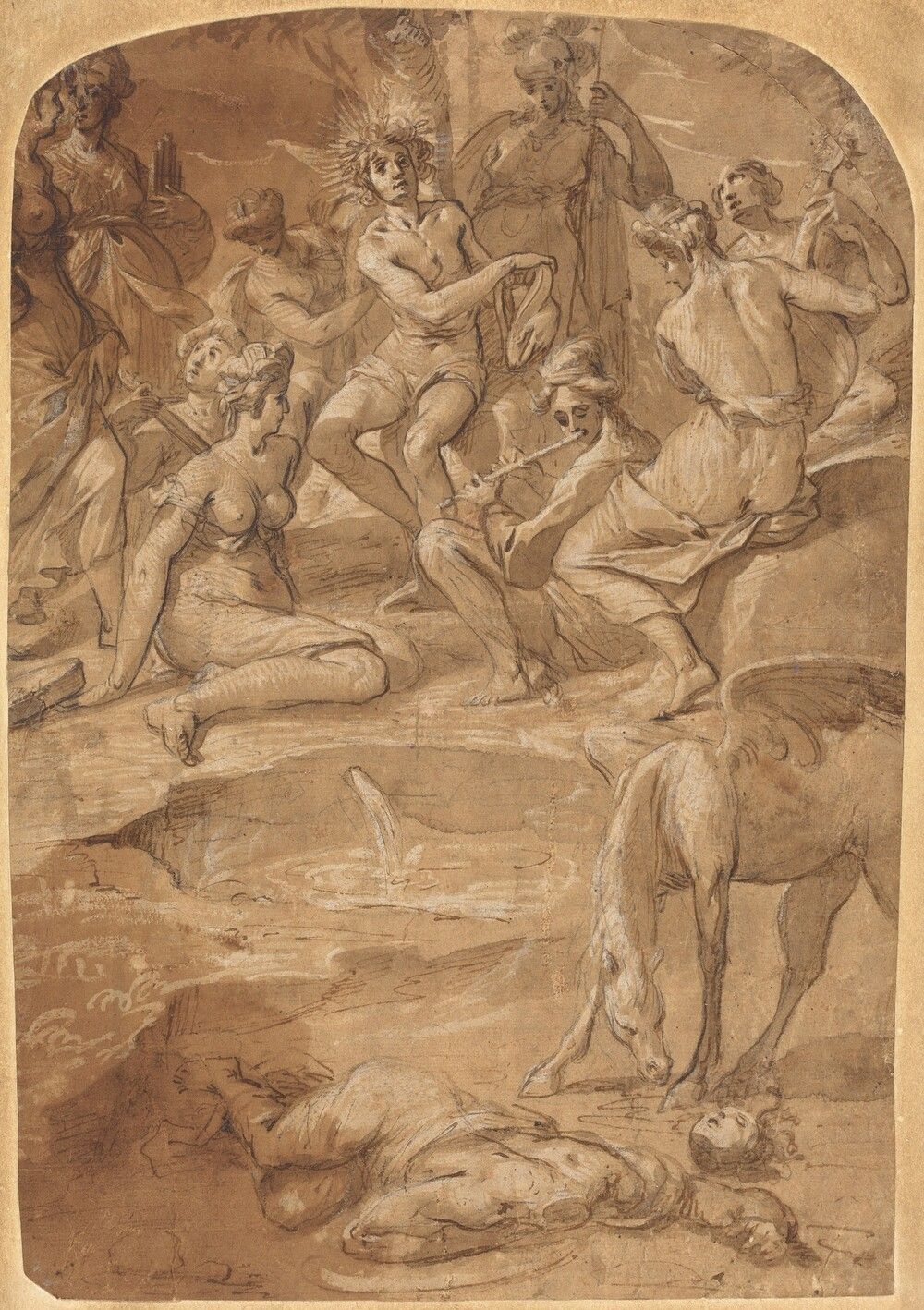
Apollo and the Muses on Mount Parnassus - Johann Christoph Storer, c. 1640, pen and brown ink and brown wash, heightened with white, over black chalk on laid paper
National Gallery of Art, Washington, DC, 2003.45.2. CC0
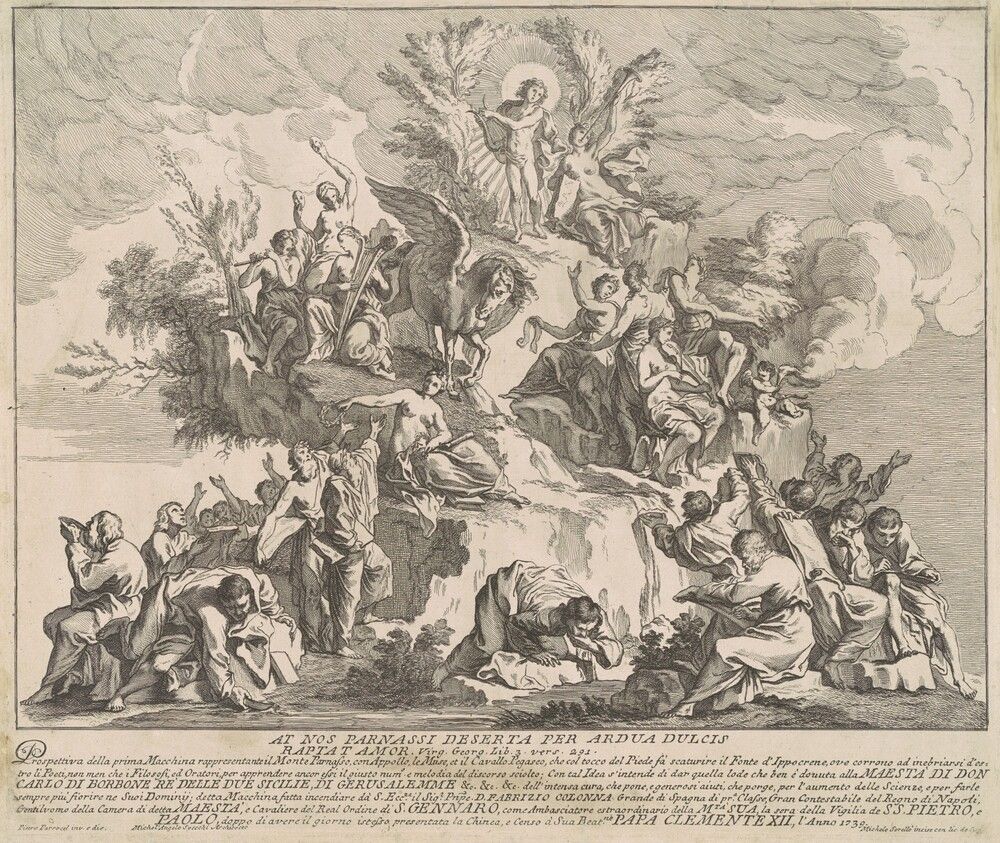
The Prima Macchina for the Chinea of 1739: Mount Parnassus with Apollo, the Muses, and Pegasus - Miguel de Sorellò, after Pierre Parrocel, after Michelangelo Specchi, 1739, etching
National Gallery of Art, Washington, DC, 2017.46.1. CC0