Glaucus
Glaucus is a Greek sea god who was first a mortal fisherman. Pausanias says he ate a certain grass at Anthedon in Boeotia, turned into a deity of the sea and has foretold the future to men ever since. Apollonius makes him the interpreter of Nereus, and Ovid adds his failed love for Scylla. The name is also borne by a Lycian warrior at Troy and by Bellerophon's father.
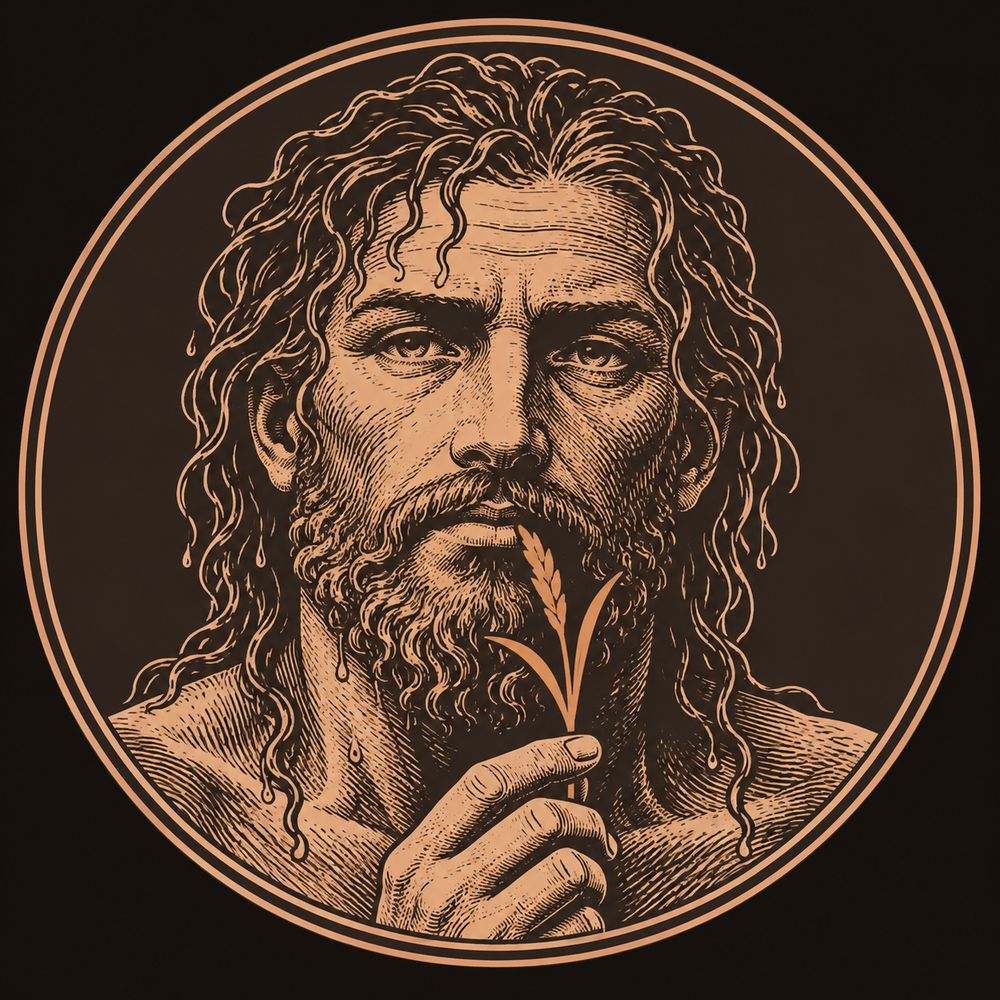
Glaucus holding a sprig of grass
Generated by AI from this page's own facts, not an ancient image or evidence of anything. How this site uses generated images
Sections on this page
See Glaucus in the Greek family tree.
Core Myth
Pausanias gives the local account from Anthedon, a town on the coast of Boeotia. He reports the belief that Glaucus was a fisherman who ate a certain grass and turned into a deity of the sea. Ever since, Pausanias says, he has foretold the future to men, and seafaring men tell every year many tales about his soothsaying (Pausanias, Description of Greece 9.22.7). Pausanias also names a place by the sea there called the Leap of Glaucus (Description of Greece 9.22.6). He adds that Pindar and Aeschylus took a story about Glaucus from the people of Anthedon, and that Aeschylus made it into a play (Description of Greece 9.22.7).
Apollonius of Rhodes uses Glaucus as a seer in the voyage of the Argo. After the ship has left Heracles behind in Mysia, Glaucus rises from the deep sea. Apollonius calls him the wise interpreter of divine Nereus. He seizes the keel and tells the crew that Heracles is fated to labour for Eurystheus and to complete twelve toils. He adds that Polyphemus will found a city among the Mysians and that a nymph has made Hylas her husband (Argonautica 1.1310-1325). Then he plunges back into the water.
Ovid, writing in Latin centuries later, gives the fullest account of his love. In Metamorphoses 13, Glaucus describes himself as a fisherman who ate a herb and then plunged into the sea. He loves Scylla and tries to win her with words, but she flees at the sight of him (Ovid, Metamorphoses 13.898-968). Ovid is the source for Scylla's earlier life as a nymph, and Homer's Odyssey does not tell it.
In Book 14 Glaucus goes to Circe and asks her, as a goddess, to pity a god and to use an incantation on his behalf. She answers that he would do better to court someone willing, and says she herself wishes only to be his. Glaucus refuses her. Circe still loves him, and her anger falls on the woman he prefers. She infects the pool where Scylla bathes with juices of a root and monster-breeding drugs (Ovid, Metamorphoses 14.1-74).
Several other figures carry the name. In the Iliad, Sisyphus fathers a Glaucus, and that Glaucus fathers Bellerophon (Iliad 6.152-155). Apollodorus gives the same line and says Glaucus's wife was Eurymede (Apollodorus, Library 1.9.3). The sources checked here do not say that this Glaucus became a sea god. The Iliad also has Glaucus son of Hippolochus, a Lycian leader on the Trojan side and a grandson of Bellerophon.
This Lycian Glaucus meets Diomedes on the field in Book 6. The two find that their families are guest-friends, and they exchange armor. Homer says Zeus took away the wits of Glaucus, who gave gold armor for bronze (Iliad 6.232-236). Apollodorus's Epitome says that Ajax killed Glaucus in the fight over the body of Achilles (Epitome 5.4). The passage does not say which Glaucus it means.
A third Glaucus is a son of Minos. Apollodorus says that as a child he chased a mouse, fell into a jar of honey and drowned. Minos then searched for him, and the seer Polyidus found the child (Library 3.3.1). This Glaucus has no link in the sources checked here to the sea god.
What is the myth of Glaucus?
The main myth is a change of nature. A mortal fisherman of Anthedon eats a grass or herb, becomes a sea deity and from then on foretells the future. Pausanias gives the belief as the local one, and Ovid has Glaucus tell the same change in his own voice. The ancient authors checked here do not date it or name a god who caused it.
Pausanias, Description of Greece 9.22.7
Did Circe love Glaucus?
In Ovid she does. When Glaucus asks her for a charm against his love for Scylla, Circe says she wishes only to be his. He refuses, and her love turns to jealousy of the woman he prefers. Homer's Odyssey, the earlier source for Circe, tells no such story, and this triangle is a later tradition that Ovid gives in his Latin poem.
Ovid, Metamorphoses 14.1-74
What did Glaucus do to Circe?
In the sources checked here he does nothing against her. He comes to Circe as a petitioner, asks for help with his love for Scylla and turns down her offer of herself. The harm in Ovid's account falls on Scylla, whose bathing pool Circe poisons with drugs and the juices of a root. Glaucus's only part is that his refusal sets her anger in motion.
Ovid, Metamorphoses 14.1-74
Was Glaucus a Greek or Trojan god?
He is a Greek god, worshipped as a sea deity in Boeotian Anthedon. The Trojan connection comes from a different man of the same name. Homer's Glaucus son of Hippolochus is a mortal Lycian who fights for Troy and trades armor with the Greek Diomedes. Nothing in these passages makes him a god, so the two should not be merged.
Homer, Iliad 6.232-236
Did Glaucus become the Minotaur?
No. The sources checked here give Glaucus the sea god a fisherman's origin and no bull form. The only Glaucus tied to Crete is a child of Minos in Apollodorus, who drowns in a jar of honey while chasing a mouse and is found by the seer Polyidus. Neither story turns a Glaucus into a bull-headed monster.
Apollodorus, Library 3.3.1
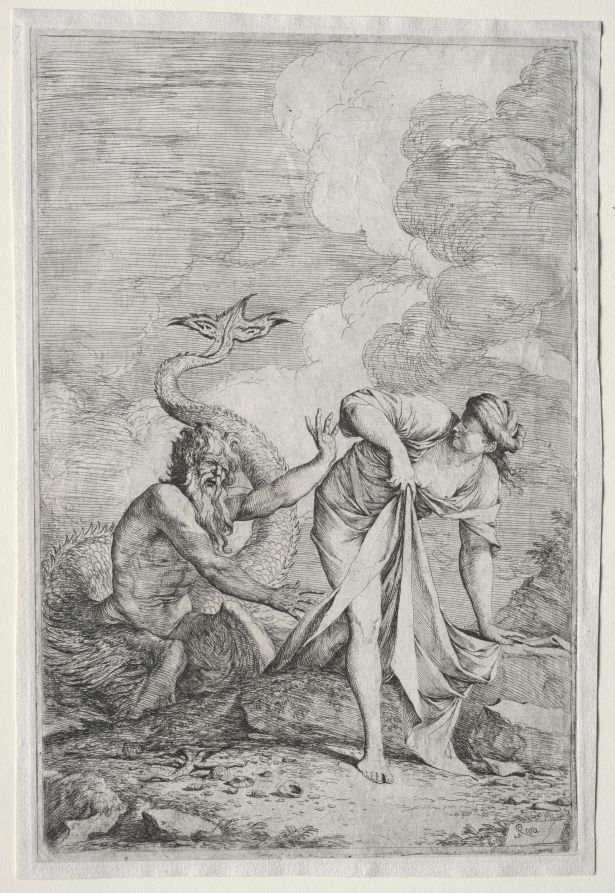
Glaucus and Scylla - Italy, c. 1661, etching
The Cleveland Museum of Art, Cleveland, OH, 1971.176. CC0
2 recorded relations, each with the ancient line behind it.
Parents
Children
-

In the Iliad's genealogy Glaucus, son of Sisyphus, begets Bellerophon.
Also Connected
3 recorded connections, each with the ancient line behind it.
Connected
-

In Ovid, Glaucus asks Circe for an incantation against his love for Scylla. Circe offers herself instead and, when he refuses, poisons Scylla's pool.
-

The Lycian Glaucus of the Iliad exchanges armor with Diomedes after their families are found to be guest-friends. He is a different figure from the sea god.
-

In Ovid's Metamorphoses the sea god Glaucus loves Scylla and she flees from him.
Read the full source verification →
Mythology
Referenced By
Sources
- Pausanias, Description of Greece 9.22.6
- Pausanias, Description of Greece 9.22.7
- Apollonius of Rhodes, Argonautica 1.1310-1325
- Ovid, Metamorphoses 13.898-968
- Ovid, Metamorphoses 14.1-74
- Homer, Iliad 6.152-155
- Homer, Iliad 6.232-236
- Apollodorus, Library 1.9.3
- Apollodorus, Library 3.3.1
- Apollodorus, Epitome 5.4